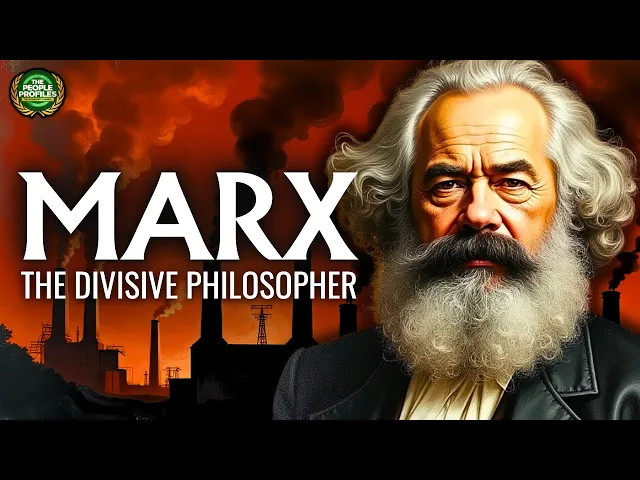
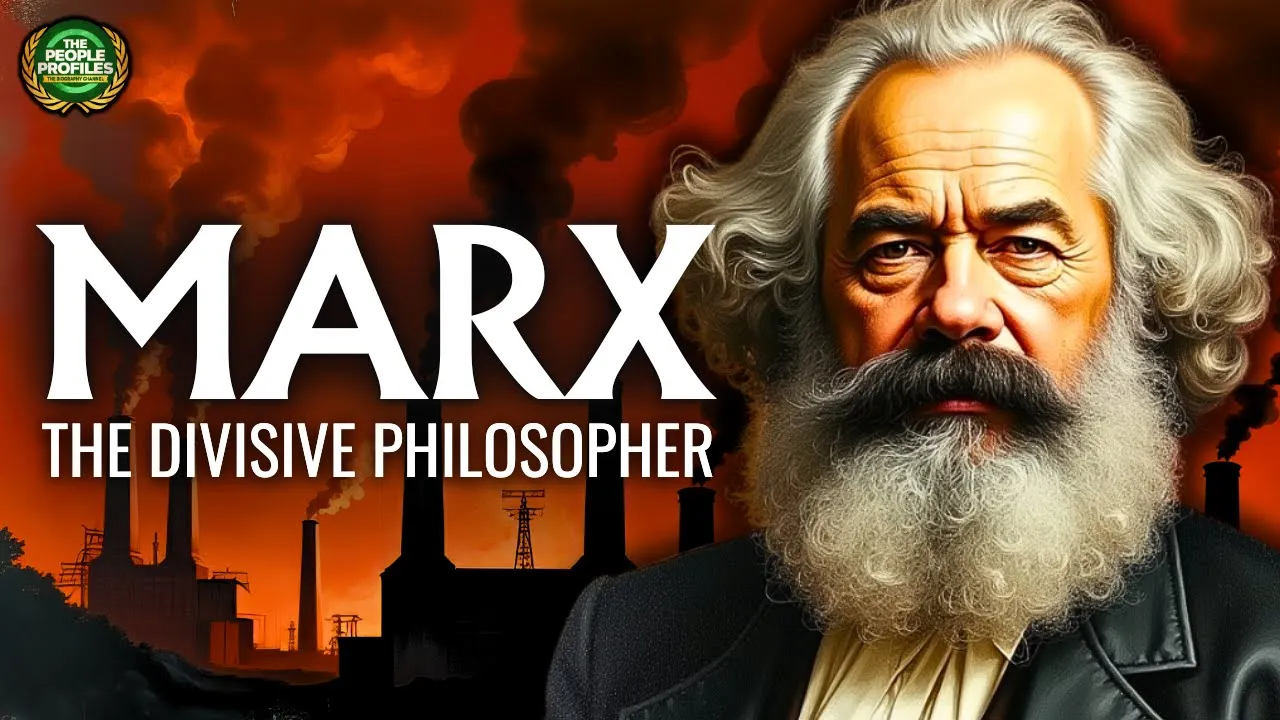
The man known to history as Karl Marx was born on the 5th of May 1818 in the town of Trier in western Germany, not far from the border with Luxembourg today. In the first half of the nineteenth century, this town was in the midst of a large section of the German Rhineland which had come under the rule of the Kingdom of Prussia in the eighteenth and early nineteenth centuries. Marx’s father was Heinrich Marx, a German lawyer of Jewish heritage whose own father was a rabbi.
His original name was Hirschel Levi, but he changed it right around the time of Karl’s birth after renouncing his Judaism and converting to Lutheran Christianity in the face of the Anti-Semitism which was mounting in Europe in the nineteenth century. He was a successful lawyer and the family owned some vineyards from which they acquired an additional income. Karl’s mother was Henriette, a Dutch-born woman who had married Heinrich in 1814.
The marriage resulted in nine children, Karl being the third. Two of these would die in infancy, and, as a result, Karl grew up with six siblings. The Marx household enjoyed a relatively affluent life when Karl was growing up.
When he was still an infant they moved to a ten-room townhouse in Trier, a clear sign of their upper-middle-class economic status. It was a secular household interested in the ideas of rationalism and liberalism that had permeated Europe during the Enlightenment of the eighteenth century. Karl was home-schooled by his well-educated father until he was twelve years of age.
Thereafter he was sent to a school in Trier run by Hugh Wyttenbach, a figure who ran into considerable controversy not long after, owing to his radical teaching curriculum, one which led the Prussian authorities to intervene to actively change the methods being used and the texts being read at the gymnasium. Other than these issues, Marx’s childhood was seemingly fairly uneventful. He rarely reflected on his younger years in any of his own writings.
Marx’s life and political philosophy were shaped by the events which were just beginning to accelerate on the European continent as he was growing up as a child. The Industrial Revolution had begun in England back in the 1770s when proto-industrialists, specifically ones who controlled the country’s textile trade, began to realise that they could substantially increase their profits if they introduced machines to carry out the weaving process that had traditionally been done by hand, and then that they could engage in what we now call economies of scale if they placed large numbers of these machines in one building, what would soon come to be called a factory. Soon, as steam engines were introduced into the mix to accelerate the production process, the demand for coal to fuel them ballooned.
This was how the Industrial Revolution began. It did not spread quickly to Europe though. The rest of the continent was slow to absorb the new ideas, a lethargy that was augmented by the unrest created by the French Revolutionary and Napoleonic Wars between 1792 and 1815.
However from the 1820s onwards many countries on the continent began to industrialise at speed. The Low Countries came first, followed by parts of northern France and western Germany, particularly in the Rhineland and Ruhr regions where coal and mineral wealth were abundant. Marx was thus born into a region that was emerging as one of the main centres of the Industrial Revolution on the continent from the 1820s onwards as he was growing up there.
The Industrial Revolution was a poisoned chalice in many respects. It was one of the key social and economic phenomena which created the modern world. The economies of the European states and other western countries in the Americas like the United States, Canada and Argentina began to experience historically unprecedented growth as a result of it, and the material attainment of people in countries like England and Germany became greater than any society in human history had ever seen.
Our lives of convenience and comfort in the twenty-first century are in many ways the by-product of the Industrial Revolution. Yet it came with its own strains. In medieval and early modern times most people were agricultural workers.
They worked hard at certain times of the year, specifically during the sowing season and the harvest, but for much of the year they had little work to do. Life was precarious and people were quite poor in the main, yet it was also not overtly onerous at times. Industrialisation changed that.
Reforms to how agriculture was practiced and booming populations forced large throngs of people into emergent industrial cities like Manchester, Sheffield, Newcastle, Liege and Aachen that had been minor towns a generation or two earlier. There they were paid poorly to work extremely long hours in factories and mines, or laying down railway tracks and building steamships from the 1830s and 1840s onwards. Adult men were expected to work up to 70 hours a week in some scenarios and women and children as young as 8 or 9 were working 55 or 60 hours a week.
When these urban workers, or the proletariat as figures like Marx would soon term them, went home it was to cramped tenements that were plagued by outbreaks of the Blue Death, the cholera epidemic that ravaged Europe’s industrial cities between the 1830s and the 1890s. This is the situation which needs to be borne in mind when assessing Marx’s subsequent career. In 1835, after turning seventeen in May of that year, Marx was sent to study at the University of Bonn not far to the north of his native Trier.
A clash with his father over what the future course of his studies and career might be, led to Karl, who was more inclined towards philosophy, partly studying law. His attentions never focused on it. Instead, he was more interested in extra-curricular activities such as his membership of the Trier Tavern Club, the purpose of which can be assumed from its name.
Within a year his parents, exasperated by his seeming waywardness, insisted that Karl transfer to the University of Berlin, a more prestigious and a stricter university. He would study here for the next several years, for a BA and then a more advanced degree. These were formative times for him.
His father died in 1838 and despite their disagreements the pair had been relatively close. Heinrich’s death left an emotional and material void, the surviving members of the large Marx family now suddenly finding themselves with a precarious financial future. Meanwhile, in Berlin, Karl experimented with various different career options, for a time trying his hand at writing fictional novels and plays in the late 1830s, though he soon abandoned these literary aspirations.
Ultimately Marx was drawn to the philosophical thought of Georg Wilhelm Friedrich Hegel while studying at Berlin. Hegel had only recently died in the Prussian capital in 1831 and there were many figures at the University of Berlin who had known and worked with him. His letters were also being edited there, making study of Hegel’s thought somewhat fashionable at the time.
Marx was soon a member of the Young Hegelians, a group of students and radicals who were critical of the conservative Prussian government and who believed in line with Hegel’s thought that the liberty of the individual and the creation of a more permissive society were social goods. It was through his study of Hegel and association with the Young Hegelians that Marx ended up beginning a doctoral dissertation at the University of Jena under the supervision of Bruno Bauer, a former student of Hegel’s. This was entitled The Difference Between the Democritean and Epicurean Philosophy of Nature and involved a comparative analysis of the work of Democritus and Epicurus, two ancient Greek philosophers of the fourth and third centuries BC, one of whom, Democritus, had also been a formative figure in the early history of physics, hypothesising the existence of atoms, while Epicurus was the founder of the Greek philosophical school of Epicureanism.
Marx defended the thesis in 1841. Following the completion of his studies at Berlin and Jena, Marx was giving considerable thought to pursuing an academic career and had taught occasionally by then. However, the environment within the lands of the Kingdom of Prussia was far from conducive to this and the Young Hegelians had been monitored by the authorities owing to the perception of them as being politically radical.
He consequently decided to become a political writer, yet soon fell foul of the press censors in Berlin. With this, realising that there was little room for the free expression of his ideas in the lands of the Kingdom of Prussia, Marx left for Paris in October 1843. It was the beginning of a period of some six years in which he moved around quite a lot.
Two years in the French capital, for instance, were brought to an end in 1845 after Marx and a cohort of other radical political writers were expelled after the French government was requested to do so by the Prussians on account of their having published several articles that were critical of the Prussian government. This led Marx to Brussels, the capital of the Kingdom of Belgium, one of Europe’s newest independent nations, having only emerged after centuries of Burgundian, Spanish and Austrian rule following the Belgian Revolution of 1830. He would work from Brussels for the next three years before also being expelled from there for breaking a promise not to engage in subversive activity.
A brief stint would follow in Cologne before Marx made London his home in 1849. By the time Marx adopted the lifestyle of a nomadic political writer in 1843 he was a married man. His wife was Jenny von Westphalen, a member of a family of the lower aristocracy in western Germany.
She was four years older than Karl and they had known each other in Trier as children and as teenagers. They later resumed their acquaintance and married in 1843 despite the reservations of her family about marrying the thickly bearded, bohemian and seemingly dissolute political writer. Such relationships could be complicated.
Karl would remain on good terms with Jenny’s brother, Ferdinand, who served as Minister of the Interior of Prussia for much of the 1850s, a man who oversaw policies which were the antithesis of everything Marx advocated for. The marriage would result in seven children, though four would die in infancy and childhood, a very high percentage at a time when infant mortality was rapidly declining owing to medical advancements. The three that lived into their adult years were all daughters, Jenny, Laura and Eleanor.
Each would become political actors, writers and socialists. The Marx family life was chaotic. They were never wealthy or even comfortable, living in a two room house for many years in London, while they spent many years moving around with Karl renting homes under aliases to avoid political interference in his actions.
He could be viewed as a neglectful father who favoured advancing his own writing career over the material wellbeing of his family, though he was otherwise written about by those who knew the family as a doting father and his daughters’ later decisions speak to an affinity for their father’s work. Rumours of an affair later in Marx’s life with the family housekeeper, Helene, one that produced an illegitimate son, Frederick Demuth, have never been substantiated and remain largely hearsay. These itinerant years moving between Berlin, Paris, Brussels and Cologne in the 1840s were some of the most productive of Marx’s life.
He composed numerous books and articles during this time, although he could not acquire a publisher for many of them on account of their content and his reputation as someone who the Prussian censors and others abroad were watching. These ranged over a wide range of subjects. A Critique of Hegel’s Philosophy of Right was, as the title clearly indicates, a reflection on elements of Hegel’s philosophical ideas.
Other work assessed the philosophical views of James Mill and Pierre-Joseph Proudhon, two relatively contemporary philosophers from Scotland and France. A piece entitled ‘On the Jewish Question’ was published in 1844 and reflected on the issue of Jewish liberties in the Kingdom of Prussia. It has strangely led to accusations of Anti-Semitism being pointed at Marx, despite the fact that he was himself Jewish, albeit the son of a secular Jewish father who had converted to Christianity for broadly social and economic reasons.
Finally, in 1847 Marx delivered a lecture which was later published under the title of ‘Wage Labour and Capital’. Here he began to lay out his ideas concerning material progress and how industrialisation and the accumulation of capital were driving class conflict across Europe. Throughout these years Marx was beginning his long partnership with Friedrich Engels.
Engels was a fellow German. He was two and a half years younger than Marx and hailed from a considerably wealthier family. His father, Friedrich Snr.
was a textile businessman, one who owned mills and factories in the town of Barmen in western Germany and also in Salford, a suburb of the industrial metropolis that Manchester in the north of England had become on the back of its central role in the cotton industry during the Industrial Revolution. Friedrich Jnr’s parents had hoped that he would follow in the family business, but by the time he was twenty years old he was already demonstrating a critical attitude towards his family’s wealth. In 1841 he was called out for mandatory military service in Prussia, something which Marx had been excused on the basis of poor health.
In Berlin Engels began attending lectures at the University of Berlin, became interested in the work of Hegel and later bonded with Marx over shared interests and political views after they first met late in 1842. They would collaborate on a huge number of co-authored works, though Engels was a substantial writer in his own right. His 1845 book, The Condition of the Working Class in England, is, for instance, considered a major reflection on the poverty and squalor that was attendant on industrialisation in the middle of the nineteenth century.
Many decades later it was also owing to Engels that the second and third volumes of Marx’s foremost work, Das Kapital, were published posthumously. Marx and Engels were not just co-authors of several works together. They were also allies in political action.
One such early endeavour was the formation of the Communist Correspondence Committee. This was an organisation formed of individuals like them with similar views on politics, economics and society who lived in Brussels, London, Paris and Cologne, four cities in relatively close proximity to each other in Western Europe between which members of the Committee could exchange letters speedily. The name ‘communist’ was adopted as it had come into vogue in parts of Western and Central Europe in the late 1830s and 1840s to described individuals whose political views were akin to the radical left-wing of the Jacobins clubs that had led the French Revolution through the first half of the 1790s.
They viewed themselves as being politically sympathetic to the sans-culottes of Paris during the Revolution, the working-class Parisians who had been responsible, amongst other things, for the Storming of the Bastille Prison and the decision to remove the royal family from Versailles and place them under virtual house arrest in Paris in 1789. This was in part the origin of the term ‘communist’, though over time it would also take on the additional meaning of someone who is in favour of the communal ownership of goods within a society. The Communist Correspondence Committee soon joined into a union with a similar group known as the League of the Just after a conference in London in the early summer of 1847.
The new entity was termed the Communist League. From its inception Marx and Engels were prominent figures in the Communist League. They attended a second meeting of its membership in London in late November and early December 1847.
It was decided there that Marx and his colleague would draw up a manifesto that would outline what the Communist League sought to achieve. The work progressed quickly. Over the space of about six weeks in the winter of 1847 Marx drafted what would become The Communist Manifesto and then had Engels review it.
The writing process was chaotic and Marx procrastinated on it in January 1848. Eventually he finished the typescript in early February and sent it to London where the publishing team for the Communist League sped it through publication. It was published in the English capital late in February 1848.
Though the text was attributed to both Marx and Engels, most assessments of the writing process tend to argue that Marx was the primary author, with Engels offering only minimal interventions, albeit the general tenor and spirit of what was contained in it had been forged in conversations between the duo over a half a decade prior to Marx putting pen to paper. The Communist Manifesto, for such a consequential text in modern world history, is actually very short, more like a pamphlet than a book. It stretches to just around 14,000 words in modern editions, depending on the editorial conventions used.
Marx immediately set out his view that history is a story of struggles between different economic and social classes. In ancient Rome this was between patricians, plebeians and slaves. In the medieval era it was between lords and knights and the serfs that worked their fields.
Now in the industrial age, Marx asserted, the clash was between the bourgeois factory owners and professional classes who ran society and the growing proletariat of urban workers. He castigated the changes industrialisation had inflicted on society, stating, quote, “The bourgeoisie has torn away from the family its sentimental veil, and has reduced the family relation to a mere money relation. ” Everywhere the bourgeois monopoly on industrial power and capitalism was creating misery in places where material progress should have been improving people’s lives.
He was especially critical of the manner in which child labour in the factories and mines had proliferated. The solution, Marx argued, was held by the Communist League and other groups like it. Private property ought to be abolished and henceforth factories, mines, shipyards, farms and other economic and social utilities should be held under communal state-ownership.
With this done, collective decisions could be made by the proletariat to expand access to education, create better working conditions and allow for an equal share in the benefits of industrial growth and material progress. Marx closed his pamphlet with a famous phrase which was the slogan of the Communist League: “Workers of the world, unite! You have nothing to lose but your chains.
” The Communist Manifesto has become one of the most controversial texts ever written. This is in sharp contrast to how uncontroversial it really was at the time. It was basically the articulation of the policy platform of a new political movement.
Political groups and parties publish policy documents all the time. Revolutionary documents and idealist political statements of this kind were also hardly novel. In England in the Civil War period of the 1640s a wide range of revolutionary schemes to reorganise the entire foundation of society had been devised.
One figure from that era, John Milton, a political idealist, had influenced Marx considerably in the views he professed in his work, Paradise Lost. The very concept of establishing a United States of America out of the British Thirteen Colonies lying between New Hampshire and Georgia was radical when the Founding Fathers devised it in 1776. Perhaps most importantly, political treatises which argued in favour of political and social utopias of the kind outlined in The Communist Manifesto had been produced as far back as the fourth century BC when the Athenian philosopher and political scientist, Plato, composed The Republic, a lengthy commentary on the ideal state.
Plato had argued in favour of something akin to the communal ownership of goods, and one could also argue that the English Lord Chancellor of the reign of King Henry VIII, Sir Thomas More, had offered up proto-communist ideas in his famous treatise, Utopia. In this regard the text was hardly a completely new departure in European political thought. It has been speculated that Marx was largely drunk while writing The Communist Manifesto, something which would be quite ironic given that this short treatise would go on to become one of the most influential texts ever written.
Part of the reason he had procrastinated in finishing it in January 1848 was that he had headed to Ghent to establish a branch of the Communist League there and spent a week and half in the smaller Belgian city, much of it spent intoxicated, before returning to Brussels, where an ultimatum from the League headquarters in London to finish the Manifesto was waiting for him. He then rushed it off over the next few days. That Marx was imbibing throughout this period was unquestionable.
The available evidence certainly suggests that he met the definition of a high-functioning alcoholic. He began drinking a lot during his early student days in Bonn and continued the habit for the next half a century. This was not the average diet of almost perpetual beer consumption that characterised European life in early modern and pre-modern times, especially in cities where drinking alcohol was safer than consuming disease-ridden water, but, instead, Marx had a penchant for wine and liquor, all in tandem with a rich diet and cigars.
By the late 1840s, by which time he was just entering his thirties, he had a growing range of health problems, some probably related to liver disease. Even as The Communist Manifesto was being published in London at the end of February 1848 a wave of revolutionary fervour was sweeping across Europe. This began in the city of Palermo on the island of Sicily in January 1848 and rapidly spread across the continent.
By March and April major revolts were underway in places like Poland, Hungary, France, much of Germany, Denmark, the Swiss Confederacy and Ireland, while virtually every other country witnessed popular protest if not full-blown revolts. The Revolutions of 1848, or ‘The Springtime of the People’, as it would become known, led to wide-ranging political changes in countries like France, Hungary and Italy and threatened to lead to the overthrow of entire governments in Germany and other regions. In the aftermath of the revolutions there were crackdowns on perceived political extremism.
Marx, who had just moved back to Cologne after coming under pressure from the Belgian government owing to his political views in the midst of the revolutions sweeping the continent, soon also experienced harassment from the Prussian government on account of his role in the Communist League and was eventually asked to leave the kingdom entirely. This was the background against which the Marx family relocated to London. Marx would spend the rest of his life based out of the British capital in a country which was more liberal-minded than virtually any other country in Europe at that time, with extensive censorship practiced in other capitals of a kind which would have precluded him from getting his work published.
In London Marx was inspired enough by the events of 1848 and 1849 across Europe, even though the revolutions had generally ended in suppression and violent crackdowns, to begin now researching and writing some retrospective commentaries on that other great European revolutionary movement, the French Revolution of 1789 and its aftermath in the 1790s. For communists and for left-leaning socialists of all hews, the French Revolution was one of the defining events of human history. Where the American Revolution had been primarily driven by well-to-do urban bourgeois types and wealthy plantation-owners, the French insurrection had been led to a significant extent by the sans-culottes urban workers of Paris and the Jacobin clubs of radical revolutionaries.
It had been both a movement to overthrow the ancien regime of crown, aristocracy and church, and an effort to establish a completely new type of society. Marx and many others wished to launch a new revolution of this kind. To that end, from 1849 into the early 1850s he wrote extensively in an effort to analyse what went wrong in France in the 1790s to foil the Revolution and lead it into the monarchy of Napoleon Bonaparte, contrasting it with the recent rise to power of Charles-Louis Bonaparte, Napoleon’s nephew, as President of France during the revolution of 1848.
He would subsequently proclaim himself to be Napoleon III, a new Emperor of the French. Marx was clear: the bourgeois had manipulated the French proletariat in a manner which led them to accept an abandonment of the Revolution in 1799 and the acceptance of Bonaparte as First Consul and then Emperor of the French in 1804. Similar principles had recently led to the undermining of the 1848 revolution in France and the rise of another Bonaparte to power.
Marx might have been anxious to comment on and analyse the various revolutionary movements across the continent, but he also had to make a living in London after he moved there. He acquired some work as a journalist writing as a London-based correspondent for the New York Daily Tribune, while also writing occasionally for several other publications. Much of this involved digesting British political developments and making them intelligible for an American audience, especially developments at the British parliament at Westminster during a very busy time in the country’s legislative history.
It was precarious work and Marx was often only paid for articles that were accepted for publication, making his income stream unstable. The Marx family were not poverty stricken, yet they hardly lived an affluent life in London and Karl would have had difficulties in continuing his unpaid research and writing had it not been for financial support from Engels, whose family’s wealth provided him with an independent income stream. Marx was also interested in these years in London in the on-going political tensions in the United States, ones which focused on the issue of slavery and which would eventually spill over into the American Civil War in 1861.
This was based on his observations of the fractious state of US politics in the 1850s and then the final descent into conflict after the election of Abraham Lincoln in the 1860 Presidential Election, however his collection of essays on the topic, published as a series of articles for the New York Daily Tribune and Die Presse in Vienna between 1860 and 1866 also attempted a wider analysis of the economic divisions between the free northern states and the slave-owning southern states which had caused the conflict in the first place. Marx was firmly on the side of the Union in the war and the anti-slavery cause, so much so that it ultimately cost him his job writing for the New York Daily Tribune after the board of the paper decided on a markedly neutral stance in the war in 1863, arguing that a peaceful resolution between north and south, one that might allow for a retention of slavery of some kind in places like Virginia and the Carolinas, was possible. Marx withdrew from the paper at that juncture and acquired other work with Die Press and other outlets.
Luckily, by then one of his other books, A Contribution to the Critique of Political Economy, published in 1859, was selling well enough that Marx was on a firmer financial footing. The end of his time writing for the New York Daily Tribune and his increased income allowed Marx to concentrate on a large work which had been in the firmament for some time. This would be the major distillation of his political ideas.
He spent much time writing it in the reading rooms of the British Museum in London, the archival and library sections of which are the British Library today. It was here that Marx drew up hundreds of pages of notes on all manner of issues relating to class relations and the like. The result would be a three-volume work published gradually over several decades and entitled Das Kapital: Kritik der Politischen Ökonomie, which transliterates as Capital: A Critique of Political Economy.
The first volume of Das Kapital was published in 1867. It was a lengthy work in and of itself, one which runs to 500 to 600 pages in most modern editions. It was then supplemented by volume two and volume three, published posthumously in 1885 and 1894 respectively after Engels finished the two texts based on Marx’s very extensive notes and drafts.
Collectively the three volumes tend to run to over a thousand pages in modern editions that try to publish them in one volume, and that can only be achieved by using a very small print or synopsising substantial sections of the text. It is therefore an extremely long work, running upwards of a million words in most modern editions if footnotes or endnotes are included. Given its sheer size, there are a great many elements to Das Kapital, far more than with the rather paltry Communist Manifesto.
Two key facets of it should be noted. Das Kapital offered the clearest articulation of Marx’s views on ‘historical materialism’. This is the view of history as primarily being characterised by conflict between different economic classes.
This is not an entirely ground-breaking idea today. In the middle of the nineteenth century, though, it was trailblazing. Up to this time most historians, or those who deployed historical arguments, tended to assess human history as being about a conflict of different ethnic groups or of empires, kingdoms and nation states.
Pick up a nineteenth-century European history book and you will invariably be greeted by chapters outlining conflicts between England and France, the German states and the Papacy, Spain and Portugal. Kings, queens, lords and Popes featured heavily and religion and territorial power was allegedly what motivated them. Conversely, little was said about what the vast majority of the population of such countries did and what their motivations were.
Marx was writing in reaction to this. He argued that history was basically a clash of different economic classes rather than nation states. In this reimagining, Western European history in the High Middle Ages was not, for example, a tale of the French and English crowns waging war on one another, but of the French and English nobility collectively oppressing the feudal peasantry.
Over time the relations between economic classes changed as different technological innovations transformed the modes of production of food and goods. Therefore Europe’s recent history had been tumultuous and was resulting in class warfare owing to the recent innovations of the Industrial Revolution, ones which were pitting the bourgeoisie, a class that had in turn defeated the old feudal nobility centuries earlier, against the new industrial proletariat. To Marx’s mind ‘historical materialism’ offered a method of explaining nearly all historical developments.
While many people might disagree with the political ends towards which Marx was working in formulating this theory or argue that he placed too much emphasis on material issues as being the fulcrum on which all historical events pivoted, there is no denying that he contributed to a fundamental re-evaluation of historical methodology, one which highlighted how economic developments and class conflict were just as important as nationalism or the actions of leading rulers and statesmen. This concept of historical materialism is directly related to one of the other key facets of Marxist thought as presented in Das Kapital. It is called the Marxist dialectic or ‘dialectical materialism’.
In fashioning this Marx was responding to the dialectical methods espoused by Hegel decades earlier. The Hegelian dialectic argued that ideas were often in fundamental conflict with each other, but that this tension could result in a more sophisticated outcome. For instance, a person might put forward an idea or thesis concerning a philosophical issue.
Then a second person or group would put forward a counter-argument or antithesis. In many instances neither would be entirely correct, but the fundamental tension between the two arguments would result in a more evolved synthesis that borrowed from both thesis and antithesis to form a synthesis. The Hegelian concept ultimately has its roots in the philosophical methods of Plato.
Marx now borrowed and altered this dialectical approach and injected arguments about political economy and metaphysics into it. What he was arguing was that society and nature had a physical existence beyond the impression of it which human beings form in their mind and therefore was worth studying independent of individual perceptions of society. In this he was rejecting Hegel’s thoughts and a long line of other European philosophers going back to Rene Descartes who had founded the Cartesian school of metaphysics in the middle of the seventeenth century.
For Marx the individual could be ignored to some extent. What was significant within this dialectical method was that economic groups were in tension with one another, leading to changes in the physical world, though ones which were often contradictory or difficult to explain. The Marxist dialectic is one of the more complex elements to Marx’s thought in Das Kapital and his political and philosophical outlook more generally.
It is also one of the most controversial. Many hold that in placing emphasis on the material world and how it operated, and in rejecting Hegel’s Cartesianism, that Marx was essentially rejecting the fundamental value of the individual in society. The argument here is that in stating that the material relations between economic groups in the world and how they relate to nature, rather than individual perceptions of the same, were what was important, Marx was essentially trivialising the value of individuals.
It is easy to see why this might be deemed a controversial viewpoint, particularly so when we consider that Joseph Stalin produced a paper entitled ‘Dialectical and Historical Materialism’ that was first published in 1938 in the midst of The Great Purge that he was inflicting on Russia at the time. The argument could follow that Marx’s Dialectical Reasoning was consequently responsible for the worst excesses of the Soviet Union and other communist regimes in decades to come. Nor is the Marxist dialectic the only thing which has been deemed controversial in Marx’s work.
His view of historical materialism, while a very useful corrective to the traditional view of history being a clash between kingdoms and nation states, when over-stated has led to an overt emphasis on class struggles as being behind all historical phenomena. Finally, his advocacy for the communal ownership and management of goods might have been considered utopian by many in the twentieth century, but what Marx overlooked was the possibility of authoritarianism being used to achieve this. Marx was not an authoritarian by any stretch of the imagination himself, yet he failed to realise that efforts to put his ideas into practice could result in tyrannical regimes, particularly so if attempted in countries like Russia which had a centuries-long political culture of autocracy.
Practical measures to try and further the communist mission in the real world, and not just on paper, were underway even as Marx was writing up the first volume of Das Kapital in the mid-1860s. In 1864 a coalition of socialist, communist and other left-wing radical groups from around Europe was formed at a meeting in the Queen’s Theatre in London on the 28th of September. They called themselves The International Workingmen’s Association, though today in communist historiography this is known as the First International, it being the first entity that claimed to represent communist groups from all over the world, though in reality at the time that meant Europe in practice, as communism had barely spread anywhere else, a few advocates in the Americas being the only major exception.
The onus for the gathering was the Poland Uprising against Russian rule there in 1863 and the realisation that grassroots labour organisations and those that represented groups like the oppressed Polish subjects of the Russian Empire could meet with greater success if they organised themselves on an international scale. By transcending international borders in this way they could aspire to mimic the Revolutions of 1848 one day. Marx was heavily involved in the First International.
However, the First International soon descended into conflict, specifically between a more staunchly communist wing led by Marx and an anarchist wing led by the Russian revolutionary, Mikhail Bakunin, a seminal figure in the history of political anarchism. The dispute came to a head at a conference at the Hague in the Netherlands in 1872 and the First International effectively collapsed over the next few years. A Second International would not emerge until 1889 after Marx’s death.
The split in the First International was in many ways fuelled by the events of 1871. In mid-March of that year, as France and in particular the city of Paris tried to recover from the shock of its swift defeat by Prussia in the Franco-Prussian War, radical political groups had seized control of the French capital. The Paris Commune would control the city for two and a half months before its bloody suppression by the government of the fledgling Third French Republic, resulting in the deaths of anywhere between 10,000 and 20,000 people.
The Commune cannot be considered a wholly communist revolution, as the Communards were a loose coalition of political radicals, but it certainly involved communist and radical socialist elements. Marx engaged in a flurry of activity from London when news arrived of what was happening in Paris in March 1871. The treatise that he prepared in response to it was entitled ‘The Civil War in France’, though by the time he finished it the Commune had already been suppressed and the text needed to be edited to put it into the past tense for publication that summer.
We get a sense of how overly optimistic Marx’s view of the Commune was from this passage: ‘Wonderful indeed was the change the Commune had wrought in Paris! No longer any trace of the meretricious Paris of the Second Empire! No longer was Paris the rendezvous of British landlords, Irish Absentees, American ex-slaveholders and shoddy men, Russian ex-serfowners and Wallachian boyards.
No more corpses at the morgue, no nocturnal burglaries, scarcely any robberies; in fact, for the first time since the days of February 1848, the streets of Paris were safe and that without any police of any kind’. Whatever the merits of the Commune may or may not have been, to present Paris as a paragon of peace and safety in the late spring of 1871 stretches credulity. The events of the early 1870s, with the brief possibility of a new revolution in France and then the gradual collapse of the First International in the years that followed were the final era of major political involvement by Marx.
He turned sixty in 1878 and by then his health was seriously declining. He continued to write, though much of his time was absorbed in preparing the second and third volumes of Das Kapital, two works which he never fully completed and brought to publication. Engels would achieve this after his death.
A number of his later writings, correspondence and minor publications were of note. For instance, in 1881 he discussed with Vera Zasulich, a Russian communist who is a forgotten but formative figure in the history of the movement in that country, whether Russia could aspire towards communism, the traditional Marxist view being that societies would have to move from feudalism to capitalism, then capitalism to socialism and from socialism to communism, industrialisation being a necessary process in the development of capitalism into socialism. Given future events it was an interesting correspondence.
By then several thousand copies of Marx’s work had been published in Russian, though he would have found the fact that Russia would soon become the epicentre of the communist movement very curious, given that he had envisaged it as a political ideology for countries like England, Germany or even France that were well along the path of industrialisation already and had an urban proletariat to drive the revolution as a result. Karl’s wife Jenny died in December 1881. His own health was not good by then and it declined precipitously thereafter.
Indeed it had never been good. As early as the late 1830s Marx had been excused from military service in Prussia on the basis of ill health. What exactly was involved is not 100% clear.
He may have been suffering from some form of pleurisy even at this early stage. This was compounded by issues brought on by his borderline alcoholism, exacerbated by poor living conditions in London. He did everything wrong from a modern health perspective thereafter, working long hours, having a poor diet, smoking and then adding sleep aids into the mix when he developed insomnia later in life.
He may have had other conditions. Ultimately it is hard to tell from the limited medical records available. What is clear is that he developed a case of catarrh right at the beginning of 1882 that reduced his ability to breathe properly.
His health continued to decline from then onwards and Marx died in London on the 14th of March 1883 at 64 years of age. He was almost penniless at the time and friends and political colleagues put some money together to organise for his burial in Highgate Cemetery in the city. The funeral was a very modest affair, attended by Engels and around a dozen other people, hardly a large showing for a figure whose writings would, for better or worse, have an enormous impact on the century that followed his own.
Even by the time Marx died in 1883 there had been enormous progress made in reforming the worst elements of the relationship between the business and working classes that had been allowed to develop during the first decades of industrialisation. Back in 1847, when he and Engels had been brainstorming what would become The Communist Manifesto, the British government under Lord John Russell introduced the Factories Act of 1847, colloquially known as the Ten Hours Act. This enshrined the principle that women and children should never be required by factory-owners and managers to work more than 63 hours per week, an upper limit that was quickly reduced to 58 hours in 1848.
This might still seem like a very high number of hours. However, it was the beginning of a process of reform which led to the working conditions of the proletariat improving incrementally over the second half of the nineteenth century. For a time governments introduced these measures relatively willingly, yet workers also began to use their collective bargaining power through trade unions and labour movements late in the century and into the twentieth to extract greater concessions from the business classes.
It was a time of great conflict, one often marred by violent clashes like the Homestead Strike in Pennsylvania in the United States in 1892 when the American industrialist Henry Clay Frick brought in strike-breakers to wage war on his own workers, but over time huge concessions were won in the decades prior to and after Marx’s death. Still, Marx would not have been satisfied with this. His observations of industrialisation had convinced him that a radical overhaul of the entire system of ownership was needed, communism not socialism or labour reform.
Many agreed with him. In the course of the 1870s, 1880s and 1890s many communist movements began to appear in industrialised European countries. Many did not have names like ‘The Communist Party’ but instead bore names like ‘The Socialist Workers Party’ or some such, yet were still adherents of many of the ideas of Marx and Engels.
One such was the Russian Social Democratic Labour Party, formed in the city of Minsk in what was then the Russian Empire. It soon split into the Bolsheviks and the Mensheviks, the former of which would launch the October Revolution in Russia in 1917, beginning the ascent to power of the communist Union of Soviet Socialist Republics. The emergence of the Soviet Union would inspire many imitators and as the First World War came to an end in 1918 communist regimes were briefly established in places like Hungary and several major cities in Germany.
Ultimately it would require the defeat of fascism and the advent of the Cold War from 1945 onwards for communism to emerge as a global force. At the height of the Cold War between the 1960s and 1980s nearly half of the world’s nations purported to be communist states. Of course all of this raises questions as to the extent to which Marx was responsible for the rise of these authoritarian regimes, many of which committed appalling crimes against their own people, none more so than the Soviet Union and Maoist China, two countries in which tens of millions of people died in man-made famines between the early 1930s and the mid-1960s and in which state terror devastated entire societies.
Some historians suggest that Marx bears some blame for the manner in which his idealistic utopian ideals of collectivisation and the ending of private property rights created the conditions for Socialist countries descending into authoritarian dystopias. Indeed, it could be said that this is the point at which Marxism and Socialism falls apart as that it is impossible to eliminate private property rights in a population other than with the use of force, as people with private property which has often been built up over generations, seldom consent to surrendering the fruits of their labours willingly. It has also been stipulated that because of this and the fact that the majority of Communist Revolutions took place in countries which were previously under autocratic rule, like Russia under the Tsars, that the Revolutionary regimes simply replicated and amplified the worst characteristics of the regimes they replaced.
There is little doubt that Marx had genuine concern for the quality of the lives of the millions of people who rapid industrialization in the 19th century had thrown into squalor and that his ideas were intended to give everyone in society enough food and wealth to live on comfortably. He would no doubt have been appalled by the horrific death toll that occurred under the 20th century regimes who adhered to his ideology, however the question is, do his writings and ideas contain a vital flaw which if enacted, makes authoritarianism all but certain? Indeed, if one takes even a cursory glimpse at 20th century history, it is difficult to argue with this point.
As the saying goes “The pathway to hell is paved with good intentions. ” What do you think of Karl Marx? Was he simply a well-meaning socialist reacting to the dreadful industrial squalor of the mid-nineteenth century, or was he the architect of much of the suffering of the twentieth century, whose dream of reshaping society into a fair and equal Utopia, ended in creating one of the greatest nightmares humanity has ever endured?
Please let us know in the comment section, and in the meantime, thank you very much for watching.