- When I got to graduate school, they thought that the mind was an empty slate- 'a tabula rasa. ' An environment just filled up the brain with who you were. And as I sit there and listen to these various academics, I thought: "That's not true.
" I thought to myself: "If there's any part of human behavior that has a biological origin, it must be our patterns of love and marriage. Because, as Darwin would've said, 'If you have children, and I have no children, you live on, and I die out. '" The game of love matters.
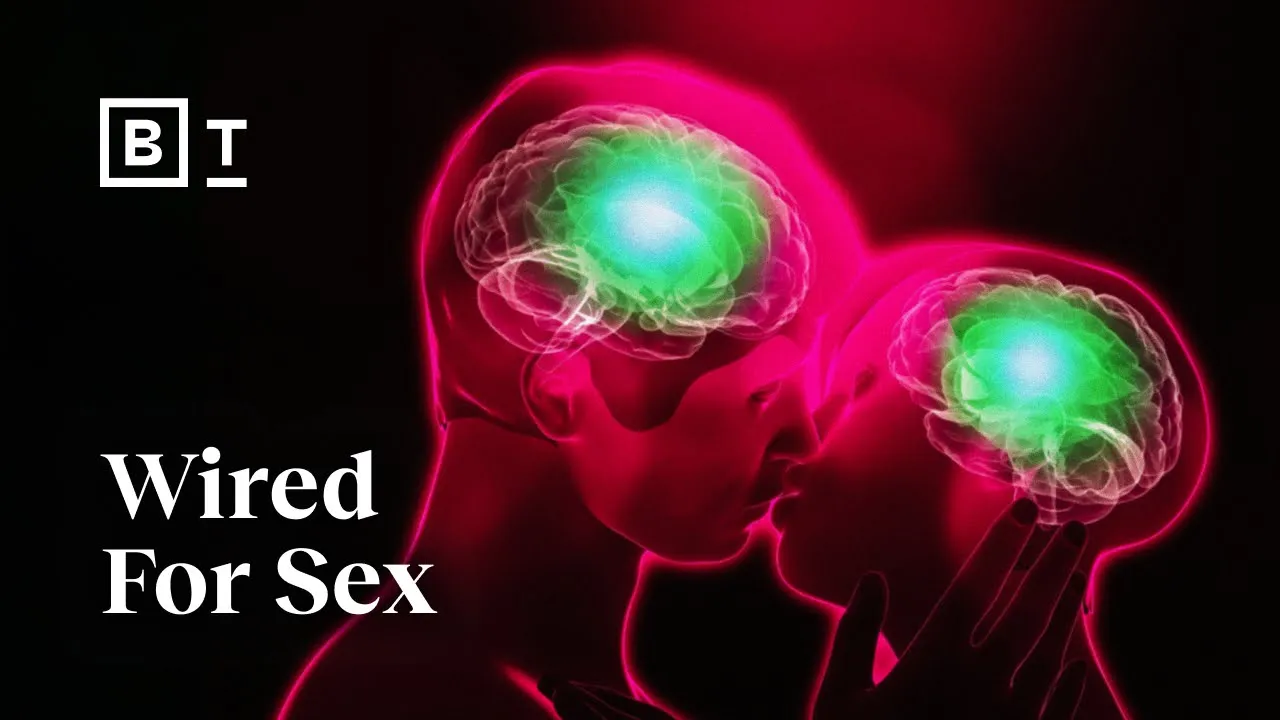
A lot of people think that sex drive, romantic love, and feelings of attachment are phases. They're not phases, they're brain systems. I'm Helen Fisher.
I'm an anthropologist, and I actually know where love is in the brain. I really had a wonderful childhood. I grew up in a modern house-a glass house- and it was thrilling.
We had a lot of land. We could see the deer and the foxes and the possums all around the house all the time. I have an identical twin sister, so I always had somebody to play with.
My father and mother really believed that sex was an important part of a partnership. On Saturday afternoon, we were instructed to never walk around that side of the house 'cause it was a glass house, and you could see in. We were never allowed to knock on their bedroom door if it was shut.
So I knew from a small child that, when I grew up, there were certain things in a partnership that really should work properly, and one was you should find your partner sexually attractive. When I first began to study romantic love, I wrote my very first academic paper. It was on these three different brain systems that I think evolved for mating and reproduction: sex drive being one, feelings of intense romantic love being the second, and feelings of deep attachment being the third.
And I was maintaining in that article that these all evolved for various reasons. Sex drive evolved to get you out there looking for a whole range of partners. Romantic love evolved to enable you to focus your mating energy on just one at a time.
And attachment evolved to enable you to stick with this person, at least long enough to raise a single child through infancy. The peer reviews came back, and at least one of the peer reviewers wrote back and said, "You can't study this; it's part of the supernatural. " And I looked at that, and I thought to myself, "Does this person think that anger's part of the supernatural?
That fear is part of the supernatural? That disgust or joy is part of the supernatural? " Why would they think that romantic love, a basic brain system, would be part of the supernatural?
I mean, all over the world, people everywhere fall in love. They pine for love, they live for love, they kill for love, and they die for love- it's a powerful brain system. And I thought maybe if I could put people into a brain scanner, I could find the basic brain pathways, the basic brain circuitry, of these three basic brain systems.
So I assembled a team, and began to put people in the scanner. They would look at a picture of their sweetheart that called forth the wonderful feelings of romantic love, and they would also look at a photograph of somebody who called forth no emotions; no positive or negative emotions. And when you put the neutral and the romantic love on top of each other and cancel out what they have in common, you're left with what's going on in the brain when you're madly in love.
I'll never forget the first moment that I looked at our data. What we saw was activity in a tiny little factory near the base of the brain called the 'ventral tegmental area. ' It's a brain region that actually makes dopamine, a natural stimulant, and gives you that focus, that motivation, the craving, the elation of intense romantic love.
After we discovered this data, a lot of people came and wanted to talk to me, and I thought to myself at the time, "You know, Helen, this really isn't very important. You know, when you're madly in love with the right person, there's no problem. The real problem is when you've been rejected in love.
That's where I can make a contribution to humanity. " Sure enough, I was able to put 15 men and women into the scanner who had just been dumped. I was able to find activity in a lot of brain regions.
One brain region is that same basic ventral tegmental area, the VTA, that pumps out the dopamine that gives 'em the feeling of intense romantic love. You don't stop loving somebody when they've dumped you. I found activity in a brain region linked with pain.
This is a brain region that also becomes active when you have a toothache. But most important, I found activity in three brain regions linked with craving and addiction: Specifically, is activity in a brain region called the 'nucleus accumbens. ' It's the basic brain region that becomes active when you are addicted to cocaine, heroin, alcohol, cigarettes, gambling.
And so, I was able to prove that romantic love, when you are rejected, is an addiction. I hope the world understands that this intense feeling of romantic love came out of nature. Everybody feels it, and we have to respect the intense feelings of people when they have been rejected in love, when they're happily in love, and when they're in love long-term.
My colleagues and I have put 17 people into the scanner who were in love long-term. These were people all in their fifties and sixties who were happily married, in love an average of 21 years, and sure enough, we found activity in these same brain regions. The ventral tegmental area pumps out the dopamine, gives you feelings of intense romantic love.
A brain region in the hypothalamus linked with the sex drive, and brain regions linked with calm and security. So in long-term love, you can remain in love, but you gotta pick the right person. And that's what sent me into wondering, "Why him?
Why her? " Why are we so naturally drawn to one person rather than another? I don't think it's just culture; I think there's biology involved.
Sex drive, romantic love, and feelings of attachment: If you want to maintain a long-term, happy partnership, you wanna sustain all three of these brain systems. You wanna have sex regularly. That drives up the testosterone system, so you want more sex.
Sex is very good for you, if you like the person you're having sex with. If you wanna sustain feelings of intense romantic love, novelty, novelty, novelty! And you don't have to swing from chandeliers; just ride your bicycles going out to dinner.
Walk in a different part of town. Go on a summer vacation to someplace else. And if you want to sustain feelings of deep attachment, stay in touch.
Any kind of holding hands, kissing, walking arm in arm, sitting next to each other to watch television instead of separate armchairs. Any kind of continued pleasant touch drives up the oxytocin system. So, I think what I'm working towards here is understanding these brain circuits enough so that we can use the data to find the right person, that's number one, understand who they are, that's number two, and sustain a long-term happy partnership.
Romantic love will be with us forever. It's primordial, it's adaptable, and it's eternal. It will survive as long as we survive as a species.
- Get smarter, faster, with videos from the world's biggest thinkers. And to learn even more from the world's biggest thinkers, get Big Think+ for your business.