Have you ever stood up from your chair and felt a profound sense of disconnect from your own legs? A dragging, heavy sensation, as if you’re wading through water just to cross a room. Perhaps you’ve noticed a subtle swelling around your ankles that worsens as the day goes on, a quiet tightness in your shoes that wasn’t there in the morning.
For millions of adults, this isn't a rare occurrence; it's a daily reality, a creeping erosion of confidence and freedom. It's often dismissed as an inevitable consequence of aging, a simple truth we must accept. But as a physician, I want to tell you that this narrative is not only incomplete, it can be dangerously misleading.
This feeling of instability and fatigue is not your fault, but ignoring its root cause can have significant consequences for your long-term health and independence. The truth is, there is a powerful physiological system within your lower legs that is often overlooked, a system that, when neglected, can lead to these very symptoms. Today, we are not going to talk about strenuous gym workouts or complicated routines.
Instead, we are going to explore the remarkable, yet simple, science of your body's circulatory design and learn how to reactivate a crucial component of it with three methodical, safe movements you can begin doing immediately, right in the comfort of your own home. To understand the solution, we must first appreciate the problem, which is one of fundamental physics: gravity. Your heart does a magnificent job of pumping oxygenated blood throughout your body, but returning that deoxygenated blood from your feet and lower legs back up to the heart is a much more challenging task.
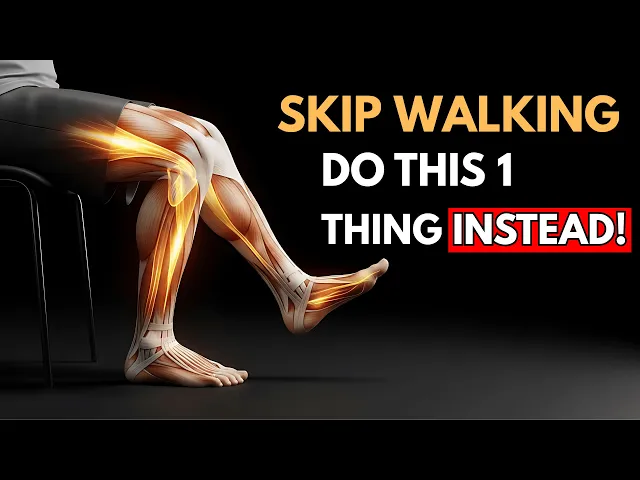
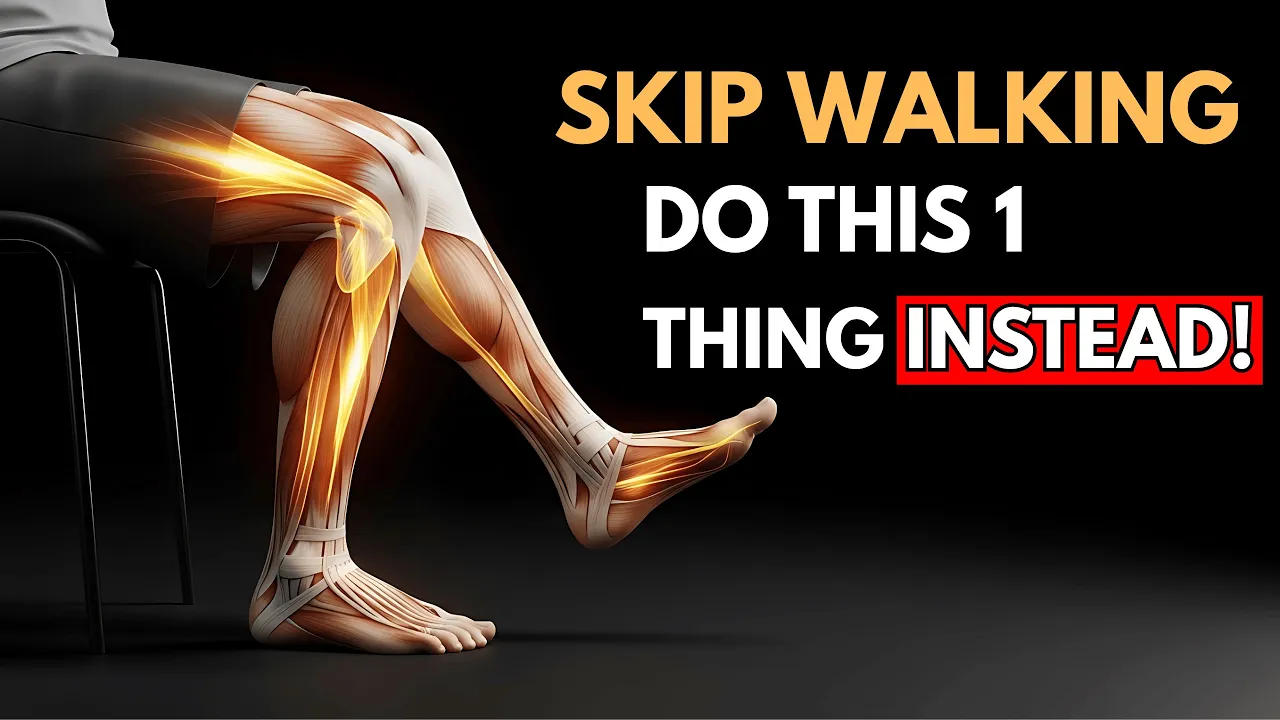
It's an uphill battle against a constant downward pull. To solve this, your body is equipped with what is often referred to by physiologists as a 'peripheral heart' or a 'secondary heart' system, located deep within your calf. This isn't a second organ, but rather a powerful muscular pump.
Every time you take a step, the muscles in your calf contract, squeezing the deep veins within them. These veins are lined with one-way valves. When the muscle squeezes, blood is forced upward, and the valves prevent it from flowing back down.
This is the calf muscle pump, and it is absolutely essential for proper circulation. However, a crucial part of this system is a muscle that many people have never even heard of: the soleus. It lies beneath the larger, more visible gastrocnemius muscle—the one you see as the bulge of the calf.
While the gastrocnemius is designed for powerful, explosive movements like jumping, the soleus is a workhorse. It’s an endurance muscle, composed primarily of slow-twitch fibers, designed to work tirelessly for hours on end to maintain your posture and, most critically, to consistently pump blood. As we age, a combination of factors—a more sedentary lifestyle, changes in gait, and natural muscle atrophy—can cause this soleus pump to become dormant.
It doesn't receive the strong, complete contractions it needs to work effectively. Walking helps, but it often isn't enough to fully engage this deep muscle. When the soleus pump is inefficient, fluid begins to pool in the lower legs.
This leads to that feeling of heaviness, visible swelling, and can contribute to more serious issues like venous insufficiency and an increased risk of blood clots. But the good news is this system isn't broken; it's merely offline. Our first task is to gently wake it up.
We will do this from a position of complete safety and stability: your chair. Sit tall in a sturdy chair, with your back supported and your feet placed flat on the floor, ensuring your knees are bent at a comfortable 90-degree angle. Place your hands on your thighs to provide a gentle, steadying pressure.
Now, keeping the balls of your feet firmly on the ground, slowly lift both of your heels as high as you comfortably can. You should feel a distinct contraction, a deep squeeze in the back of your lower legs. Hold this contraction for a moment, for one or two seconds, really focusing on that sensation.
Then, with just as much control, slowly lower your heels back to the floor. Don’t let them drop. The controlled lowering, the eccentric part of the movement, is just as important as the lift.
Repeat this deliberate movement 10 to 15 times. This simple, quiet motion is a direct signal to your nervous system, a command to reactivate the soleus. It is the foundational step in restoring the vital pump that supports your entire circulatory system from the ground up.
Now that we've re-established that vital connection to the soleus muscle from a safe, seated position, it's time to teach it how to function in the real world—under the influence of gravity and your own body weight. The transition from sitting to standing is one of the most common moments where people feel unsteady. That brief hesitation, that slight wobble, or the instinct to reach for support is your body's way of telling you that its internal balance system isn't firing as quickly or as effectively as it once did.
This isn't just about muscle weakness; it's a neurological issue. Deep within your muscles, tendons, and joints, particularly around your ankles, are millions of tiny nerve receptors. This network is called the proprioceptive system.
It constantly sends information to your brain about your body's position in space—the angle of your joints, the tension in your muscles, the distribution of your weight. Your brain then processes this data in fractions of a second to make tiny, automatic adjustments to your posture to keep you upright. With age, the speed and clarity of these signals can diminish.
Furthermore, if the muscles around the ankle are weak, they cannot respond quickly enough to the brain's commands. This is where instability originates. It's a breakdown in communication and response.
The next movement we will perform is designed to address both of these issues simultaneously. It builds functional strength while actively retraining this neurological feedback loop. Find a sturdy surface, like a kitchen countertop or the back of a heavy, stable chair.
Stand facing it, with your feet positioned about hip-width apart, toes pointing straight ahead. Place your hands lightly on the surface. It’s crucial that you use this for balance only, not to support your weight.
Your legs should be doing the work. Now, engage your core slightly to stabilize your torso, and shift your weight forward onto the balls of your feet. From this stable base, slowly and deliberately lift both of your heels, rising up as high as you can.
At the top of the movement, pause. Feel how your calf muscles—both the deeper soleus and the superficial gastrocnemius—are now working together to support your entire body weight against gravity. Feel the small adjustments your ankles are making to keep you steady.
This is your proprioceptive system at work, being actively challenged and retrained. After that brief pause, lower your heels back to the ground with extreme control. Imagine you are placing a fragile object on the floor; the descent should be slow, smooth, and deliberate.
Performing 10 to 15 repetitions of this standing calf raise does far more than walking. While walking is excellent cardiovascular exercise, the calf contraction during a normal gait is often brief and incomplete. This isolated, full-range-of-motion exercise forces the muscles to work through their entire capacity, building resilient strength.
Each repetition is a powerful pump for your circulatory system, actively pushing stagnant fluid out of your feet and ankles. But more importantly, it is a direct training session for your nerves. You are sharpening the communication between your feet and your brain, teaching your body to trust itself again, to be stable, to be grounded.
Practicing this once in the morning can prime your legs for the day, and again in the evening can help alleviate the swelling that has accumulated. This is how we transform a simple muscle contraction into confident, real-world stability. We have successfully awakened the soleus pump and then integrated it into a functional, weight-bearing movement.
Now, we will take the final and most important step: we will isolate and fortify the single muscle that is the true cornerstone of your postural stability. To truly build a foundation that resists the unexpected trip or the uneven patch of pavement, we must move from building general strength to cultivating intelligent, responsive strength. As we discussed, your calf is composed of two primary muscles.
The gastrocnemius is the muscle of power. It's what you use for dynamic actions. The soleus, however, is the muscle of posture.
Its dense concentration of slow-twitch muscle fibers makes it incredibly resistant to fatigue, allowing it to work subtly all day long to keep you upright. It is the muscle that makes the minute adjustments that prevent a stumble from becoming a fall. Most conventional calf exercises primarily target the gastrocnemius.
But there is a simple biomechanical principle we can use to shift the focus entirely onto the soleus, your deep stability engine. When your leg is straight, the gastrocnemius is in a position of mechanical advantage and does most of the work. However, by simply bending your knee, you put slack in the gastrocnemius, effectively taking it out of the primary role and forcing the soleus to take over.
This is the secret to directly training your body's most critical postural muscle. For this final movement, stand behind your sturdy chair or countertop, holding on lightly for balance. Shift your weight onto one leg—let’s start with the right.
Lift your left foot off the floor slightly behind you. Now, here is the critical step: soften your right knee. This is not a deep squat; it is a slight, athletic bend.
Your knee should be unlocked and flexed. From this bent-knee, single-leg stance, slowly raise your right heel off the floor. You will likely find that your range of motion is smaller than before, and the feeling of the contraction is different.
It will feel deeper, closer to your Achilles tendon. This is a clear sign that you have successfully isolated the soleus. Pause at the top, focusing on your balance.
Notice how your ankle is working overtime to keep you stable. Then, with absolute control, slowly lower your heel back to the floor. The entire movement should be performed with intention.
Aim for 8 to 12 repetitions on this side before carefully switching your weight to the left leg, bending the left knee, and repeating the movement. This exercise is not about speed or power; it is about precision and control. It is a direct investment in the muscular and neurological system that protects you in moments of instability.
By integrating these three movements into your daily routine—the seated raise to awaken, the standing raise to strengthen, and the bent-knee raise to stabilize—you are creating a comprehensive system of support. You are doing more than just exercising; you are reclaiming a fundamental piece of your body's design. The heaviness in your legs, the afternoon swelling, the hesitation when you stand—these are not your destiny.
They are symptoms of a system that can be restored. Consistency is far more important than intensity. A few minutes dedicated to this practice each day can profoundly change your relationship with gravity, with movement, and with your own sense of security.
You are not just building stronger muscles; you are rebuilding the confidence to move through your life with the strength and grace you deserve.