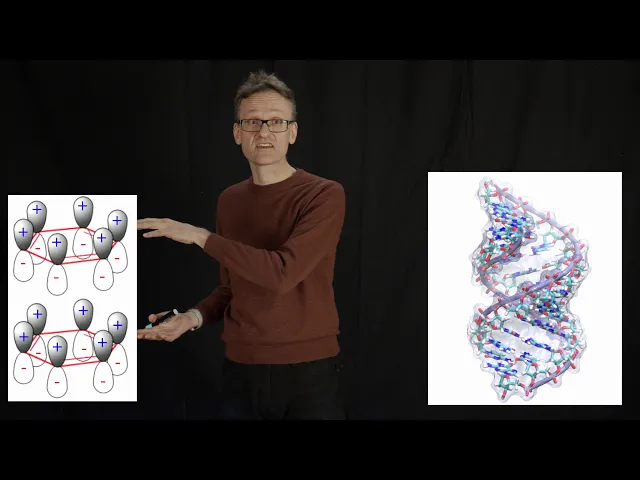
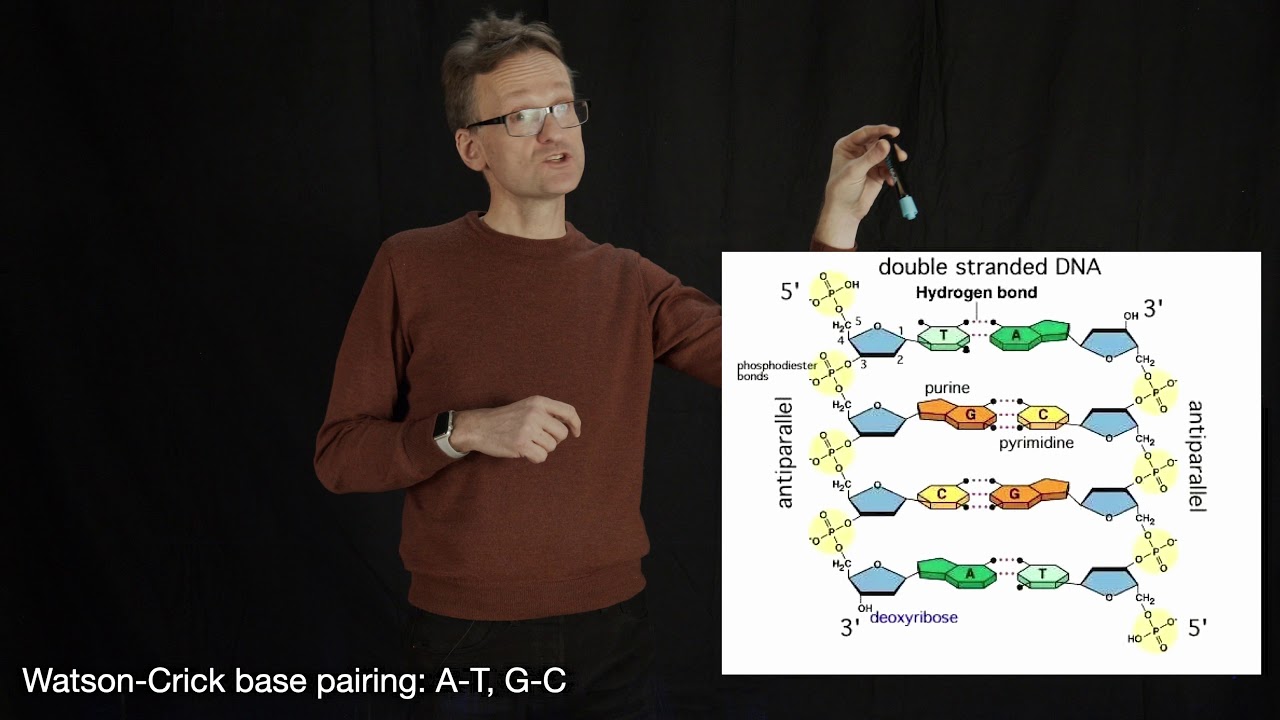
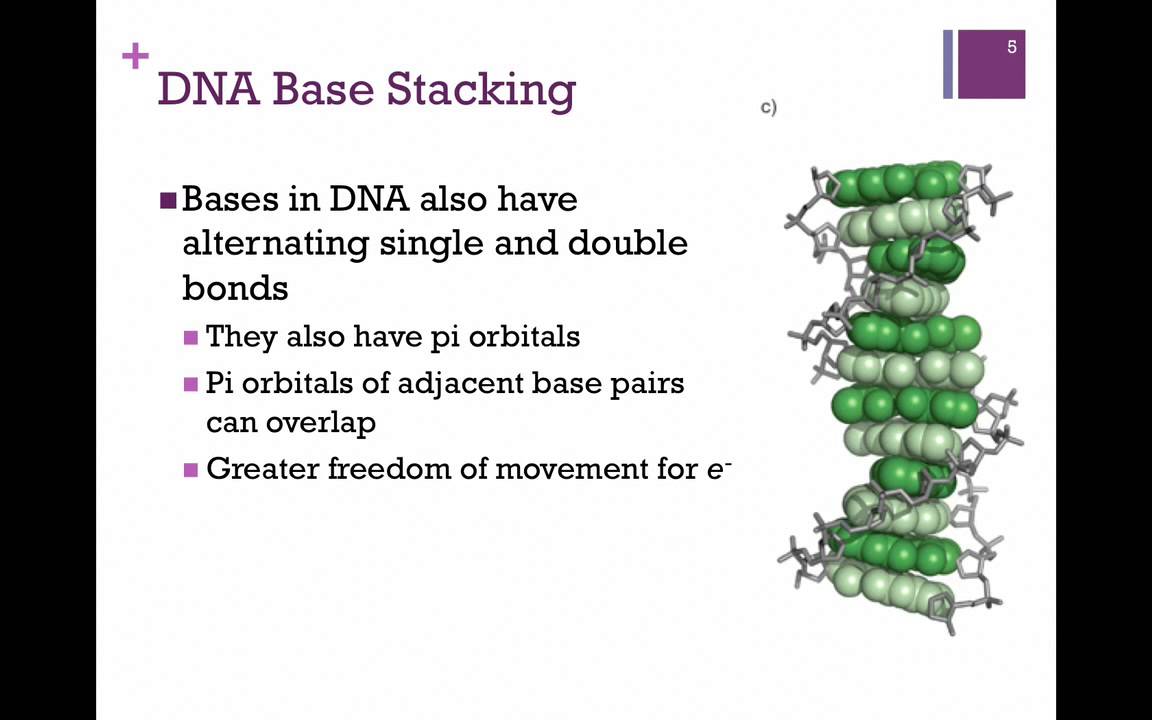
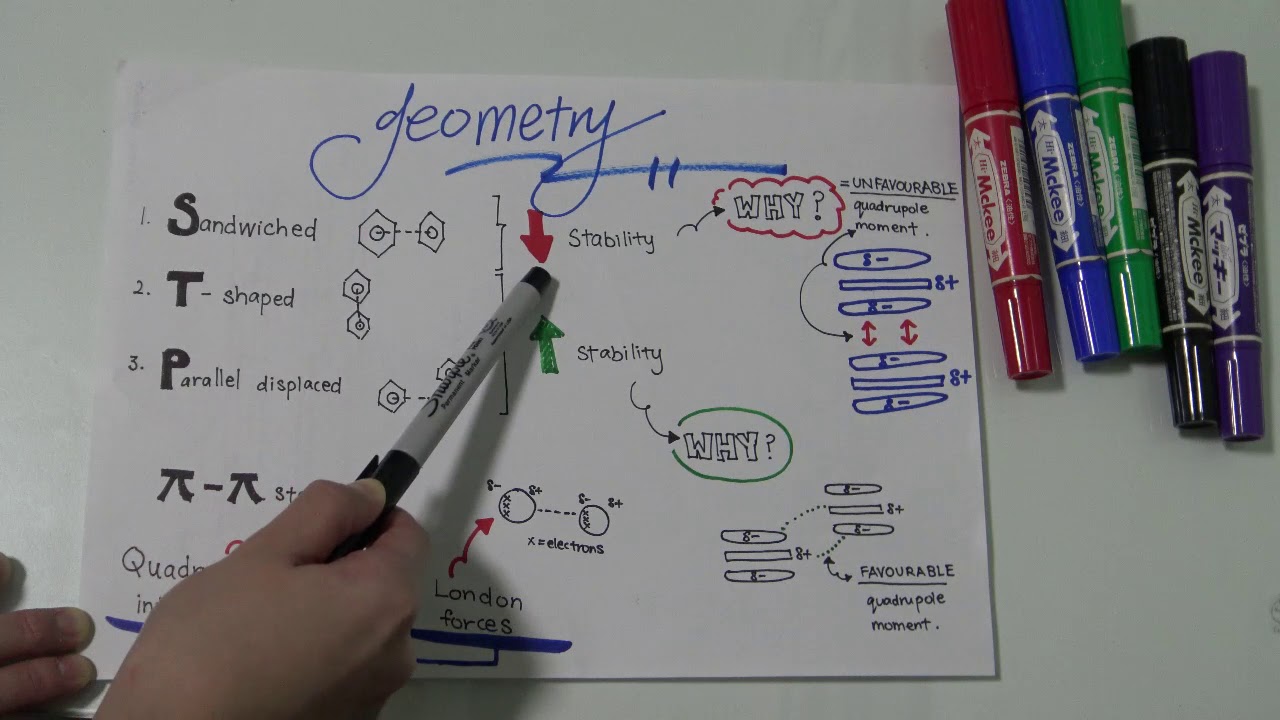
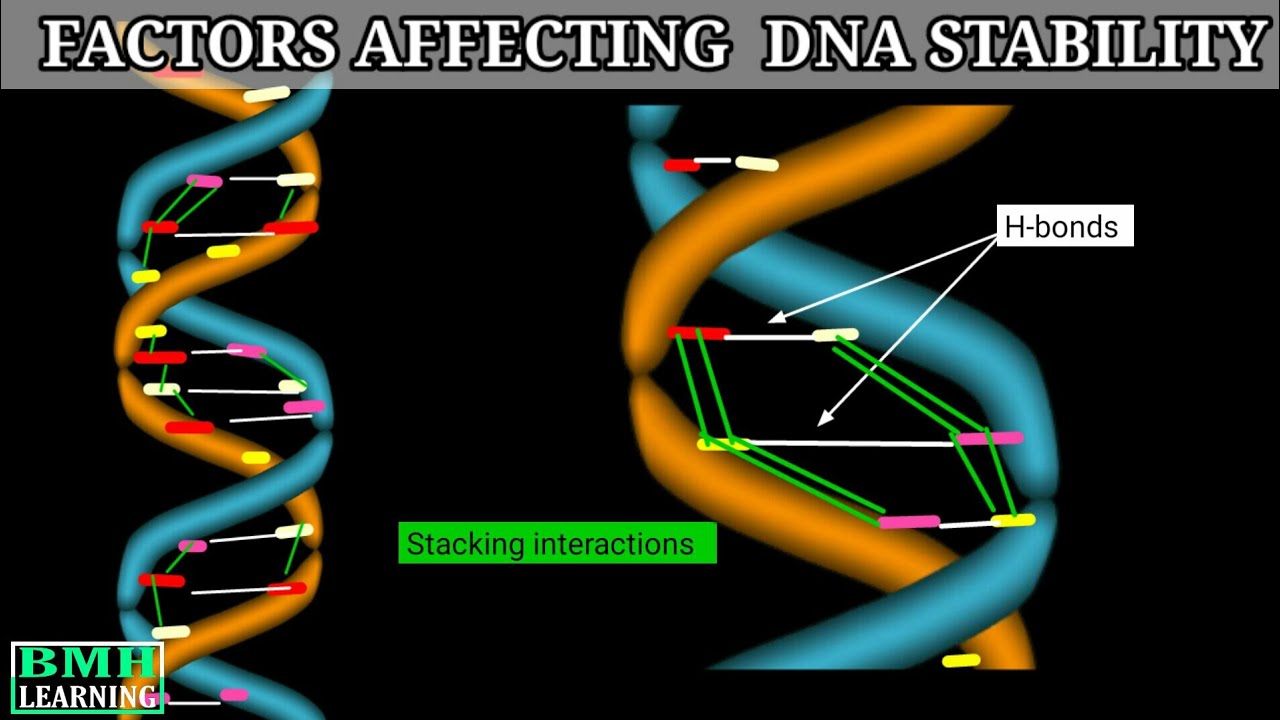
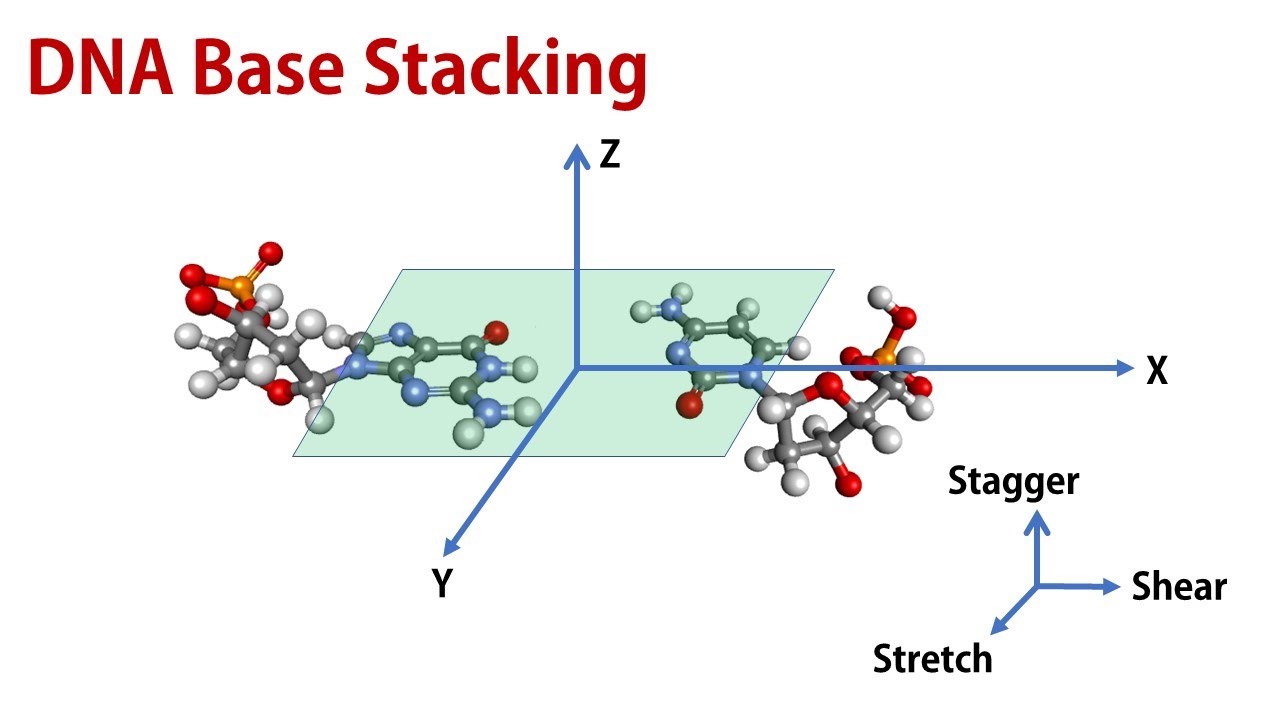
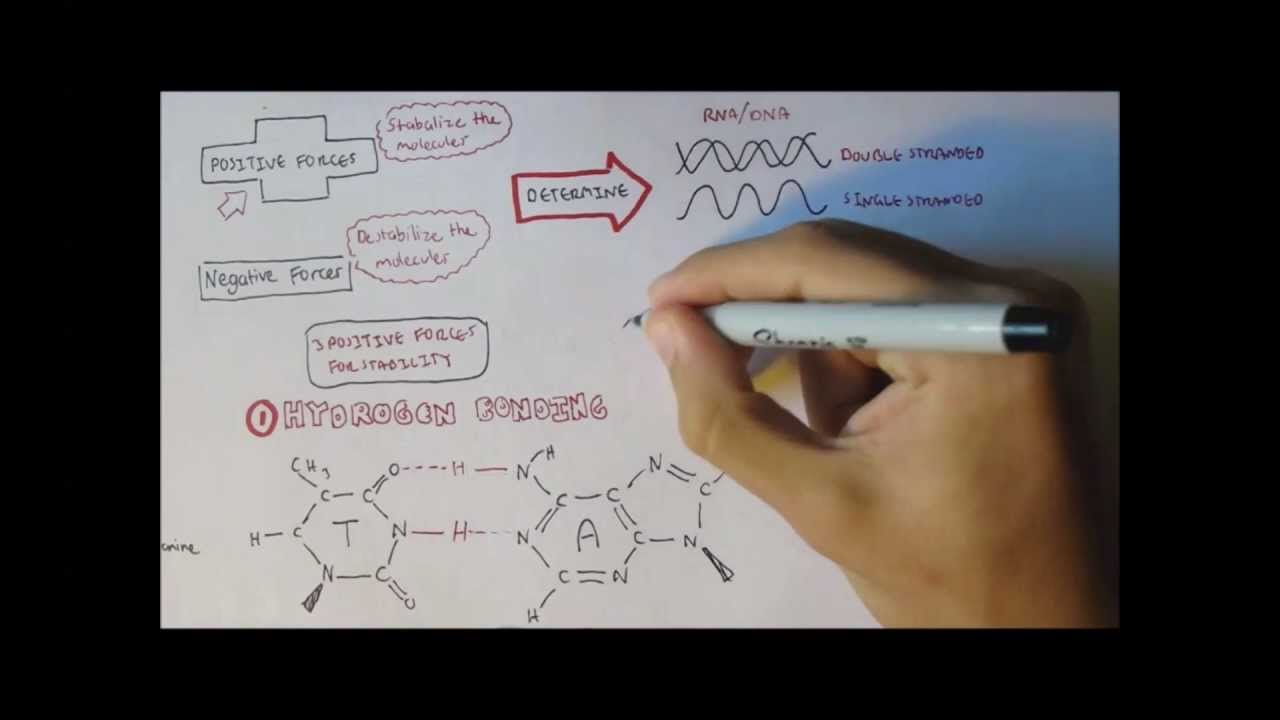
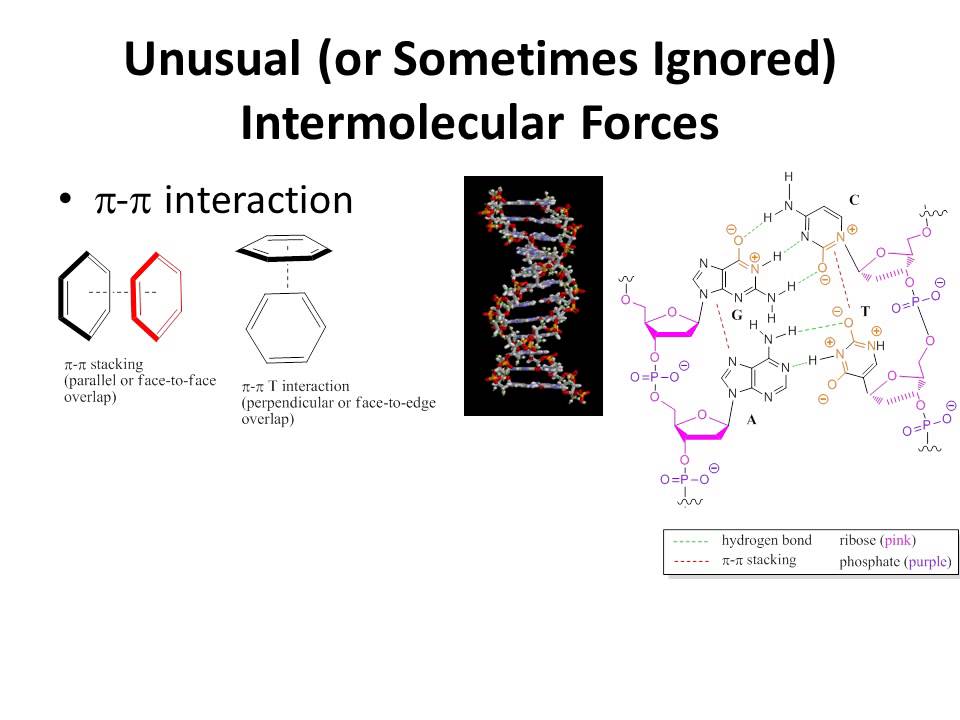
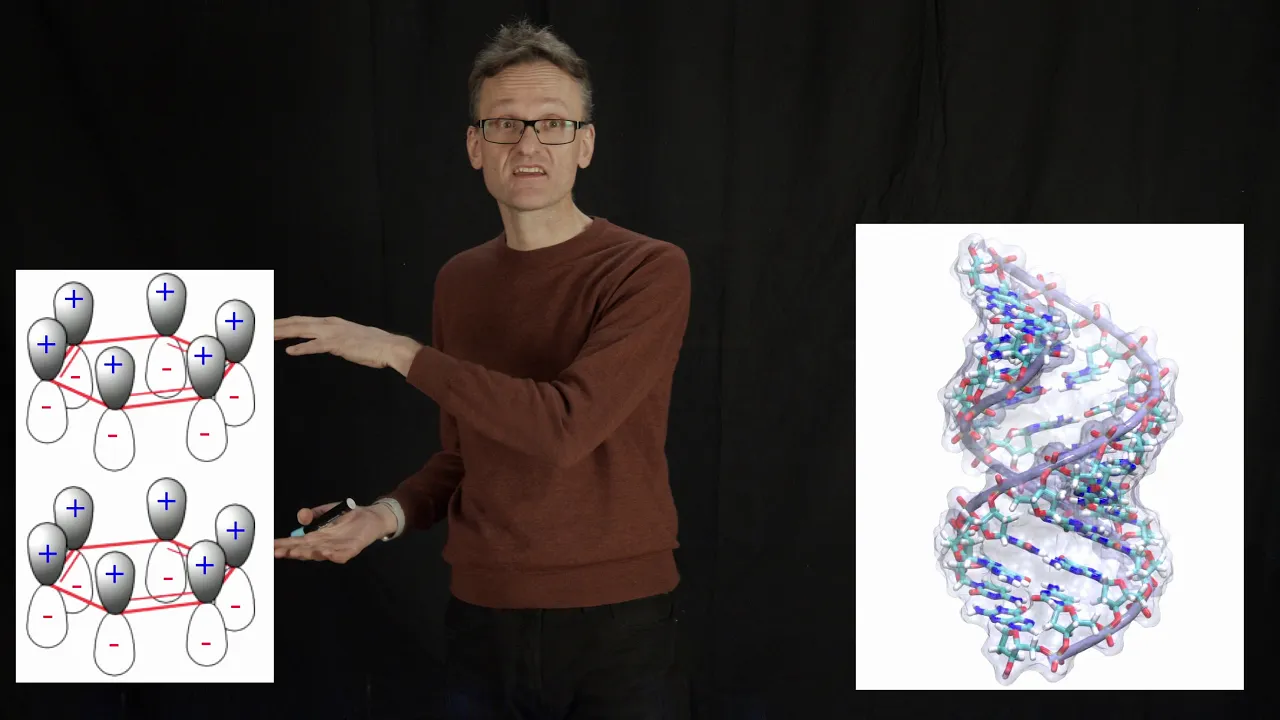
there is another factor with the watson and quick model that would stabilize dna so in this the dna basis you have here you have a bunch of five and six membered rings in the basis and if you know a little bit organic chemistry which i don't expect you to do these rings the way the electrons are divided up here if you represent those electrons in so-called orbitals that i'm going to talk a little bit about in lecture two some most of these electrons are going to be in the plane but some of them will be
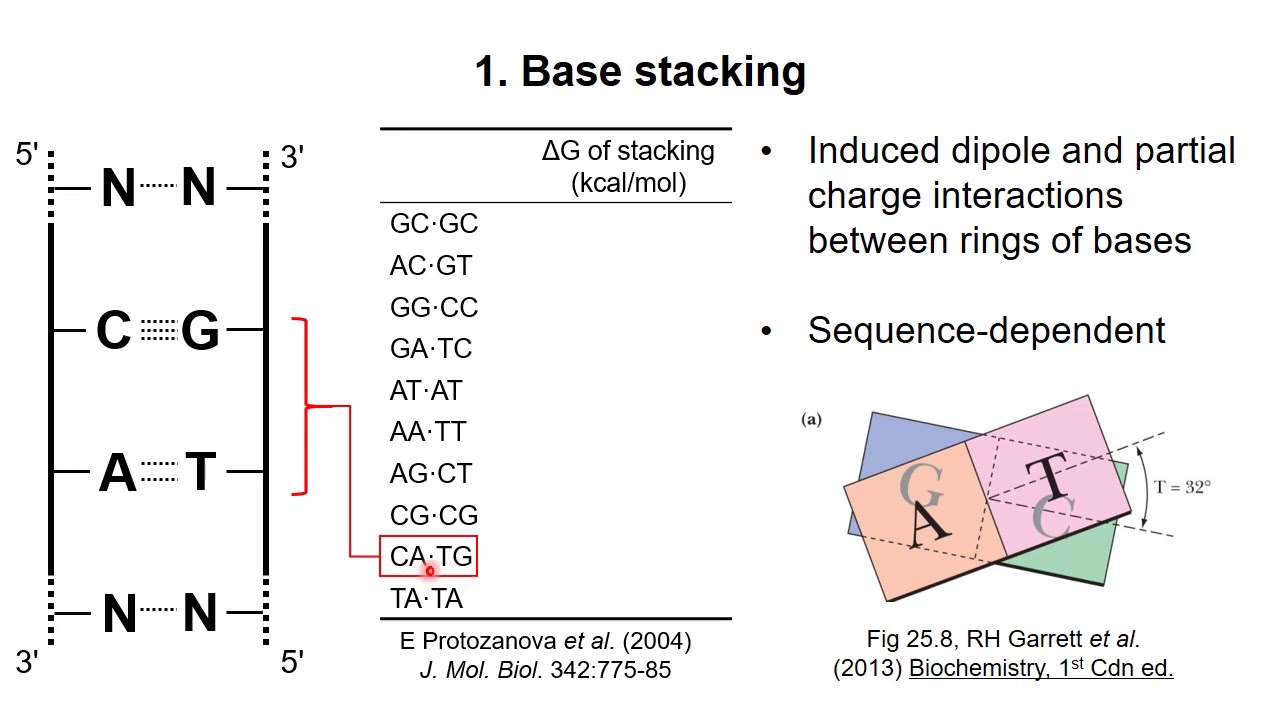
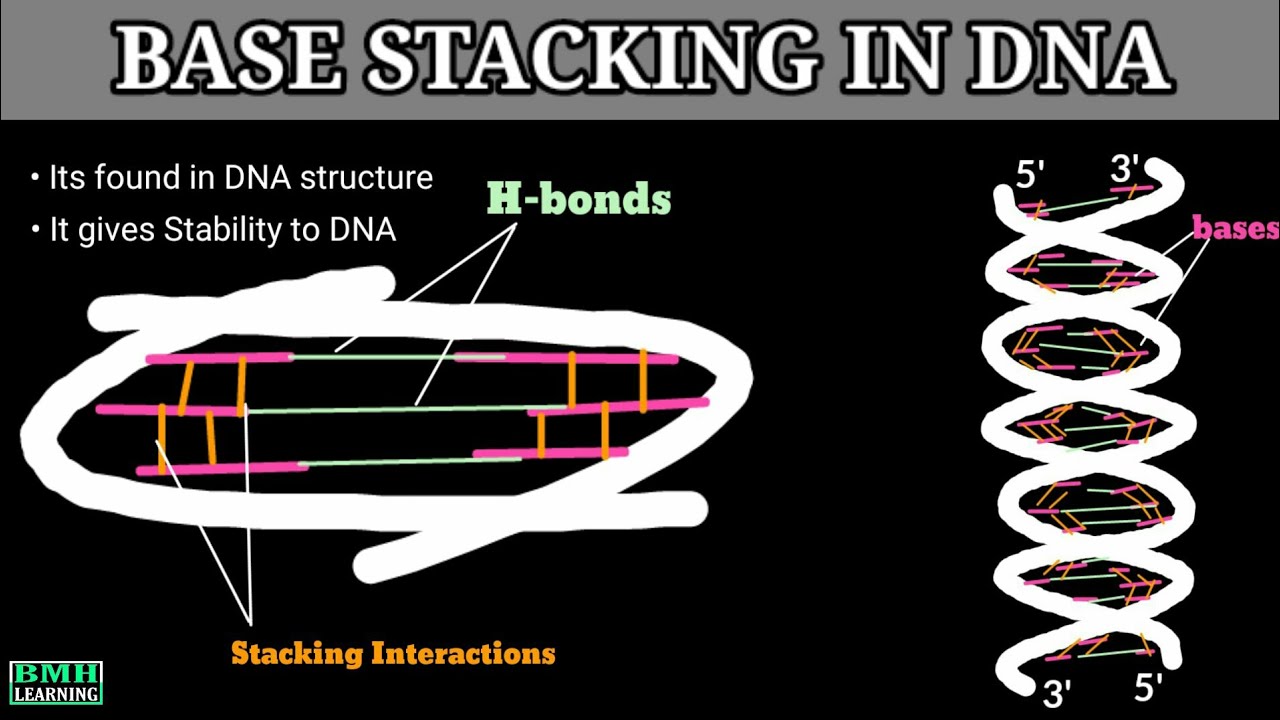
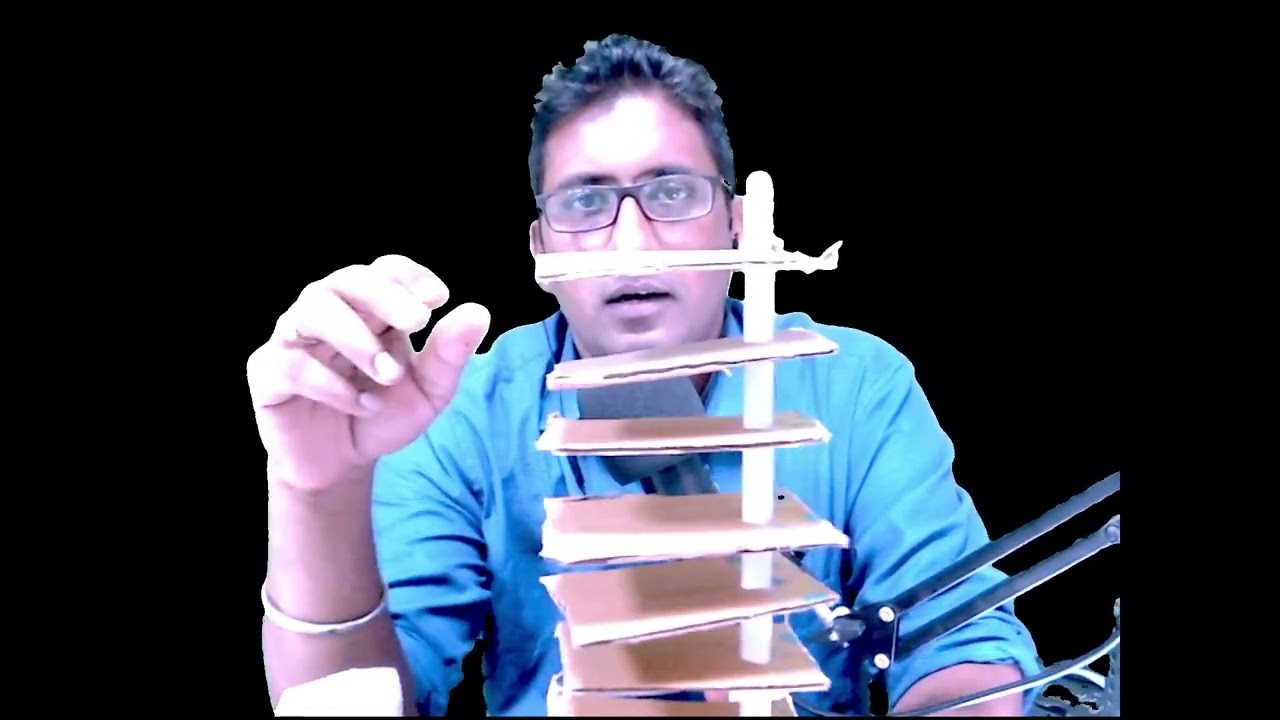
forced to move out of the plane and that's not going to need a plus and minus charge so these char these plus and minus signs they're really parities of the orbitals rather but if you take two such rings and put them next to each other it's going to turn out that this pairing means that the rings will stabilize each other because these so-called the pi electrons here are going to be interacting favorably with the next string and it's called pi stacking and this particular structure is full of pi stacking interactions so this is yet another
factor stabilizing the structure this tends to be the hallmark of a good model that you come up with one model and the more you think about it the more experiments confer your model that that too would be good and that too would be good and that too would be good you end up getting confirmation of the confirmation of the confirmation which is what watson and greek did i really encourage you to read their paper published in 1953 on the dna structure it's not the modern paper with 20 pages and 50 pages of supporting information it's
a beautiful short paper with a fantastic formulation at the end that i'm not going to reveal to you but we will talk about it in the discussion session if you're taking this class in stockholm