My mother said I would bloom even on the driest land. She was wrong. >> Maybe not.
Maybe you just haven't found the right soil yet. >> They said Apache girl was too wild, lonely rancher just gave her a horse and watched her ride into his life. The San Pedro River Valley stretched beneath Arizona's deep blue sky.
A land as barren and vast as Owen Garrett's own solitude. It had been 15 years since he left the bloody battlefields of the Civil War, searching for a place where silence could heal old wounds. But the silence had become like a thick blanket, enveloping him and turning him into a man of isolation.
Day by day he lived in a world of his own, where the only sounds were the wind whistling through cracks in the door, the crackle of firewood in the hearth, and the slow chewing of his horses at the watering trough. every day was the same, and that regularity was both a comfort and a burden. That afternoon, as the sun began to sink towards the west, painting the distant mountains in gold, Owen sat on the old wooden armchair on his porch, his hand loosely held a chip tin cup, the only remnant of a once bustling life.
He took a sip of the cold coffee, its bitter taste spreading in his mouth, like the flavor of memories he had tried to bury. Suddenly, an unfamiliar sound broke the quiet of the twilight. It was the clatter of hooves and the heavy creek of wooden wheels grinding on dry ground.
The noise grew closer, followed by a thick cloud of dust. Owen squinted, his eyes shifting from their usual indifference to a watchful alertness. A military wagon train bearing the insignia of Fort Lel stopped at his watering trough.
The soldiers, in their faded blue uniforms, their faces caked with dust and fatigue, seemed to have endured a long journey from Tucson to the San Carlos reservation. They quickly dismounted, watering their horses and filling their cantens. Amidst the clamor, Owen saw an image that made him pause.
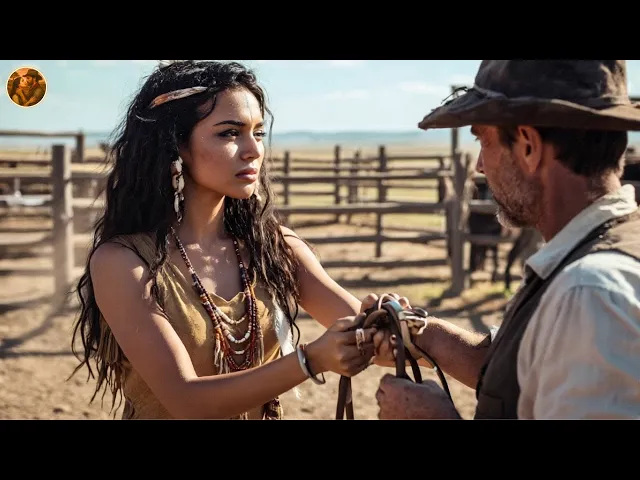
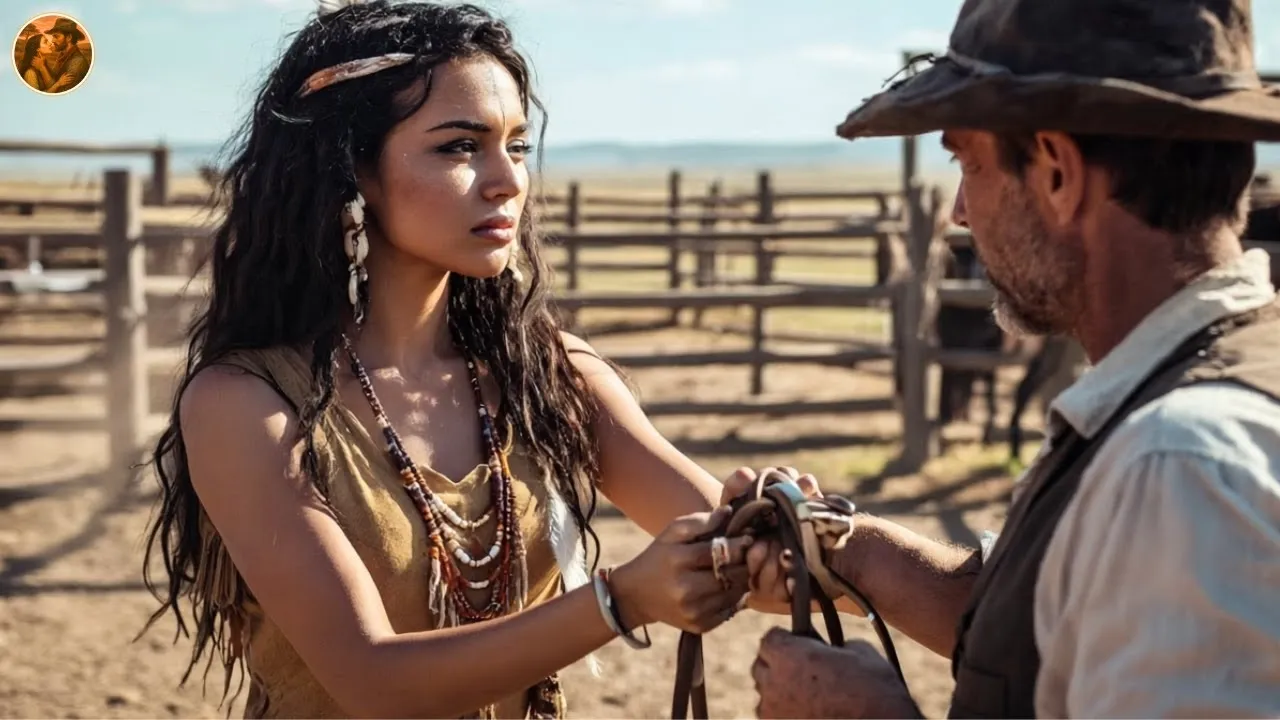
It was a young Apache woman sitting on the last wagon. Though her hands were bound with a coarse rope, she held her head high, her eyes unwavering as she stared straight ahead. A young, arrogant soldier, Private Carter, walked towards her.
With a sneer, he offered her a canteen of water with a careless flick of his wrist. Tisa, with a surprisingly calm expression, knelt down silently. She skillfully used her bound hands to cup water from the trough, but Carter suddenly kicked her, his boot striking her shoulder.
Tisa fell, her shoulder hitting the wooden trough hard. A small gasp escaped her lips, but she quickly rose, her eyes fixed on Carter with a resolve so strong that he took a step back, as if punished by her gaze. Owen had seen enough.
He had witnessed too much cruelty in the war, and he knew that injustice, no matter how small, could ignite a fire of indignation in his heart. His hand tightened on the coffee cup. The cold metal could not overpower the hot anger building inside him.
Captain Thatcher approached Owen, no longer with the stiff demeanor of an officer, but with the feigned friendliness of a man seeking an ally. He gave a slight nod, a cynical smile on his face, bearing the weariness and cunning of his years in the unforgiving West. "Buddy," he said, his voice low, as if sharing a secret.
"I see you're out here, too, making your own stand. You and I, we both know the price of survival in this land. Owen remained silent, his eyes still fixed on the watering trough.
He couldn't shake the image of Private Carter kicking Tisa. He looked at Thatcher and felt an immense distance. Thatcher didn't understand his solitude.
He only saw another white man, someone on his side. Thatcher continued, his voice filled with contempt as he glanced toward Tisa, who stood silently on the wagon. We're taking a demon back to where she belongs," he said, as if speaking of an animal.
"Those Apaches, they're not people. They're wild animals without souls. They only know how to eat, sleep, and kill.
We've been fighting them for years, and we know what they are. They have no respect, no compassion. We're doing what needs to be done to keep this world safe.
" Owen listened to those words, and a simmering rage built inside him. He had heard similar things countless times during the war. He had seen his own soldiers murder women and children simply because they were on the opposing side.
He knew that hatred and brutality weren't inherent to a people, but were a choice made by individuals. She's a pretty flower, isn't she? Thatcher asked, a malicious grin appearing on his face.
But my friend, those flowers often have poisonous thorns. She killed one of our soldiers, a young man, just because he looked at her. We won't let her escape punishment.
She'll pay for what she's done. Owen looked at Thatcher and felt a profound disgust. He knew Thatcher's story was just a lie, a way to justify his own cruelty.
He had seen too many lies like that on the battlefield. He knew that the truth was often twisted and hidden to serve the purpose of the powerful. Thatcher returned to his wagon and ordered his soldiers to move on.
Before he left, he looked at Owen one more time, his eyes filled with a threat. Don't forget what I told you, buddy. She's a snake.
And if you dare to help her, you'll get bitten, too. You and I, we're on the same side, and we have to protect each other. Owen just looked at him, saying nothing.
He had learned that in a world filled with brutality and inhumity, sometimes silence was the most potent weapon. It allowed him to reflect, to see the truth behind the lies. After the wagon train left, silence returned to the ranch.
But this time, it was no longer the familiar tranquility, but a haunting stillness. Owen walked to the watering trough. He saw a small blood stain on the wood and a torn piece of red cloth caught on a nearby bush.
The vibrant red cloth, a small detail full of desperation, was like a silent plea from a trampled flower. He looked down the road the wagons had taken. He saw a few barefoot tracks, small and quick, leading off the main road and towards a rugged canyon.
He realized she had escaped and might be injured. Owen went back inside, setting the empty cup on the table with a dull clink. He stared at his hands, hands that had once healed many soldiers, but had also killed many others.
His conscience would not allow him to ignore this injustice. He put on his cowboy hat, grabbed his rifle, and mounted his horse. He didn't know what he was looking for, only that he couldn't leave a mistreated woman alone in this harsh desert.
He was a man who had given up on saving anyone a long time ago. But the dust of one woman's resilience was stirring something deep within him. Owen rode towards the treacherous canyon known as Devil's Backbone.
The silence in Owen Garrett's log cabin was a familiar comfort, an invisible armor that protected him from the outside world. But tonight it was shattered by the hot, hurried breaths of a phantom from the desert. The breaths were soft, but they weighed more than a cannonball, pulling Owen back to memories he had tried to bury.
For more than 15 years, he had learned to live alone. But now a strange woman lay on his only bed, wrestling with a fever, and his solitude was no longer a choice. Owen had found her in Devil's Backbone Canyon after the sun had fully set.
She lay unconscious between two large rocks, her torn cloth shirt stained with blood and dust. The wound on her shoulder, exactly where Private Carter had kicked her, was severely infected, swollen, and burning. Owen gently picked her up, feeling the heat radiating from her body.
Her weight was less than he thought, but the life within her was still fierce. His calloused hands, which had once bandaged hundreds of wounded soldiers, now gently cradled a strange woman. When he got home, Owen carefully placed Tisa on his bed.
The fire in the hearth flickered, illuminating her face, her dark Apache skin, high cheekbones, and long curved eyelashes. Even in pain, she possessed a wild and resilient beauty, like a cactus flower blooming in the desert. Owen mixed a pus from the herbs he still used, a remedy he had learned from a battlefield nurse.
He gently cleaned her wound with warm water and a clean cloth, feeling her ragged breaths as he touched her shoulder. The scent of antiseptic mixed with the smell of sage and the earth clinging to her hair. A strange combination that evoked a sense of fragile safety.
When Tisa woke, she was immediately cautious and wary. Her dark eyes opened wide, scanning the room quickly, like a wounded bobcat looking for an escape. Her body language.
Even the slight clench of her injured hand was prepared for a fight. She said nothing. She didn't cry out or plead, but the weariness in her eyes said it all.
It was a stone wall built from pain and betrayal, protecting her from any feigned kindness. She lay on a soft bed, a sensation she hadn't known in a very long time. Under the thick quilt, her body still trembled uncontrollably, not from cold, but from tension.
She felt a throbbing pain from her shoulder, where a white soldier had kicked her. The wound wasn't just physical pain, but a reminder that this world had no compassion. She took a deep breath.
The scent of pinewood and burning logs filled the air, a warm and strange fragrance. She didn't know where she was, but she was sure of one thing. She couldn't trust anyone.
Owen sat down on the old chair next to the hearth, keeping his callous hands in her line of sight, a gesture that a man who had lived through war would understand. He didn't move, didn't say anything. He just sat there looking into the flickering flames.
He knew his silence could be a threat, but his words could be an even bigger one. He just wanted her to know he meant no harm. He had seen too much suspicion in the eyes of wounded soldiers, and he knew that trust could not be bought with words.
It had to be built with small actions, with patience and compassion. He gave her a polished tinned cup with a little warm water inside. He said only one word, "Drnk.
" His voice was low and warm, but devoid of any emotion. It sounded like an order, but it was also an invitation. Tisa looked at the cup, then at him.
Her eyes were filled with doubt. She had been deceived too many times, given things that weren't meant to be eaten, treated like an object. She couldn't trust that the cup only contained water.
Her heart pounded, a quick, strong beat like a caged bird. She wanted to run, to scream, but her body wouldn't allow it. The pain from her shoulder and the fever were tormenting her, making her weak and vulnerable.
She looked into Owen's eyes. His eyes held no desire or hatred, only weariness and a hint of sadness. It was a weariness she had seen in the old men of her tribe, those who had witnessed too much death.
Thirst won out. She felt her throat parched and a burning thirst spread throughout her body. She knew she needed water.
She gently reached out her hand, taking the cup. Her hand trembled, but she held the cup tightly. She felt the warmth of the cup transfer to her palm, a strange but comforting warmth.
She drank in small sips, her eyes never leaving Owen. The warm water flowed down her throat, soothing her burning thirst, and a feeling of relief spread through her body. After she finished the water, she set the cup down and looked straight at Owen.
"Why? " she asked, her voice hoarse, but clear, a single, short question, but one that contained immense complexity. It wasn't a question about why he had helped her.
It was a question about why he wasn't like the others. Why didn't he treat her like an animal? Why didn't he take advantage of her?
Why did he give her water without asking for anything in return? Owen had anticipated this question, but he hadn't prepared a perfect answer. He simply and honestly said, "Because I've seen the same thing too many times, and this time I didn't want to look away.
" That was their first real connection. The look in Tisa's eyes softened a little. She saw the sincerity in Owen's eyes, a sincerity she had long ceased to believe in.
She was used to lies, to empty promises. But the truth in his eyes was different. It wasn't a promise to give her a better life.
It was just a statement that he was tired of the brutality of this world. Owen gently said his name. Owen Garrett.
Tisa was silent for a moment, then replied, "My name is Tisa. " She added, her voice dropping to a whisper. "It means blossoming flower.
" Owen looked at her and saw a profound sadness in her eyes. She continued, "My grandmother said I would bloom even on the driest land. She was wrong.
" Owen sat quietly, thinking about her words. He saw a woman who had been ravaged by this world, who had lost faith in herself. But he also saw a fire within her that could not be extinguished.
"Maybe not," he replied, his voice low and full of certainty. Maybe you just haven't found the right soil yet. In that moment, Tisa looked at him and she felt an immense relief.
He didn't make promises, didn't offer flowery words. He simply offered a possibility, a fragile glimmer of hope, and that was all she needed. She knew she couldn't fully trust him.
But she also knew she had found a safe place, if only for a time. He had given her a chance, a chance to survive, to fight, to find her own right soil, and she wouldn't waste that chance. Owen looked at her, and he knew he had made a decision he couldn't take back.
He had opened the door of his house to a stranger, a woman who had been trampled by this entire world. But he also knew he had opened his heart to a healing he had not found in 15 years. He had found a reason to live, a reason to fight, a reason to believe.
and that reason was her a fragile hope and a new question about her past, about the stories she had yet to tell. Owen knew he had opened the door of his house to a stranger, but at the same time he had also opened his heart to a healing he had not found in 15 years. The morning light not only brought brightness, it also brought the sound of approaching hooves, a sound that would test the fragile truce forged in the night.
The hooves were distant at first, but gradually grew clearer and more insistent, like a war drum announcing an inevitable confrontation. Owen had woken before dawn, but Tisa was also awake. She sat by the hearth, silently drinking the coffee he had made for her.
The smell of coffee and corn cakes drifted through the air, creating a cozy, peaceful, but fleeting scene. In the silence of the morning, a subtle change had crept into Owen Garrett's log cabin, not with words, but with the quiet care between two strangers. Owen sat on the old chair, watching Tisa.
He saw how her fingers, though they had been bound and were still red, held the tin cup with a strange grace. It was not a sign of weakness, but the resilience and dignity of a woman who had faced much suffering. Her eyes, no longer holding the intense weariness of the previous night, were replaced with curiosity and a sense of calm, like a wounded bobcat that had found a safe place to lick its wounds.
He felt a subtle change in his house. This house, which had once been an empty box of solitude, now had a presence, a life. The emptiness had given way to a new feeling, a warmth he hadn't felt in 15 years.
He didn't know what that feeling was, but he knew it wasn't unpleasant. They didn't talk much, but the small actions said it all. When he woke up, he saw his shirt neatly placed on the chair next to the hearth.
He realized it was the shirt he had given her to cover the tears in her clothes. It was a caring gesture, a silent thank you. He put it on and felt a fragile connection to her.
Later, when he went outside to check on the horses, he saw that she had picked up a few pieces of dry firewood and put them in the hearth without him having to say a word. It was a silent collaboration, a non-verbal commitment. She didn't demand anything.
She simply did what she saw was necessary to keep the house warm. She not only brought life to the house, but also warmth to his heart. Owen stepped out onto the porch and he saw her sitting on the old wooden chair, starting to weave a small bag from the wild grasses she had found.
Her fingers moved deafly and quickly, creating a small, beautiful bag. Owen sat down beside her, and he felt the warmth of her body. He listened to the wind blowing through the mountains and her soft voice humming a song in Apache.
It was a sad melody, but it was also full of resilience and pride. At noon, Tisa made lunch for Owen. It was a vegetable soup with a little dried meat and the herbs she had found in the desert.
The taste of the soup was very different from the food he had ever eaten. It wasn't just a meal. It was a story.
It was the story of a woman who had survived in the desert who had found the smallest things to sustain life. Owen ate the soup, and he felt a deep connection to her. That evening, as the sun set, Owen sat by the hearth, watching Tisa.
She was sitting by the fire, mending his shirt. She had sewn up the tears, and his shirt looked new again. He looked at her, and he realized that she was not just a woman who had come and cleaned up his life, but also a woman who had brought him a sense of healing.
She had healed the old wounds in his heart, the wounds he had tried to hide for 15 years. Owen stood up and walked toward her. He gently placed his hand on her shoulder and she looked up at him.
Her eyes were full of trust and love. "Thank you, Tisa," he said, his voice deep and emotional. "Thank you for coming here.
Thank you for giving me a sense of life. " Tisa just smiled and she placed her hand on his. "We have overcome everything together, Owen Garrett," she said.
"And we will continue to overcome everything together. " In that moment, Owen realized that he was no longer alone. He had a woman, a friend, a companion, and he knew that he would do everything to protect her, to protect their home, to protect their love.
The fire in the hearth flickered, lighting up the room, and Owen knew that his house was no longer empty. It was filled with love, with warmth, and with life. The sound of hooves grew closer, forcing them to face reality.
Owen stood up, looking out the window. A cloud of dust was rising from the main road. He recognized Captain Thatcher and his men returning to look for Tisa.
He turned to Tisa and the fear in her eyes had returned. But this time it was not a passive fear. It was a preparation for a fight.
"They're coming," Owen said, his voice low and calm. "They'll ask about you," Tisa only nodded, but her eyes said it all. She understood that her presence here was a threat not only to her but also to Owen.
She knew that if they found her, they would not hesitate to take her and might harm Owen for helping a fugitive. Owen stepped onto the porch alone, closing the door behind him. He stood there with his usual calm expression, waiting for Thatcher and his men.
Captain Thatcher dismounted his horse, his eyes sweeping over Owen, looking directly at the cabin door. His eyes were full of suspicion. Mr Garrett, he said, his tone sharp.
Seen an Apache woman around here? A fugitive? Owen replied slowly, as if thinking, no one.
I've been here all day. It's just me and my horses. Thatcher didn't believe him.
We saw her tracks leading this way. Maybe she found her way back home and is hiding here. Owen maintained his composure, but a battle raged inside him.
He knew that silence wouldn't be enough. He needed a lie. a big convincing lie.
"I don't know what woman you're talking about," Owen said, his voice full of certainty, but my wife is in the house. "She just made coffee for me. " "That lie, though a simple one, carried an incredible weight.
" Thatcher smelled the coffee from inside the house, and his eyes scanned Owen, searching for a sign of deception, but Owen stood there with a calm face, and his lie became a truth. Thatcher, though suspicious, had no evidence to incriminate Owen. He could only mutter, "Be careful, Garrett.
She's a murderer, a snake. " After the soldiers left, silence returned. This time, it was not a peaceful silence, but a tense stillness.
Owen went back inside, and Tisa had heard everything. She stood in the middle of the room, looking at him. "They will kill me," she said, her voice small but clear.
And if they find me here, they will harm you, too. Owen looked at her at the worry in her eyes. And he realized one thing.
He was no longer a lonely man. He had told a lie, and now he had to live with it. There was no other choice.
He had to protect her. The army is looking for a runaway Apache prisoner, Owen said, his voice resolute. They're not looking for a rancher's wife.
That offer, though a desperate attempt to save her, was a turning point, a complete change in both their lives. Tisa was silent for a long moment, contemplating his offer. She had been sold, treated like an object, but now a man wanted to marry her to protect her.
Her life had been a series of injustices and pain, but now there was a glimmer of hope. The chapter ended with her question in a calm, serious tone. Do you know what it means to marry an Apache woman?
Tisa's question hung in the air, a weight heavier than the silence of the desert night. The candle light on the kitchen table flickered, casting long shadows on the wooden walls. Owen sat across from her, his gaze fixed on Tisa without a hint of avoidance.
It wasn't a question about customs, but a question about trust. A question that challenged him to step out of his shell into a world he had never dared to consider. Tisa took a deep breath, her voice calm and slow as if she were telling an ancient story.
Marriage in our tradition is not just the connection of two individuals. It is an alliance, a thread that binds two families together, binding two tribes together. It carries obligations that last for generations.
My parents, my grandparents, all were part of that oath. Do you understand that? Owen listened to every word, not missing a single one.
He saw the seriousness in her eyes, the semnity in her voice. He understood that she wasn't just talking about a wedding, but about a life, about a culture she had to carry. He was used to living alone, but now he had to face a truth.
To save her, he had to become a part of her world. I understand, he said, his voice deep and certain. I understand that this is not just a lie to survive.
This is a commitment. Then he stood up and walked out onto the porch. Tisa followed him.
They stood there under the starry sky of the San Pedro River Valley. The bright moonlight illuminated every detail of Tisa's face, making her wild beauty shimmer. The chirping of crickets, the gentle breeze blowing through the mountains, all made the moment sacred.
Owen turned to Tisa, taking her hand, a simple but meaningful gesture. For the first time in 15 years, he felt the warmth of another person's hand. He looked straight into her eyes and began to speak, his voice no longer his usual quiet self, but full of sincerity and determination.
Tisa, I can't promise you an easy life. I don't have a tribe to protect you. I don't have a family to give you stability.
But I have this land. I have these hands. I promise to protect you, to protect this house.
I promise to respect your customs. And I will try to understand your world. I promise to give you a place where you belong.
I don't know if that's an adequate oath, but it's all I have. Tisa listened to him, her eyes welling up, but not shedding a tear. She felt the sincerity in his every word.
She had been sold like an object, treated like a prisoner. But now a man wanted to dedicate his life to protecting her. She smiled, a smile as radiant as the moon.
She gently replied, her voice also full of sincerity. Oh, and Garrett, you have given me a precious oath. Now I will give you my oath.
She said a few words in Apache, an ancient oath reserved only for those in the tribe. Owen didn't understand what she said. But he felt the power in her voice, the connection she was trying to create.
Then she looked at him and said in English, "I promise to be your companion, your ally. I will bring the strength of my people into our lives. I will be the one to heal your old wounds.
We will build a home, a life together, and I will never leave you. " The two of them stood there holding hands under the stars. There were no flowery words, no elaborate rituals, just a mutual understanding and trust.
Their feelings for each other no longer constituted a lonely existence, but became a solid alliance. Late at night, Tisa fell asleep on Owen's bed. Owen lay on the porch, listening to her sing a song in Apache.
It was a sad melody, but full of hope. He listened, and for the first time in many years, he realized that his house was no longer empty. His house had a woman, and a new story had begun.
The next morning, Owen woke just as the sun rose. The soft yellow light from the east filled the porch, waking the dust moes dancing in the air. He sat up, stretched, feeling the biting cold of the night give way to the warmth of the new day.
But something else had woken him, a scent he hadn't smelled in a very long time. It wasn't the smell of roasted coffee or his own smoked meat, but the smell of toasted corn flour, of stewed beans, and a strange pungent spice mixed with the lingering scent of sage. Owen walked into the house, and he froze.
His small log cabin, which had once been an empty box of solitude, was now filled with warmth and life. Everything seemed to have changed. The wooden table, which was always covered in dust, was now clean.
On the table, a steaming plate of hot corn cakes and a bowl of bean stew, along with a polished tin cup, reflected the light from outside. Tisa was sitting by the hearth, blowing air onto a piece of wood. The flickering flames highlighting the resilient and delicate features of her face.
She wore Owen's shirt, which was baggy, but somehow accentuated her simple, wild beauty. Tisa looked at him and a gentle smile bloomed on her lips. "It was not a radiant smile, but a smile of peace and acceptance.
"Good morning, Owen Garrett," she said, her voice still a little horse, but full of warmth. "I made you breakfast. " Owen sat down in the chair across from her, feeling a rush of awkwardness.
He had lived alone for so long that he had forgotten what it felt like to have someone else take care of him. He picked up the cup, feeling its warmth in his palm. He tasted her bean stew and a spicy, strange but delicious flavor spread in his mouth.
It was a taste of the desert, of spices he had never known. "Thank you," he said, his voice still a little hesitant, but full of sincerity. Tisa only nodded, and they ate in silence.
But it was no longer the silence of solitude, but the silence of understanding and acceptance. Owen watched her, the way she ate, the way she moved, and he realized that her presence had changed everything. She was not just a woman who had found refuge, but a woman who had brought life to a place that had been dead.
After breakfast, Tisa began to clean the house. She picked up Owen's old rags and started wiping everything down. She cleaned the dust from the bookshelves, arranged the old books that Owen hadn't read in a long time.
She cleaned the windows so the sunlight could stream into the house more clearly. She washed the dirty tin cups and arranged them neatly on the shelf. Everything in Owen's house, which had once been a chaotic mess of solitude, was now neat and clean.
Owen looked at her and he felt a sense of astonishment. He was used to his own dirty and messy life, and now he was witnessing the miraculous transformation of a woman who had come and cleaned up his life. Tisa didn't just clean the house.
She also cleaned the burdens in his heart. She brought him a sense of order and peace, something he hadn't found in 15 years. When Tisa finished cleaning, she went out onto the porch.
She looked toward the distant mountains, which had once been her home. Her eyes were full of nostalgia, but also full of hope. She sat down and began to weave a small bag from the wild grasses she had found.
Her fingers moved deafly and quickly, creating a small, beautiful bag. Owen sat beside her, and he felt the warmth of her body. He listened to the wind blowing through the mountains and her soft voice humming a song in Apache.
It was a sad melody, but it was also full of resilience and pride. At noon, Talisa made lunch for Owen. It was a vegetable soup with a little dried meat and the herbs she had found in the desert.
The taste of the soup was very different from the food he had ever eaten. It wasn't just a meal. It was a story.
It was the story of a woman who had survived in the desert, who had found the smallest things to sustain life. Owen ate the soup, and he felt a deep connection to her. That evening, as the sun set, Owen sat by the hearth, watching Tisa.
She was sitting by the fire, mending his shirt. She had sewn up the tears, and his shirt looked new again. He looked at her and he realized that she was not just a woman who had come and cleaned up his life, but also a woman who had brought him a sense of healing.
She had healed the old wounds in his heart, the wounds he had tried to hide for 15 years. Owen stood up and walked toward her. He gently placed his hand on her shoulder and she looked up at him.
Her eyes were full of trust and love. "Thank you, Tisa," he said, his voice deep and emotional. Thank you for coming here.
Thank you for giving me a sense of life. Tisa just smiled and she placed her hand on his. We have overcome everything together, Owen Garrett, she said, and we will continue to overcome everything together.
In that moment, Owen realized that he was no longer alone. He had a woman, a friend, a companion, and he knew that he would do everything to protect her, to protect their home, to protect their love. The fire in the hearth flickered, lighting up the room, and Owen knew that his house was no longer empty.
It was filled with love, with warmth, and with life. The morning light painted the mountains in yellow and pink, also revealing the new challenges of a life built on a desperate vow. More than a week had passed since the night Owen and Tisa made their promises to each other.
Owen's small log cabin was no longer a place of solitude. It had become a home, however fragile. In the morning, the smell of coffee and corn cakes was no longer just for Owen.
Tisa woke up, made coffee for him, and that aroma had become a part of their new life. Owen, for the first time in many years, no longer felt an emptiness when starting a new day. He watched her, seeing how she moved gracefully and powerfully in the small house.
Realizing her wild beauty could not be hidden by simple clothes, they worked together on the ranch. Tisa, with the special sensitivity of an Apache, showed a miraculous ability with animals. Owen's horses, accustomed to his coldness, now seemed friendly toward her.
She could whisper to them, stroke them, and they responded to her with a strange trust. They worked in silence, but it was not the silence of solitude, but the silence of understanding. Their small conversations, even simple sentences, were enough to strengthen their emotional bond.
One morning, as they were mending a fence together, the sound of a wagon echoed again. Owen and Tisa looked at each other. A look of worry briefly crossed Tisa's face, but she quickly regained her composure.
Owen placed a hand on her shoulder, a gentle but firm gesture. Don't worry, he said. I'll handle this.
It was the promise of a husband, a protector. An old wagon stopped in front of the house. Stepping down from the wagon was Jedadia Stone, a traitor Owen had met a few times in town.
He was a cunning man, his eyes always glinting with calculation. He stopped to ask for directions, but his eyes were fixed on Tisa, who stood behind Owen. "Well, Garrett," Jedodiah said, his voice full of surprise.
"I didn't know you had a woman. " "That's right," Owen replied. his voice firm.
"This is my wife, Tisa. " Jedodiah grinned, a smile completely devoid of sincerity. He looked at Tisa, and his eyes showed a mix of desire and contempt.
I once saw a woman just like her near the San Carlos area. Dark hair, dark skin, looked like an Apache. She was a runaway prisoner, and there's a pretty big bounty on her.
Tisa's heart pounded, but she kept her face calm. the facade she had so painstakingly built to hide her utter terror. Standing in front of her, Owen Garrett was like an unyielding fortress.
He didn't just block Jedodiah's view, he blocked every danger. When Owen uttered his cold denial, "That's not my wife. " Tisa felt an invisible shield of protection, a promise that didn't need to be spoken.
She knew that in a world of bounty hunters and soldiers, a lone Apache woman wouldn't stand a chance of survival. Jedodia Stone shook his head, his grin growing wider, a sneer of contempt and malice. He looked at Tisa, his eyes showing a mix of lust and scorn.
Be careful, Garrett. That girl might be a beautiful flower, but beautiful flowers often have poisonous thorns. He said it cryptically, but the meaning was all too clear.
He didn't just want to warn Owen. He wanted to hint that he had seen through the lie. He turned back to his wagon, but his eyes never left Tisa.
Like a hawk circling its prey, he wanted her to know he wouldn't give up and he would be back. When Jedodiah was gone, the silence returned. But this time, it wasn't the silence of peace, but the silence of an approaching storm.
Owen turned to look at Tisa. She had heard everything. She understood that the threat came not only from the army, but also from bounty hunters and anyone who might recognize her.
Their new life, though it had begun with so much hope, now faced a new danger. Owen and Tisa stood together, looking down the road Jedodiah had taken. They both knew they were no longer alone.
They had each other, but that also meant they had to face every danger together.