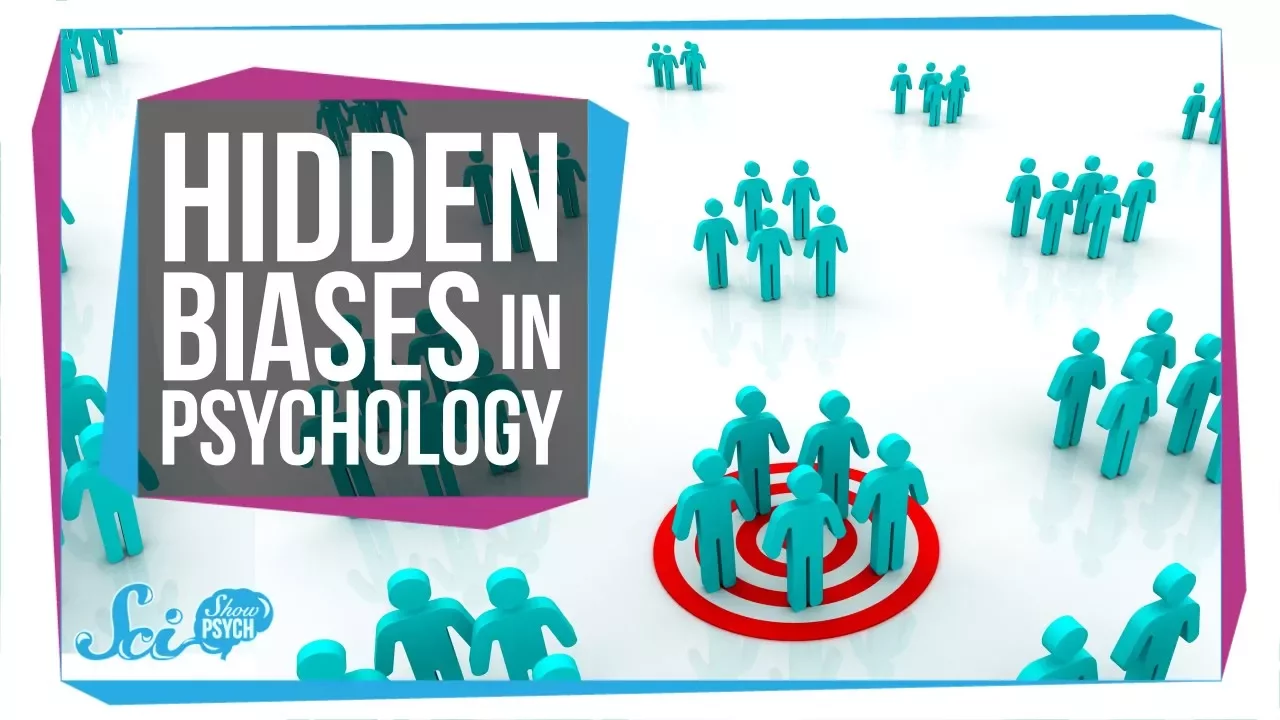
[♪ INTRO] Psychology is the study of human behavior and the mind, so it’s easy to imagine that researchers are trying to learn universal truths. But humans come in a lot of different flavors. So we can’t make sweeping predictions about all of humanity based on the limited populations that are usually used in psychology research.
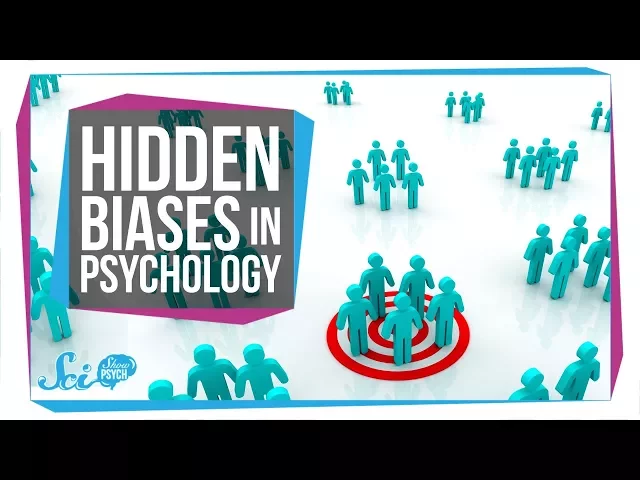
In fact, many subjects may actually be psychological outliers, so we should be careful about jumping to conclusions about what makes humans tick. See, most research subjects in behavioral sciences, which include psychology, economics, and cognitive science, belong to what’s called the WEIRD population. Coined by researchers in 2010, WEIRD is an acronym that stands for Western, educated, industrialized, rich, and democratic.
These subgroups are more likely to have the resources and educational systems to support academic research, but it means that the studies that they publish can be really skewed. For example, in 2008, a study of more than 4,000 articles published over 20 years found that around 95% of behavioral science research subjects come from the U. S.
, Europe, and English-speaking countries like Australia. But these countries only make up about 12% of the world’s population! The same analysis found that 68% of subjects are from the United States, and more than two-thirds of American psychology research subjects are undergraduate students.
So another review in 2010 looked at dozens of studies in the behavioral sciences and concluded something that seems kind of… obvious. But it’s worth saying: American college students aren’t representative of all humans. They’re actually a pretty unusual subgroup.
So they were given the acronym WEIRD. Like, take the W in WEIRD. As one example, research has found that Western subjects tend to report having higher self-esteem than many non-Western subjects.
Some scientists have pointed out that this might just reflect how different cultures value things like modesty. This could affect how people describe themselves but not how they actually feel. And even within the same country or region, people aren’t the same.
Just looking at a “typical” American psychology subject, an undergrad student, compared to most Americans reveals some differences in self-perception, ethics, and economic decision making. For instance, researchers compared a bunch of studies on the Ultimatum Game, which is a financial sharing and decision-making task that was designed for psychology and economics experiments. Specifically, they were looking at the “E” in the WEIRD acronym, to understand how people in college made money decisions in this game, and whether those results could be generalized to all people.
And they found that undergrads are more likely to offer less money to another person compared to American adults who aren’t currently, and may have never been, college students. So even just within the U. S.
economy, it’s important to recognize that the typical research subject’s behavior doesn’t really tell you how the typical person manages money. And education is just part of society. Society-wide traits like industrialization, which is basically a shift from growing food to making goods, has some pretty dramatic effects on psychology, too.
For example, a number of studies have found that people who speak English and other Indo-European languages tend to use words meaning “left” or “right” to describe where things are. In other words, we use egocentric terms, and view objects relative to where we are. But it turns out that’s a pretty unusual way to think of things.
People in smaller-scale societies tend to speak languages that favor allocentric terms, like “behind” or “above,” or even cardinal directions like “north” or “south. ” This anchors objects in relation to other things or the environment. This is important when it comes to behavioral research, because it suggests that this way of thinking is cultural.
It’s a result of the language we speak and the environment we grew up in. And all this doesn’t even begin to cover differences in wealth or political structure, either. But the point is: researching outside of the WEIRD bubble is really important because it lets psychologists puzzle out things that do seem to be universally human.
Like, most people seem to recognize the same facial expressions meaning specific emotions, like anger and happiness. And we’re pretty sure that most people perceive the same colors, even though the amount of names for colors might vary between languages. Now, this isn’t to say that WEIRD studies, and all the psychology research done so far, isn’t valuable.
It is! It’s just important to recognize its limitations. And if we want to learn the most we can about humans, we need to study more different kinds of humans.
Because, again, different flavors. Thanks for watching this episode of SciShow Psych! If you want to dive into another example of how our brains might be influenced by our cultures, check out our video about an optical illusion that doesn’t work for everyone.