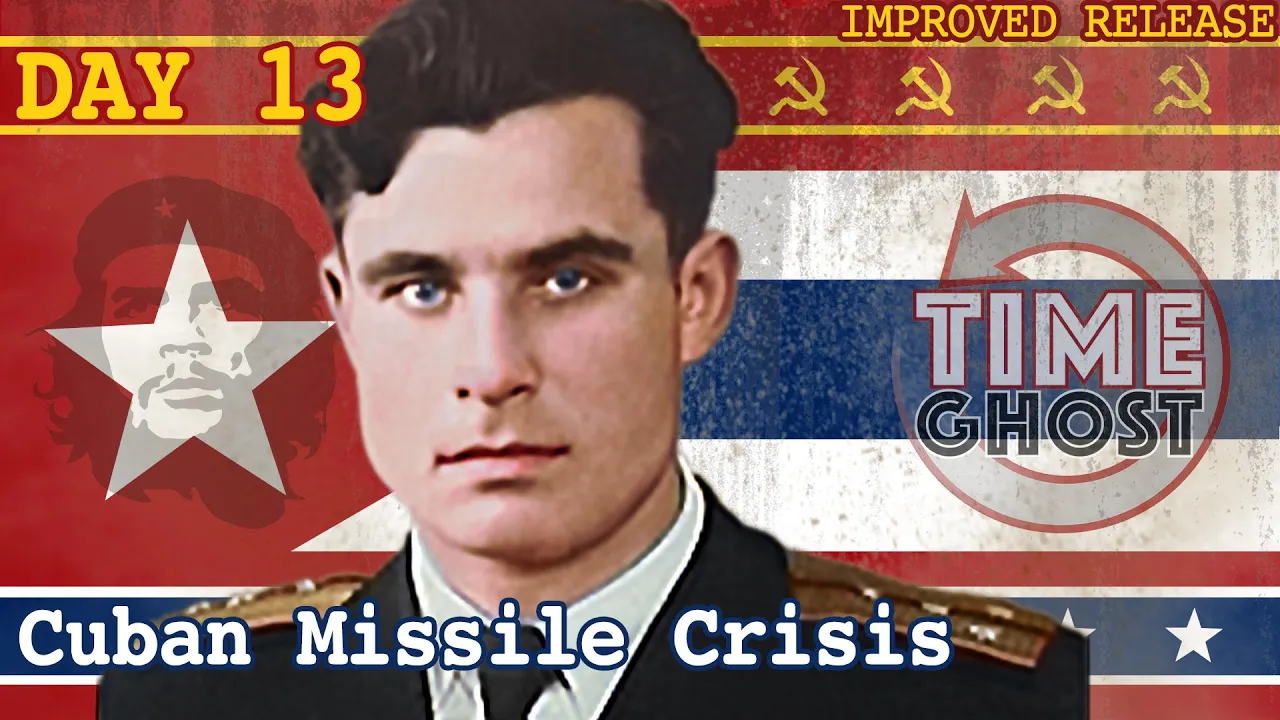
Day 13 It would suck if you hosted a party together with a friend at your place and only the friends of your friend show up. So you end up more like a servant in your home. Then your friend and your friend’s friends make real mess and break all your stuff.
So all you get out of the whole thing is to clean up the mess and to buy new stuff. Now you’re really pissed, and who could blame you for at least wanting to keep the leftover booze? And who could blame you for losing it when your friend walks off with that too.
Fidel Castro’s role in The Cuban Missile Crisis is pretty much being that host. This is TimeGhost with the Cuban Missile Crisis, I’m Indy Neidell Yesterday, things escalated quickly. The US lost track of one U-2 spy plane over Russia.
The Soviets shot down another one over Cuba. Finally, both sides realized what madness they were about to unleash on humanity and hit the brakes. Soviet leader Nikita Khrushchev offered to take his missiles home from Cuba if the US would not invade Cuba.
And US President John F. Kennedy made a secret promise to take his nuclear missiles home from Turkey. As Washington goes to sleep and as the sun rises in Moscow on Sunday October 28th, 1962, the thirteenth day of the crisis, the world doesn’t know anything about a deal and is still living in the fear that nuclear war could break out at any time.
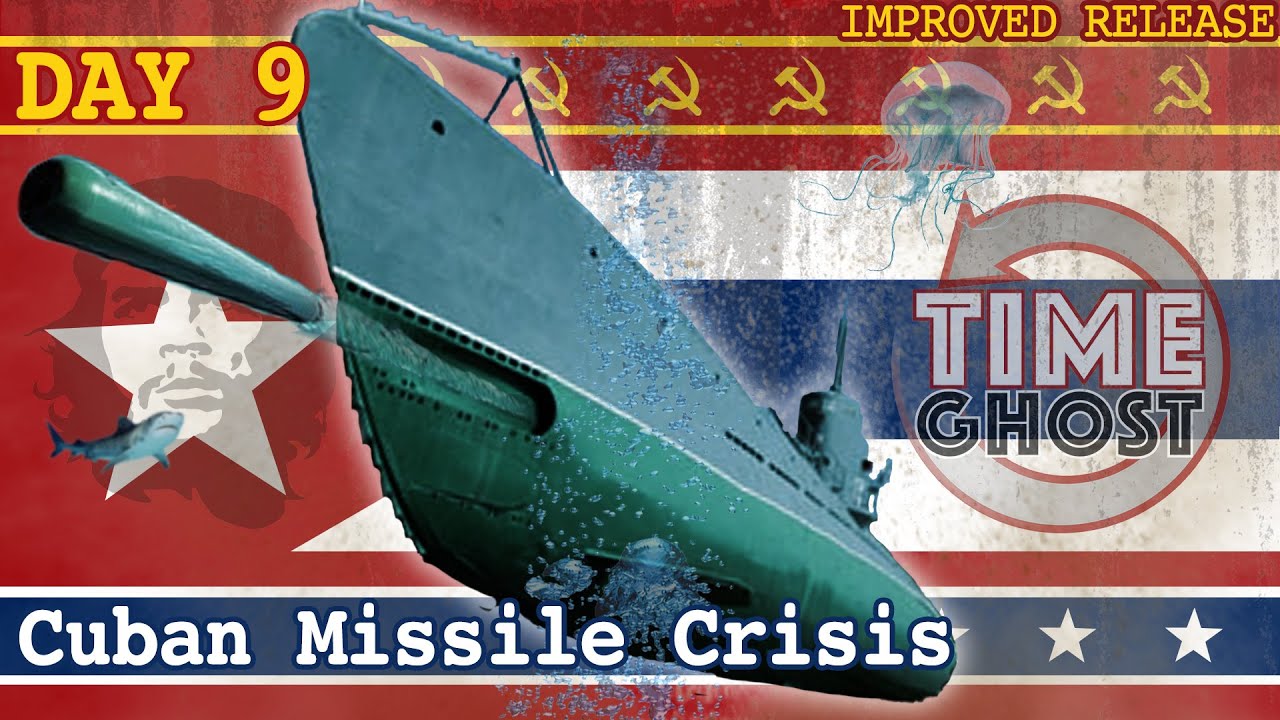
In fact, they have no idea how close they’ve already come, and almost no one will know for the next 40 years, including the leadership of the United States. As we’ve seen, in an attempt to evade the American blockade and establish a fixed submarine base on Cuba, the Soviet Union has dispatched four foxtrot class diesel submarines armed with T-5 nuclear torpedoes. It’s unclear exactly what nuclear strength the torpedoes have, but the range was somewhere between 3 and 15 kilotons - enough to kill between 30.
000 and 80. 000 human beings if dropped as bombs- or missiles- over Paris. But a nuclear torpedo works somewhat differently than a nuclear bomb in that the incendiary effects are limited by the water around the explosion.
The torpedo is fired in the direction of the target, say, a flotilla of ships. It’s not detonated on the target, but deep below it, and it creates a fireball 100 million degrees hot, which in turn creates a huge gas bubble that pushes the water around it outward. Simultaneously, a shockwave is sent though the water ahead of the expanding water, right?
Water is many times denser than air, so it transmits force better and faster than air. For an underwater explosion, this means an amplification effect so the shockwave exerts more force on the medium. To make a long story short, the incredible force transmitted through the water will shatter the hulls of the ships in the flotilla, instantly sinking them.
The expanding gas bubble will then shoot to the surface and push enormous jets of water far into the air. Not a single soul on board the flotilla’s ships would survive. Yesterday, two of those four Soviet submarines had still not been forced to surface.
One of those two, the B59 was located several times and so had not the opportunity to surface to recharge its batteries for four days, so it’s almost out of electricity. They haven’t had contact with Moscow for a while, so that they have no idea what the situation is - as far as they know, Moscow is already a smoking pile of irradiated rubble. The sub’s Captain is Victor Savitsky, who- according to his shipmates- is now going mad under the increasing psychological pressure, merciless heat, lack of oxygen, and CO2 poisoning aboard his vessel.
Second in command is Political Officer Ivan Maslennikov, who is also showing signs of mental impairment from the conditions on board. Normally, these two men would decide together to fire a nuclear torpedo. This mission is special, though - the Chief of Staff of the whole four submarine brigade is also on board – so firing a nuclear torpedo will need his approval.
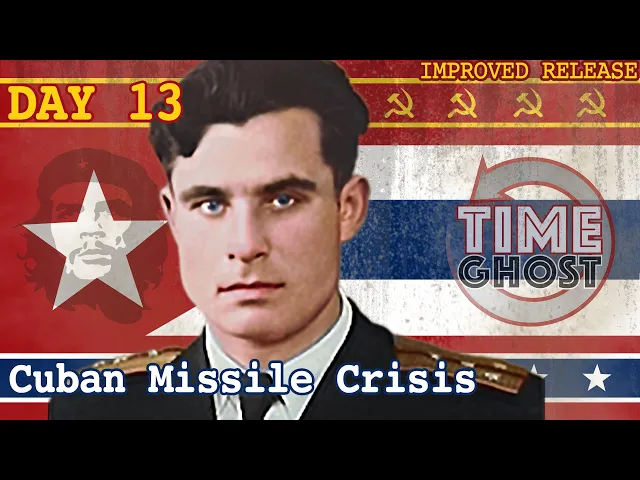
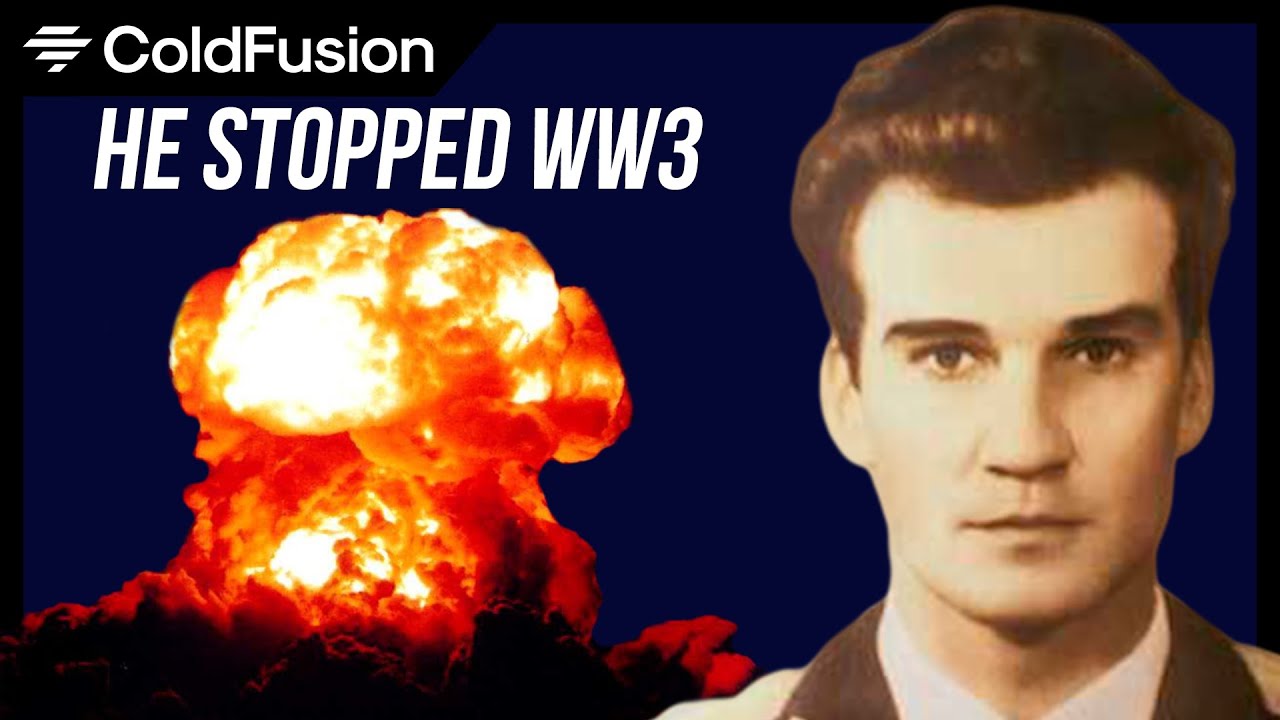
He is Commander Vasili Arkhipov, a hero of the Soviet submarine fleet. He previously commanded the fateful training mission of the K19 nuclear submarine that suffered a breakdown in its reactor cooling system. Seven of his crewmen sacrificed their lives then by voluntarily going into the reactor room to perform repairs to avoid a nuclear meltdown.
Arkhipov’s coolheaded actions during the disaster also contributed to saving the rest of the crews’ lives, although he and they were badly irradiated, and many of them would die later the effects of radiation poisoning. Anyhow, the B59 has now dared to surface momentarily - they must get air and their batteries are nearly empty. But before they have recharged and aired out the fetid, overheated submarine that is their prison, they’re discovered by US Navy airplanes.
A whole mess of destroyers and even an aircraft carrier now descend upon them, and as they dive, the Americans drop signaling depth charges on them to force them to resurface. That bombardment goes on for hours while the B59 attempts tries to elude its pursuers. Captain Savitsky reportedly loses it completely.
He’s convinced that World War Three has broken out, and in his carbon dioxide poisoned mind he thinks the signaling charges are actual live charges, so he decides to fire one of their T5 nuclear torpedoes. Political Officer Maslennikov agrees to this, but Commander Arkhipov doesn’t. Reportedly, Savitsky screams at him and a fight almost breaks out.
Finally, after an intense 30 minutes, Arkhipov manages to cool Savitsky down and they decide to again surface. The US Navy ships fire shots across the B59s bow to signal her to give up. The Americans then allow the sub to return to Russia under escort on the surface.
Launching that torpedo will have begun nuclear war between the USSR and the United States. One man- Arkhipov- has now singlehandedly saved the world from nuclear war. He will continue to serve in the Soviet Navy, eventually commanding several submarine squadrons and receiving a promotion to Rear Admiral in 1975.
In the mid 1980s, he retires and despite his K19 radiation wounds lives to see his 72nd birthday in 1998. He will take the secret of the B59 with him to his grave and it will only become known to the public in 2002. When Khrushchev and President Kennedy decide that it is time to try to stop the madness that both of them have begun, neither knows about the incident.
Kennedy will never know, while Khrushchev will find out when the B59 returns to port. For now, they’re still nervous that their deal might not go though. Both sides are very suspicious of each other.
The Soviet Presidium has now received the message that Kennedy agrees to guarantee Cuba’s sovereignty and will secretly dismantle the American missiles in Turkey over the next five months. To send a clear signal to the Americans and the rest of the World, Khrushchev will announce the removal of the Soviet missiles on Cuba on public radio in Russia, so his guys prepare the statement. When they are done, they want to pass it to the US embassy before the broadcast, as protocol requires.
Only one problem, the KGB has organized massive demonstrations against the US “aggression” against Cuba outside the US embassy. When Mikhail Smirnowski, who is in charge of American Affairs at the Soviet foreign ministry, arrives there with his limousine, a few thousand protesters block his way. At Radio Moscow’s studios, it is also not going well.
Leonid Ilychev can’t get a hold of a newscaster to read the message. Finally he finds one. The newscaster wants to read through the text to train his delivery for such a momentous message to the world.
Now, you might think that Ilychev faces a trivial problem… what could ten, fifteen minutes more matter? But remember what happened yesterday on the 27th? When one thing after the other went wrong and how close the world came to self-destruction?
That’s on everybody’s minds right now and minutes might in fact matter. Ilychev forces the newscaster to just cold-read the damn message on live, global radio. At the US Embassy, it takes the Moscow police so long to clear a path for Smirnowski, that by the time he hands over the script, the Americans have already heard the public broadcast.
In Washington DC, it is now morning. At the White House, EXCOMM has gathered to await news from Moscow. As they mill into in the Cabinet Room at 9AM, Khrushchev’s broadcast is reported to them.
The relief is obvious. As usual, JFK switches on his secret recorder - Secretary of State Dean Rusk opens up the meeting with a few words to describe their success. He becomes so self-congratulatory and pompous that President Kennedy turns off the recorder after only a few seconds.
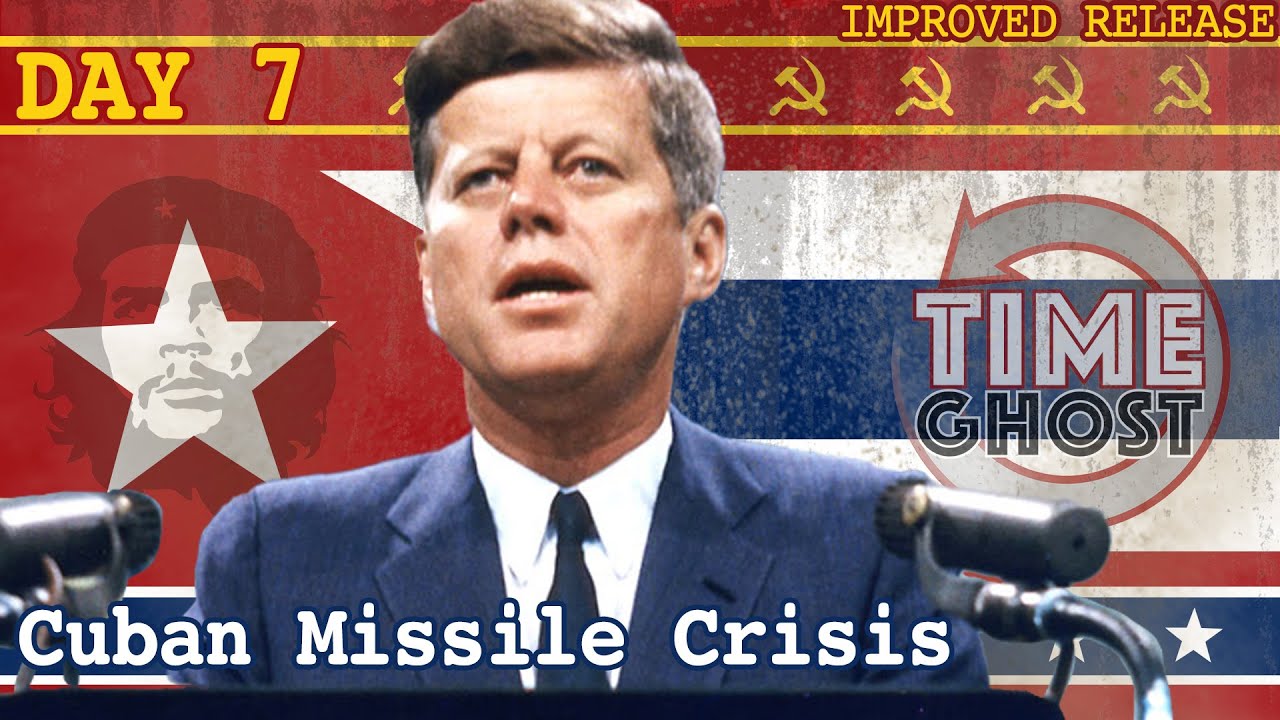
Kennedy still has to make his statement. He gets a draft to read, but remember, it’s Sunday morning and Kennedy is a practicing Catholic, so he takes the draft and leaves with the First Lady and the kids to go to church. In Moscow, the Presidium is still gathered, tensely awaiting Kennedy’s reply.
Most of them are very nervous. Reportedly, the only one to have regained his cool is President Leonid Brezhnev - he’s listening to his favorite soccer team playing an important match over the radio and his only irritation is that no one else is interested in that. When the KGB reports that Kennedy is not working on any statement, but has gone to church, some of them get even more nervous.
Deputy Chairman Mikoyan doesn’t make the situation any better when he jokes that; “maybe the US President has gone to pray before he nukes Russia. ” Eventually, Kennedy’s message goes out and everyone relaxes for the first time in thirteen days. At the White House, an elated Attorney General Robert Kennedy hands out chocolates, in Moscow they toast with vodka.
The whole world is relived, very relieved. But, believe it or not - the crisis is not over yet and it won’t really be over for many weeks. First of all, there’s many days of hard negotiations ahead with UN Secretary General U-Thant, regarding monitoring the dismantling of the missiles and their return to the Soviet Union.
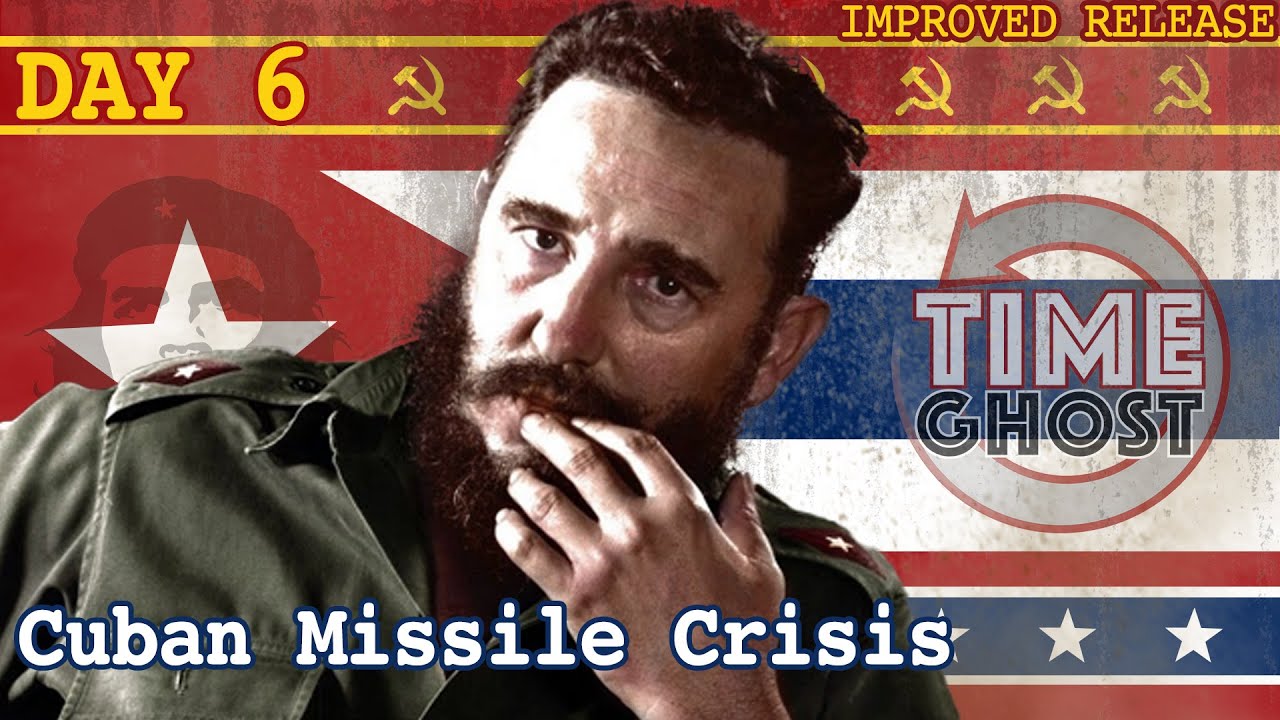
Then there’s still one submarine armed with nukes somewhere in the Caribbean that has no contact with Moscow and continues to play cat and mouse with the US Navy for another couple of days. And then there’s Fidel Castro… We’ve now spent well over three hours examining the Cuban Missile Crisis. One would think that Cuba, or at least its leader, would have been featured more.
You could assume that we just chose to not cover it, which is sort of true. Thing is, though, so far Castro has not played any significant role in this play - other than making some speeches in Havana and issuing demands to his Soviet ally, which were mostly ignored. Now suddenly he becomes important, however.
For he is absolutely livid and starts raising hell with the Soviets and making life difficult for U-Thant and his inspectors. He feels betrayed, and that’s not really unjustified. From his perspective, the Soviets have placed nuclear missiles in his country to deter the US from invading it.
Then at the moment when such an invasion seems like it’s gonna happen, they decide to take the missiles back. No matter what Khrushchev says, Castro has no reason to believe that the Yanks are going to honor their promise to not invade. Moreover, his feelings are hurt because he’s heard about the trade of missiles on Cuba for missiles in Turkey.
He feels like a pawn in a much bigger game, which again is not unjustified. His mood won’t get any better when the Soviets exclude him from the negations to solve the Cuban Missile Crisis at the United Nations. Before that, though, he demands to at least keep the tactical nuclear missiles as a means of defense and deterrence towards the US.
In a moment of weakness, Khrushchev agrees. Mikoyan is not impressed. As the Presidium member with the most experience on Cuba, he volunteers to go see Castro and negotiate the handover of the tactical nuclear arms.
He will work hard to get Castro back on track, but the fact is that the relations between Cuba and the Soviet Union will never fully recover. Especially when Mikoyan decides on his own that Castro can’t be trusted with nukes of any kind and orders them all back to the USSR. By the end of the year all the nukes on Cuba are gone.
Kennedy does stay true to his word and dismantles the Jupiter missiles in Turkey, not that this was very difficult as they were scheduled for scrapyard anyway, but the US also never places any new ones there. A small side effect that has never been fully clarified is that the conflict over Berlin never again heats up, despite the Soviets having had real plans to escalate that issue independently of Cuba. For Nikita Khrushchev, it doesn’t end well at all.
In 1964, he’s ousted in a soft coup, and the failure of Operation Andayr is one important reason for his fall. As we know, John F. Kennedy only has 13 months left to live at the end of these 13 days, so he himself will never know exactly how close to the brink of destruction he helped bring the world.
Neither will his brother Bobby Kennedy, who will also die at the hand of an assassin six years from now. Mikoyan will side with the new leaders of the Soviet and stay on board. Gromyko will also survive politically and continue to be part of the soviet leadership until the 1980s.
But before all of them disappear into political backwaters, retirement, or death, they will achieve a few things as a result of this mad adventure. After seeing how essential it is to have open and speedy communication lines in a nuclear age, they will install the famous hotline. This cuts communication between the two superpowers from hours or days to minutes or seconds.
Contrary to popular belief it is not a red telephone, it’s not even a telephone - it’s a whole communications system with heavy encryption, failsafes, and multiple communication lines that in 2020 still remains in use between Russia and the USA. Maybe more importantly, Khrushchev and Kennedy will sign the Nuclear Test Ban Treaty in 1963 and lay the corner stone for cooling down the nuclear arms race between the two superpowers. I’m Indy Neidell and this was the Cuban Missile Crisis.
We will begin our weekly coverage of the Suez Crisis next week, so don’t forget to subscribe and ring that bell to not miss that. All of our series, large and small, are financed by the TG Army. Please join the army at patreon.
com or tg. tv so we can continue to produce and broadcast great historical content in these troubled times. Good night and good luck.