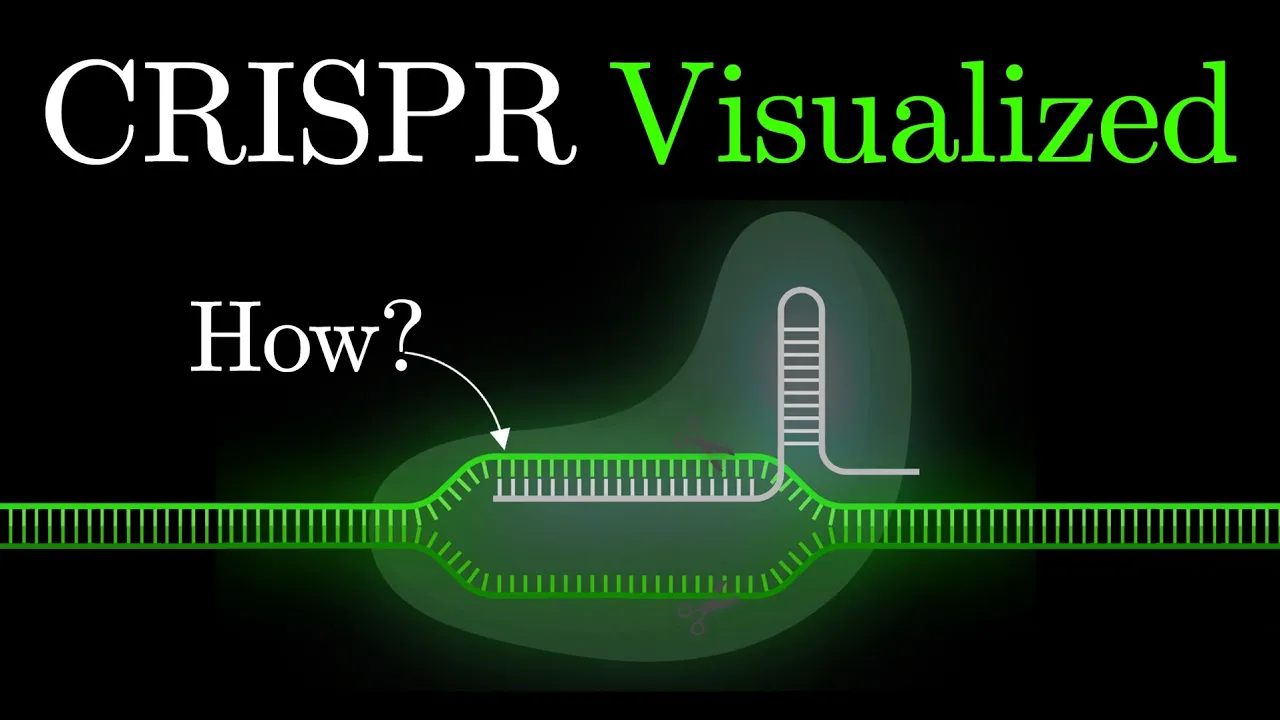
What you’re looking at is something scientists have called “the beginning of the end of genetic diseases”. This revolutionary technology has won Nobel Prizes, it's been used to engineer human embryos, and it's even cured patients of disease. But what is it?
Well, let’s take a step back. If you’re an active viewer of this channel, then you’ll know that the instructions to make proteins is found in DNA, with each individual protein recipe called a gene. Therefore, you can expect that if something is wrong with a recipe, for example the gene becomes mutated, then this gene variant might result in a malfunctioning protein, which can in turn result in a disease, such as cancer and sickle cell disease.
So scientists wondered. . what if there was a way to fix these mutations?
That is, if we could in theory edit our DNA to correct mutations, then we would have a way to combat diseases! And this simple idea became known as gene editing. But while this was a simple idea in theory, in practice, it was much more difficult.
While the first efforts in gene editing started in the 1960s and 70s, it wasn’t until 1994 that a reliable method of genome editing was developed. This first gene editing technology was zinc finger nucleases, which were custom-designed proteins that consisted of 2 parts: a DNA-binding part, or domain, that told the protein exactly where on the DNA to bind, as well as a DNA-cleaving domain that actually cut the DNA, usually containing the “scissor” enzyme called Fok1. Years later, scientists found an even better gene editing technology known as TALENs, which were similar to zinc finger nucleases but were easier to engineer because TALENs recognize exactly one base pair per module, as opposed to zinc finger nucleases which recognize three base pairs per module.
However, just a couple years after TALENs were developed, a third major gene editing technology was discovered. This was highly efficient and highly specific, and the funny thing is, the scientists who discovered this technology weren’t even intending to work on gene editing in the first place. Pay close attention.
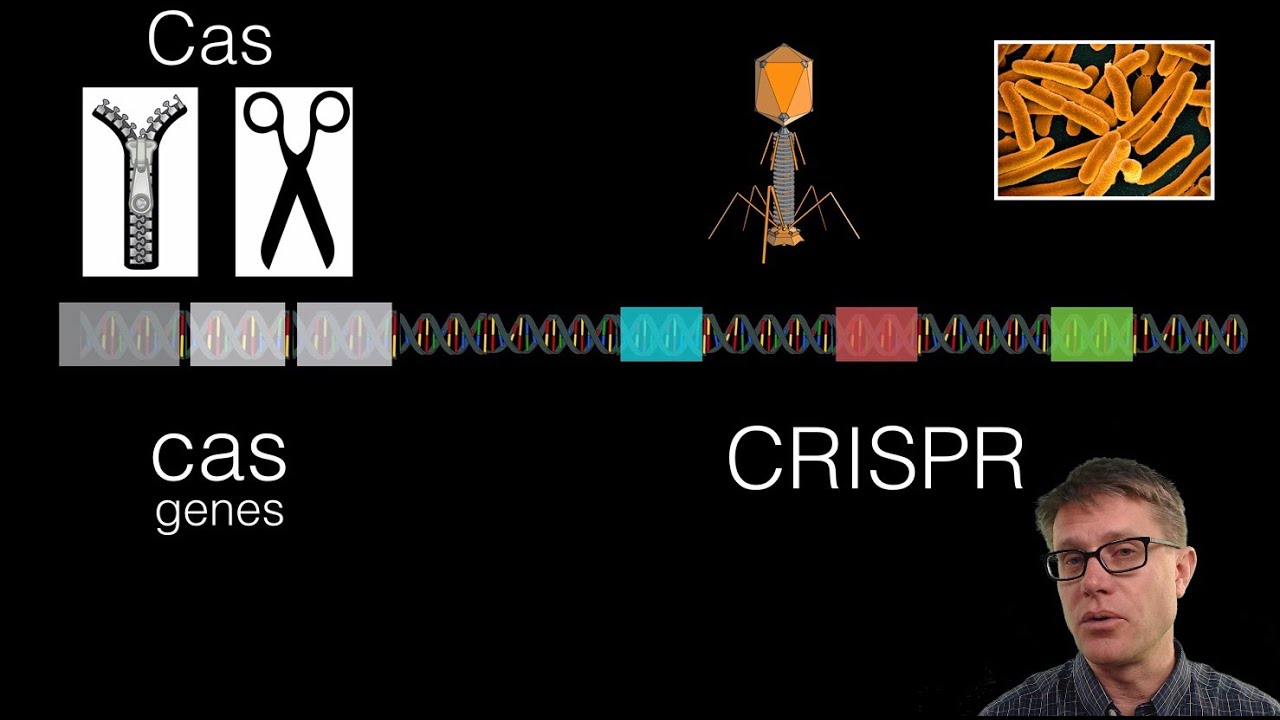
In the late 1980s, scientists were studying the DNA sequences of bacteria, and they noticed something strange. In about 40 percent of bacteria, there seemed to be clusters of regularly-spaced repeating sequences, specifically sequences that could be read the same backwards and forwards, known as a palindrome. In between these repeats were seemingly random DNA sequences, which the scientists decided to call “spacers”.
And this region was really weird, so scientists decided to give it a name. . uncreatively: Clustered Regularly Interspaced Short Palindromic Repeats, or the CRISPR array.
But for years, scientists didn’t know why the CRISPR array was there. They focused extensively on the palindromic repeats, but it turned out that the secret was in the spacers. One scientist in particular, Francisco Mojica from Spain, realized that these spacers were an exact match to DNA found in viruses, specifically, viruses that infect bacteria, called bacteriophages.
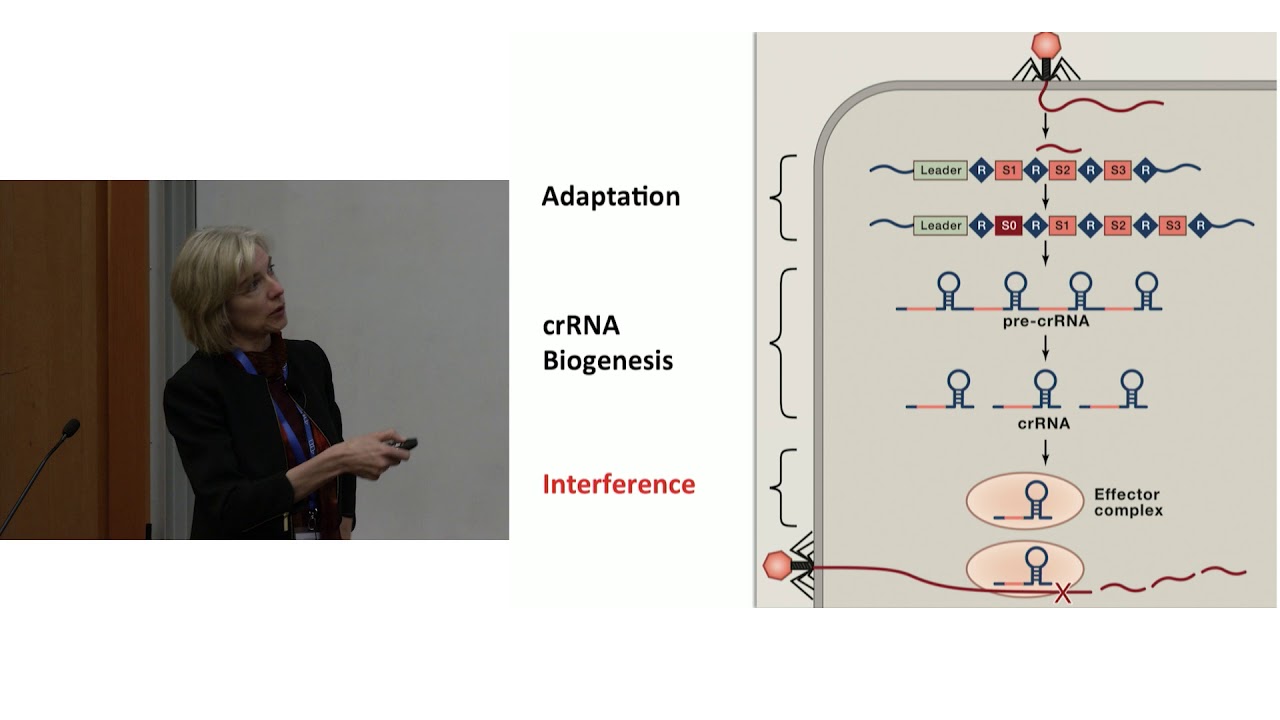
This observation suggested to him that maybe CRISPR acted as a sort of immune system for bacteria, that somehow during a bacteriophage infection, the bacterium was able to cut off a segment of the viral DNA and insert this piece into the bacterium’s own genome so that it would have a memory of this invader and be able to better defend against it in the future. And Mojica turned out to be exactly right. The way that this works inside is that, when a new virus infects a bacteria, the bacteria uses a protein complex called CRISPR-associated protein 1 and 2, or simply Cas1 and 2, to identify this viral DNA and to cut out a segment, which it then inserts into the front of the CRISPR array as a spacer so that the bacteria has a record of this virus.
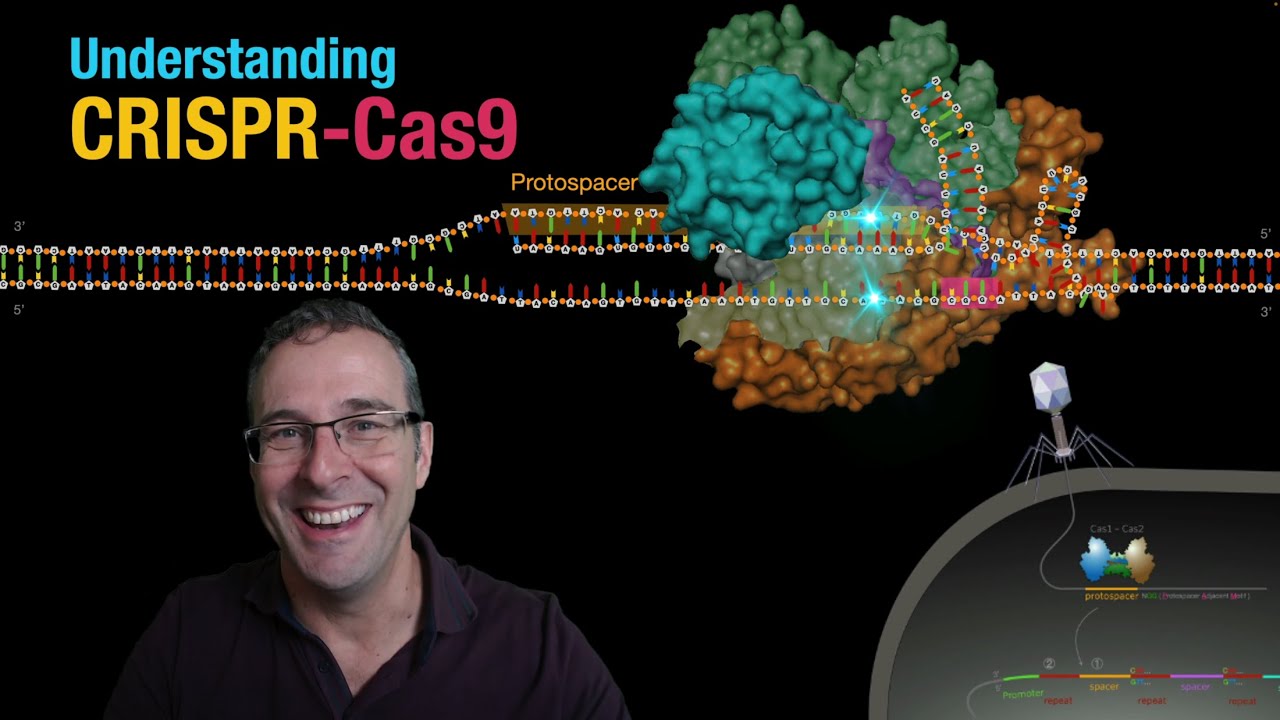
For reference, before the DNA is integrated as a spacer, it's called a protospacer, with "proto" meaning "before. " But. .
how exactly does the bacteria use this CRISPR array, this memory book, as a form of defense? Well, scientists found that during a viral infection, the CRISPR array in bacteria is transcribed into a long RNA. This long RNA then gets processed into smaller RNAs called CRISPR RNAs, each containing sequences that match viruses’ RNA.
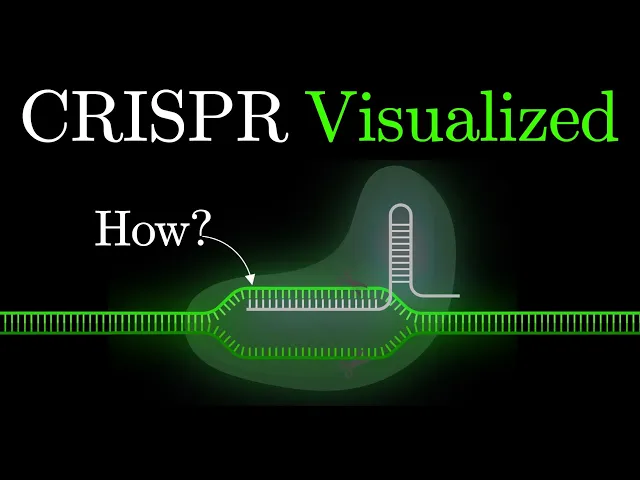
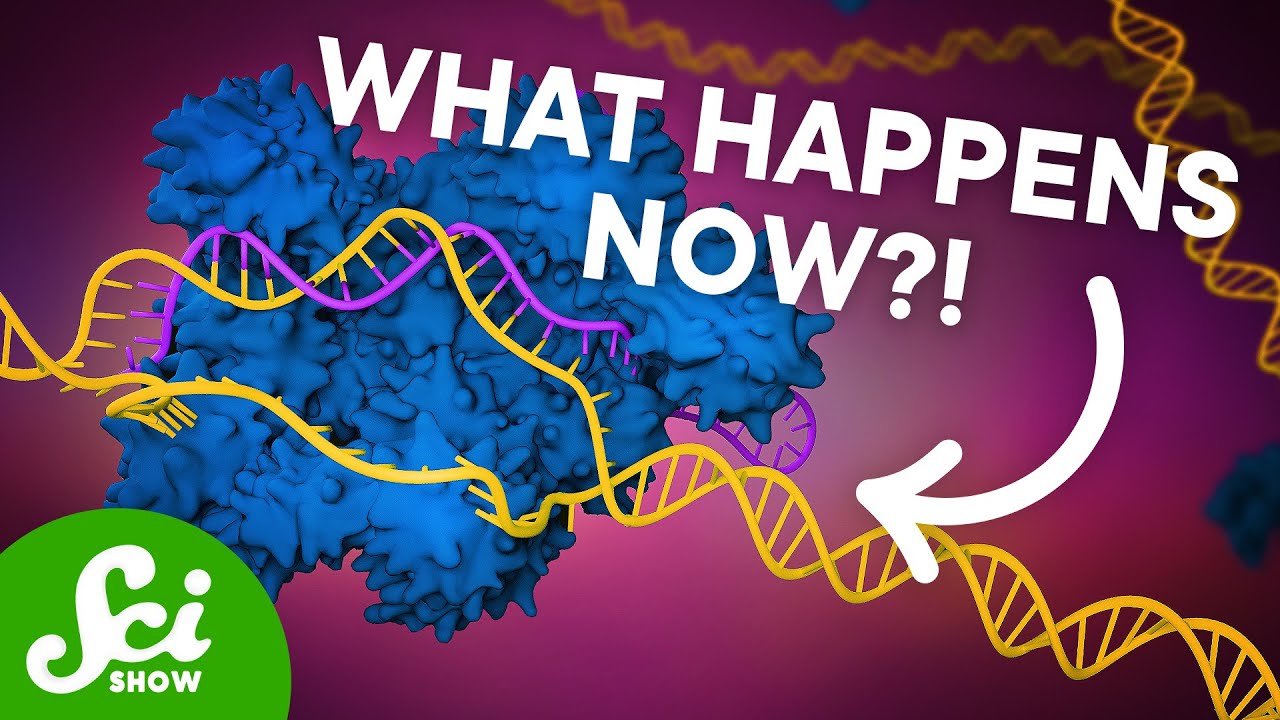
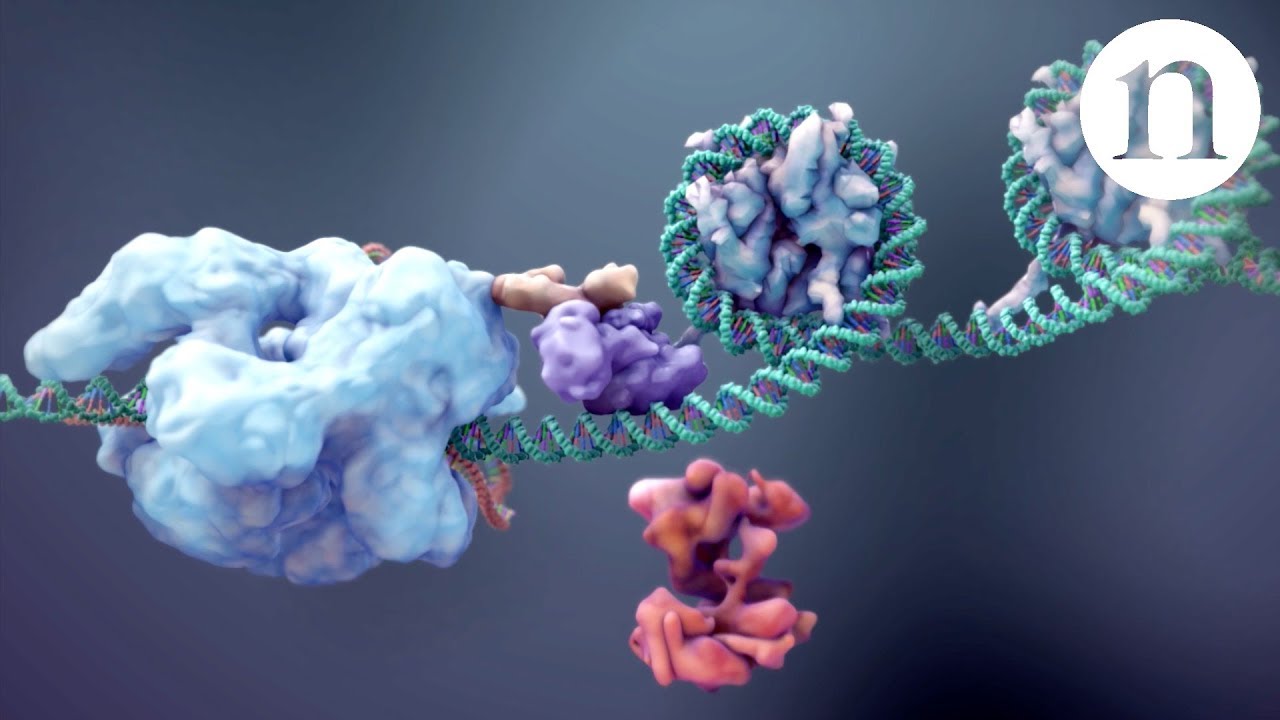
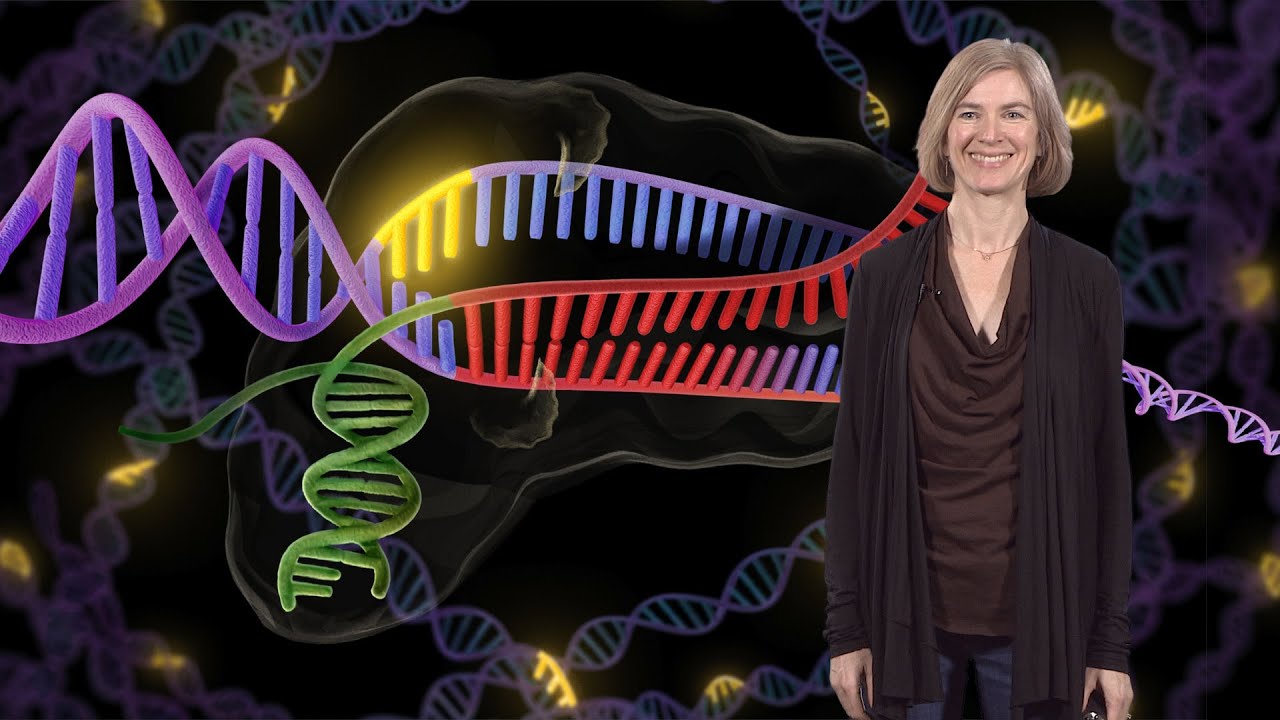
This processing is largely done by another RNA known as trans-activating CRISPR RNA, or tracrRNA. The crRNA and the tracrRNA then both bind to a protein called Cas9, which acts as a scissor to cut DNA. This entire complex then scans along DNA, and if there is a sequence matching the crRNA, then it will cut that DNA.
This is how the bacteria use CRISPR to cut viruses’ DNA as defense! But scientists weren’t done. Two scientists, Jennifer Doudna from UC Berkeley and Emmanuelle Charpentier from Umeå University in Sweden, asked themselves: what if we could combine the crRNA and the tracrRNA into one single “guide” RNA?
And they were slowly realizing the power of this question. If this was indeed possible to create a guide RNA, then they would be able to attach any single guide RNA to Cas9, and Cas9 would find and cut that matching DNA sequence. So they did that!
They used a simple “connecting loop” to combine the crRNA and tracrRNA, and this engineered single guide RNA worked extremely well! Attach any guide RNA to the Cas9 and you can cut the corresponding DNA! This bacterial immune system could be harnessed for gene editing!
And this technology wasn’t limited to just cutting! It turns out that scientists can use a “dead” version of Cas9 which can bind specific DNA but doesn’t actually cut. Scientists can then fuse an activator protein to dead Cas9, which forces the attached gene to be more active and to transcribe more RNA.
Similarly, they can attach an inhibitory protein, which turns off the target gene. Scientists can even attach a glowing, fluorescent protein to dead Cas9, most commonly one called GFP, so that scientists can just see where the Cas9 protein is bound to. There is still one question that needs to be answered though: If the Cas9 complex cuts any DNA that matches the guide RNA, then why doesn’t CRISPR cut at the CRISPR array?
Well, it turns out that when Cas1 and Cas2 cut out protospacers from viral DNA in the first place, they always cut at a spot so that the adjacent sequence is NGG, where N can be any nucleotide: A, T, C, or G. That way, any time Cas9 searches for a DNA sequence that matches its guide RNA, not only does the guide RNA sequence have to match, but there also must be an NGG right next to it in the DNA! The CRISPR array itself doesn’t contain any NGG, so it’s not at risk of being cut by Cas9.
This NGG sequence is a pattern, or motif, that Cas9 looks for adjacent to the protospacer, it is called the protospacer adjacent motif, or PAM sequence. And that’s CRISPR-Cas9! It’s more efficient than ZFNs and TALENs in that entire protein complexes don't have to be engineered; we only need to give a small guide RNA to Cas9.
And scientists are still trying to make this process even better! For example, some scientists such as David Liu of Harvard University realized that instead of cutting DNA, we can more simply change the nitrogenous bases chemically in order to fix mutations, a process known as base editing. There's even a technique called prime editing, which does insertions, deletions, and base swapping, all without double-stranded breaks.
It goes without saying that CRISPR-Cas9 is a powerful technology, not only to treat diseases but also to potentially make stronger crops, and much more. But we need to be careful. First, the specificity of CRISPR-Cas9 isn’t perfect, so there’s always a risk of making unwanted off-target edits.
Moreover, gene editing might actually be harmful to the human species since it might accidentally cause undesired permanent changes to our DNA and even alter human evolution. Specifically, if DNA of sperm and egg cells are edited, any changes will be passed down to future generations, possibly causing irreparable consequences. But science doesn’t stop, and technology continues to improve, all thanks to the creative thinking and collaboration of hundreds of scientists across the world.
And who knows? Maybe the scientist who will accomplish these feats in the future is watching this video right now. Thanks for watching.
If you made it this far, consider subscribing and sharing with your friends! Each video takes me over 100 hours to make, so thank you so much for helping this community grow and fostering a love for biology.