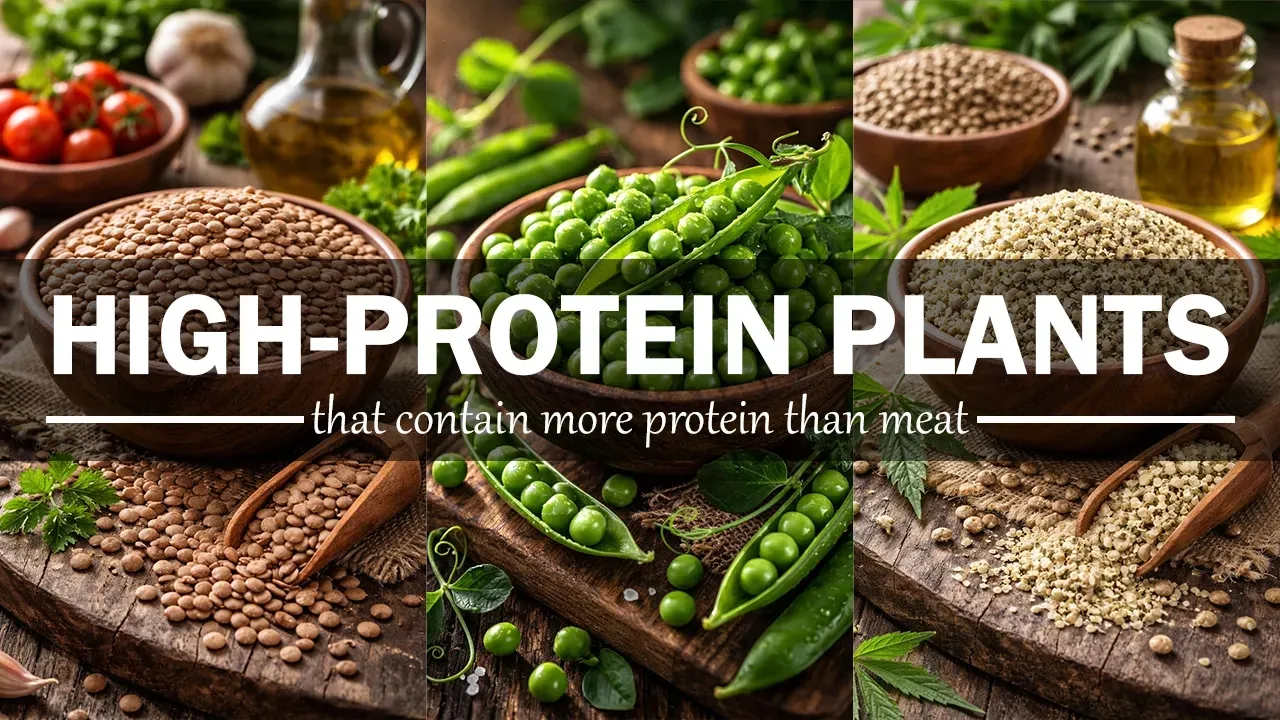
What if I told you that some of the most protein-packed foods on the planet aren't hiding in the butcher's case or the frozen chicken aisle, but growing quietly in fields, forests, and maybe even your own backyard? Most people don't know this, but while we're all obsessing over steaks and protein shakes, there are plant foods out there that match or even exceed the protein content of meat gram for gram. Plants with amino acid profiles that would make a bodybuilder do a double-take.
Plants that athletes, doctors, and nutritional scientists are finally paying serious attention to. And today, I'm going to show you 20 of them that will change the way you think about protein forever. Make sure you hit that subscribe button because we post new videos every week that connect real nutritional science with practical knowledge, empowering you to take charge of your health.
Stick around because number 14 on this list has more protein per calorie than a ribeye steak, and it's been feeding entire civilizations for thousands of years. And number 20 is so protein-dense that NASA studied it as the ideal food for long-duration space missions, and astronauts aren't exactly known for messing around with their nutrition. So, let's get into it.
Here are 20 plant foods that have more protein than meat, ranked from impressive to absolutely incredible. Plant one, green peas. The backyard protein nobody respects.
Let's start with something most people completely overlook, green peas. Those little round things sitting on the side of your plate that you probably pushed around as a kid. But here's what nobody tells you, a cup of green peas packs about 9 g of protein.
That's more protein per serving than a whole egg. And unlike a lot of plant foods, peas contain all nine essential amino acids, making them a surprisingly complete protein source. Modern sports nutrition companies have caught on in a massive way.
Pea protein isolate is now one of the fastest growing segments in the protein supplement industry. Clinical studies show pea protein supports muscle growth and recovery just as effectively as whey in controlled trials. Here's what makes peas special from a nutritional standpoint.
They're also loaded with fiber, iron, and B vitamins. You're not just getting protein. You're getting a nutritional package that most animal proteins simply can't match.
Traditional use goes back thousands of years. Peas were a staple crop across Europe and Asia, feeding armies and civilizations long before anyone counted macros. Peas got overlooked simply because they're common.
They're not exotic. They're not trendy, but for anyone serious about getting more protein into their diet, the humble green pea is extraordinarily undervalued. Think of it as the protein source that's been sitting on your plate your whole life, just waiting for you to take it seriously.
Plant two, lentils. The ancient protein that built empires. Lentils have been feeding humans for over 10,000 years.
They show up in archaeological sites across the Middle East, and there's a reason every ancient civilization kept coming back to them. One cup of cooked lentils delivers roughly 18 g of protein. That's more than two eggs and comparable to a serving of ground beef, and they cost a fraction of the price.
Modern nutritional research has validated what our ancestors already knew. Lentils are packed with protein, fiber, folate, iron, and manganese. Studies show regular lentil consumption is associated with better blood sugar control, improved heart health, and lower cholesterol levels.
Here's what makes lentils a nutritional powerhouse. They're one of the fastest cooking legumes, requiring no soaking. Red lentils cook in 15 minutes.
You can add them to soups, stews, salads, or blend them into sauces. The versatility is unmatched. Lentils got pushed aside when cheap industrially produced meat became the norm.
But, those cheap meats come with their own costs, both to your health and your wallet long-term. Lentils offer what they've offered since the dawn of agriculture, dense, affordable, reliable protein that sustains life. It's the food that literally built civilizations, and it costs less than a dollar per serving.
Plant three, hemp seeds. The misunderstood superfood. Let's address the elephant in the room.
Yes, hemp is related to that plant. No, hemp seeds won't get you high. What they will do is deliver 10 g of complete protein per 3 Tbsp serving.
That's more protein by weight than most cuts of beef. Hemp seeds contain all nine essential amino acids in an easily digestible form. They're also rich in omega-3 and omega-6 fatty acids in an ideal ratio that supports heart health.
Modern research shows hemp protein is highly bioavailable, meaning your body can actually absorb and use a very high percentage of what you eat. Here's the traditional angle. Hemp has been cultivated for over 10,000 years across Asia and Europe.
It was one of the earliest domesticated plants grown for food, fiber, and medicine. Entire economies were built around it. Hemp seeds disappeared from Western diets, primarily due to legal confusion with their psychoactive cousin.
That confusion has largely been resolved, but the stigma lingers. Meanwhile, hemp seeds remain one of the most complete and nutrient-dense protein sources available. Think of it as the seed that got punished for its family name, but never stopped being one of the most powerful foods on Earth.
Plant four, nutritional yeast. The cheese that isn't cheese. This one throws people off.
Nutritional yeast is a deactivated yeast that comes in flakes or powder and tastes remarkably like cheese. 2 Tbsp deliver about 8 g of complete protein. And here's what makes nutritional yeast genuinely remarkable.
Most brands are fortified with B12, the one vitamin that's notoriously difficult to get from plant sources. So, you're getting protein and solving one of the biggest nutritional gaps in plant-based eating in a single sprinkle. Nutritional yeast also contains fiber, zinc, and a range of B vitamins that support energy metabolism and nervous system function.
Studies show the beta-glucans in nutritional yeast support immune function and may help reduce cholesterol. Here's the practical angle. You can sprinkle it on popcorn, stir it into pasta, blend it into sauces, or use it anywhere you'd use Parmesan.
It dissolves easily and adds a savory, umami-rich depth to everything it touches. Nutritional yeast got overlooked because it sounds weird. The name does it no favors.
But, for anyone looking for a versatile, complete protein source that also happens to taste incredible, it's one of the best-kept secrets in nutrition. Plant five, black beans. The protein the Americas were built on.
Black beans have been a dietary cornerstone of Central and South American cultures for over 7,000 years, and modern science is confirming what those cultures have always known. One cup of cooked black beans delivers 15 g of protein along with 15 g of fiber. That combination of protein and fiber creates a sustained energy release that keeps you fuller longer than most animal proteins.
Research published in major nutrition journals shows black beans improve gut health, support blood sugar regulation, and are associated with reduced risk of heart disease and certain cancers. The anthocyanins that give black beans their dark color are powerful antioxidants. Here's the beauty of black beans.
They're cheap, shelf stable, endlessly versatile, and available everywhere. From burritos to soups to salads to veggie burgers, black beans do it all. They got sidelined in mainstream nutrition simply because beans weren't considered glamorous, but glamour doesn't build health.
Consistent, nutrient-dense food does. Think of it as the protein that fed civilizations across two continents for millennia, still costs practically nothing, and still delivers. Plant six, quinoa.
The grain that isn't a grain. Quinoa has gotten a lot of attention in the last decade, and for good reason. One cup of cooked quinoa provides 8 g of complete protein, meaning it contains all nine essential amino acids.
That's rare for a plant food. The Incas called it the mother of all grains and considered it sacred. They understood something that modern nutrition science took thousands of years to catch up to.
Quinoa isn't actually a grain at all. It's a seed, and it delivers protein alongside magnesium, iron, fiber, and manganese. Studies show quinoa's protein quality is comparable to casein, the protein in milk.
It's also naturally gluten-free, which makes it accessible to people with celiac disease or gluten sensitivities. Here's the practical angle. Quinoa cooks in 15 minutes, works as a base for bowls, salads, stir-fries, or even as a breakfast porridge.
It absorbs flavors beautifully and has a pleasant, slightly nutty texture. Quinoa was forgotten for centuries after Spanish colonizers suppressed its cultivation, but the Incas knew what they had, and now the rest of the world is finally figuring it out. Plant 7 edamame, the snack that outperforms chicken.
Here's a stat that shocks people. One cup of edamame, those young green soybeans you get at Japanese restaurants, delivers 18. 5 g of complete protein.
That's more than a 3-oz serving of chicken breast per calorie. Edamame is one of the few plant foods that's a complete protein with all essential amino acids in balanced proportions. It's also rich in folate, vitamin K, fiber, and isoflavones that research links to improved heart health and bone density.
Modern clinical studies show soy protein supports muscle protein synthesis and cardiovascular health. The old myth about soy and hormone disruption has been thoroughly debunked by large-scale meta-analyses published in peer-reviewed journals. Here's the simple truth about edamame.
You can steam it, toss it in salads, add it to grain bowls, or just eat it straight as a snack. It takes 5 minutes to prepare. Edamame has been a staple in East Asian diets for thousands of years.
Those populations have some of the longest lifespans and lowest rates of heart disease on Earth. That's not a coincidence. Plant eight, tempeh, the fermented powerhouse.
Tempeh takes soy to the next level. This traditional Indonesian food is made from fermented whole soybeans, and 1 cup packs a staggering 31 g of protein. That's more than a 5 oz serving of beef.
But, here's what makes tempeh special beyond the numbers. The fermentation process breaks down phytic acid, which means your body absorbs more of the minerals. It also creates probiotics that support gut health.
You're getting protein and digestive support in the same food. Research shows fermented soy products like tempeh are associated with improved gut microbiome diversity, better nutrient absorption, and reduced inflammation markers. Here's the practical side.
Tempeh has a firm, nutty texture that holds up to grilling, stir-frying, baking, and crumbling into sauces. It absorbs marinades beautifully and develops a satisfying meaty chew when cooked properly. Tempeh got overlooked in the West because it looks unfamiliar, and the fermentation puts some people off.
But, the Indonesians have been eating it for centuries, and they're not wrong. Think of it as the food that proves fermentation doesn't just preserve protein, it makes it better. Plant nine, pumpkin seeds, the tiny protein grenades.
Don't let the size fool you. 1 oz of pumpkin seeds, that's a small handful, delivers 9 g of protein. By weight, pumpkin seeds contain more protein than most cuts of beef.
They're also one of the best plant sources of zinc, magnesium, and iron, three minerals that are critical for immune function, muscle recovery, and energy production. Studies show pumpkin seed consumption is associated with improved prostate health, better sleep quality due to their tryptophan content, and cardiovascular benefits. Here's what makes pumpkin seeds practical.
You can toss them on salads, blend them into smoothies, stir them into oatmeal, or just eat them by the handful. They store easily, travel well, and require zero preparation. Ancient cultures across the Americas prized pumpkin seeds as both food and medicine.
They were roasted, ground into pastes, and used in traditional remedies for thousands of years. Pumpkin seeds got overlooked simply because they're a byproduct. People carve the pumpkin and throw the seeds away.
That's like throwing away the most nutritious part of the entire plant. Plant 10, amaranth. The grain the conquistadors tried to erase.
This one has a dramatic history. Amaranth was so important to the Aztecs that it was used in religious ceremonies. When the Spanish conquistadors arrived, they banned amaranth cultivation specifically to destroy Aztec culture.
That's how powerful this food was considered. One cup of cooked amaranth delivers 9 g of protein with a particularly impressive amino acid profile, including high levels of lysine, which is the amino acid most plant proteins lack. Amaranth is also rich in iron, magnesium, phosphorus, and manganese.
Modern research shows amaranth protein is highly digestible and has anti-inflammatory properties. Studies demonstrated supports cardiovascular health and may help lower cholesterol. Here's the practical side.
Amaranth can be cooked as a porridge, popped like popcorn, added to baked goods, or used as a thickener in soups. It has a slightly earthy, nutty flavor that works in both sweet and savory applications. Amaranth survived centuries of suppression because people kept growing it in secret.
The conquistadors couldn't kill it, and now it's coming back as one of the most promising protein sources in modern nutrition. Think of it as the grain that empires tried to destroy and couldn't because it was too valuable to let die. Plant 11, chia seeds, the endurance fuel of warriors.
The Aztecs and Mayans called chia the running food. Warriors and messengers would carry small pouches of chia seeds on long journeys because the energy and protein density was unmatched for the weight. Two tablespoons of chia seeds deliver 5 g of protein along with 10 g of fiber, omega-3 fatty acids, and a remarkable ability to absorb up to 12 times their weight in water.
That hydration capacity makes chia exceptional for sustained energy and satiety. Modern sports science has validated the ancient claims. Studies show chia seeds support endurance, hydration, and post-exercise recovery.
The complete amino acid profile and high fiber content create a slow, steady release of energy that outperforms many conventional sports nutrition products. Chia pudding. Chia in smoothies.
Chia in baking. The applications are endless, and the protein adds up fast when you use it consistently. Chia seeds were nearly lost to history when colonial powers suppressed indigenous crops.
They were rediscovered in the 1990s and have been climbing ever since. The warriors knew what they had. Now, you do, too.
Plant 12, spirulina, the algae astronauts eat. Spirulina is where things get extraordinary. This blue-green algae contains roughly 60% to 70% protein by dry weight.
Let me say that again. 60% to 70% protein. For comparison, beef is about 26% protein.
Chicken is about 31%. Spirulina nearly triples them both. 2 Tbsp of spirulina powder deliver 8 g of complete protein along with iron, B vitamins, and powerful antioxidants like phycocyanin.
Research published in peer-review journals shows spirulina supports immune function, reduces inflammation, improves cholesterol levels, and may help regulate blood sugar. NASA studied spirulina as a potential food for space missions because of its extraordinary nutrient density and efficient growth requirements. Here's the practical truth.
Spirulina has a strong earthy taste that works best blended into smoothies, mixed into energy balls, or stirred into juices. You won't eat it like a salad, but you don't need to. A small amount delivers an outsized protein punch.
Spirulina has been consumed by cultures in Africa and Central America for centuries. Lake Chad communities and Aztec populations both harvested it as a primary protein source. It got forgotten because, let's be honest, blue-green algae doesn't sound appetizing.
But for pure protein density, almost nothing on Earth beats it. Plant 13. Chickpeas.
The Mediterranean secret weapon. Chickpeas have been a staple across the Mediterranean, Middle East, and South Asia for over 7,500 years. One cup of cooked chickpeas delivers 14.
5 g of protein alongside fiber, folate, iron, and phosphorus. But here's what makes chickpeas special. Their versatility is genuinely unmatched.
Hummus, falafel, chana masala, roasted chickpea snacks, chickpea flour for baking, aquafaba from the canning liquid for vegan meringues, no other legume has this range. Research shows regular chickpea consumption improves satiety, supports healthy weight management, and is associated with better overall nutrient intake. The combination of protein and fiber keeps blood sugar stable and hunger controlled for hours.
Chickpeas got pushed aside in Western diets as meat became cheap and accessible. But, the cultures that never stopped eating them, those Mediterranean and Middle Eastern populations, consistently rank among the healthiest and longest-lived on Earth. That should tell you something.
Plant 14, mycoproteins and fungi. The protein most people have never heard of. Here's the one I teased at the beginning.
Certain fungi, particularly mycoprotein derived from Fusarium venenatum, contain more protein per calorie than a ribeye steak. We're talking about 11 g of protein per 100 calories compared to beef's 9. 5 g per 100 calories, and the amino acid profile is complete.
Modern research shows mycoprotein supports muscle synthesis comparably to animal protein. Clinical trials published in the American Journal of Clinical Nutrition demonstrate that mycoprotein consumption results in similar muscle-building responses to milk protein after resistance exercise. Mushrooms themselves, while lower in total protein, contribute meaningful amounts alongside unique compounds like beta-glucans, ergothioneine, and vitamin D that you won't find in any meat.
Here's the bigger picture. Fungi are one of the most sustainable protein sources on the planet. They can be grown vertically, require minimal water, and produce protein far more efficiently than livestock.
Mycoprotein got overlooked because fungi don't fit neatly into the plant or animal category. They're their own kingdom. But, that's exactly what makes them special.
Think of it as the protein source that outperforms steak and doesn't require a single acre of pasture. Plant 15, peanuts, the protein hiding in plain sight. Peanuts are so common that we've completely forgotten how nutritionally remarkable they are.
1 oz of peanuts delivers 7 g of protein. A 2 Tbsp serving of peanut butter gives you 8 g. By weight, peanuts contain more protein than most tree nuts and rival many cuts of meat.
Peanuts are also rich in niacin, folate, magnesium, vitamin E, and heart-healthy monounsaturated fats. Large-scale research consistently shows that regular peanut consumption is associated with reduced cardiovascular disease risk, better weight management, and improved blood lipid profiles. The Harvard Nurses' Health Study, one of the largest nutritional studies ever conducted, found that people who ate nuts, including peanuts, five or more times per week had significantly lower rates of heart disease.
Here's the simple truth. Peanut butter on toast might be the most cost-effective high-protein meal on the planet. It costs pennies, requires zero cooking, and delivers genuine nutritional value.
Peanuts got overlooked as a serious protein source because they're associated with childhood snacks and ball game food, but the science doesn't care about perception. The science says peanuts are one of the most nutrient-dense protein sources available to humans. Plant 16, tofu, the 2,000-year-old innovation.
Tofu has been a protein staple in East Asian cuisine for over 2,000 years. Half a cup of firm tofu delivers about 10 g of complete protein along with calcium, iron, and all essential amino acids. Here's what most Western critics get wrong about tofu.
They treat it like a meat substitute when it's actually its own category of food entirely. Tofu is a blank canvas that absorbs whatever flavors you give it. Marinated and grilled, it develops a crispy exterior and satisfying texture.
Silken tofu blends into smoothies, desserts, and sauces for added protein without changing the flavor. Modern research conclusively shows soy protein supports heart health, bone density, and muscle maintenance. The American Heart Association recognizes soy protein's cardiovascular benefits.
Tofu disappeared from Western consideration primarily because of marketing. The meat industry spent decades positioning plant proteins as inferior, but the billions of people across Asia who've been eating tofu for millennia while maintaining lower rates of heart disease and cancer tell a different story. Plant 17, sacha inchi seeds, the Amazonian protein treasure.
Sacha inchi is one of the most remarkable protein sources most people have never heard of. These star-shaped seeds from the Peruvian Amazon contain about 9 g of complete protein per ounce along with exceptionally high levels of omega-3 fatty acids. Indigenous Amazonian communities have relied on sacha inchi for centuries as a primary protein and fat source.
The seeds are roasted and eaten whole or pressed into oil. Modern research shows Sacha Inchi protein is highly digestible with an amino acid profile comparable to soy. Studies demonstrate anti-inflammatory effects and cardiovascular benefits.
Here's why Sacha Inchi is emerging now. The global demand for complete plant proteins with healthy fat profiles has created a market that this seed fills perfectly. It's being called the next quinoa by food industry analysts.
Sacha Inchi remained hidden simply because the Amazon is remote and the seeds weren't commercially cultivated until recently. But the indigenous communities always knew what they had. Think of it as the protein the rainforest kept secret until the world was finally ready for it.
Plant 18. Seitan. The protein champion of plant-based eating.
If you're looking for pure protein density from plants, seitan is virtually unmatched. A 3-oz serving delivers 21 g of protein with a meaty, chewy texture that makes it the closest plant-based analog to actual meat. Seitan is made from vital wheat gluten and it's been used in Asian Buddhist cuisine for over 1,500 years.
Monks developed it as a protein source during periods of meat abstinence and the techniques have been refined for centuries. The texture is remarkably versatile. Seitan can be grilled, sliced for sandwiches, crumbled for tacos, or braised in stews.
It takes on marinades and sauces better than almost any other plant protein. Here's the caveat. Seitan isn't suitable for people with celiac disease or gluten sensitivity.
It's literally made of gluten. But for everyone else, it's one of the most protein-dense and culinarily satisfying plant foods available. Seitan got forgotten in the West because wheat gluten was associated with bread making, not protein.
But the Buddhist monks who developed it 15 centuries ago understood something modern nutrition is just now appreciating. Plant 19, moringa leaves. The miracle tree strikes again.
Moringa is the overachiever of the plant world, and it deserves its place near the top of this list. Dred moringa leaves contain approximately 27 g of protein per 100 g. For reference, that's comparable to chicken breast.
The protein content alone would be impressive enough. But moringa also delivers more iron than spinach, more calcium than milk, more potassium than bananas, and more vitamin C than oranges. It's a nutritional anomaly.
Traditional communities across Africa and South Asia have relied on moringa as a protein source for centuries, particularly in regions where animal protein is scarce or expensive. It's sometimes called the drumstick tree or the miracle tree. Modern research validates the traditional claims.
Studies show moringa supports blood sugar regulation, reduces inflammation, and provides genuine antioxidant protection. The protein is highly digestible and contains a solid amino acid profile. Here's the opportunity.
Moringa grows fast, requires minimal water, and thrives in tropical and subtropical climates. The leaves can be harvested, dried, and powdered for year-round use. Moringa got overlooked in Western nutrition simply because it grows in places the Western nutritional establishment wasn't paying attention to.
But the tree doesn't care about who's watching. It just keeps producing some of the most protein dense leaves on the planet. Plant 20, Chlorella, the cellular protein machine.
And here we are at number 20. The one I saved for last because it represents the absolute pinnacle of plant-based protein density. Chlorella, a single-celled green algae, contains 50 to 60% protein by dry weight.
That's roughly double the protein concentration of beef. And the amino acid profile is complete. NASA studied Chlorella alongside spirulina as an ideal food source for long-duration space missions.
When you're sending humans into space for months or years, you need the most nutrient-dense foods possible. Chlorella made the short list. Modern research shows Chlorella supports immune function, detoxification pathways, cholesterol management, and overall cellular health.
The unique compound Chlorella growth factor, found only in this algae, has been studied for its effects on tissue repair and cellular regeneration. Studies published in peer-reviewed journals demonstrate measurable improvements in immune markers, lipid profiles, and antioxidant status in people supplementing with Chlorella. Here's the practical side.
Chlorella comes as tablets or powder. The powder mixes into smoothies, juices, or energy balls. The taste is green and earthy, but mild compared to spirulina.
A small daily serving adds significant complete protein to your intake. Chlorella has been consumed in East Asian cultures for decades and cultivated commercially since the mid-20th century. It never gained mainstream Western traction because algae just doesn't sound like food to most people, but the science doesn't care about what sounds appetizing.
The science says chlorella is one of the most concentrated complete protein sources on the planet, and NASA agrees. Think of it as the food so good at sustaining human life that scientists chose it for the most extreme environment imaginable, outer space. If you made it all the way to the end of this video, you've just learned something that changes the protein conversation entirely.
The idea that you need meat to get serious protein isn't just outdated. It's simply not supported by the nutritional science. These 20 plant foods aren't niche supplements or exotic curiosities.
They're real, accessible, science-backed protein sources that have been sustaining human health for thousands of years. Some of them cost pennies. Some of them grow in your backyard, and several of them outperform the most expensive cuts of meat on the planet.
So, here's what I want you to do. Smash that like button if this video changed the way you think about protein. Drp a comment below and tell me which plant protein surprised you the most.
Are you team legumes, team seeds, or team algae? I read every comment, and I love hearing from you. And if you haven't subscribed yet, what are you waiting for?
Hit that subscribe button and ring that notification bell so you never miss a video. We're connecting real science with practical knowledge, and I'd love to have you on this journey with us. Remember, sometimes the most powerful nutrition isn't in the butcher's case.
Sometimes it's in the garden, just waiting for you to look at it with new eyes.