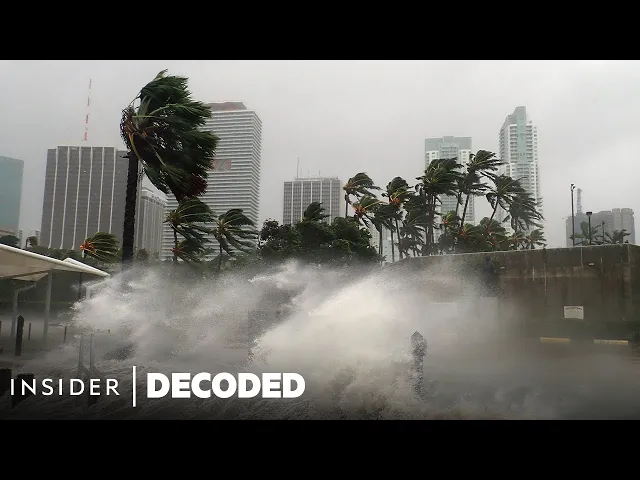
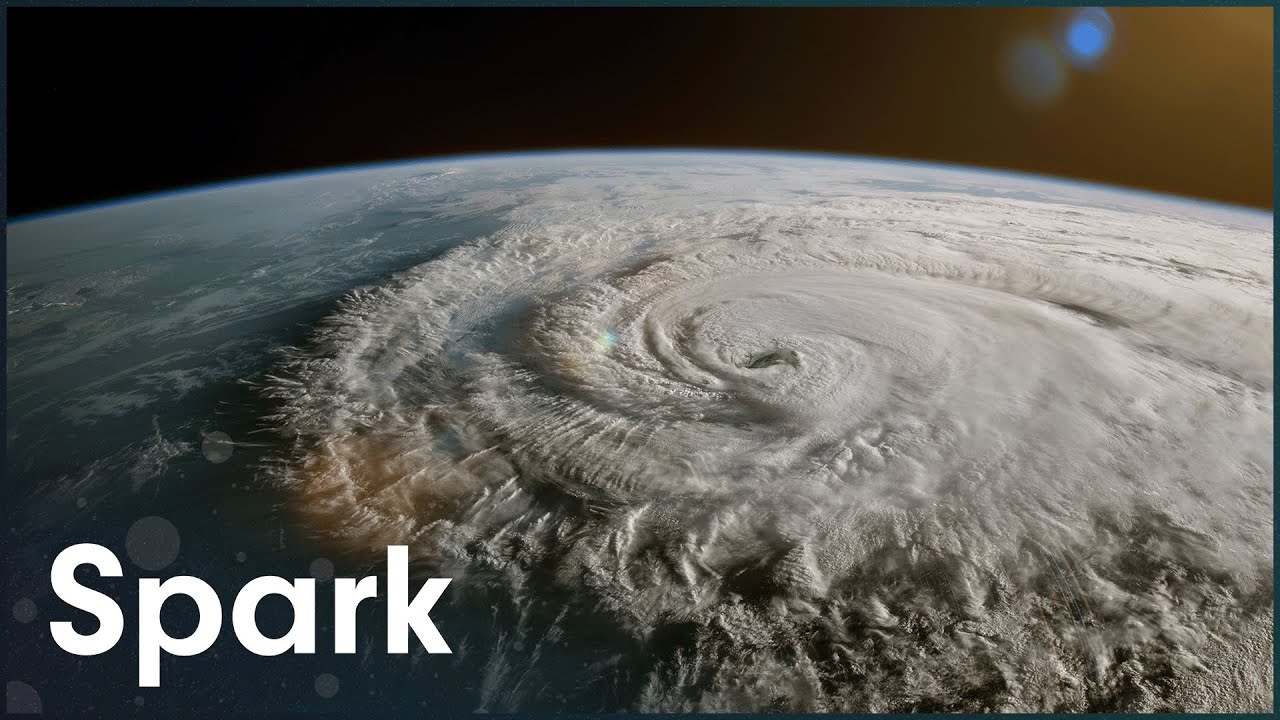
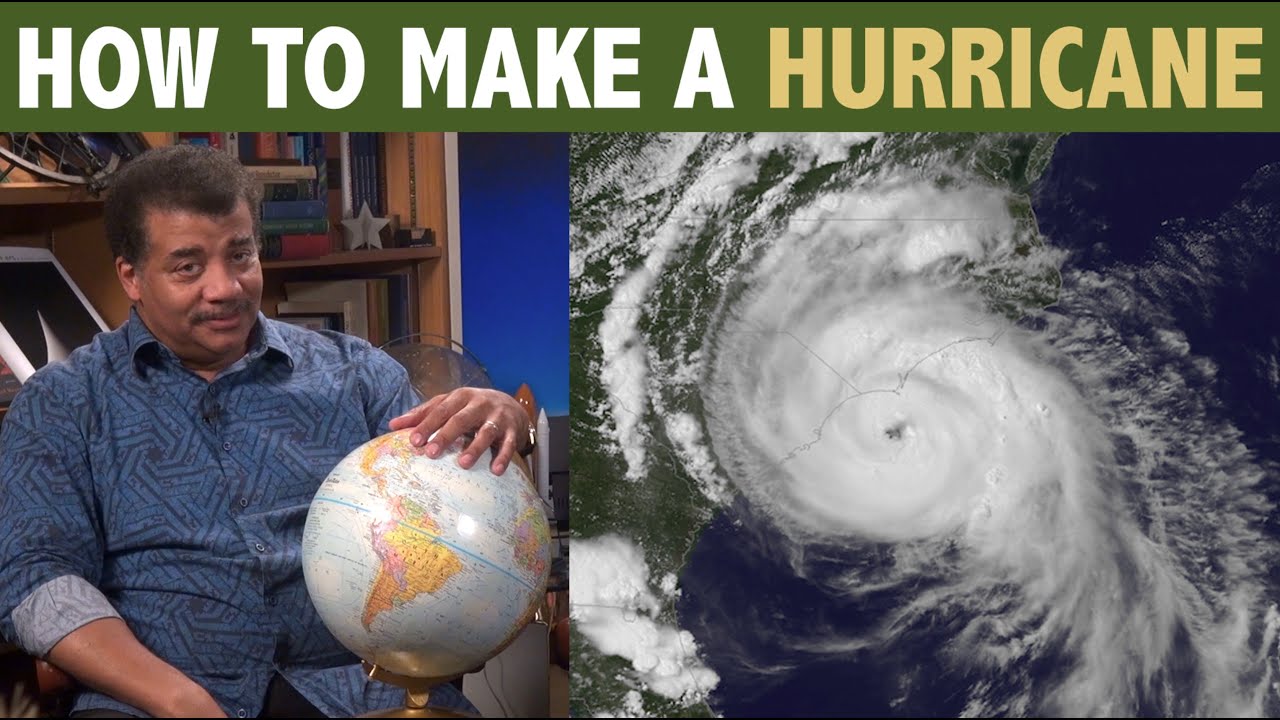
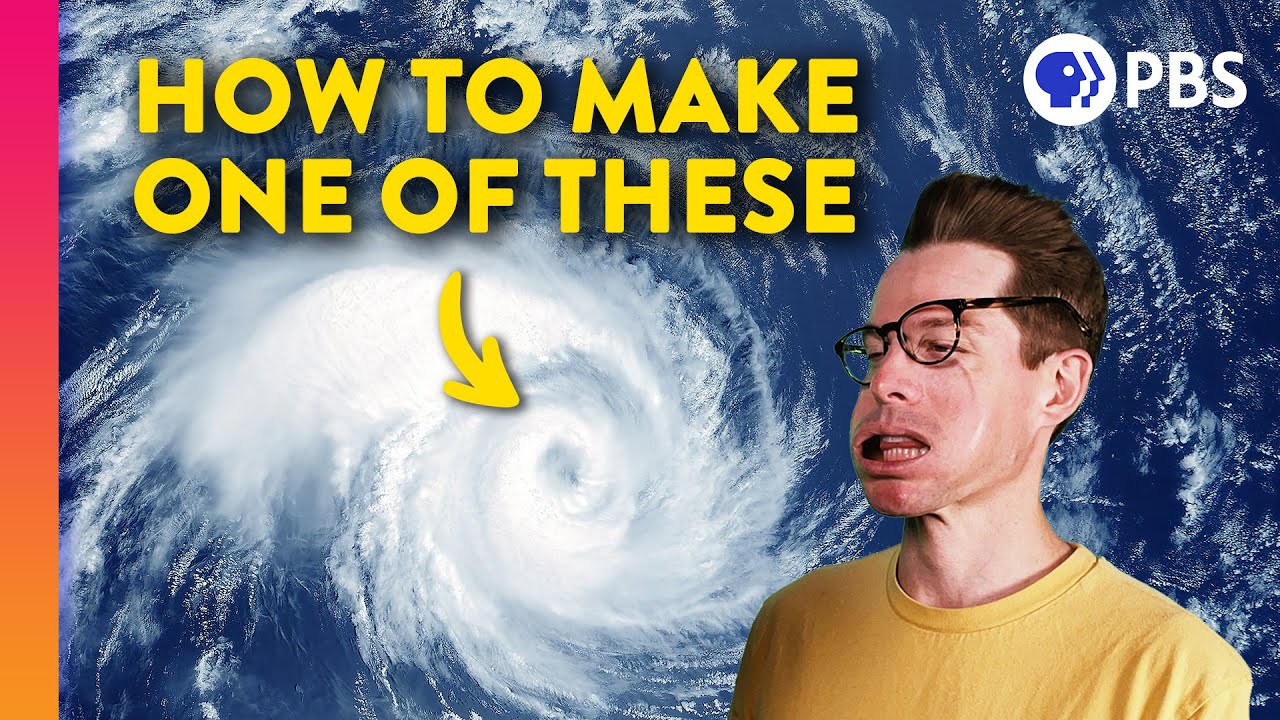
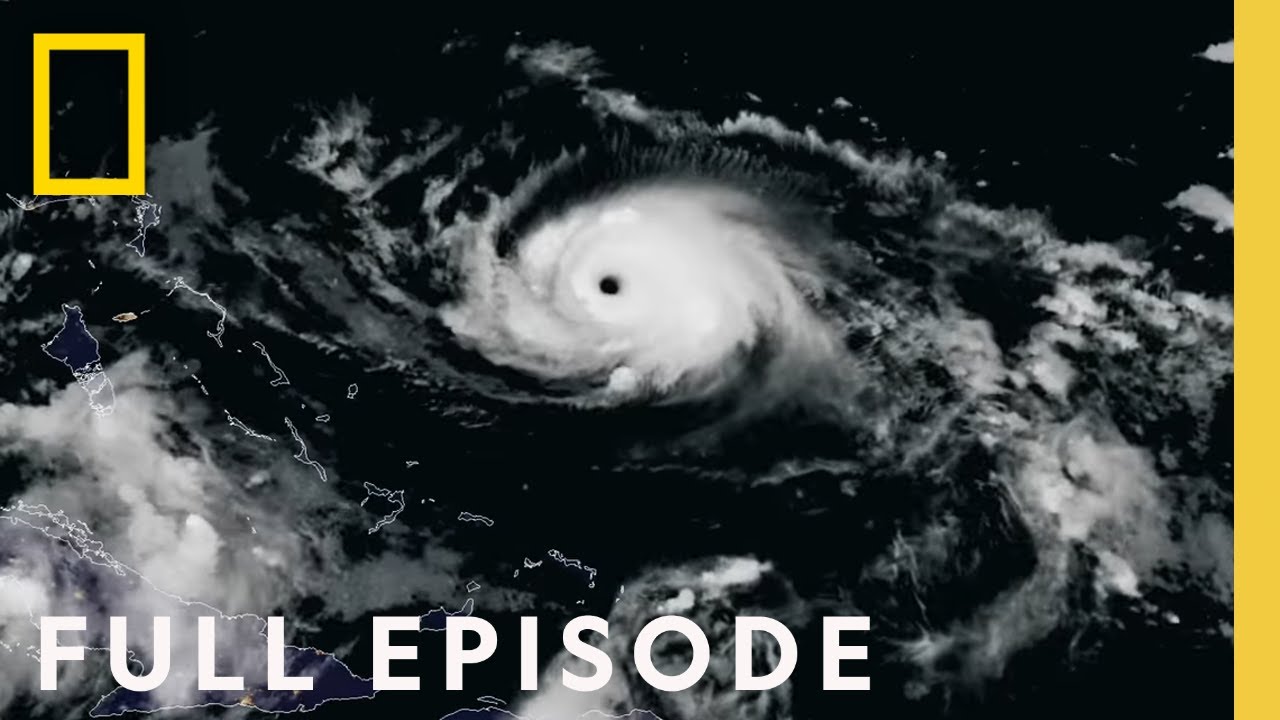
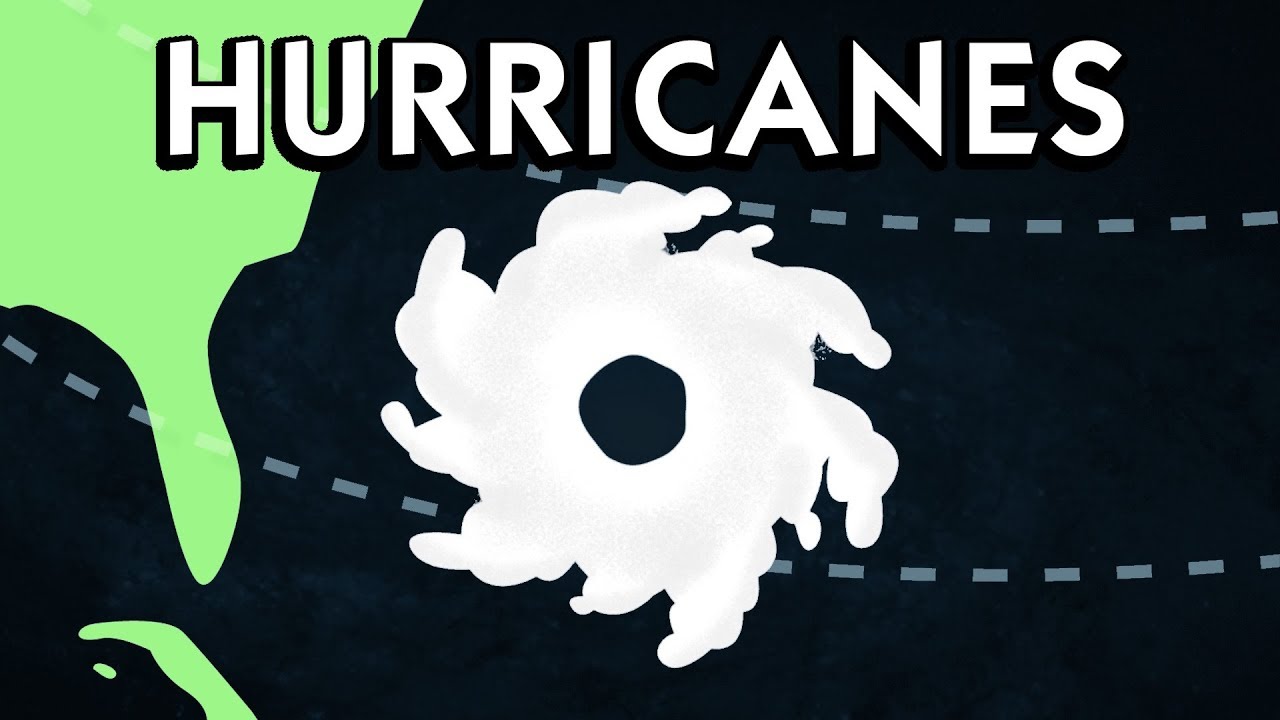
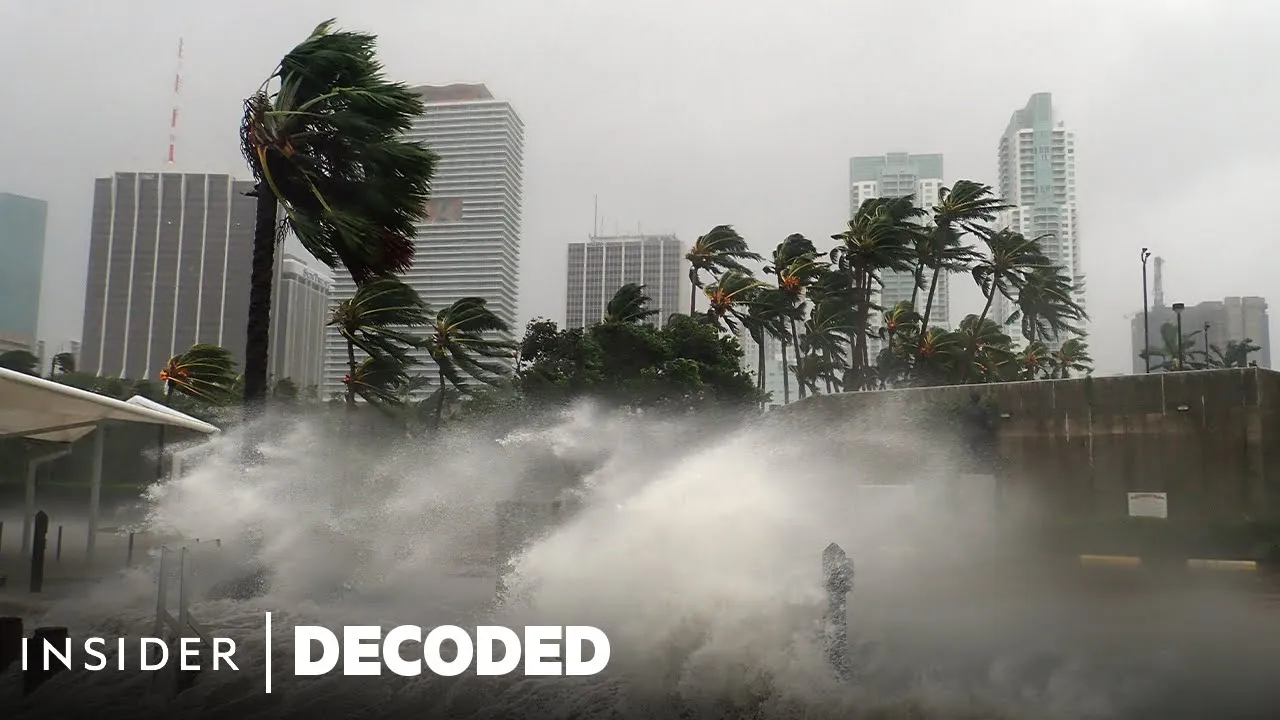
Narrator: This satellite image shows hurricane after hurricane popping up in the Atlantic, all on the same day. Storms like these are becoming more intense, wet, and costly. But what's causing this escalation, and is there any turning back from it?
Oh, my God. Narrator: 2020 was the most active Atlantic hurricane season on record, with 30 named systems. And 2021 saw storms forming even before the start of the season.
Hurricane Ida made landfall in Louisiana exactly 16 years after Katrina. It was one of the most powerful storms to ever hit the US, with 150 mph winds and over 7 feet of storm surge. These gusts are happening.
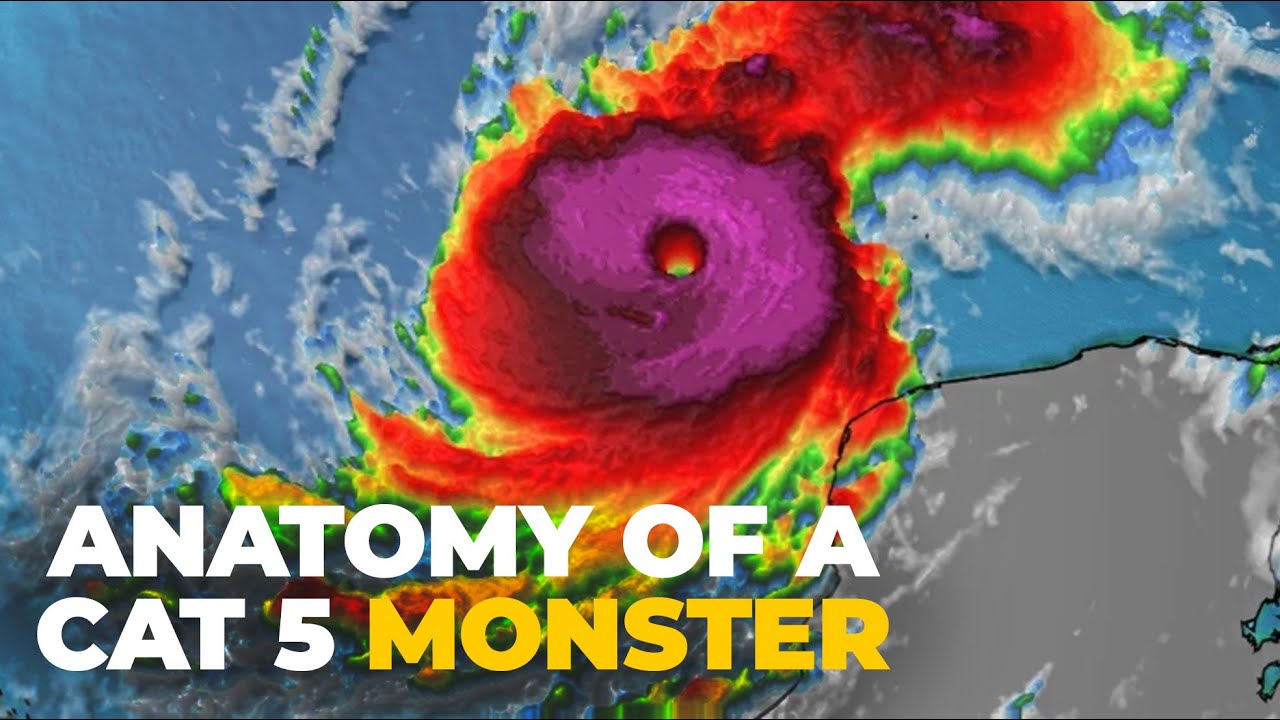
Narrator: Ida was a Category 4 hurricane on the Saffir-Simpson scale, named after the engineer and meteorologist who developed it in the 1970s. The scale measures the intensity of a storm from one to five based on wind speed. Category 4 hurricanes have winds between 130 and 156 mph.
And Category 5s are 157 mph or more. Between 1990 and 2005 the number of Category 4 and 5 storms nearly doubled worldwide, averaging about 18 a year. And a recent study found that since 1979, the chances of stronger hurricanes forming has gone up by about 15%.
Scientists say the main reason they're becoming more common is climate change. Heat is more conducive to hurricanes, which form when the ocean is at least 80 degrees Fahrenheit. This graph shows that as sea-surface temperature has gone up, so has the power of these storms as measured by strength, duration, and frequency.
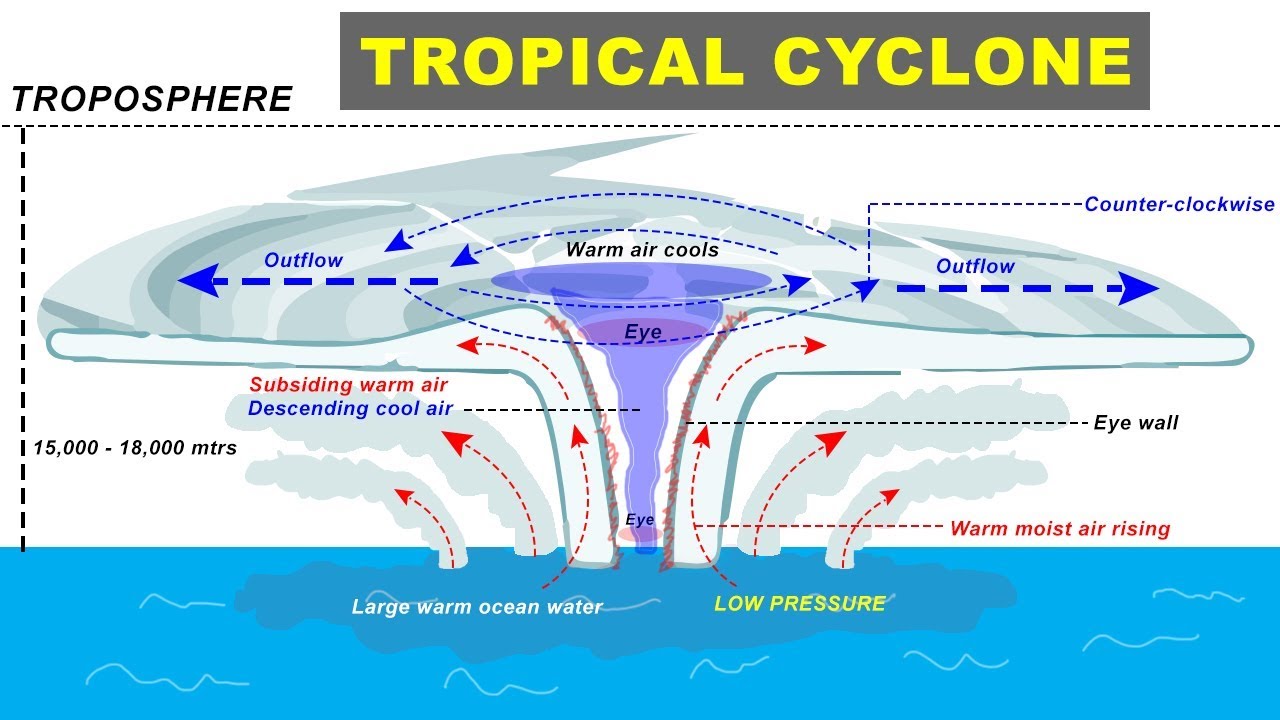
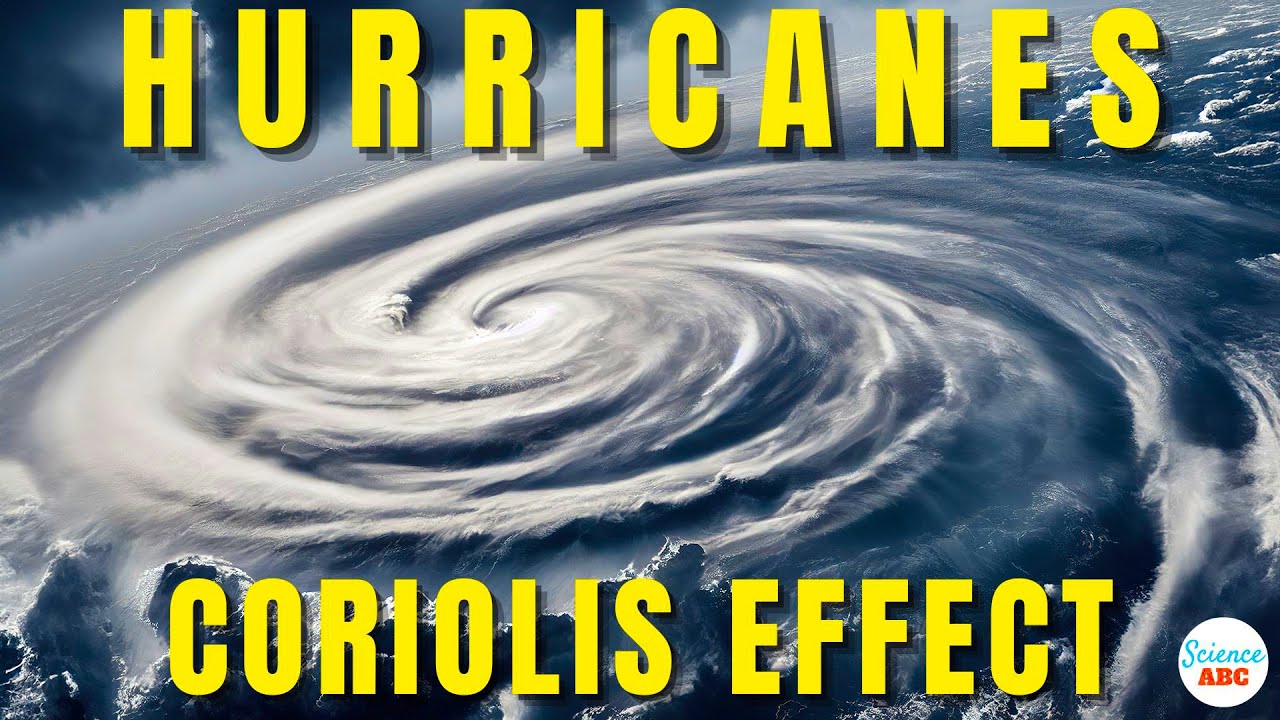
As wind passes over the ocean surface, warm water evaporates, cools, and condenses back into water droplets. Up in the atmosphere, that turns into big stormy clouds. Warm air continues rising and is pulled into the clouds.
Winds begin to spin around the center of the formation. And once they've reached 74 mph, the storm officially becomes a hurricane. Though if this happens in the northwest Pacific Ocean, they're actually called typhoons.
And if this happens in the south Pacific or the Indian Ocean, they're called cyclones. Only when they're in the eastern Pacific or the Atlantic Ocean are they called hurricanes. As the storm strengthens and winds increase to about 80 mph, an eye starts to form in the center.
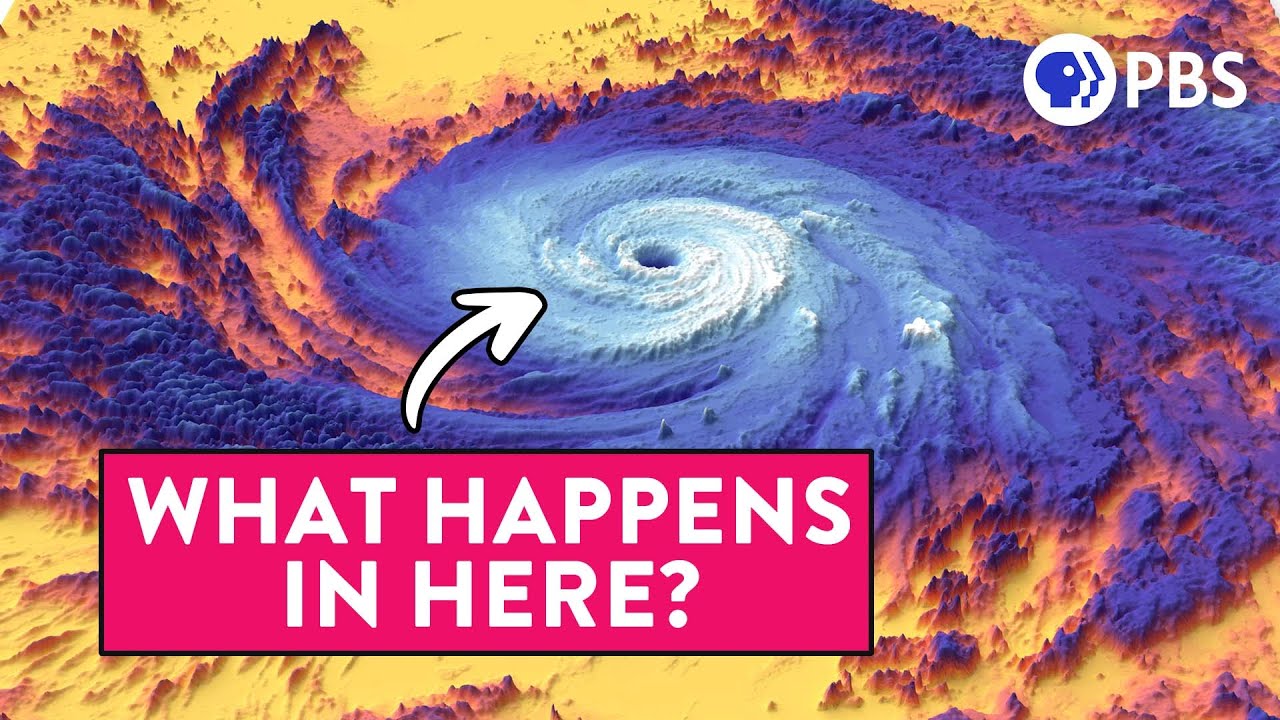
It's this circular spot when viewed from above, and it's usually about 20 to 40 miles in diameter. Here, a plane flies inside the eye of Hurricane Iota, which was a Category 4 storm. The area surrounding the eye, known as the eyewall, is the most vicious part of a hurricane.
It's a ring of thunderstorm clouds and the strongest winds. In the Atlantic, hurricane season officially starts on June 1, but for six years leading up to 2021, storms have been forming before that. This year, the National Hurricane Center began issuing tropical weather forecasts on May 15 instead.
After reaching land, hurricanes eventually run out of the warm, moist air that fuels them. Winds also die down, but these days, hurricanes are staying active longer. They now take 33 hours to weaken, compared to 17 hours half a century ago.
Hurricane speeds actually slowed down by 10% between 1949 and 2016, but that's not necessarily a good thing. Slower speeds mean that storms can stay put longer over a specific area, which can ultimately lead to more destruction. Harvey lingered over Houston for several days, dumping 34 trillion gallons of rain over the Gulf Coast.
That could have filled up 26,000 New Orleans Superdomes. It was the heaviest precipitation event ever recorded for a storm in the US. And scientists say it was 15% more intense because of climate change.
That's been causing more rainfall during hurricanes because warmer air can hold more water vapor. Ida's rain prompted the National Weather Service's New York office to declare a flash flood emergency in New York City for the first time ever. Within a few hours, more rain fell in the city than San Jose, California, has gotten over the last year.
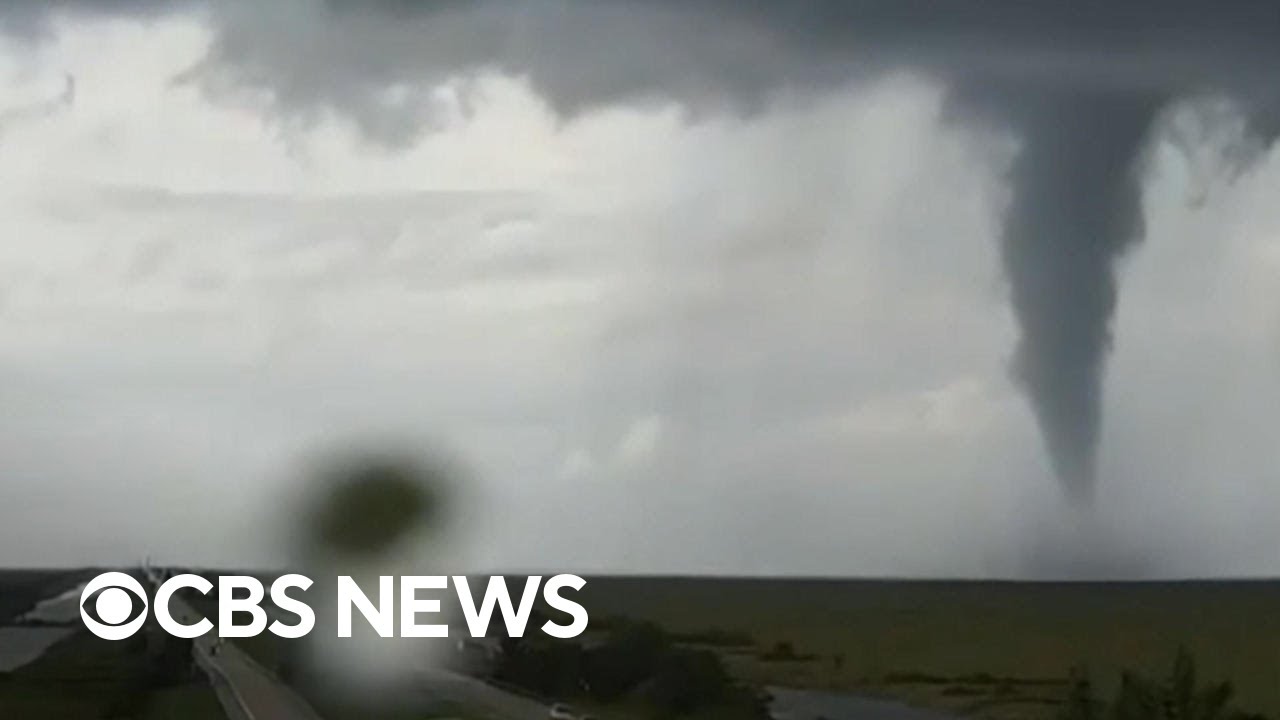
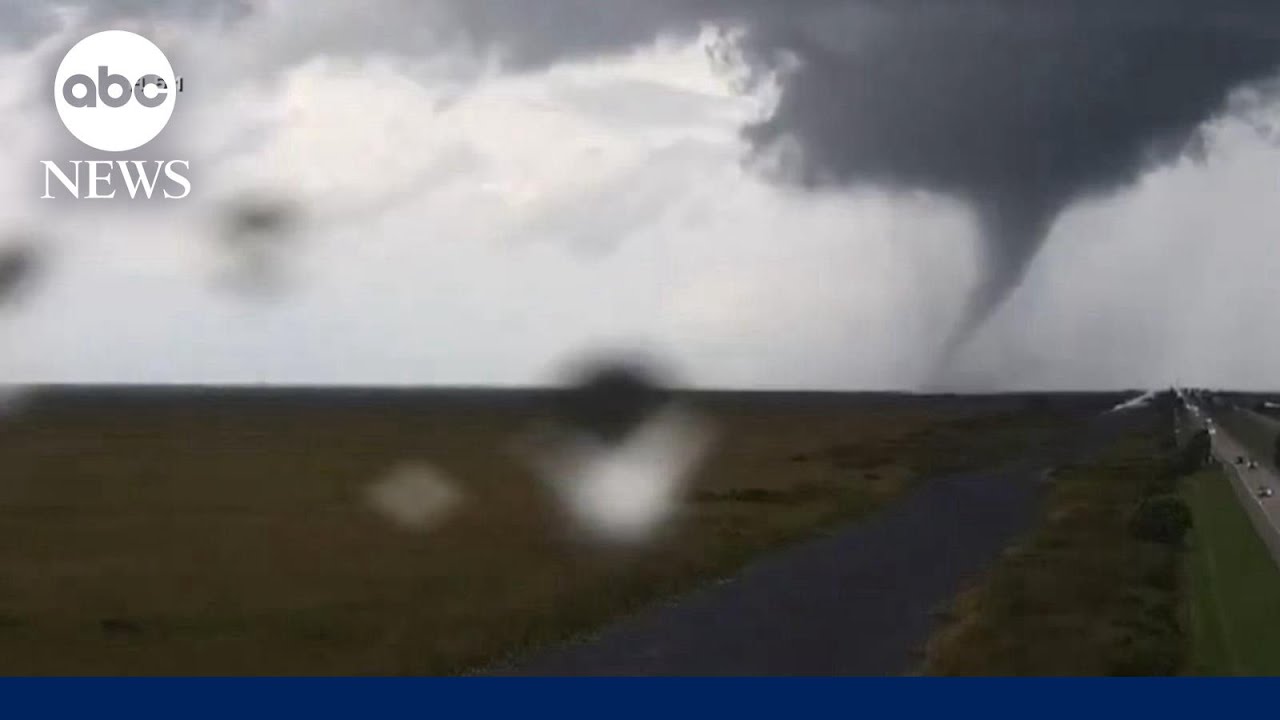
Ida also brought tornadoes, rarely seen across the Northeast, demonstrating how even after hurricanes weaken, their remnants can continue to be disastrous. Right now the US, China, and Philippines see the most of these dangerous storms, followed by Mexico, Japan, and Cuba. But hurricanes also appear to be hitting their peak strength at farther latitudes than before.
That's because the tropics themselves are expanding at an average rate of 30 miles per decade. Scientists say it's mostly because climate change is heating up oceans, which are circulating warm water to wider areas than before. That's shifting where hurricanes can strike and threatening parts of the world that have had little experience in dealing with them.
Already, almost 1. 2 million Americans live in counties at risk of substantial hurricane damage. Since 1980, the US has lost more than $945 billion to hurricanes, the most costly of any natural disaster.
One of the earliest recorded in the country hit Galveston, Texas, in 1900. It was the deadliest in American history, killing at least 8,000 people and costing today's equivalent of about $1 billion. Fast-forward to recent years, Hurricane Katrina and Hurricane Harvey each cost over $125 billion, though more development along the coast has also been a big factor in the increase.
By 2075, the cost of annual hurricane damage in the US could go up by 40%. Local and federal government agencies are trying to prevent disaster as much as possible. Here, temporary flood walls are set up in New York City ahead of a storm.
The city is spending $20 billion after Hurricane Sandy to construct barriers like these, make power upgrades, and design stronger facilities. Hurricane Andrew led to the first official statewide building code in Florida, requiring sturdier roofs and wind-resistant windows. The code is updated every three years, and officials say it's been crucial to lessening the damage from recent hurricanes like Matthew and Irma.
And following Katrina, New Orleans built a $14. 5 billion system of levees, pumps, and other protections to prevent future flooding. That system seemed to hold up against Ida.
Human activity has fueled climate change and worsened these violent storms over the decades. And now, building more resiliently may be our only way of mitigating their impact.