Hi, I'm Craig, and this is Crash Course Government and Politics. Today, I'm going to try to explain two fundamental concepts of American government that students and citizens often confuse. Team Jacob and Team Edward.
No. Separation of powers and checks and balances. Team Jacob!
[Theme Music] So separation of powers is really simple. The national government is divided into three separate branches: the legislative branch, the executive branch, and the judicial branch. I put them in this order because that's the way the Constitution has them.
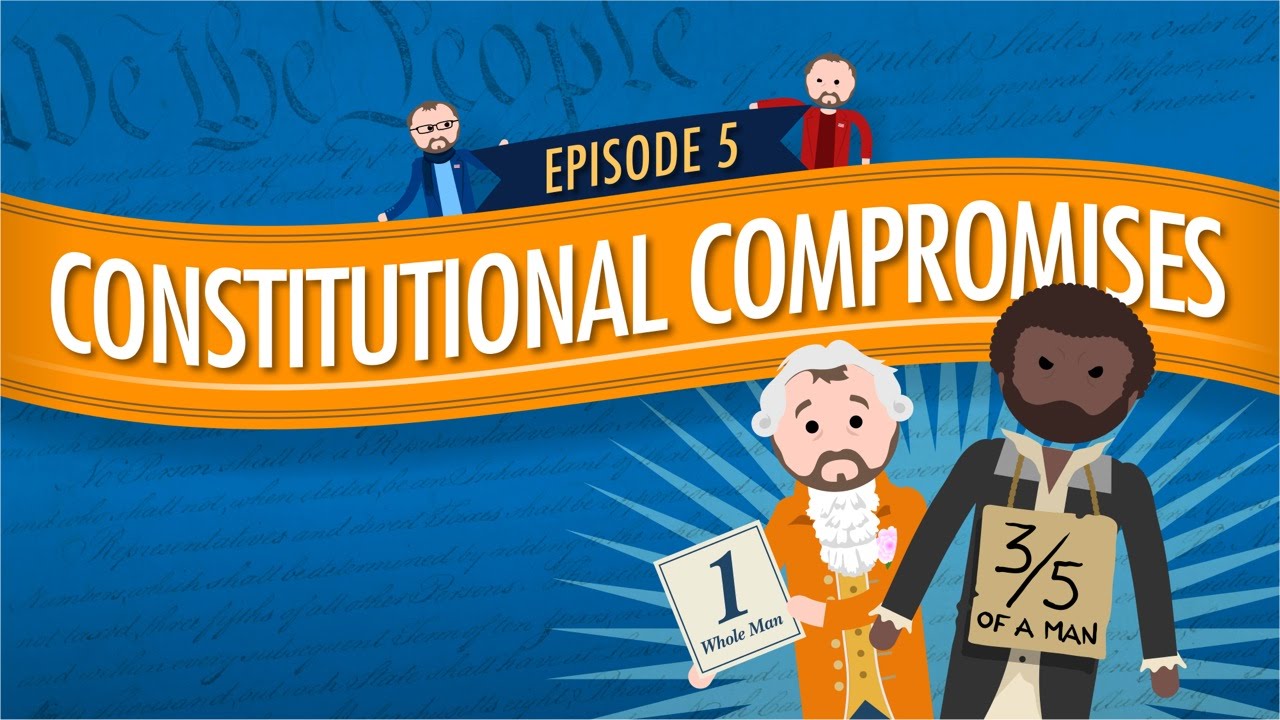
And I'm not going to argue with the Constitution, except for that stupid 3/5ths of a person thing. So the legislative branch comes first, because it's supposed to be the most important branch, and Article I is the longest and most detailed of the 7 Articles in the Constitution. The main job of the legislature is to make laws.
The secondary job is to say, "No, it's your fault. " "No, it's your fault! " "No, it's your fault!
I'm going home, I have to campaign. " Then we have the executive branch, and here the Constitution is a little less helpful. Article II Section I states "The executive power shall be vested in a President of the United States of America.
" The executive branch is obviously more than one guy or girl. The executive branch is in charge of executing the law, which basically means carrying them out. The President is like the CEO of the US, making sure that the government governs.
Interestingly, the President's power as executive is found in the Oath of Office. "I do solemnly swear (or affirm) that I will faithfully execute the office of the President of the United States, and will to the best of my ability, preserve, protect and defend the Constitution of the United States. " Ruh ruh ruh!
Wait, Stan, I just gave the Presidential Oath of Office, so I'm President now, right? Totally. Oh, elections, yeah, we didn't have those.
Last and, in the eyes of many, least, is the judicial branch. The job of the judiciary, also sometimes called "the Courts," which I'm going to also call "the Courts," because judiciary is really hard to say, is to interpret the law, to explain what it means. Article III, which describes the judicia- the courts is even shorter than Article II.
It only has 3 sections instead of 4, and the courts today don't really look like this description. Here is the first sentence of Article III Section I: "The judicial power of the United States, shall be vested in one Supreme Court, and in such inferior courts as the Congress may from time to time ordain and establish. " At least the Framers realized that the entire United States would probably need more than one court.
But notice right there in the sentence, that Congress has the power to create all other courts. And this lead us nicely into the second important concept of American government - checks and balances. Yeah, that was a segue right into it.
It was a nice job, by me. I'm going to need a little help explaining checks and balances, so let's do that part in the Clone Zone. Checks and balances is a confusing term because it implies two things.
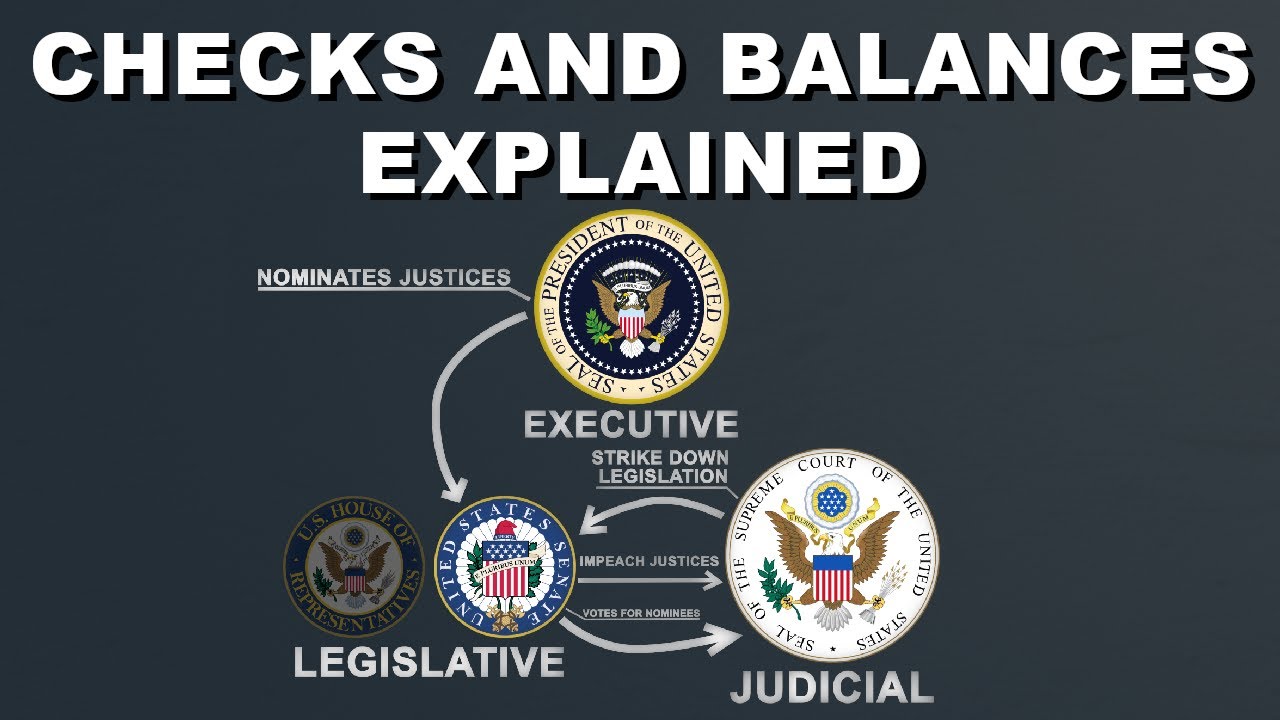
But really, it would be better to think of them as checks that balance, although that might be confusing to people who actually try to balance their checkbooks. Anyways, the point here is that each of the branches has the power to limit, or check, the other two and this creates a balance between the three separate powers. In the same way that the Constitution lays out the legislature in the greatest detail, it also gives the legislature the greatest number of checks on the other branches.
Legislative clone. . .
Legislative Clone: So the Framers of the Constitution were really concerned about the President becoming a tyrannical figure a la King George III. That guy was a jerk. So the Constitution gives the legislature a lot of power over the Executive.
The House of Representatives can impeach the President, then the Senate can remove the President from office, but only if two thirds of the Senators vote for impeachment. The Senate can also check the President's appointment of judges and officials by rejecting them. This is known as advice and consent.
Either branch of Congress can investigate executive activities and officers. If the President vetoes a law, Congress, with a two thirds vote in both houses, can override the veto. Congress can also refuse to pass laws that the executive wants, and probably most important, they can refuse to appropriate funds for executive programs.
You might think that since the judiciary is the third and presumably least important branch, Congress would have fewer checks on it. But that would be wrong! Here are the ways that the legislative branch can limit the judicial branch: Congress can impeach and remove judges as it can do with the President.
Congress can be a bunch of jerks sometimes. Huh, that's me. Heheheh.
Senates can reject judicial nominees, which is a check on judges before they even get there. Congress can change the federal court system by adding or taking away courts like it says in Article III. And it can change the jurisdiction of federal courts.
Congress can pass new laws that override the Supreme Court decisions, as long as the decisions aren't based on the Constitution. Don't want to do that, no. And as a very last, super drastic resort, Congress can propose Amendments to the Constitution, as it did with the 13th, 14th, and 15th Amendments, overruling the Drd Scott decision.
Craig: Wow, legislative clone. Looks like the Framers were so scared of an all-powerful super president that they gave Congress most of the power. Executive Clone, you know, I'll be Executive Clone because I'm basically president of the clones.
The executive branch can check the power of the legislature in the following ways: the president can veto Congress' laws so that they don't go into effect. The president can call Congress into a special session, but he can't make them pass new laws. The executive branch carries out the laws, and may do so in ways that are contrary to what Congress wanted.
Although this rarely happens, the vice president is given power to break ties in the Senate, which is one of his only real powers other than embarrassing the president. The president nominates Supreme Court justices, and this can change the way the courts work. He also nominates federal court judges, and this shapes the entire court system.
The president can pardon people convicted by the courts, which cancels out their judgments. The president can also, in his capacity to carry out the laws, refuse to carry out court decisions. So you can see, even with a number of checks that it has, the executive branch is weaker than the legislature.
Judiciary Clone: But not as weak as the judiciary branch. Many political scientists consider the judiciary the weakest branch because without legislative and executive action, it doesn't have a whole lot to do. Being the weakest branch, the judiciary also has the fewest checks on the other two branches.
Here's what it can do: The judiciary checks the legislature by declaring its laws unconstitutional. The Chief Justice presides over impeachment trials, and sometimes he gets to wear a special robe when this happens. Perk of the job, it's a perk of the job.
It's really nice. And the judiciary checks the executive branch by declaring executive actions unconstitutional. A really good example of this was Youngstown Sheet and Tube Company vs.
Sawyer, a super important case. Look it up, look it up! The court also issues warrants in federal crime cases, and again presides over impeachment trials in the Senate.
But the big check that the courts have is invalidating laws and executive actions. We'll talk about how courts actually do this and where they got this power in a later episode. Craig: No, I'll talk about it in a later episode, okay?
Let's go back to the regular desk. Judiciary Clone: You're out of order! Craig: Thanks clones.
Now some of you are probably saying, Craig, this is very helpful information but why do we have checks and balances in the first place? To you I say, "Stop talking to your computers, that's weird! " I also say, "Let's go to the Thought Bubble.
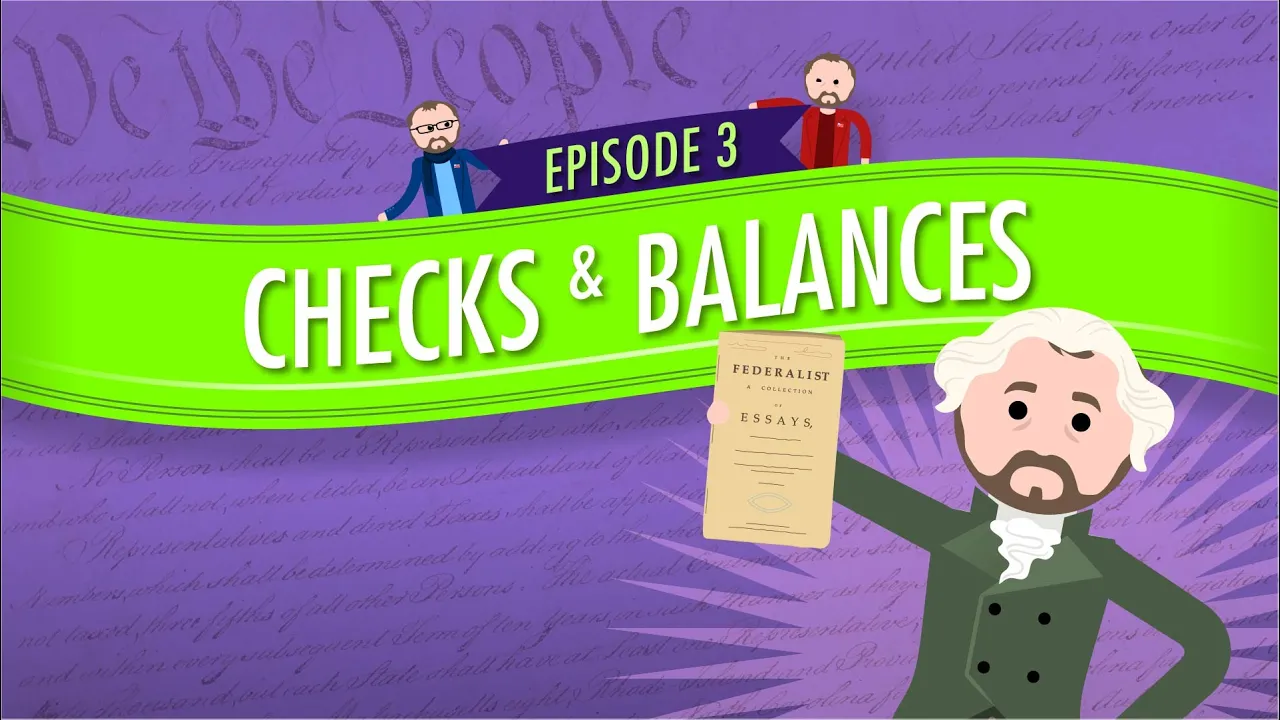
" So the Framers of the Constitution were terrified of a tyrannical central government that would destroy people's rights like they felt the British had. The powers of the national government are separated, and each branch are able to check others because this makes it more difficult for the government to act in ways that harm the acts and interests of the citizens. One of the best explanations of this comes from, you guessed it, the Federalists Papers.
In this case, Federalist 51, which was written by James Madison, who also wrote a lot of the Constitution and became president, so he kind of knows what he's talking about. And really, it's kind of a shame that he's not on our money because Americans would pay him more attention, and they would also pay him, literally. In Federalists 51, the title which also contains the phrase, "checks and balances," Madison wrote, "But the great security against a gradual concentration of the several powers in same department, consists in giving to those who administer each department the necessary constitutional means and personal motives to resist encroachments of the others.
It may be a reflection on human nature, that such devices should be necessary to control the abuses of government. But what is government itself, but the greatest of all reflections on human nature. " That's right, he wrote with an accent.
Don't know how that's possible. Thanks, Thought Bubble. Madison was talking about checks and balances; I'll leave it up to you to decide if human nature requires that we build safeguards into our government to protect us from our leaders.
But Madison thought so, and I think so too. But this isn't about me; this is about government. And it's helpful to remember that when people tell you that the Framers of the Constitution were infallible, James Madison actually that they were outfallible, or just fallible.
Anyways, see you next time. I'm so fallible. Crash Course Government and Politics is produced in associate with PBS Digital Studios.
Support for Crash Course US Government comes from Voqual. Voqual support non-profits that use technology and media that advance social equity. Learn more about their mission and initiatives at Voqual.
org. Crash Course is made by all these nice people, they're very nice. I know them.
Thanks for watching.