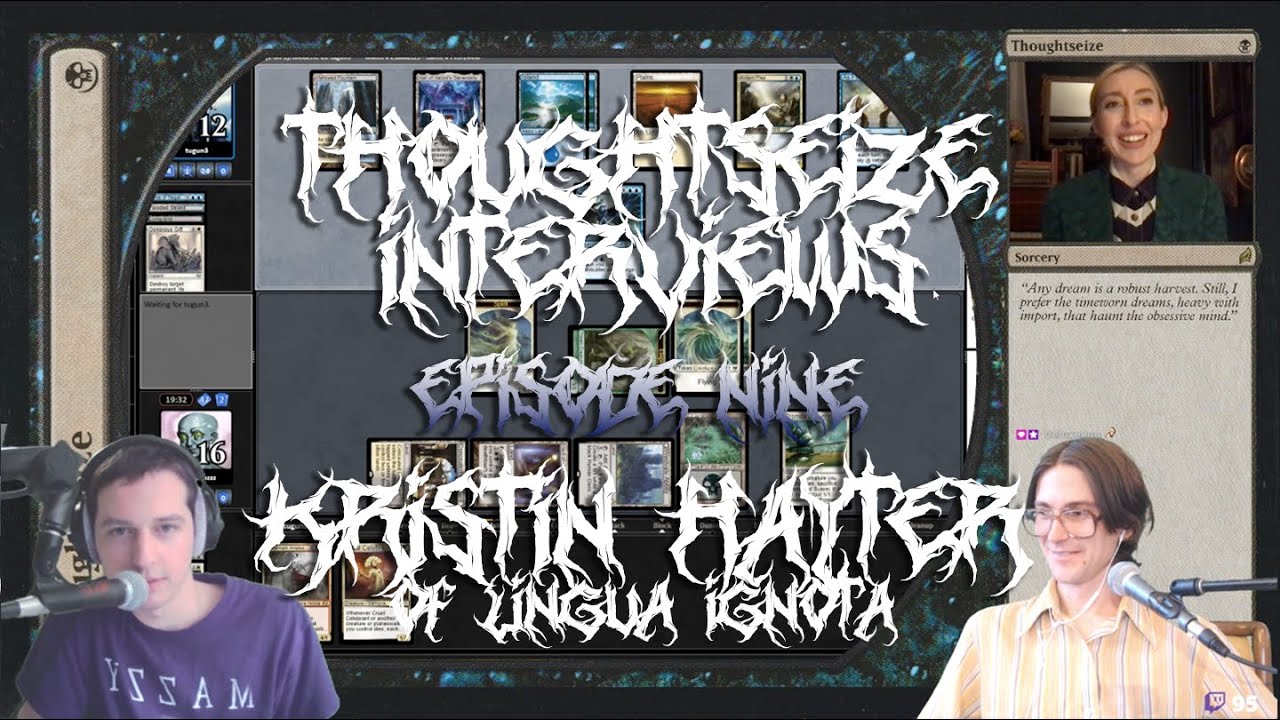
going okay hey everyone anthony fantano here internet's busiest music nerd hope you are doing well and it's time for an exclusive interview and conversation with the one and only lingua ignota this is our second interview that we've done with uh miss hater but i felt like we needed to catch up again after the release of the fantastic center get ready which dropped this year and get more info more background on that because it really is an incredible release and one of my favorites of the year um so yeah you know we're hoping to dive into
that and uh anything else that comes up in the conversation of first off how are you doing thanks for coming through thank you so much for having me again it's really nice to be here yeah no problem round two round two you survived the first round so we're going to i did it it was fun i enjoyed that talk very much um i'm i'm hanging in there i'm alive still yeah how are you i'm doing good so far how have you found like the reception between you know this new record and your last one to
to be has it been a bit warmer more intense different in any way that you've noticed i think people were really surprised by what it ended up sounding like sure um i think people were expecting something large and industrial and kind of metallic and it is not that um but the reception was really wonderful it was very warm it was very kind it was yeah um i i wasn't i was expecting and anticipating people to be like oh we [ __ ] hate this because it's not like screaming you know um into the abyss although
it is screaming into the abyss but in a different way but um but yeah it was um the reception has been really wonderful and very um enlivening for me yeah yeah um let's talk about you know some of the differences uh that uh have sort of come up with this new record um the first of which i want to explore sort of like the religious aspects and spirituality of the album overall and obviously these are like themes that you have dived into pretty clearly in your past work but you know what made you want to
lean so hard into that as not just like a side dish but really just sort of like the main focus a main concept for the record this time around yeah i was um it had a lot to do to do with my kind of life circumstances and where i was living at the time and the situation i was in um i moved to central pennsylvania kind of remote like literally kind of in the middle of the state um which i which was a very different cultural experience for me and it really was um it felt
like god's country to me um there's a lot of um different kind of sects of christianity that exist and are really prominent there and i really started to um investigate and become really interested in like amish and mennonite communities in particular um which are you know we're literally like neighbors basically um and so i was exploring that as a way to contend with my own experience and to um really just look at the concept of higher power and explore my own faith because i felt like i was in a really dark place and faith was
kind of the only thing that saw me through in a way although my own relationship to to god and to faith into organized religion is super complicated i can't even really describe it um like almost elapsed catholic but not quite um not non-practicing uh i don't know it's it's very it's it's very complicated i don't even understand it myself but again becoming um like with caligula and stuff there was a lot of catholic imagery in particular but in this uh record i chose to explore kind of more folky or not folky but like folk um
vernacular religion yeah i mean there is something about a lot of the tracks on the lp and even the religiosity of it that feels like very lost in time you know that feels like very kind of archaic feels um you know almost like 1900s america or like earlier like um you know and even as you say like it's uh difficult to put your spirituality into words you know you've referred to yourself in interviews as like a semi-practicing catholic and and everything before um you know but even if it is difficult to define would you say
there are any definitive ways in which your spiritual beliefs or outlook have kind of evolved over the course of creating this record you know did that sort of like impact your you know overview spiritually in in some way um that's a good question i feel like i um i feel like i lost all belief in the making of this record um it was yeah i feel like i started to move like very strongly back into being like fully atheist um or agnostic as as this record was completed and just um and just started to have
a relationship with with the aesthetic components of of religion as a place to put pain i guess yeah that's um interesting that you say that because you know while there are uh you know narratives i would say that you're concocting on this record for sure there are a lot of moments where it does seem like at least through your music that you're having like some kind of sincere communication with with god in a way you know i mean would you say that that that was something that you were engaging with on this record it was
it was um it was definitely an attempt it was it was searching it was searching for god um the entire record i think is me searching for god and not being able to find god not being able to find a higher power um during the time that i was making this record as well i i was working on a 12-step program i was working coda and al-anon and was trying to find a higher power in in those in that context and was having difficulty doing so so um the commune with god is is like a
is definitely a seeking and not finding i think in the record and you know i mean uh outside of sort of a musical context is and you know barring the atheist statements that you made just a second ago you know is is uh uh do you often find yourself you know attempting that communication in private moments as well like is prayer generally something that is you know significant to you which again i ask given just the intensity with which you try to make that you know communication on on this record yeah in in my private
life i do not pray um i i started trying to pray and i feel like i've lost that capability because i i don't know i prayed so often as a child um every day um and i don't even know how anymore although i suppose the entire record is some form of prayer um but i yeah it's it it isn't really a part of my daily life at this point yeah i i guess um i'm just kind of curious given you know some of the catholic background uh uh because you know somebody who was in the
religion myself at one point you know i vividly remember um you know uh sort of the uh almost like the hierarchy of communication with god which had to be done you know through the confessional as well you know and i sort of you know wonder if in the past like you know was was that something that you ever held the issue with this idea that you know god maybe in sort of a protestant sense wasn't more of like i guess more of an intimate relationship it was something that you know you sort of needed like
a third party to be involved with to sort of act as sort of like you know yeah the mediator the zoom call to reach god um you know because you've spoken before about uh uh being attracted to sort of like the pageantry of uh religion and catholicism and sort of you know and and i guess i wonder as a result of that like what do you also simultaneously think of like the hierarchy that is also kind of involved with that as well because it does seem like you wrestle with that too on this record yeah
um i think that's part of also the the kind of vernacular religious approach that i took in um in this record of like the the communication to god being direct which i think is is also a part of amish mennonite um and certain forms of like um again like vernacular religions out in in pennsylvania um and that you don't need these kind of like structures that surround for instance catholicism um and that you can speak directly to god um that was something that i found really interesting um and i think in a way um the
site pennsylvania kind of became god and a thing that i really connected with out there was nature and so i started to um develop a really important connection with the natural world and with the kind of like sublime i guess out there um and it was kind of like my comfort and my solace to be out in in god's country like kind of among god um in in nature i think and so that was kind of my direct link to maybe the higher power that i was seeking that it was nature somehow i wanted to
dig a little bit more specifically into some of the folk aspects of the record that turn up on a few tracks because they do manifest in such an interesting and authentic way i think like when you were in pennsylvania and sort of familiarizing yourself with these you know communities was there any sort of like you know uh research or immersion that you had to sort of put yourself into in order to i guess get a better grasp of you know appalachian folk music as like a sound an aesthetic and a style to be able to
not only execute it on this record but then also to kind of turn it into this you know very noisy and intense uh sort of experience that very much you know reflects uh this you know what i guess some people might refer to as like a linguing notice sort of sound uh i did do a lot of research i um i read a lot and kind of picked up every book i could find on on the amish on mennonite fracture which is their illuminated manuscripts on kind of the pennsylvania dutch culture and then i also
did a lot of research into um you know like televangelists like i became really uh kind of like bizarrely symbiotically enmeshed with jimmy swaggart um and uh in his work and started like just studiously watching his sermons and listening to all of his music and um and then also researching like the the music of appalachia and like string bands and the history of certain instrumentation in that area and i ended up just kind of like picking up instruments in antique stores and you know out in the world while i was there and utilizing them in
the record um often in ways in which they're not supposed to be utilized or extended instrumentation or um in a kind of experimental way um but i was really musically i became really focused on like on folk music on melismatic music which is part of what um uh amish uh singing and amish worship music is it's just melismatic chant that they set to like a um a popular hymn or something so um so i started like really looking at uh like hymns psalms uh sung worship music of those areas and started applying the kind of
um the chord progressions and uh the structures to to my own record in a sort of bizarre way and you know i'll say that you really kind of captured and i think sort of an important aspect to that style of music is really like a lot of the repetition involved in the tracks because it does sort of like really kind of create that transcendental experience i don't really know what it is psychologically in the mind uh that uh you know creates this sensation but when you you know when you're hearing such an intense sound kind
of repeat it over and over and over and over and over it does sort of like create almost like a buzzing kind of feeling in your head which at a point where maybe people were less self-aware biologically you could maybe connect to i'm having a religious and talking i feel god in me or some [ __ ] like that you know it's like i'm speaking in tongues i'm sucking snakes heads off you know that like that sort of thing yeah yeah um yeah definitely that was absolutely something i was thinking about um and [Music] that
kind of that repetition um is often used in like ceremony to um to create a transcendental or hypnotic state uh which is meant to allow you to lapse into like um religious fervor or ecstasy um at which point you will find like glossolalia and speaking in tongues and stuff so um yeah i was definitely keeping that in mind as structurally at least as part of you know what i wanted to do uh what you were saying earlier about jimmy swaggart to jump into that as a connection quickly um you know was that something that uh
you you know was that a threshold you crossed as a result of being in pennsylvania at the time or was that just something that you kind of fell into as a result of of some other kind of connection or you know happenstance um well swaggert is not from pennsylvania this is kind of the only non-pennsylvania um reference that i put into the record he's actually from louisiana baton rouge um but i was uh taken with his story of disgrace and um it had an interesting parallel in my life at the time and so he became
kind of an emergent figure this kind of uh this god-like figure who is worshipped by so many people and who presents himself um as god-like and you know um behind the scenes is you know being anything but god-like um and basically hypocrisy and um and so i came to him you know we were watching stuff about televangelists and i just started and about disgrace televangelists um because it's kind of thing for them so i i really focused on him because he had a lot of material and his confession is so it's so like rich with
like it's just so gross um um yeah i was i became really taken with him and i'm still taken with him i still do work with i've been making like a video series recently with like written pieces and video that are for jimmy swaggart um and yeah he's kind of the continuing thread for me yeah now i wanted to ask about that as well if anybody's unaware on um you know your band camp and instagram now you've been dropping sort of like these video montages and you know it's a lot of visuals from those pennsylvania
settings and it's you know letters that you've written in that you're speaking aloud uh to jimmy you know uh what did you feel like or what do you feel like those letters and those pieces sort of add to this album cycle you know after i mean you know at least for me the role that jimmy plays as like a device for the record is is pretty clear and pretty cut and dry but after the record was over what did you feel like still was left to be said you know was was i i guess you
know what what drove you to this point you can to put these letters out and what do you feel like they add to i guess like this era that you're in the midst of artistically yeah um i just felt compelled to make them i um i first of all there was kind of a constraint um formally for me because i i was not able to sing this fall i had a um a tooth situation that i ended up having to cancel my shows and i cancelled for other reasons as well but mostly it was because
i couldn't sing so i was missing kind of my like major expressive outlet and i wanted to keep making things because i i constantly feel like if i'm not gonna make something i'll i'm like a shark i'll die um so um so i i was trying to process the pain i was experiencing this summer and into this fall by writing these letters to jimmy um who will never see them who will never um hear them or care um and it's kind of this exercise in futility that and then failure um that felt really important for
me to do at this time and um i don't know i've been wanting to move more into working in video i directed uh and shot um the video for pennsylvania furnace and so i've i've started kind of trying to integrate more disciplines into the the lingua practice i guess and this felt like the way to to continue into you know when i start recording again in the spring so yeah i wanted to ask about um sort of another perception that you have of jimmy and his inclusion in the record i mean maybe this is kind
of answered by what you were saying about him earlier and just sort of what you were referring to as kind of your your spiritual evolution as a result of this record but um when jimmy is brought into the record or included into the record uh to at least in one breath like highlight some sort of hypocrisy um you know is it for you is that done in a way that's i guess sort of like maybe in a way cynical like you know sort of a burn it all down sort of attitude like [ __ ]
this [ __ ] it doesn't mean anything like you know look at this bullshitter or whatever um or is it also done in part to you know sort of acknowledge or maybe even like you know reinforce the christian adage that like we're all fallen we're all sinners it doesn't matter how you know sort of like outwardly religious or a leader you are you know we have to acknowledge that uh we're all still sinners at the end of the day yeah um i wanted i wanted to make it ambiguous enough that both ways could be read
um that's the the narration of my music is really important to me and that ambiguity of who is speaking and what they're actually saying is a really big part of my practice and it harkens back to when i first started and i made the thesis and the thesis was all other people's language it was all um misogynistic language that was processed and algorithmically generated and then became my language um and so the narrator in my work is always ambiguous it's always potentially me speaking potentially my abuser potentially god or potentially the other figure there's always
the possibility that these people within the space of a line are speaking all together or all at once or um that you know when i'm using my voice i'm actually speaking jimmy's words so um i wanted although there is like a very yeah i guess i wanted that that kind of ambiguity of like indeed you know there is cynicism and hypocrisy but also it speaks about the ways in which you know i'm talking about me as well when i'm talking about jimmy um so yeah definitely definitely both for me you referred to a second ago
sort of there being a thesis for the record is is is that in the case that like you you had to have a really clear idea as to what you were doing before you sort of you know embarked upon the journey to to do it um somewhat i was meaning more like the the thesis that started my project and the um from from back in the day and that there's this ongoing ambiguous narrator throughout the work and um so but for this record definitely there was um there was a general idea of what was going
to happen and there was obviously a lot of like structural and formal things that i was that were kind of in like the like the wheelhouse and the toolbox and whatnot but the record kind of evolved in a way that was different than the other records because i was living the experience of the record as i was making it it wasn't you know my previous records have been reflective and this one was about my current experience um so it was building it was a little bit different honestly this time um to dive back into pennsylvania
for a second i mean it obviously like the its inclusion manifests on the album in a bunch of different ways but um you know i'm specifically interested to hear how you know centralia kind of ended up tying into the whole record because i mean you know with pennsylvania and appalachia in general there's a lot of history there's a lot of lore there's a lot of aspects that you could explore but you decided to you know make a large reference point you know sort of this town famous for this mine fire that's currently burning under it
and will probably you know continue burning for decades to come and you know it was something that personally i wasn't completely unaware of you know prior and um you know if anybody's you know interested in the story i encourage you to look it up because it is you know really i think one of the greatest american freak shows in in modern history um but uh you know what attracted you that story what made you uh stumble upon it and eventually you know sort of like include it in in your work in such a bold way
yeah um so much of my time in pennsylvania was spent kind of alone and trying to with kind of nothing to do kind of like stranded and covered um isolated and i kind of made it my objective to find out more about where i was living and so i looked into a lot of the a lot of the lore and a lot of the kind of weird sights of ruin and abandonment there are many there um there's also a really great spot um that was about 15 minutes away from where i lived where i shot
quite a lot of footage um that was like an old iron ore facility that's just like big concrete blocks hanging out in the forest um but centralia is a very is a pretty famous um pennsylvania site and um i had only driven through i actually didn't go visit it and like stay there until very recently like a month ago uh when i was driving through and um but i think it's such like such a wild story and it was so perfect for the record because it's just um i don't know like it's a perfect story
of like dereliction and abandonment and this town that was doomed um and where nothing can live anymore and um it really is just this site of like there's nothing there and there's a little bit of like steam and smoke that kind of um can come through the seams in the asphalt but everything that previously could live there can no longer um except for this crazy church that's up on a hill and it's perfect um so it it felt for me like kind of my interior it became like a very personal place for me uh to
reference and then to talk you know the the title perpetual flame of centralia has like kind of many meanings um being you know literally about the um the underground fire burning continually and then um potentially like a perpetual flame of of of adoration um and yeah it was just it was so it's so perfectly locked into to all the themes of the record yeah i mean when i was looking into it myself that church is like one of the strongest kind of like reference points for the whole thing because i think like its existence and
just how virgin it looks is just kind of i think a testament to our as a society like our religious spirit and also superstition in a way like you know even if things are like completely like falling apart and whatever that is a house of god you don't touch it it's sacred it's whatever you know no matter what you know sort of religious background it comes from like that's god's place you don't do anything with it you don't [ __ ] with it you know it's sort of like reminds me of um when i had
gone to a couple of music festivals in australia and uh one of the venues that i had been to i think in melbourne uh was this really cool rock venue that was converted from a church so it's you know you go in there it's like an old stone church as well and um you know i'd in the past i've been to a few shows at like some religious you know uh buildings but like when i was in there i was like we would never do this here like this is you know to sort of just
turn a church like if if you end up not using the church for anything you just leave it because like again because of that of that superstition uh because of you know the idea of like maybe even accidentally doing something sacrosanct in there and then sort of like coming back to to bite you yeah absolutely um the european versus american um perspective on uh how we sanctify places and how we hold and preserve spaces of worship is very different um [Music] yeah it's really interesting yeah um i wanted to ask you about i guess sort
of like the process of actually creating the album did you find yourself running into i guess like any bumps or difficulties in uh the recording process or you know being able to sort of like maintain your vocal health which you know vocals are always something that you're like running in the red on on so many of your records and performances uh when making this album yeah um for vocals i i made a very conscious decision to not really scream and it was part of part of the entire i guess kind of the ideology of the
record and seth and i talked about this in the beginning when we really sat down to discuss it um seth manchester machines with magnets who is my wonderful producer and engineer and my dear friend um we were talking about how to create a record that's really dark and very noisy and very upsetting um but without using any of the previous conceits that i'd used really um or using distortion or using screaming and how we could use you know again that kind of like appellation darkness um to create a really upsetting soundscape without you know without
actual distortion without actual noise um there's very very little distortion on the record at all if any um but so i did not scream and i really leaned into and did a lot of research on how i wanted my voice to sound because it is a bit different than the previous records and i wanted to i listened to again a lot of like folk music a lot of appalachian music a lot of um you know again like mennonite and amish uh singing and i wanted that kind of conviction and rawness and lack of refinement in
my voice and so i really focused on kind of like unlearning a lot of classical technique which i already pretty much don't use in the project anyway and use like a belt register um but taking taking away like the things about my voice that i think are beautiful and just having it be like very straight and focused and like about what i was saying as opposed to focusing kind of on like creating a beautiful town um so there was a lot that was a challenge and it was a challenge to hear my voice and to
be like this sounds ugly i don't want it to sound like this i want reverb on it like i want it to be nice and seth would be like no it's it's perfect uh it sounds terrible it's perfect and there are a lot of moments that were like um legit like uninhibited bad pitch like i'm pitchy and there's it's i'm just pitchy and i didn't do a good job singing the note and we kept it because it's it aligned with the the ideology of the record and creating that kind of like uh moment like oh
god like why didn't they take that out like she's pitchy but we kept it so that was it was challenging for me like emotionally because i'm like oh i want it to sound you know my classical brain is like this sounds like [ __ ] i hate this um but for for our purposes we needed to keep it um you know ugly so um other than that like it was really smooth making the record i think for the most part um seth and i had no fights about how i wanted things to sound or how
he wanted things to sound we like worked really happily on and um not that we fight generally but that like you know sometimes i fight him because i'm like it needs to sound bigger it needs to sound crazy it's like there's no blast beats like um so so yeah i was i was very amenable to like making sure that it stayed within the confines of what it was supposed to be and did not try to do other [ __ ] that like caligula would have done for instance so yeah for me that was the main
challenge being like i want it to be big i want it to be beautiful i want it to be like a massive you know production and then instead keeping it like simple you know keeping like parts where i would have put like a billion polyphonic you know voices around me just keeping it one voice um so yeah that was that was kind of the the challenge which is as far as as making no it's funny that you describe the vocals that way and you know i mean there is something raw about a lot of the
singing on the record but um um i would describe it in a way i mean i i get where you're coming from because i imagine sort of like doing each individual vocal sort of like in a harmony style and hearing you do it in the moment especially during these tracks and passages where you're singing in like almost a higher register and have and bring your nose more into it sort of sort of like a maybe more of a sort of tone but like you know from the outside when i hear all those vocals sort of
layered up on each other it sounds like a bunch of read instruments like a bunch of very like tiny read instruments sort of like droning together and it does again sort of like help create that buzzing transcendental sort of feel in in your head because it is something that um again i i can't quite describe it but it is a little like you know mentally a little scrambling yeah that was that was definitely an objective it was it was looking at again like those raw voices of appalachia and instead of like trying to replicate like
the twang or any any kind of like um um any kind of like specific vernacular idiom just taking like that that like focused and it is very like it's nasal i had to bring my voice out of out of my throat and out of like my soft palate and bring it like forward to um to achieve that sound which is i think you know one of uh for the song the sacred liniment of just of judgment um we worked really hard on eq'ing the voice to get it to sound as grating as possible and um
that that track in particular like the vocals are just like still like ah you know it's just like and uh like no no refinement whatsoever and uh basically just yelling um and and then it eq'd in a way that it was like very like like very buzzy in in your head so um yeah that was very intentional i wanted to ask you also about the um i if i could refer to it as your look for the record um you know i feel like a lot of the visuals that you created around the caligula era
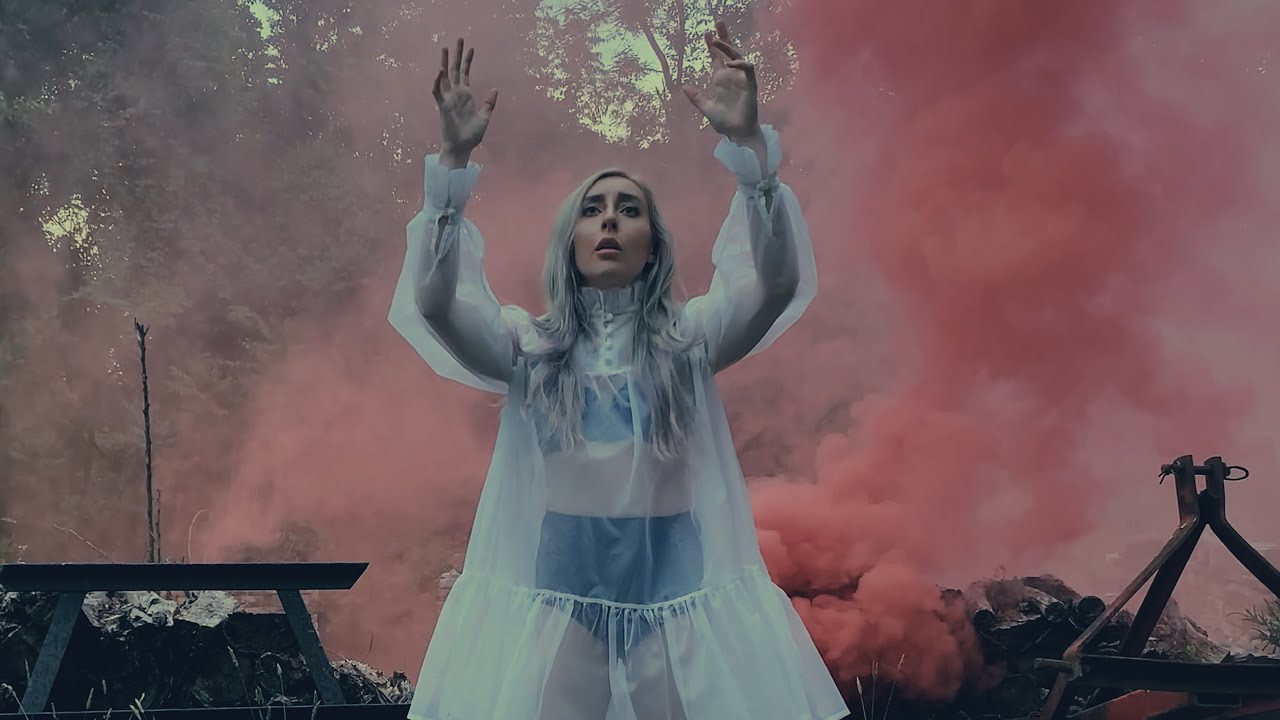
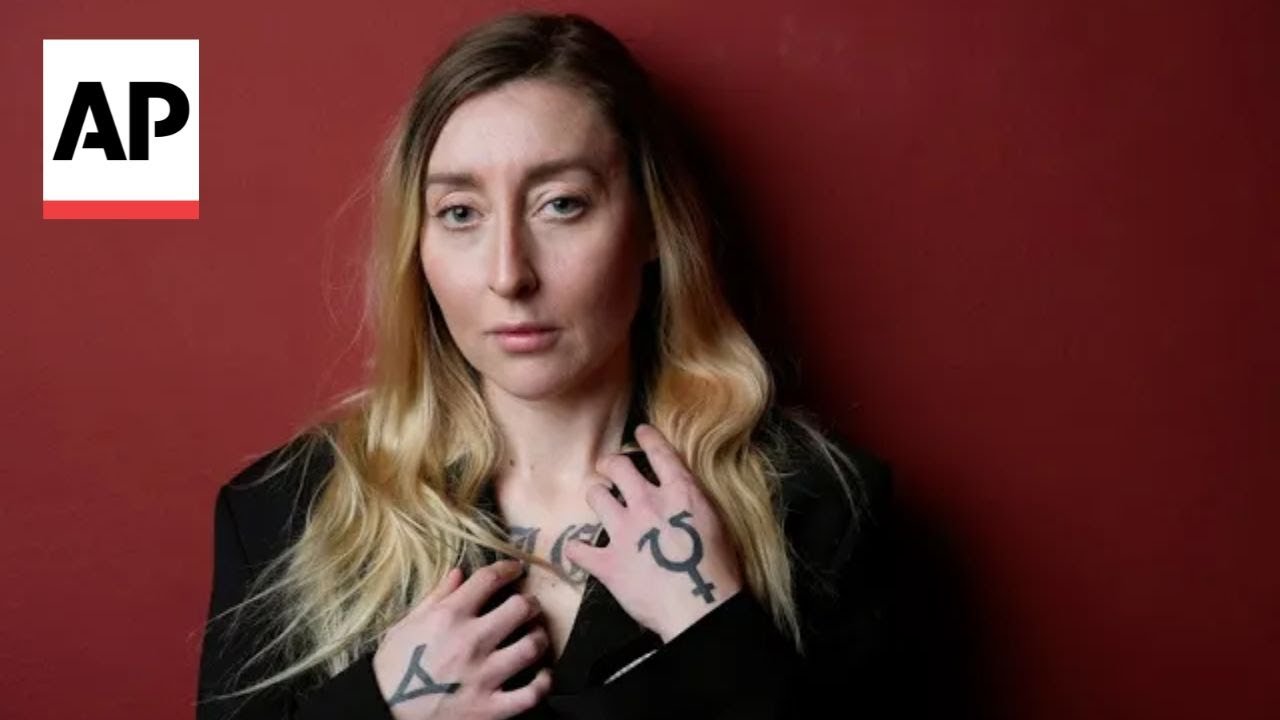
uh you know especially with like the tattoo and everything were super purposeful in terms of like what you wanted to present visually and a lot of this new cycle uh especially like revolved around those you know ashley rose couture sort of pieces that you were wearing that were um very ornate and uh you know like almost like thin in terms of the material and almost like you know veiling in a way like what what do you feel like those you know pieces sort of like brought to the visual aspect of this record this time around
and what made you you know sort of like incorporate that into the uh you know records uh i guess greater universe as well right um ashley is such a genius i don't know how she does what she does i really think she's a visionary and i hope she gets just like massive recognition because she in my mind she's just as great as like a mcqueen or a vivian westwood or something and i i knew her work and i wanted to work with her before she knew about me i've had her like in my sights for
quite a while and this was finally my opportunity and um starting with that mask which is on the cover um which i took which has like an element of like really perverse transgressive chastity to it and is almost like it's like grotesque and that's something that i really love about her work it's like it's so heavily wrought with like tulle and pearls and beads it's like um it's really overloaded with ornament and i thought that was a really interesting and beautiful contrast to the kind of like spartan nature of the music and the kind of
spartan nature and the derelict nature of pennsylvania that it was like incorporating an element of the sacred and sanctity in a way that was um more like materialistic and more um like yeah kind of more more material than than the record being so spiritual i guess um for me it was like it was a really nice contrast was there anything that sort of went into the you know idea or philosophy behind maybe like obscuring your face this time around on the album cover as opposed to you know being so upfront with it on the last
one like you know sort of hiding in that way was was that something that sort of adds to the narrative of the record for you yeah definitely um i mean to me i was thinking of it as like because i think there are a lot of like sexual themes in the record um that are more kind of explicit than my previous records and i was thinking of it as like a gift mask event like that it's this really like crazy um ornate beautiful like chaste [ __ ] mask um and that i loved that we
i played with a few different ideas for the cover but that one was the one that was just kind of like it made sense um and i'm sure that the next one will be some other kind of strange portrait i'm not sure what it will be yet but um and i wanted to keep like i want to keep the project consistent in certain ways and i wanted to have it be a portrait but i wanted it to be a kind of different portrait i guess yeah like from all [ __ ] to caligula to this
it does seem like there is a very clear kind of visual consistency but you're changing it up significantly with each one um yeah i wanted to ask you with the way the sort of narrative concludes on the record especially uh you know with the final track especially with what you were saying you know earlier about um you know the atheism thing um you know regardless of that that track in particular does like really stand out as i don't know reaching some point of serenity or you know after all of the trials and tribulations of the
record so far um maybe you did sort of find what you were seeking because you know you talked so much about you know the act of seeking on this record and then creating the record um you know what was that something that was actualized on that track you know did you feel like you reached a point of solace or serenity or was that just like i have to end this album in some way so it's you know maybe a positive note like you know what was what was the you know i guess the philosophy behind
that track in general and did that actually you know the the tone of the song lyrically reflect in any way for you personally in terms of your experience of making the record yeah the the last song was very intentional in a few different ways um first of all it i wanted to make sure that i wanted the narrative of this record structurally and as far as the storytelling to do something different than caligula did um and to because caligula is very much like a circle um and is a cycle and i didn't want to do
the same thing again i wanted to have a different kind of arc and uh i guess like shape to the record and um so i was thinking about and it was a controversial thing for me because i was like oh we have to again like with seth i'm just like we have to make it big we have to make it like caligula it has to be huge um and and seth was like no like we leave this like incredibly vulnerable sad song at the end um to close out the entire thing and the last thing
you hear is the piano pedal raising and you're like is that it um but for as far as the storytelling in the record i think that song is about defeat i think that song is about surrender and defeat and um it throws like it has uh essentially like a totally traditional psalm or hymn form um and then it throws like a little bit of a curveball with the lyrics of like um what the what are the [ __ ] lyrics jesus christ um um ugliness my home loneliness my master i bow to him alone and
so it's just kind of like oh that sucks it's so sad um but that was how i wanted to i wanted to close the record on this very like quiet vulnerable like singular moment of like perhaps like perhaps serenity but you know surrender essentially and you know acceptance i think was the was the tone i was going for yeah and you know to speak to sort of the grandiosity of the song in general i mean i i think that was certainly achieved through all the vocal layering and the you know gospel aspects and especially the
horns um which uh you know uh again just kind of reminded me as as you say of sort of like a hymnal and you know you talk about sort of like giving up on the track in defeat but you know in in a way after a record like this is is that is is there like a finality to that or sort of like um maybe a break in tension for you with that because at least if i've given up then i'm not like continuing to fight against the [ __ ] tide that's beating me every
time i try to push against it because you know as you say it does feel like there's sort of like a solace in maybe not trying i don't know yeah yeah definitely it's um again it's meant to be how to have that kind of like ambiguity of um of intention a little bit that it could be seen as you know like total defeat and acceptance but also that it could be seen as like you know this is the end this is kind of like the final tone it is what it is and um yeah i
think that i think that there are a few possible reads there um and that that again was was intentional and again the horns was also a very intentional move we had ryan seton who's amazing um do all a lot of the horn arrangements and woodwind arrangements and everything almost a lot of the instrumentals and um we wanted to stay away from female vocals with strings that was like a big like original i play like the cello really terribly in an extended or prepared fashion on one of the songs but we couldn't put the cello anywhere
else anywhere else because it was just it fit into that like uh cliche of like woman sad strings we wanted it to be like woman very bizarre instrumentation and so the horns instead of like having a string arrangement you know it would have sounded like you know lana del rey or something no offense to her she's you know fantastic in her own way but like that it um it has like a very specific like funeral sound um like almost like a new orleans funeral or something um so yeah that was very intentional as well no
that's that's a great uh point in terms of like the you know geographical or cultural inspiration there and now i'm just thinking of like music listeners and fans who are like most definitely on like the lingua lana del rey like spectrum i've definitely like seen like a few pro lingua tweets from like a lana del rey psp account or two you know so it's like there's there's definitely like some crossover there for sure um i wanted to ask you uh before we uh uh you know head out about something you know uh very serious uh
that we you know had uh discussed for a moment prior about um some tweets that you had uh put up recently that make some pretty serious and damning allegations against um daughter's front man alexis marshall um and obviously uh you know there are allegations of abuse and uh this is something that you have been um you know given the timeline like dealing with for a long time and holding in for a while as well um you know at least sort of like in a social media you know sense like what made you want to come
out and sort of like speak about that and i guess like spell it out in the way that you did now at this point um the truth um i wanted the truth um i wrote the record about this experience um that's what it's about uh that's the document for me and you know i was in an abusive relationship with this man for two years i was emotionally abused i was mentally abused i was sexually abused [Music] one incident of sexual abuse led to me needing surgery on my spine which my fans helped me pay for
and to my fans i want to say like thank you because you didn't know that you were helping me in that way and you did um and there's a lot more i could say about the situation but for now i'm trying to heal and trying to process a lot of trauma um it's not easy i left that situation like a [ __ ] hole in the floor i was nothing i was i'd been reduced to like essentially servitude of this person who um didn't care about me and yeah i am just trying to heal and
it's important to me that the truth is out there and that my truth is out there um because unfortunately this behavior predates me by quite a bit um and it's not just me and um i don't know yeah and sorry go ahead no well i was going to say just for clarity on that timeline like that surgery that you refer to you had that just before we had our first interview and i did at that time i believe you know you had told me like it was from some long-standing health issue or something that you
would you had been dealing with so you know you were you weren't even forthright with it around around that time so this is something that you've been you know sort of like working through for a while yeah it's um i mean i could i couldn't say what happened yeah it's um it's been brutal um and it's been brutal to like pretend that i'm happy when i'm not and to put on a happy public face when i'm not happy and when i'm being devalued um in so many different ways um and it's not to say that
i'm a saint or like a paragon of virtue um but i didn't deserve to be abused by this person and he's going to do what he's going to do but i have to focus on myself and my healing [Music] and you know i think at some point i will speak in greater detail about it but it has to be when i have processed what's gone on um there's been a lot you know as you saw like my statement is seven thousand words um so yeah yeah as as of right now i mean obviously you're still
working through all of this what what does you know uh in an ideal situation closure on this uh look for look like you know for you does it sort of like you know end at sort of putting your experience out there and eventually letting just kind of time run its course and and moving on or is there you know uh something else beyond that that you hope to achieve or happen to reach again some point of closure or accountability for all of this it's so tricky i mean how do we deal with these situations um
how how do we culturally deal with the [ __ ] it's impossible it's it's a no-win situation kind of any way you look at it it's not about like cancelling someone's band it's not about asking anyone to not listen to daughters or you know it's about this person's behavior is unacceptable and what do we do about it you know i can't control alexis i don't have any control over him um i don't have any control over anything except myself and my own healing so while accountability would be nice i can't expect it i can't put
my healing on hold waiting for that um for initially i thought i did i thought i required you know an apology but you're not gonna get it you know so ideally there would be change in the way that we deal with these situations and there would be change in people's behavior and there would be change in the way that we approach our communities and the ways in which we keep women safe in our communities and vulnerable people safe in our communities and abuses of power in our communities ideally like that would be something constructive would
come from something like this and i'm hoping to find a way to help support other survivors and um that is more concrete than just having the cathartic outlet of music i'd like to find something um so i don't know it's all of you know the world we live in is kind of [ __ ] and dealing with this stuff in a public forum is incredibly difficult it's not and it's not fun for me to like come up here and say this and then expose myself to potentially further abuse and further objectification from people i don't
know um so i don't know it is what it is i'll just say personally i do admire you know your strength and your straightforwardness on this and you know obviously your ability to move through it and just speak on it as well and um uh and and i you know i thank you and i appreciate you for you know doing that thank you thank you very much well you know i'm also very happy with how our conversation played out generally i you know uh continue to treasure you as you know uh an artist and a
creator and just uh you know just an artistic mind in general and uh you know i think this new record has just been a showing of your power and your vision and just uh you know everything that uh you know you've been working up to to this point has manifested in such a great piece of work and i hope that you know you can in the midst of all of this feel proud of yourself you know after all this because it's really good it's really great thank you thank you i appreciate that all right well
i'm gonna have to hit you up when you drop your next record so all right thank you so much for having me again no thank you for coming through i appreciate you taking time out of your day to you know come hang with us and be so open about everything okay thank you very much all right you've been great appreciate you thank you thank you all right good night





![THE WORST ALBUM OF 2016 (Corey Feldman's Angelic 2 The Core) [NOT GOOD]](https://img.youtube.com/vi/L3E0kq9YkjA/maxresdefault.jpg)