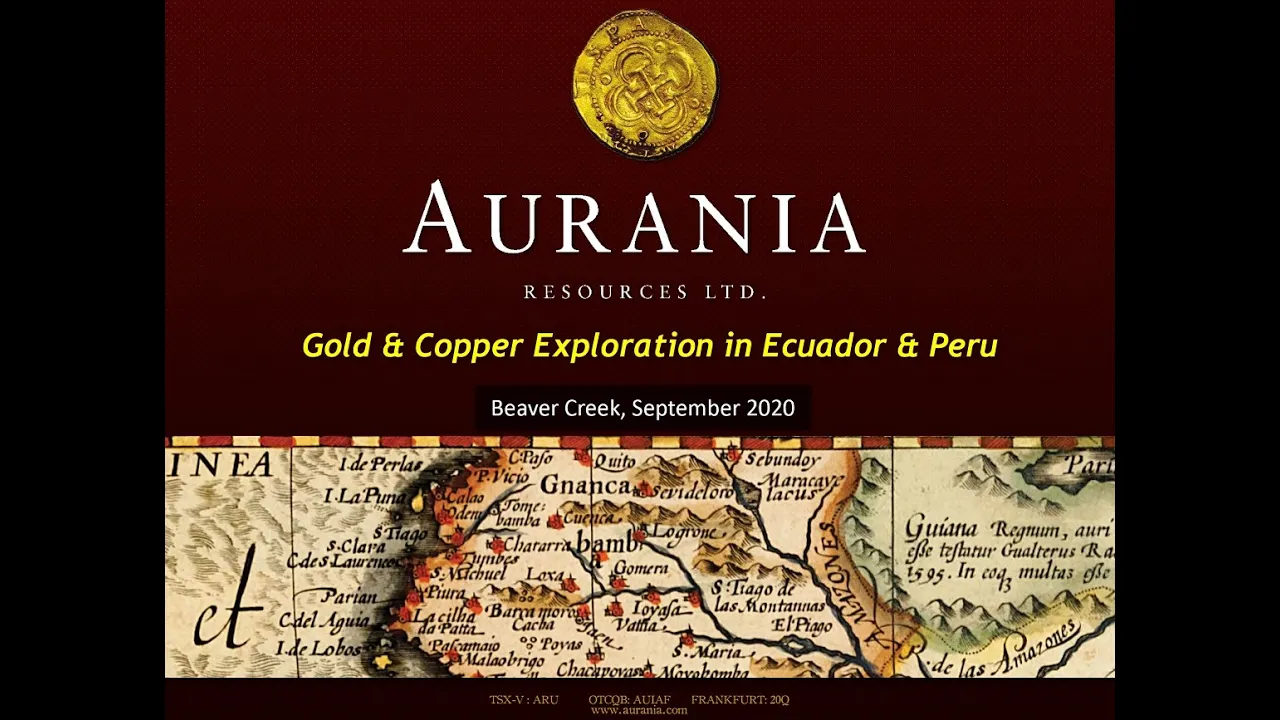
so let's try that all again i'm sorry for that but such are the vagaries of the internet uh certainly during coveted lockdown i am keith barron i'm the chairman and ceo of iranian resources and i'll be walking you through today our projects in ecuador and peru thanks for joining i will be making forward-looking statements so be forewarned we have got our hands full uh half a million acres equivalent to 208 000 hectares down in southeastern ecuador and south america near the border with peru and all these things here are advanced projects the big red one here is ours but there's a lot of activity uh elsewhere here in ecuador you've probably heard of fruta del norte uh london gold's deposit down here solaris has an advanced copper porphy project right in here seoul gold has the kaskabell project up in here suffice it to say ecuador is a very uh very hot jurisdiction right now and it is receiving a lot of worldwide notice it's a great place to be um don't be intimidated by this it's a geological map but i'm going to be geolight on you um this is the geological belt coming through here it's on there here's the the high andes we're on the backside of the andes it's in what's called uh a back arc rift and the property is outlined here in red it's comprising mostly sediments and volcanics and the trend goes down through like this is kind of north north east so southwest this area has been heavily prospected and why because all this orange here represents granites and deposits here of gold and of copper have essentially been eroded down to their roots you only see little scabs of the sediment and volcanic sitting on top here that the kind of dark blue and the purple lying on top here because most of the deposits have been eroded away the gold deposits such that there's lots and lots of gold alluvials and the creeks down here that's what brought the prospectors in going back to the 1920s in this area it hasn't been so dissected by erosion and the systems are intact so you get centers on top of epithermal gold silver systems you get litho caps on the top of porque copper systems these things are intact they're harder to find because they're not outcropping but we have a lot of tricks up our our sleeves so uh i'll go on here i'm going to toot my horn a little bit here because i am the co-founder of brilliant resources which i started back in 2001 privately and took public in 2003 and then eventually was sold on to kenross uh for 1. 2 billion dollars and that was the on the back of the discovery of the fruited del norte gold deposit in 2006. it's now in production by londine gold and they're very very successfully sending lovely bricks of gold and silver offshore and uh and generating a lot of income for the the company and a lot of income for ecuador in the form of taxes everybody has to pay taxes richard spencer is my presence and he is responsible for discovery of most of the perfect copper deposits to the south of us including mirador which is in production right now the chinese have a big open pit mine there he also uh ran i am gold in ecuador for a number of years and was responsible for the loma larga gold silver discovery elsewhere in ecuador suffice it to say that the two of us know our business we've been kicking around ecuador for a lot of years roughly about 20 years for both of us and it's familiar territory to us and we're getting it done this is my last company a really in resources and look at this is kind of a a reverse ski slope here it's going up and it says here we went from 30 cents to 40 dollars we actually went to a high of 43 dollars that was a 10 000 increase for the shares it made a lot of shareholders a lot of money it made me money because i was the largest shareholder at the takeout thank you god uh but it it it was provided me with the seed money to do what we're doing here today with the new company irania this is what can happen in the expiration space when you make discovery and you suddenly turn something that is uh basically uh uh a bunch of swamp and uh un interesting uh jungle into something potentially worth many many billions billions with a b of dollars i am a big proponent and believer of this thing called the the sonde expiration curve pierre lassonde put this together about 20 years ago and essentially what it means is that in early expiration your valuation is pretty low when you discover something it suddenly shoots up and then you have a bit of a lull here while it's being engineered and developed you're building the mine and then it shoots up again here when you're actually producing gold or silver or copper or whatever optimally you want to sell on here and why because the chances today today and i know uh pierre put this together a long time ago but today uh cycles business cycles and political cycles are shorter than the time it takes to get a mine up and running can take 10 years to get a mine up and running in the case of ferna del norte it took actually even longer than that so the chances are good that whoever makes the discovery down here is not going to be the person who's going to get the profit in here uh with uh production it's not going to be the same people the chances are you're going to go through a business cycle and you're going to get whipsawed so you try to make the most money you can and the best deal that you can for the shareholders by spinning it off here spin-off companies or jv or a sale a part of the project now because we have different commodities and a very very large land package it gives us optionality that we can split the thing up and we can send one thing to one direction one thing to another direction and uh in that way the shareholders get multiple bytes at the apple that's what i want to do here so this is a a a chart for soul gold it's in pence um now no offense to so gold but they haven't been able to get back up here to uh where their high was which was based on discovery and they're going through this uh this lull here and all power to them i hope they actually get to production and they get to to uh realize the profit here so uh we have multiple targets ready we've been at this for almost four years and i consider that the heavy lifting has already been done because we've done geophysics we've done geochemistry we've been geological mapping and now we're at the stage to drill a lot of our different projects we have 20 epithermal type gold targets 32 perfect copper silver type targets and 23 kilometer long uh copper and silver in sediments 23 kilometers that's 16 miles of length now here we go this is just started last saturday we started drilling one of our perfect copper targets so the chat what we want to do here we want to drill three to five holes on each of maybe four targets and then we'll move on uh we'll decide we'll have a a reappraisal of the results and decide what we're gonna do next but we have a whole host of things uh to tackle right now uh including uh a bunch of gold uh silver prospects that i i really really am anxious to get some drill holes on but first things first we're targeting here right now because we're working in an area that's covered free and so the the gents are able to bring the drill in and and get to work this is the teriya shimpia prospect this is a very interesting project in the portfolio and this is silver in soils and you can see it goes up greater than 0.
25 grams per ton that's the same as ppm here in the soils this is a structure here it's that black line that runs down like this and it's about 15 kilometers long and this is a very very strong system and it's a big system and it's going to take some time to evaluate it fully and see what it is but gosh it's a real whopper and i'm very very pleased with it now this is soil antimony antimony is a pathfinder element for gold like arsenic like thallium like tellurium like selenium but in this case this is antimony and again here uh the cut of the the uh the interval's different here but this is 10. 6 ppm and you can see lots and lots and lots of purple in here now it's rather interesting i was reading this morning that uh 30 parts per million of antimony in soil is actually toxic for earthworms and as much as i love earthworms i i the reason i mentioned this uh and i'm sorry for the poor little guys but this is a natural system there's no pollution here nobody has done any previous mining or anything like that but this is a very very strong system uh the typical content for antimony in soils in uh all across the usa is less than one part per million and this is shooting up well in excess of ten so this is a very very strong thing we're very happy with this it had needs and requires a lot of dedicated work this is copper and sediment the uh the hammer here is about two feet in length it's one of the longer styles and you can see beautiful green here just like the roof of an old church and when you break it in half you see these layers in it and the black here is mineral called tenerites and also calcasite these are proper minerals and they're lying in the bedding plane of the sediments so this is a type of deposit which is controlled stratigraphically controlled by bedding within rocks that were laid down in a shallow ocean originally sandstone shales things like that and this is very analogous to a deposit called the cooper schieffer which is in eastern germany and into poland and it's being mined today by kghm the national polar polish mining company and they are number two in the world for silver production and number eight in the world for copper production based on stuff like this this sample here is running about nine percent copper and about uh a hundred grams per ton of silver and that's a great number now we followed this stuff we decided to be a little bit opportunistic and we figured out because we had the goods on it we had done the geological work and we knew where the uh the copper and the silver was sitting in the sediments and we just followed it across the border into peru and it's not called the same horizon here they give it a different name but here it is and all these yellow blobs here are areas of we think high potential high potential can to contain the same sort of mineralization falling right up here and then right across the border there's a national park in here so there's a bit of a gap we haven't followed it all the way through because you can't stake in there but this is over four hundred thousand hectares of land which is more than double uh well is approximately double what we already have a huge huge land package still to be uh checked out this is what the breakdown looks like on a capital structure we've kept it nice and tight over the years we have 41 million shares outstanding 46 uh on a fully diluted basis uh this was prepared a couple days ago we were at 4.