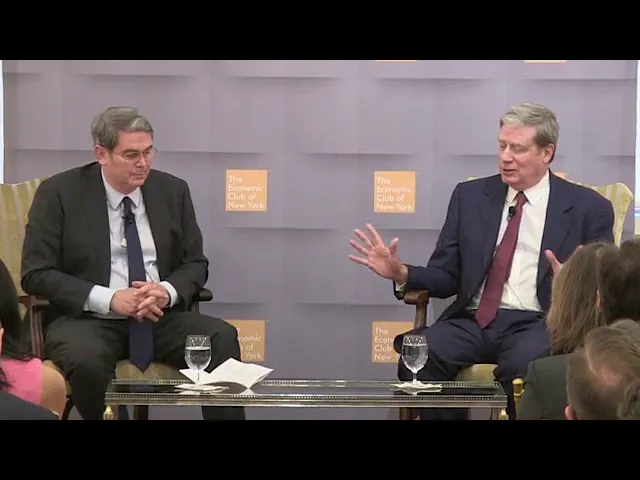
to the 507th meeting of the Economic Club in New York and our one hundred and twelfth year I'm gonn Hutchins vice chairman of the club and co-founder of North Island the Economic Club in New York as the nation's leading non partisan forum for speeches on economic social and political issues more than 1,000 speakers have appeared before the club over the last century and we've established a strong tradition of national excellence which I'm quite confident will persist and be reinforced today before you start I want to take a moment to thank the many members of the
Centennial society who are attending here tonight the the club is I think one of the best bargains in New York so you should all join if you're not members but the Centennial Society of those people who have actually chosen to give us more money to support the operations the club made the capital gifts and they play a special role in ensuring that the club remains financially sound now in the future we'd also like to welcome our of 2008 19 class of Economic Club of New York fellows who are young and up-and-coming members of our business
and technology communities in financial communities in New York it's great to have you with us tonight so it's my pleasure today to introduce our speaker this evening Stan Druckenmiller chairman and chief executive officer of the Duquesne family office which he founded in 1981 which in which he ran until they closed the firm at the end of 2010 from 1988 to 2000 he was managing director of Soros Fund management where he served as the lead portfolio manager by the way I should say I'm supposed to give this bio but if you don't know Stan's bio you're
probably in the wrong room and they'll be a test afterwards whether I got it right Lee portfolio manager of the Quantum Fund and chief investment officer of Soros and had overall responsibility for funds with an asset value of at least twenty two billion dollars Stan is also as evidenced by who he's sitting with here tonight as an active member of our community and very involved in philanthropy he's chairman of the board of the Harlem Children's Zone on organization nine I think very very highly of chairman of the blue Meridian Partners board member of Memorial sloan-kettering
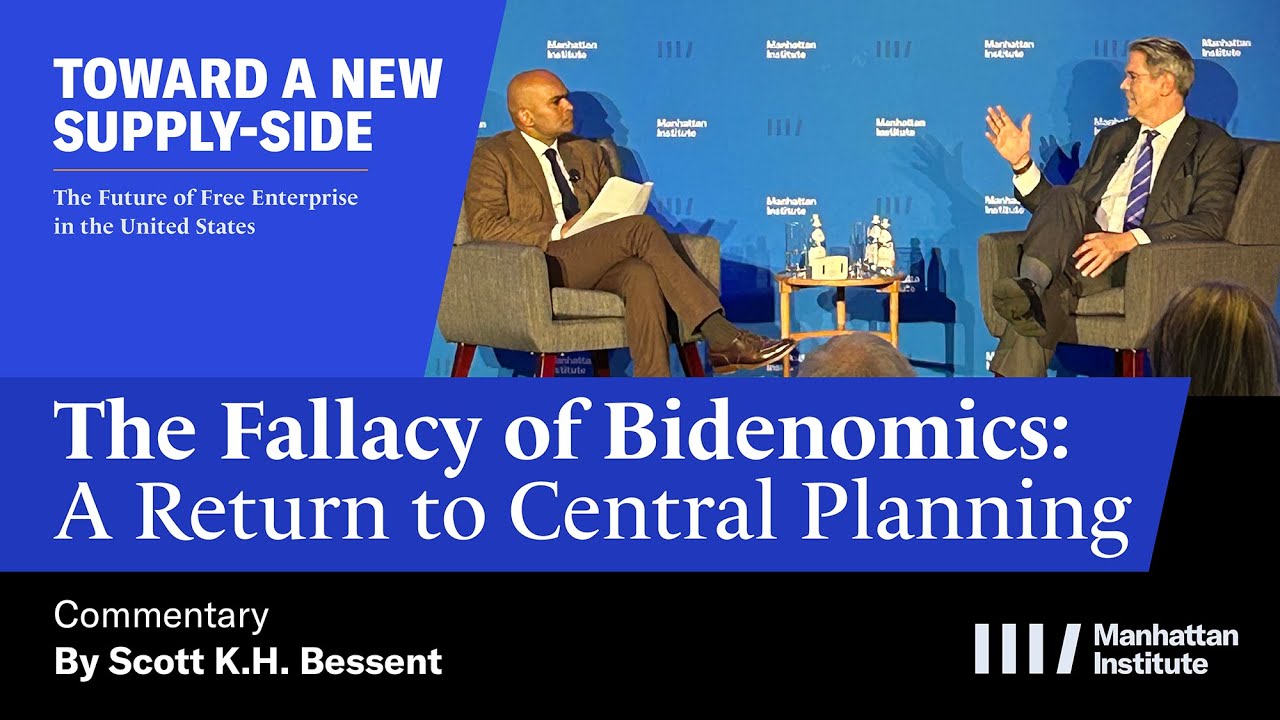
they're already already talking about they're worried about their investment results for today and of the Environmental Defense Fund he's a member of the investment committee by the Union anybody who has stand on his investment committee is very fortunate Bowdoin College and co-founder I think this is fun and board member of the Kasparov chess foundation the format today is that we're fortunate to have another great investor friend of mine Scott Besant chief executive officer and chief investment officer of the key square group doing the honors speaking Scott was the chief investment officer for Soros Fund Management
the investment vehicle for the Soros family and their foundations from 2011 to 2015 frequent contributor to the International economy including a recent article reason on reforming the Fed he was kind enough not to press me on that during cocktails from 2006 to 2010 he was an adjunct professor of at Yale where he taught economic history he's profiled in the book macro investors inside the house of money and featured prominently on mieze history of hedge funds more money than God he's a frequent speaker on economic and investment panels and Scott thank you very much for being
here today to do this many of you in the audience have shared your questions in advance those have been given to Scott to inform the questions which he's going to ask and at the end of their conversation I'll come back up to the stage and we'll ask for questions from the audience which I recommend being substantive and short and I want to remind everybody that this conversation is on the record and being carried live gentlemen the stage is yours [Applause] great well thank you Glenn I'm excited to be here today and to interview my friend
and mentor Stan Druckenmiller we got a lot to cover we have the sputtering economy the US and rest of the world the flip-flopping fed the petulant president a little China Syndrome and then maybe some advice on how to navigate these conditions to begin with I would say I've had mostly the good fortune of speaking the stand every week for a couple of decades and I'd say mostly because if he's having a bad day you're gonna have a bad day on the phone so I thought tonight we would go through the equivalent of one of our
phone conversations so why don't we get right into it you don't speak very often in public and you and Kevin Worf pinned an article in The Wall Street Journal this past December outlining why you thought the Fed was making a policy er if they raised rates and I'm curious the what you were thinking then because for the past three four years you had been urging them to raise rates correct I love to contradict myself I need to go into a little background with the first part but what the answer the first question is even though
I thought rates were still too low relative to maybe where they should have been by that time period we had observed that the global economy particularly trade this was pre the latest antics was starting to slow down and we were afraid it could seep into the US economy probably more important in my mind we were in a meltdown in financial conditions and since 1913 when the Fed had been founded the Fed had never hiked with the decline we'd had in the SP and other indexes going into that now that was the primary reason the the
editorial has been way over read and way over analyzed the last two words in it were for now the Fed shouldn't hike for now take a pause and just see how things develop there's some background those got you're correct let me start from the very beginning I will go to my grave and often wrong never end out believing that really loose monetary policy greatly contributed to the financial crisis there were obviously problems with regulation but when we had a 1% Fed Funds rate in 2003 after to me it was pretty obvious the economy had turned
and I think the economy was growing at 7 and 9% nominal in the fourth quarter of Oh 3 and that wasn't enough for Fed they had this little thing called considerable period on top of the 1% rate just so we would make sure that their meaning was clear and it was all wrapped around this concept of an insurance cut the last one an insurance policy but the history of what I have seen and you know I've I've made some money predicting boom-bust cycles it's what I do sometimes I'm right sometimes I'm wrong but every bus
I had ever seen was preceded by an asset bubble a generally set up by Toulouse policy and the latest one at that time period that had just occurred was obviously Japan responding to our pleas in their own after the plaza Accord setting up the the bubble in the second half of the 80s and then we all know what happened in the 90s so that's sort of the background I come out this with stance so we can go to more recent history the this time last year you got the Alexander Hamilton award from the Manhattan Institute
and during it was really slim pickings obviously what nikki Haley was on the other side so the an opening act but you said if I were trying to create a deflationary bust I would do exactly what the world central banks have been doing for the past six now seven years the what did you mean by that yeah so I think Bernanke and and the rest of the Fed did an unbelievable job once the bust occurred in oh nine the QE was aggressive it was decisive interest rate policy every everything they did was spot-on but coming
out of the crisis and I loved QE one coming out of the crisis qe2 I wasn't thrilled with QE 3 I was really disappointed with and the reason was I was very fearful that the emergency days were over and the possibility was we were going to set up another misallocation of resources the most recent one I was obviously the one I referred to which was the low interest rates which created the housing bubble so I mean 2012 came around 2013-2014 economy kept getting better and better and better and every time I would give a talk
like this which was not very often and everybody said well what would what would you do would you actually raise rates I said yeah I would sneak one in every time financial conditions allowed and hopefully by some point rates will be high enough that we'll have an appropriate hurdle rate for investment where people won't be doing stupid things like they have in last asset bubbles but as you know Scott we got all the way into 2014 and 15 and we're still doing two III and I was just afraid that people were going to start to
do stupid things and indeed they have I'll just give you a few things that occurred since 2010 so corporate debt in 2010 was six trillion dollars it's now 10 trillion dollars so it's grown 65 percent I don't know what anybody thinks about that it's not necessarily disaster it depends of what they borrowed but I would point out that during that same period corporate profits grew from 1.7 trillion to 2.2 trillion so on a that's cumulative over eight years so on a four trillion dollar increase in debt we got five hundred billion in corporate profits but
it's worse than that the interest cost on the extra four trillion in debt only went up 23% from four hundred and seventy-five two to five hundred and sixty five billion so think about the horrendous return productivity of capital here you you increase your debt sixty five percent but your interest costs only go up twenty three percent you would think your profits would explode with that formula they went up 29% over eight years not in one year you know they compounded with less than a three handle you might ask wait wait corporate profits have been great
no I'm talking about total corporate profits not earnings per share which is the other misallocation of resources during that time period five point seven trillion buybacks financial engineering versus two point two trillion in capital expenditures and if you go back to 2010 capital expenditures were twenty percent I'm sorry buybacks were twenty percent of capital expenditures they're now fifty five percent with a much higher stock market so you can sort of see where I'm going with this you're getting a pretty gross buildup in the private sector and by the way if you look at it the
companies that are growing innovating they're not the ones who are borrowing the money it's not Google or Facebook they're spending their brains out on innovation it's old dying retail companies companies would by the way 24 square feet per capita in this country and that number is three in Germany and two in China but we have all these zombies walking around so here we are and probably the most innovative I would say economic disrupted period since the late 1800s in you're hardly standing bankruptcies because there have been no market signals from the Fed now this is
pre the last year we'll get into that but there's one other problem with all this and that's our government government responds to market signals too and the clowns in Washington unless they get a signal from the bond market they're just going to keep spending so for the first time in history we have massive deficits and full employment estimates are this year there'll be a trillion dollars god help us have we got in a recession if you just take the mean of what happens in the recession that would go to a trillion eight debt to GDP
has gone from 65 to 105 so you get the drift so this is where we were going into this fall I felt that Bernanke and Yellen in particular there were so many opportunities to just put a quarter end quarter in wall financial markets were booming but fear of deflation prevented them from doing so there's this belief at the Fed that if you're near the zero bound you're near deflation and that can cause you know that's the boogeyman that we dealt with in the 1930s Japanese dealt with but I've never seen a deflation happened because you
were near the zero bound everyone was preceded by an asset bubble and we to me are creating a misallocation of resources and an asset bubble that could set up a deflation and that's why I said what I did pretty long answer to a simple question so the Fed shouldn't be taking a victory lap we've had malinvestment no hurdle for capital they what are your thoughts on the new inflation target and how did QE contribute to income or wealth inequality I just don't understand the 2 percent inflation obsession we had 3 percent deflation in the late
1800s and the economy grew at 8 percent real for 10 years we had inflation of less than this level in the 1950s with the Fed Funds at 4 and we were just fine it's very clear to me but office not the Fed and they got the phd's not me that you need a hurdle rate for investment and if you don't have a hurdle rate for investment bad things happened and there are periods when maybe at minus 1 percent inflation rate is appropriate in other periods where it might be 3 or 4 it depends on what's
going on but we are in the middle in my opinion of one of the great productivity shocks in the last 150 years I understand the government statistics don't show it although we just had a very good quarter in productivity but to me it's it's immeasurable because our measurements haven't caught up with it yet and by the way I don't have the answer the measurements I just know they're not right I'll just give you a couple of examples three and a half billion searches a day on Google YouTube in the last sixty days has had more
content uploaded on it original content then the entire television industry is done in the last 60 years in 2010 we took 300 billion pictures last year we took two and a half trillion pictures we took more pictures last year than since the beginning of civilization the marginal cost of those pictures is zero the quality with the phone in my pocket is better than it was with the best cameras 10 years ago and in GDP accounting okay since you're not paying 50 cents to go and get your Kodak film process it actually subtracts from from GDP
accounting now I understand they get some advertising goes over here but there's no way to measure this stuff and I could go on and on I think everybody in this room there was a study out of MIT that you'd pay eighteen thousand a year to use Google search I'd pay a lot more than that $3,500 to pay good use Google Maps all this stuff is free so it's mismeasured it's the same thing with inflation by the way so why in the hell we're sitting here going off 1.4 1.6 1.7 we don't know what these numbers
are we don't know what GDP growth is we don't know what inflation is and we are in a Productivity boom so I'm not I'm not convinced that minus 1 or minus 2 percent deflation wouldn't be bad what we're all going to say oh my god I'm not going to buy something this month so because Google's making my life cheaper if we've had a positive support if we've had a positive supply shock then your view is low inflation and disinflation aren't bad the is it possible the Fed asset bubbles are going on yeah so the that
the Fed is focused on the disinflation and the asset bubbles blowing up over here as a result the but is it possible they just miss the secular dynamic of platform companies the and the sharing economy I guess so I don't understand all this stuff you know our star U star Z store they just look like you know with with all the stuff going on to be talking about that just sort of astonishes make and it would probably be about 50th down on my list I had a colleague it was not Kevin worst I swear on
my children who was at the Chicago monetary conference two weeks ago and I or was a week ago as a Friday I said how did it go in the meantime we've done all these tariffs all this crazy stuff oh it's the night of the tariff thing when leha is going back to China and the markets in a complete meltdown and I said how was the conference's oh they're really feeling much better about things and they're very comforted and I said why because Michigan inflation expectations five to ten years out ticked up from two point five
to two point six I'm like seriously this is this is what we're focused on right in this country and by the way no kidding these guys all have 30 IQ points on me so I just don't get it but well we just we just had the one of the biggest two-day moves in the history of a two year so maybe they were focusing on the wrong thing who knows so why don't we talk a little about your economic methodology the you you the Stan always taught me the micro drives the macro can you explain what
that means and how you use it yeah well first of all I was a dropout of the ph.d program in Michigan so we'll start with that but when I got in the business it was it became clear to me that well macroeconomic statistics are not great in terms of predicting the economy they're really great in terms of telling you where you are and where you bend but in terms of predictive ability they're not great by far the best economic predictor I've ever met is the inside of the stock market I don't mean the stock market
I mean the inside of the stock market and that's looking at cyclical companies within the stock market and I particularly like because it tends to be the right kind of timing trucking retail that kind of stuff the Russell 2000 so if you just look at at the periods I've analyzed generally those stocks start going down and defensive stocks and secular growth stocks start going up on a relative basis so what's that telling us now well it's very clear the xrt the retail index is down 24% since the high in August I think the stock market
is only down seven or eight it was five when I was preparing for this the the Russell 2000 is down 15% with a lot of breath in that decay the the ESPY metals is down 20% and unless until today which hopefully was some I'll go otherwise I'm just dead wrong which I am occasionally it's been very clear all that stuff is at 52-week relatively lows and all the companies you would analyze that probably do about the same and a 1% nominal economy as a three they're all at relative highs so the inside of the stock
market right now it's not saying we're gonna be in a recession but it's saying you better you better be careful and keep your eyes open it hymens in the audience one of the people that taught me a lot of stuff in the business and that's the other thing we just talked to companies and some companies you know lead the cycle and some companies lag the cycle and you don't really like to take look talk to the CEO she talked to the purchasing manner should get a little you get a little down and that's more mixed
right now so it's not that clear another indicator we use I've never seen a recession before corporate profits peaked hasn't happened that was great news until two weeks ago when we got our first flow funds account and it turns out corporate profits look pretty bad in the first quarter they were down and if you look at margins and labor tariffs everything else going on it's inconceivable to me that that wasn't the peak in corporate profits so we're now five months into that so I I am not willing to say we're going down but I'm willing
to say there's a lot of warning signs out there that give me great caution down in the economy yeah yep yeah and not to mention the obvious trade wars killing animal spirits all that kind of stuff I'm trying to cite some of the some of the unobvious so one of the big debates over the past twelve months has been quantitative tightening Federal Reserve insist it doesn't exist the have you've seen it I'm just a dumb money manager and I remember number one I remember in 2010 whenever they did QE 1 arguing with some of my
peers before it happened that QE would be buying bonds would be bearish for bonds and they looked at me like what is wrong with you and by the way I was dead wrong for five weeks and my theory was QE the buying of bonds by the government would cause risk to go up and therefore decrease the demand for bonds from other entities it took about five weeks but it worked then we stopped QE and sure enough like the day we stopped Huey in other words buying a bonds this 2011 bonds went up Ochs went down
Everybody blamed it on Boehner and Obama having a hissy fit with each other in the White House but I have followed this for eight years and it was seven four seven with when the government buys bonds bonds go down when the government and stocks go up and vice versa so as some people in the room who are on some boards I'm on know about a year ago I started worrying that cutie was going to hit financial assets and it did hit well I won't say it hit it the stock market started going down when we
went from QE to cutie the actual global date was October 1st and so yes I believe in it we're still doing it but oh that's the other thing that's going on we have three more months of this stuff it's a very interesting environment to be doing quantitative tightening and as you can tell I'm not like some perma dove right so the on the politics you know this is fun so you and I had talked we thought tech was the ultimate disruptor in the economy but now we don't have a black swan we have what I
call an iron swan and it's an original by the way in itself traveling the industry did President Trump just break a fragile economy going into an election I don't know is the answer as you know I remember Bernanke who doesn't have 30 sqp IQ propellants him he's got like a hundred on me saying he's from South Carolina so yeah saying so prime was contained and what he didn't calculate where all the ripple effects and animal spirits going to shore to shore terror spirits and if you just add up the tariffs we've done by themselves it's
quite debatable whether this is going to hurt the economy or not and in fact Peter and Navarro apparently has convinced the president that it's going to help GDP accounting because exports obviously go up relative to imports but there's a good chance that by hindsight and by the way I got caught with my pants down I didn't see him doing what he did but I also didn't see this looking back the is MS factory orders a lot of stuff was rolling over a month before we did our China thing so my real answer is I don't
know B it really concerns me that yes he may have right so in 1992 when you started teaching me macro the my impression was as half politics half economics and then in 2002 after the.com the money spigots got opened and it was all just money now it seems like we're back to politics the matter as much as money flows the how should we think about that yeah when April everyone I was so bullish so I was 93 percent long when the guy did his thing and I said well the only risk is political but everybody
knows you're not gonna be stupid enough tenth the trade deal blow up so I was wrong we're in a bear market in politics I mean there's just there's just no question about it in every country across the board you've got this populism this protectionism I don't care what they say they're you I will go to my grave you're not going to tell me that protectionism is as good as free trade I just don't believe it so and this weird sort of populist saying and I'm glad you mentioned the Hamilton speech because I think I named
it can we try capitalism we just seem to be moving further and further away from it where the president attacks Amazon Ori attacks AT&T today because apparently CNN kicked him off and just all this stuff it's not good does it matter I don't know again it's part of a big puzzle but it's certainly one piece it doesn't look very good well it seems like when risk equity risk premiums low the VIX is low the you get political volatility coming through so political volatility in 2016 you thought from could win I thought he would win the
now most of our Wall Street brethren it's kind of 9 to 1 the president's likely going to be re-elected what do you think's priced in and how do you think the market should think about this well I try to avoid these tout dinners but when I go to them if I ask if presidents can be re-elected they don't say yes I steer at me and go of course so I assume the market whatever that is thinks he's going to get reelected I personally think it's going to depend on the Democratic candidate but he drew us
inside straight he won seven out of seven states by less than half a percent and if you go county by county in Pennsylvania at Michigan and Wisconsin he is in deep deep deep trouble and that was with the economy growing at 3% so I personally don't believe unless they put up one of the 2/3 crazies I can't remember how many there are I think he I think he's got I'm assuming he's going to get beat I think the market assumes differently I think if he does lose particularly if if I'm wrong and a crazy beats
him I mean it's it's worth a lot of PE points a lot so you think Trump all Felician 2021 or comrade Sanders is worth worse for the market I'm gonna write in for you terrible all right so now the the Panda in the room China yeah yeah can you the frame that forth a little yeah I think those who believe a conflict between the United States and China is inevitable and apparently most people believe that obviously if you're from the United States and you believe that you want the conflict now there's a billion is it
a billion for how many people they have over there billion for people they're catching us and probably good chance pass this at some point technologically we have no chance against China if there's a conflict in 30 years if you're China okay an economic conflict or a kinetic conflict or both either okay either military or economic if you're China I think if you think there's going to be a conflict you have the same view don't know whether we can win now we're definitely when and if it happens in 30 years so I think this is probably
the genesis of this on the very immediate term as I said I did not expect the lovely tweet that interrupted my golf game on Sunday afternoon about a month ago but having said that and seen the situation from them my impression is that at this moment in time which is the only thing you can ever say about Trump at this moment in time he does not want an extra 325 billion in tariffs he doesn't see any marginal gain for that but he does want tariffs on when the election happens he wants to run on tariffs
he thinks they are a winning formula in the swing states and the belligerent sort of verbose pressure he's putting in the braggadocio toward China he's giving Xi Jinping no off-ramps to make a deal and I'm it's funny because to two to three weeks ago I thought I was here and the market was here on the prospects of a deal this being deal this being no deal and I think the markets kind of here now and I'm here so I'm not that far I'm not that much more negative than what's priced than the market itself but
my working assumption is with the economy here I would have told you a week ago in the S&P here there's no chance of a deal but my guess is the economy is not going to be here in November of twenty and I don't know where the SP is going to be but I think those will factor into it but it it's bad and the Huawei thing is real so when we were talking in yesterday you said you thought you know if we get the decline in the SP and the Mexican tariffs were bad for the
u.s. negotiating position yeah they're terrible I mean I see Jim Penge I'd be doing cartwheels because Lee Hogg comes back he's a reformer he thought the deal was not just he thought the deal was actually in China's interests because it undermines the SOE and doesn't does a lot of other reforms the old guard and the Politburo and in my opinion Xi Jinping did not feel that way they came back it was pretty obvious at White House her and taken leha's pants down in the negotiation when the Politburo saw it and she's in st. Paul that
was the end of that but there was still some fight but can you imagine trying to defend the deal if you're leha this week after I mean okay there's a problem at the border but economically and after Mexico did everything we asked they did everything right and this is how the guy behaves if you make a deal on them so to me she's Jinping and the hardliners just got a very very big gift from from Donald Trump doing what he did to Mexico so you're not a nationalist you're not a monopolist the but today the
Justice Department opened an investigation into Amazon Google and Apple and it seems like the opposite of what China is doing with Huawei in terms of defend protect so this is amazing to me I'm not a nationalist I don't even know about this economic war but if you are gonna have an economic war with China and you're looking ahead okay where do you fight the war to me you fight it with a AI and they you know you go where the future is going so the minute this trade stuff started happening last fall they started easing
up on their private sector particularly Tencent Alabama they're huge supporters of Huawei they're oiling their whole high-tech machine all their engineers what are we doing oh we're saving steel coal aluminum really the future here guys and what are we doing with our leading tech companies we're throwing sand in the gears and making their life miserable and by the way if I hear one more clown on TV telling me that Google's innovate anti innovation by the way I do not own Google come on I mean if look at the products we're using from that company and
the reason that stocks on tyrants are spending a fortune trying to do more new stuff and by the way this thing about it's harming consumer cuz all the products are free so I'm I'm really on the other side of this this thing about like and I am NOT a nationalist but if we're going to be in some kind of conflict it's going to be fought among the big tech company it's not our aluminum steel companies we're going to get rolled notes I mean it's amazing that the the general narrative is the president she can't stand
the chairman of Huawei or the rendered a plane and the you know obviously the Jeff Bezos isn't the president's favorite person well they were not happy with each other but it's their champion and he's their champion and now they're now they're partners whereas you're right the president not real fun of mr. Bies us and we're getting the gong or you are not me we're gonna move into the next phase of our conversation by other guys that was terrific thank you and have questions from the audience I have a very large type that says do not
call on the media in the back row so if you won't raise your hands I won't be rude to you by not calling on you Lynn do you want to start off good take taking microphone introduce yourself can we everybody hear that try it again I'll repeat the question if it doesn't work you talked about how there are signs for caution that the economy may have peaked what would be a defensive investment posture now a week ago I would have told you Treasuries they you had the great thing with your golf pro two weeks ago
that you told me but you know we were in a board meeting together and some of you have probably played this golf course to national and we had this old pro there and whenever it was blowing really hard there be Whitecaps on the bay and he said when the pro when when they're Whitecaps on the bay the pro don't play when the Trump tweet went out I went from 93 percent invested to net flat and bought a bunch of Treasuries not because I'm trying to make money I just I don't want to play in this
environment they're gonna be better environments to take a shot so I think if you're confident in your long-term view and your ability to make money this is not a great environment to be going to vet in the or Antion one way or the other not short not long it's in terms of the economy though if if you believe that the the obvious posture would be would be Treasuries but that's I actually own a lot of Treasuries and when I bought them I wasn't sure rates were going going to go down what I was sure is
they weren't going to go up and I thought they were a one-way bet but with the two-year at 184 you've got 75 basis points a carry in that thing right now that's the way the the roll goes it's a two-way bet so they're becoming less interesting but if you believe the economy is going to deteriorate they're the best game in town those not Gold's not bad either cover questions someone else here in the back row there gentlemen and then we'll come over here thanks so much Stan Warren Buffett has called Bitcoin rat poison square on
the other side you have folks like Peter Thiel who I think most people in this audience would agree have done a better job at being ahead of the curve in predicting disruptive technologies could you share your thoughts with us about Bitcoin it's probably one of the few asset classes in the world that has done a better job rallying over the past few months than Treasuries I look at Bitcoin as a solution in search of a problem I don't understand why we need this thing and the great thing they're out there talking about is a stable
cryptocurrency well it's to me that's called the dollar now if we keep weaponizing tariffs and sanctions and everything else we're doing maybe five or ten years down the road but the pro don't play I don't I just don't need to be playing in Bitcoin I wouldn't be shorted I wouldn't be long it I don't think I'm a Neanderthal which is what I've been called when I set it in when I own Bitcoin you keep telling me it's gonna be a store of value like gold maybe I mean it could go to a million but I
don't understand why it's a store of value other than you can't create it well there's a lot of things you can't create that aren't gonna go to a million so other questions back here it's only young yeah right there two quick questions Stan one just going through your political analysis you seem to imply that the crazies are worse than the president are there any so-called enlightened Democrats and could one of those guys actually win that's first question I got one short follow-up I didn't mean to imply that they're worse than the president I you know
if I vote for Scott think how bad they both are I that's just such a horrible choice you know I'm a big proponent of free markets and both of them seemed to me to be taking away from free market capitalism obviously if you're investing in stocks you're going to like Trump better than the crazies despite all the inner interventions he does but you know I yeah I'm just depressed about both sides of the coin I will say that one thing that really annoys me is and I'm not a hater well sort of is this narrative
well the policies are great well first of all there's more than policies to the job of the president is states there's a dignity office there's a role model you're sitting for the rest of the country there's leadership and to me that's important part of being president but by the way I don't I don't know how great the policies are there's a lot of crony capitalism and stuff going on to me nobody's been more for tax reform than me and then when he looked at that thing my god the stuff that was in there you can
buy a used jet now and write the whole thing off in the first year it's bad enough that I'm gonna buy a new one and I can write all that off and I can see how that causes production but how does it use jet why do you get to write that off I'm not so sure the I would vote for you enthusiastically my nine year olds here so he he wouldn't vote for him when you call yes so there are three ways to get rid of the president impeachment the 25th amendment or the the ballot
box which way do you think it will be Oh at this point in time you'd be crazy to do anything but the ballot box it'd take a year I have to impeach him the country would go through hell it's just it doesn't make any sense questions over here in the back on the right hand side thanks Dan Alberto Masada NASA events asset management you spoke of markets from the from the issuer side and I wonder from the buyer side of markets financial institutions or groups of people what worries you what worries me as a buyer
or about the buyers know about the buyers so where are the problems as you see them well I think we've all been forced per my first rant we've all been forced way out the risk curve and we bone a bone a bunch of assets that we don't necessarily believe in but I don't know whether Jason is here but that Tina thing there is no alternative that's a hell of a reason not to own an asset but we're all guilty of it so yeah that's that's what worries me the most is that we own a bunch
of assets and by the way there's derivatives positions out there too that that ultimately they're probably in weak hands that's for voting quite over here in the bet over here one of the odd does China have to lose in order for America to win is this a duality that we have to deal with is there another way to go back just tryna have to lose in order for America the game because the way we are going it's just animosity people to me with these two leaders I think the answer is yes I think with a
different two leaders absolutely not I think this didn't have to happen but with a leader for life who put out the 2025 scenario and Trump and now frankly I will say one thing Trump has really moved the needle in a bipartisan consensus in this country that's justice that's really astonishing I mean China has no friends on the Democratic side I think the answer to your question two years ago was absolutely they don't have to lose right now I'm kind of worried that the answer to your question is yes given given the players and the entities
we have my partner Kevin worse you I think the world of he thinks Donald Trump will be the most Pro China president in the next thirty years he thinks that's what kind of cold war were heading into over here young man they're giving you focus a lot on liquidity I was wondering what you thought of the present liquidity conditions in the market not like the old days they're tough I mean SSPs are not as liquid as they were 10 or 15 years ago Treasuries their days when they're not liquid I'd say it's fadi you get
these ball and these algo episodes and if you're on the wrong side of there's no liquidity if you were on the other side of it there's tremendous liquidity but the quiddity is a moving animal it's things can be very liquid and then three weeks later there can be no liquidity whatsoever so I don't know what I answered your question generally all right here thank you give me your assessment of where China and the US are and the characteristics of the two presidents here for a u.s. global investor either sue any China play short and long
term if so in what form I mean maybe I'm an idiot but I own Alibaba and 10 cent and I own some private growth companies over there my portfolio has basically been long disruptors and short disrupted for like three or four years now and those companies to me they're there their growth rates I see are not going to be that messed up by us there they can they can do a lot of domestic growth there so yeah and I mean pingyang the insurance company I don't see how tariffs are going to kill that so there's
a lot of names I own in China and frankly they've got if they want to if they want to pull levers and as you know I'm not a real long-term guy if they decide to pull levers they can make that place go for 18 to 24 months probably probably have more ability to do that than we do here we're kind of like handcuffed very back row over here right there yes this time I'm curious to hear your prognosis for the evolution of the hedge fund industry Givens of what seems to be a rising trend of
titans like yourself converting to family office do I see more of that or my view of the hedge fund in general or the hedge fund industry in general and how it's likely to evolve well the hedge fund industry to me had like eight to ten savant superstars in the 70s and 80s and they charged rolls-royce prices and they were expected to make 25 percent a year and those eight to ten guys did and then they got nine thousand imitators who charged the same prices as those eight to ten guys what are we down to now
do you know Scott I don't know I'm probably 4,000 hopefully so I think that the fees are still too high we're still going to shrink but there's probably five to ten people out there women and men who are worth more than the fees right now so there's they're still going to be superstars but we need to get back to like maybe 200 or 300 from 4,000 and if you make a large innovation the club stand will tell you who they are gentlemen right here hi Rick saying you talked about this not being a great environment
for long or short but you talked about the internals in the market being positioned defense defensively versus not you talked about being hard for China not to be able to make a deal and you also said that if a Democratic president is elected that would be a couple points on the P multiple no only if one of the crazies is okay well I put the illustrate Sanders or Warren maybe 30 percent okay I mean I think it would be as big as Reagan the other way but with the market not that far off its highs
I wonder why you think it's not a good environment on either side particularly the downside given that fact set well first of all I'm sure it is a good environment either short or long I just don't know what it is so I'm talking about myself myself as a myself as a practitioner this the disciplines I've used to over the years I like to make very large bets very contrary to when the Ducks are lined up and I can analyze it if you can analyze Donald Trump more power to you I've been more wrong foot it's
a swan not a duck this one I've been more wrong footed by this guy and shame on me but what I have done and it's worked sure as hell didn't work today but it's worked is I've been long a lot of these secular growth companies that I think can do spectacularly well in a 1% nominal growth environment and we know who they are the cloud companies particularly the little ones the SAS companies that kind of stuff and I've been short the disrupted stuff the biggest problem for me as I made 70% of my money when
I was competing in bonds and currencies and the central banks have really I can't make 30 percent a year anymore and I don't even charge fees now so it's it's a depressing environment one last question here the young young man back there I sent sorry do you think that in a prolonged downturn the Fed would consider using negative rates and what that what would that imply for the US oh yeah they're gonna do the works I mean these guys I did a Bloomberg interview might allow to say that the day the day before the Fed
meeting and I said one of the reasons I didn't want them to raise rates because if they did I thought we'd have a meltdown and it would lead them to get really crazy and you know stuff that I thought was brilliant in 2009 and should be used once every 50 years is now sort of being discussed as part of the toolkit even for like a recession I don't know where they're gonna do its negative rates but one of the reasons I own the two years I could easily see them going to zero in the next
year and a half easily and if I had their criteria and set out what they have laid out their metrics I would say the odds are very high that they're going to cut 50 to 100 basis points in the next year I'm not saying I would but I'm not in charge thank God but yeah I think you're going to see if this thing ends up being a misallocation of resources led problem for demand down the road everything I see out of central banks googly is radical policies ahead and an attempt to fight the thing okay
so before we closing I have a couple of quick announcements the three of us aren't allowed off the stage by Barbara Van Andel until I get through these quickly the first and most important probably is the bar is still open and the food is still available across we've we've paid for it till 7:30 so please come across and and have a cocktail afterwards tomorrow we have Brian Moynihan CEO of Bank of America at is that right on June 19 David Petraeus says here former CIA director I do remember he had a military career of some
note as well June 19 June 24 a former economic club board member I think certainly remember David Malpass from the World Bank Group gentlemen thank you very much for an enlightening and it [Applause] you