The Scavenger’s Daughter - The BRUTAL Tudor Torture Method The Medieval period and the Tudor Period were times of great brutality. During the reign of King Henry VIII for example, he ordered the executions of around 70,000 people which equates to 3% of his total population. It was a time where the use of torture was deployed sparingly in order to get information and names with regards to a crime.
Torture was considered a legitimate and just practice which was used to gain confessions from criminals, and it was allowed and permitted by law. There were many brutal torture methods used during the Tudor Period, the worst being the rack. This was found at the Tower of London, and was a device in which a prisoner would have their arms and legs secured to the ends of the rack by rope or chains.
The rack was used to stretch a prisoner, and with each turn of the rack the limbs of a victim would pop and stretch. Bones would break, joints would dislocate and ligaments would snap. But the rack was a device used to stretch, and often the sheer sight of it was enough to get a confession.
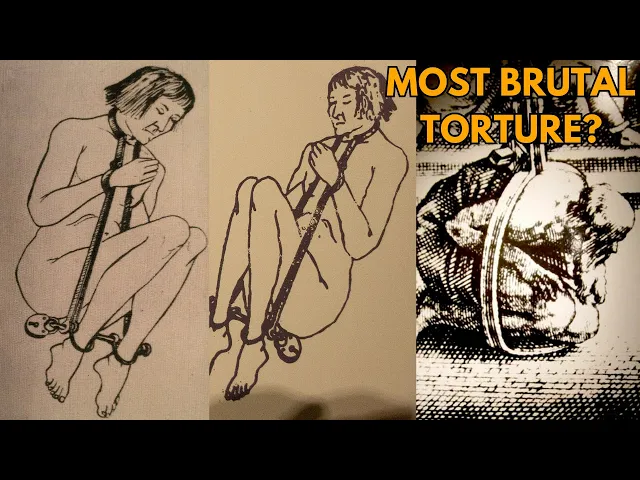
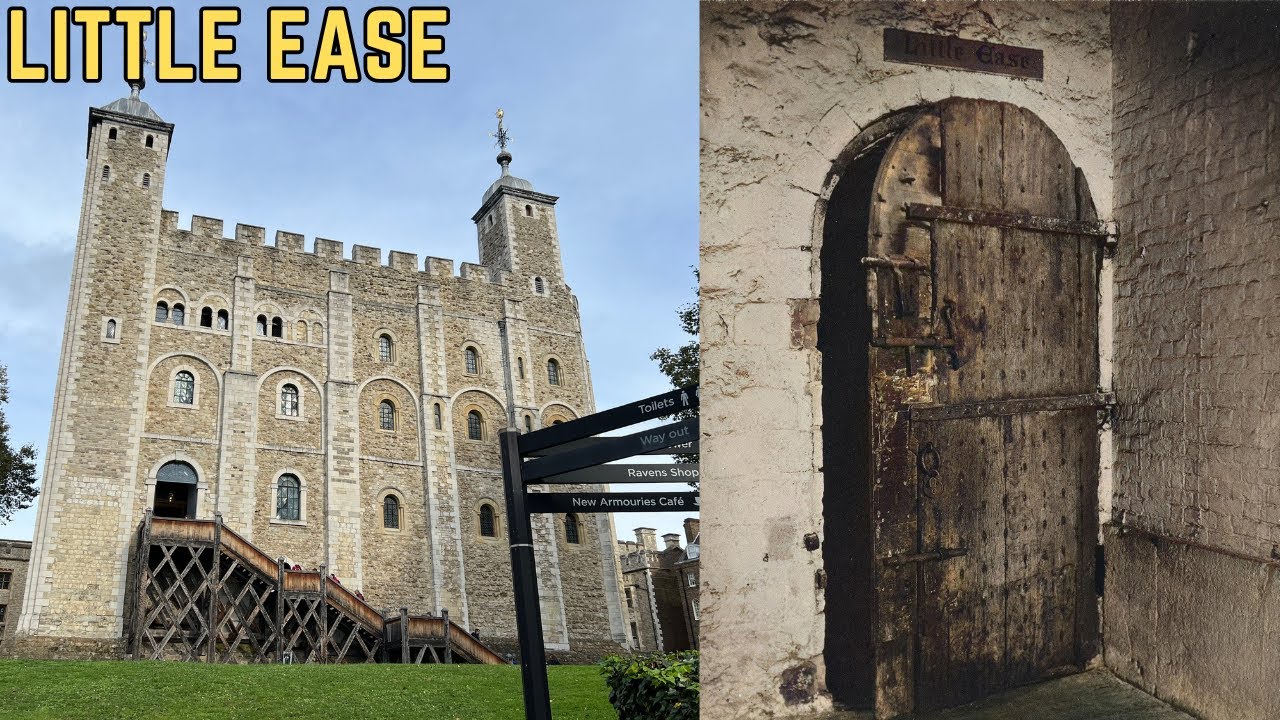
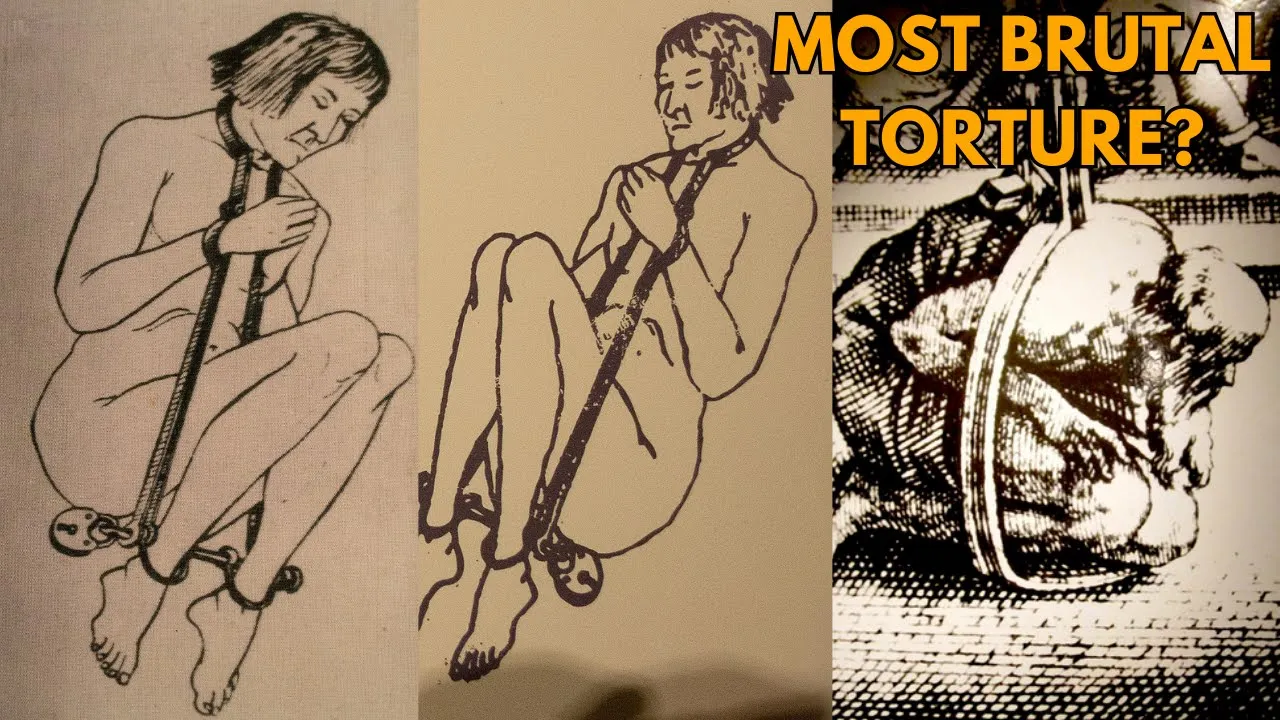
There was a device invented though that would act in opposite to the rack, and instead of stretching it would compress and force a prisoner into a tiny device, and into a very strange position. The Scavenger’s Daughter was first traced back to the reign of Tudor King Henry VIII. It was used at the Tower of London, and it’s believed was invented by the leftenant of the Tower, Sir Leonard Skeffington.
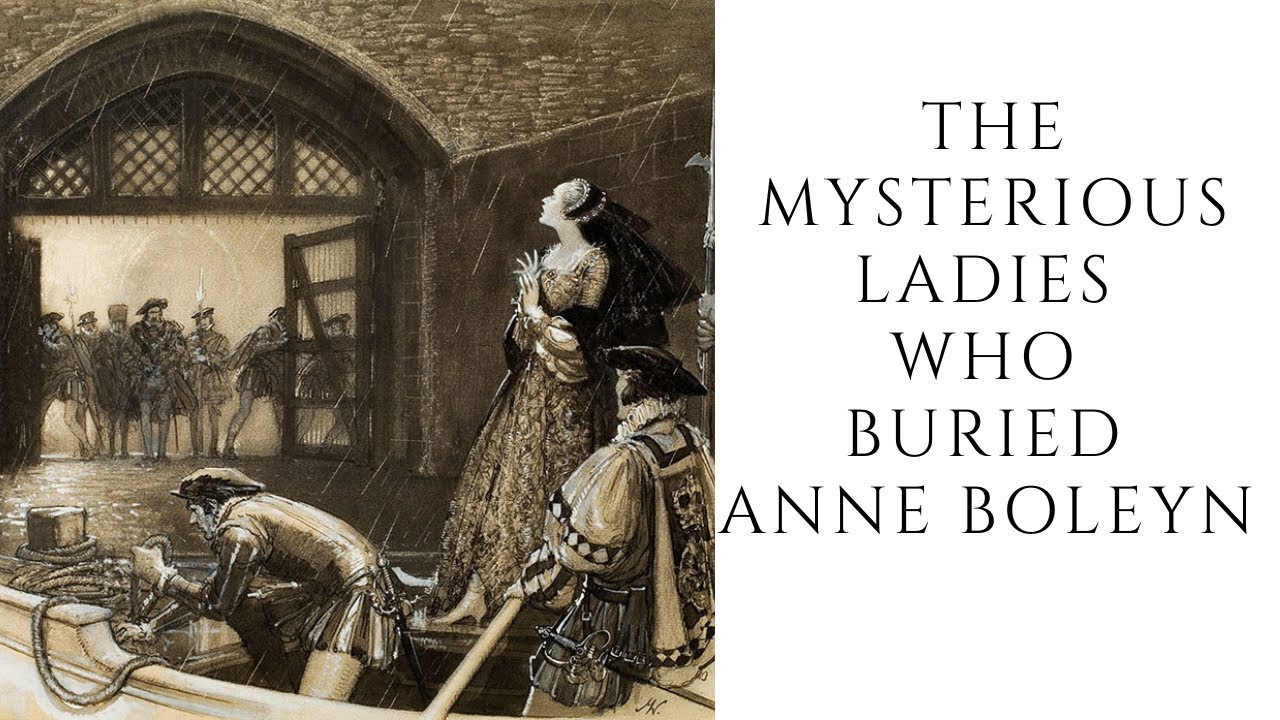
His job was important at the tower, as it was he who was in charge of keeping a number of very high profile prisoners under lock and key. The leftenant of the Tower in the Tudor Period would be responsible for the welfare of prisoners such as Anne Boleyn, Catherine Howard, Sir Walter Raleigh and even the future Queen Elizabeth I. They were often in regular conversation with high profile prisoners, but they were also in charge of administering torture if the crown wished, and Skeffington’s job would have been bloody at times.
As mentioned at the Tower of London, devices such as the rack, manacles and thumbscrews were used, but Leonard Skeffington came up with a new torture device, the Scavenger’s Daughter. This was a device that was to compress the body of a prisoner and a victim in a rather painful and excruciating way. The body would contort in bizarre and strange manners that would cause agony.
It was created to work alongside the rack, with the mangled body of a prisoner being forced into the contraption causing even more agony and pain. There are two different types of the scavenger’s daughter that can be seen in history. The first is a more rudimentary form of the device, which is simply a pin that would hold a prisoner within the metal frame with the prisoner forced to kneel with the pin tightened which could exert such pressure on a prisoners back.
But at the Tower there is another example of the device which can be seen. This is in the shape of an A. The prisoner’s head would be strapped to the top of the A frame, and then their hands were fastened to the middle part through some holes.
The legs were then secured at the bottom of the frame, which would then fold and swing the head down and force the legs and knees up into a sitting position. With this, it would cause immense strain on the prisoner’s muscles and imagine if they’ve been on the rack before it would cause such suffering. The victim’s head would be pushed in the other way from the body, and the fact the device swung on hinges meant that the body could be contorted in a number of different ways.
But there aren’t too many accounts of when the Scavenger’s Daughter was used throughout history. It was easy for a blacksmith to create, and as mentioned its Skeffington who’s credited with inventing it. Thomas Miagh (My Agh) was subject to the device and he was accused of consulting and being linked to a group of Irish rebels who were causing problems for Henry VIII across the sea.
He denied being linked to them, but to try and get a confession from him he was placed on the scavenger’s daughter and he was subject to horrific torture. He carved on the wall of his cell inside the Beauchamp Tower, ‘by torture strain my truth was tried, yet of my liberty denied Thomas Miagh. He wrote this after being subject to the Scavenger’s daughter, and wished to tell people of his ordeal.
One man who was also tortured on the rack and also the Scavenger’s Daughter was Thomas Cottam. He was an English priest who was Catholic, and he was later executed during Elizabeth I’s reign. Elizabeth tried to settle the problems in England with regards to religion, under her religious settlement.
But this punished Catholics and outlawed many forms of Catholic worship. Cottam was put on the rack to try and get a confession from him, but then he was also placed on the Scavenger’s daughter in the 1580s to try and extract information. It’s likely that he was put on there because he did not give any information.
The Scavenger’s Daughter was the innovative technology in the Tudor Period with regards to torture, and it came from a place synonymous with brutal executions and killing, The Tower of London. If you found yourself imprisoned there during the reigns of notorious Kings and Queens such as Henry VIII or Bloody Mary, then you could expect a very tough time inside the walls of one of History’s most brutal prisons. Thanks for watching To support please subscribe.