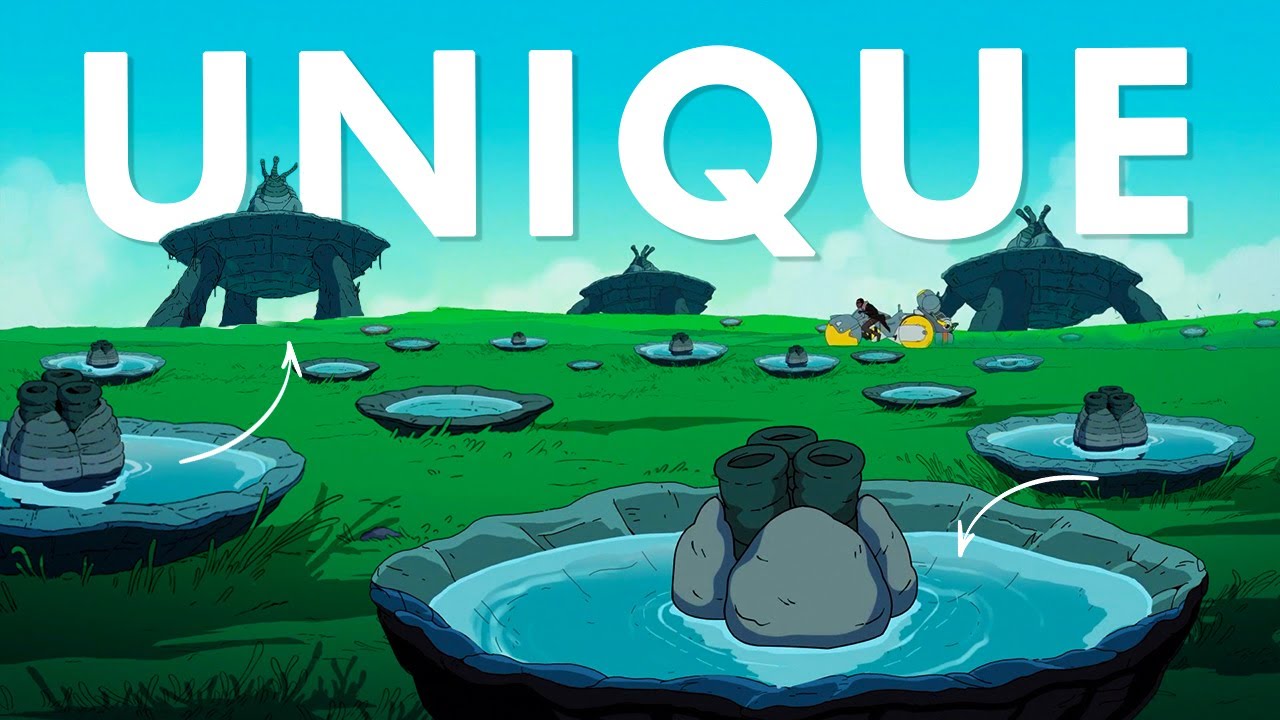
Imagine a fantasy setting. You have the protagonist walking along a strange looking world. The structures, so exceedingly alien, but the environment composed of natural elements even comprehensive to the untrained eye.
The water, so stunningly turquoise that you mistake it for a tropical paradise. A kind of steam, diffusing and cooling down into a veil of fog, eating into the ambience of this world, something similar to a natural hot spring. Now, at a glance, one could imagine this being a well constructed scene in fiction, for after all, it has all the right elements for it.
It looks fantastical. There is a sense of mystery about it. And perhaps on first Impressions, based on these elements, it seems logically consistent with our natural world.
But when you actually delve into this scene. Try to absorb yourself into the fantasy of these shots, engage all your senses, the interactions begin to transcend the normalities of our real world. It is here where the fantasy of the world building is truly unleashed in its highest capacity.
It is here when you realize that this is world building unlike anything that you have ever seen before. . .
I got to say, this was an anime that I didn't really know much about before a few months ago. And granted its position quite high up the list of the best immersive worlds did intrigue my mind even before, I was under the impression that it was something that I would eventually consume at some point in my life. But that was until I published a video about 'Scavengers Reign'.
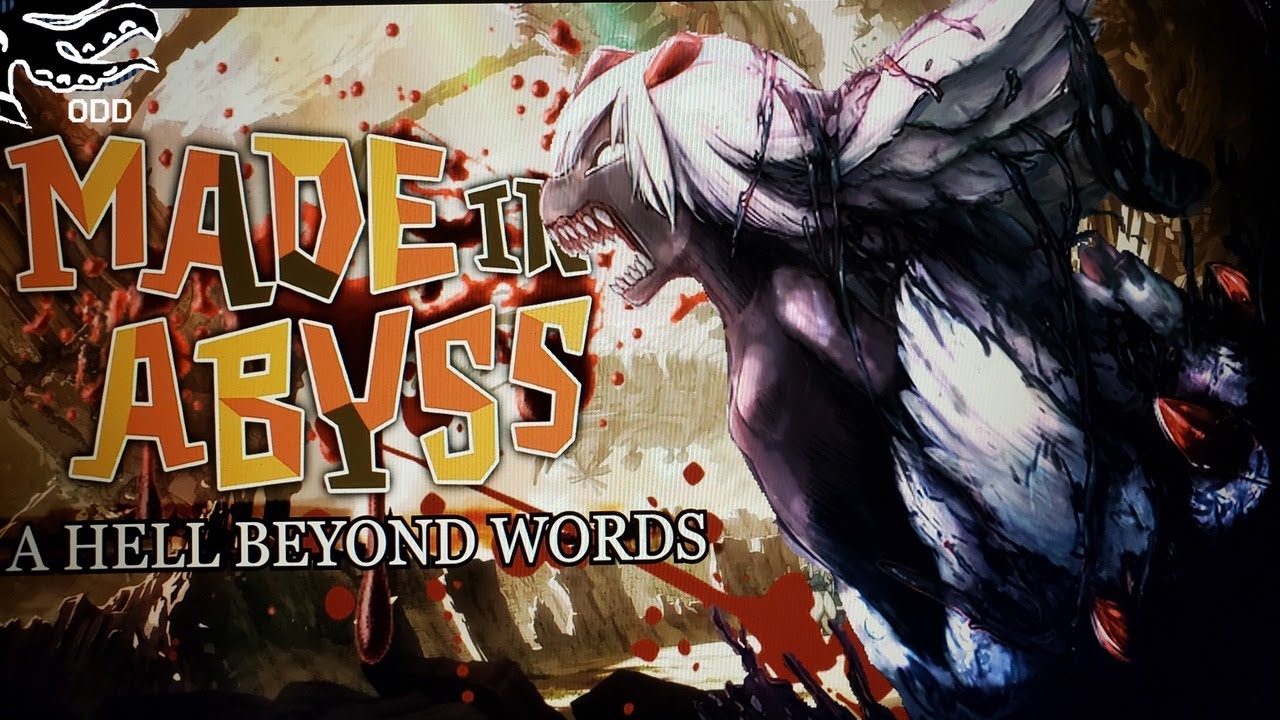
And as far as the topic of discussion goes in the comment section of one of these videos, when you have the overwhelming majority talk about the same subject, the same series, over and over and over again, you can't help but try to find out what the fuss is all about. And that is what led me to Made in Abyss. An anime that arguably has one of the most iconic world building that I have ever come across.
In a video where I raved about why it's essential to have immersively built worlds, of course with a handy guideline to go along with it, I took it upon myself to make sense of world building, as to not be an excuse for some kind of window dressing but to actually derive worlds without even a purpose, one that feels lively in every sense of the word, even when you subtract the main characters from its fabric. And I feel like the guideline that I had used to explain why the World building in Scavengers Reign worked so well, could gain the highest credits when applied within the world of the Abyss. To speak of the Abyss, an unfathomable pit of gargantuan scale as being universal, could perhaps just be the biggest understatement to define this world.
To realize what is the abyss, is perhaps the true nature of the story, above the purpose of the characters, above the mystery of its creatures, the abyss encapsulates all, and everything feels the effect of its presence. And this is maybe why the world makes more sense the further along the story you go. The World building is the true fabric of the story, and there in starts my fascination with the abyss!
Just looking at the conceptual images of the abyss, is enough to blow the mind of the avid fan of world building. The world begins at the very mouth of the chasm, as if a Colossus opening its mouth wide, wide enough to exceed a diameter of about 1,000 M! Although its depth, nothing more than mere speculation, a mind bending 20,000 m is effectively bottomless for the average cave dweller.
And therefore, this makes the universality of the world to be vertical in scale, but nonetheless, all encompassing. Usually in world building, it all begins with a handy map to nod us along the journey. The more fragments that you can obtain to cover the profoundness of the world, the better would be the quality of the world building.
And for the abyss, there is a map. And when you say a map, this is what you really mean by it. Just look at the absolute size of this thing.
The abyss, captured, speculation and all, but still in all its fictional glory. The fine details and the elaborate diagrams, precisely portraying the scale of this behemoth of a pit as it gives you a taste of what to expect on this adventure. But of course, the map is just the appetizer, the structural Integrity of this world, only burns into the mind, one episode at a time.
At the very top of the Abyss, literally at the edge of the unknown, lies the city of Orth, forever peering into this void for knowledge and power. And there is a shot at the end of the first episode where you can capture its true magnificence. A city sort of locked away in time, a city, congregated to acquire resources from the belly of the metaphorical beast.
And from a geographical standpoint, from here forth, it is a vertical journey to expand the scale of this map, to extend the limits of our imagination! And seriously, there isn't anything to not like about the geography of the Abyss. The fact that there are different layers to descend down to, each of them featuring landscapes that are often unique and persistently weird, it just shows you the depth of information the world is portrayed upon.
The further down the pit you go, it seems like there are distinct environments that exist, unbothered, and oblivious to the occasional cave dwelling human. And I like the idea of a world where it feels as if you don't have to observe it night and day for it to be alive, it can exist on its own, devoid of the presence of an observer. And I got that feeling while descending down even into the first layer, which to be fair, is not even that deep from the settlements of Orth, but still the landscape here could not look any further from the city.
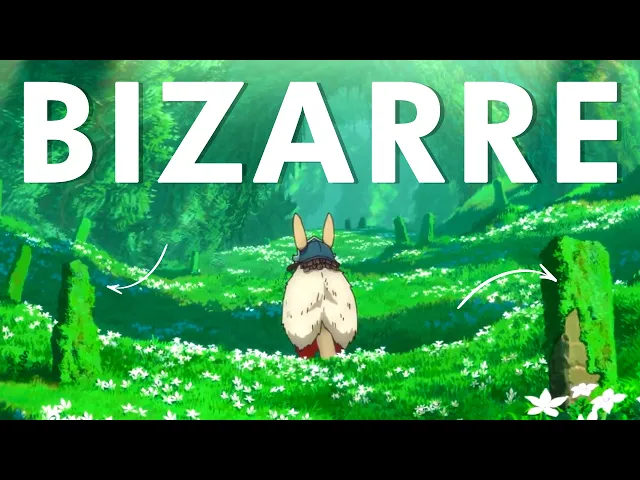
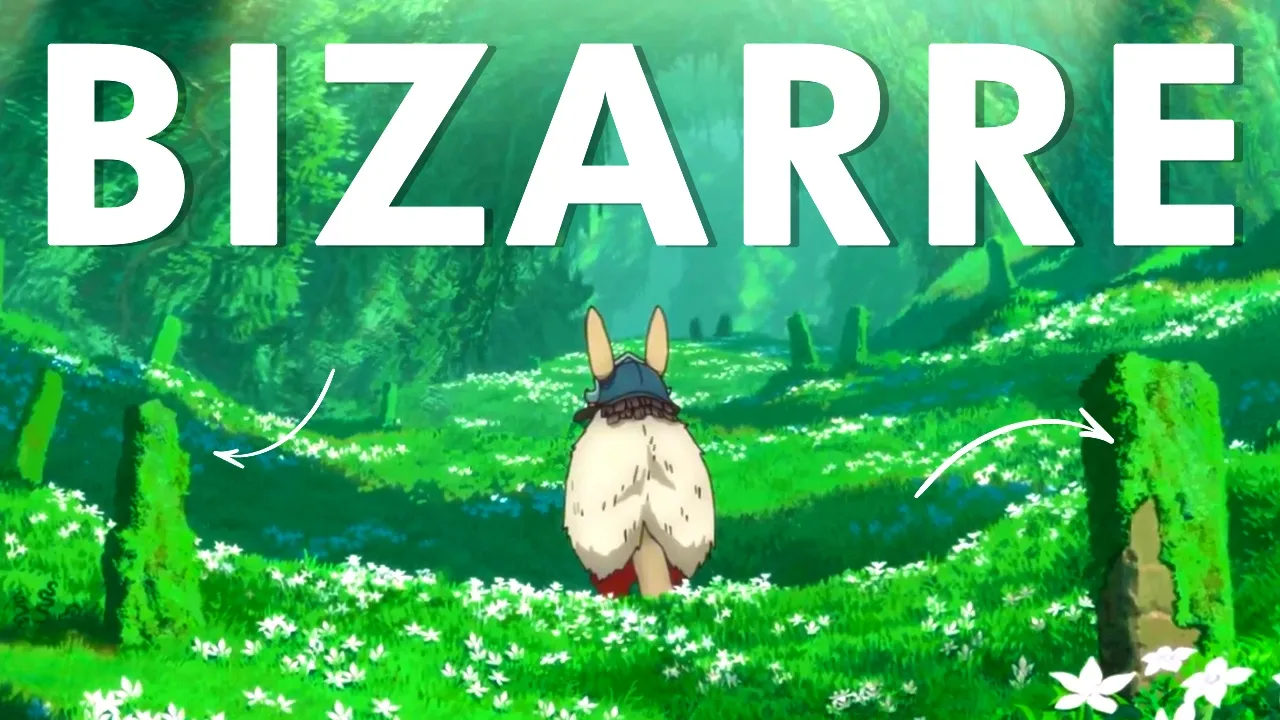
The rocky limestone cliffs, reminds you of places that you have probably been to in real life, grassy slopes filled with beautiful white flowers, and bright sunshine that irradiates the green grass through the sporadic forest canopy. With careful steps, it just feels like a peaceful and chill place to have a fun little picnic. But perhaps the abyss wants you to think that, for the allure of these landscapes wanes into something murkier, the deeper you go.
And the Forest of Temptation is a good example of this. Sitting at an average depth of around 2,000 M this is the domain where danger begins to creep in. The world here is relatively untouched, with much thicker vegetation, where in lies strange looking plants and trees, and therefore, the element of the unknown.
And the very nature of this unknown takes a turn upon itself as we approach the inverted Forest a rather peculiar looking terrain, where the features are quite literally upside down. The giant trees, perhaps similar to real world Drgon Blood trees, and also the predominant characteristic of this landscape, in the absence of solid ground, seem to descend from upon the ceiling. And walking on his tilted canopy is seemingly what makes the most sense here.
The strong updrafts of wind, responsible for most of this uniqueness, also makes the water flow upstream. And thus, to the average person's surprise, the waterfalls aren't exactly waterfalls down here, they're more like water pumps that spray the water upwards. And at this point, it's the realization that you're not even halfway down the map that makes you contemplate the sheer length of this descent, and perhaps the imposing scope of this world building.
Here sits the great fault. The most vertical section of the abyss, and on first impression, the part of the Abyss that looks the most undeniably perilous, for it takes the shape of a cliff that extends down 4,000 M seemingly Into the heart of the Abyss. But the map does recommend the use of the extensive cave systems that run along the walls of the cliff, which makes the descent quite bearable to the ones that are careful.
But for the reckless, one wrong step and it's just another way to perish in the void. The freedom of the fantasy genre is put to the absolute test at the bottom of the great fault. Here be goblets of ginormous proportions, leaking water over the brim, sprouting waterfalls in a landscape that seems like an exceptionally overgrown swamp.
But for me, this region was the epitome of visual world building, for parts of this layer offer unparalleled beauty for the ones that can seek it. It is here, locked away from the center of the layer where you can find a bloom of white flowers, showering the adventurers with its petals, elegant as the garden that fosters it. But you flip the coin to the other side, it can also offer unending nightmares, daring you to be desperate, and therefore immortalizing this duality of the Abyss.
What becomes of the geography of the Abyss underneath this, is riddled with the shade of ominous dark. In the widest layer of the Abyss, an adventurer finds only faint radiance for the Sea of corpses awaits slimy and mystical with parts that are taken over by a thick crystalline frost. The pathways converge to a spinning research station called the Ido front, its appearance, as elaborate a structure you will find upon the descent.
You can almost feel the abyss getting denser around here, as if the weight of all things which the abyss devoured settled into these sections, never to be touched by light once again. But once that feeling subsides, the eyes are sheathed with the glory of a golden Glow from within the darkness almost unexpectedly, the radiance surprises the ones who dare explore such depths of the abyss. And here lies the ruins of a city, lost considerably to the passage of time, the debris a reminder to the ones who passed through that nothing is sacred in this world.
And when you glance at the enormity of the map, scrolling from side to side, panning into shapes and diagrams, stumbling into confusing structures and lines, you almost get overwhelmed by how gigantic the abyss actually is. And when I think about this Colossus, I'm kind of reminded of this cave that was recently discovered in Vietnam. The Son Doong Cave System, the largest cave ever discovered, has its own ecosystem within itself.
You wouldn't expect a whole jungle and rivers to exist within such a cave, but as a matter of fact it does. And photos such as these, it just blows your mind to how mega structures of this magnitude, simply makes you look insignificant. And that's what the landscapes of the Abyss do to the one who think about their path every step of the way.
To realize how small you are, and how far you have reached in an alien environment, with structures of natural and artificial origin, towering over you, belittling your presence, that for me was an experience straight out of expert world building But you know, sticking with that guideline, the exploration of world building only begins at the superficial, for it to really start living rent free in the mind, we need to populate these shots. we need a touch of biodiversity. .
. and when you speak of diversity within the abyss's world building, I know that someone can pull out a book that probably talks in detail about the wondrous creatures, and vegetation, that calls the abyss their home. Because after all, that is exactly how we learn about the ecosystem of the Abyss.
Through field notes, and pieces of parchments, portraying sketches of other worldly creatures, making us ponder about the role that that these organisms play in giving life to this world. It would seem the discovery of organisms follows a similar pattern to the real world. Perhaps the naming rights do belong to the ones that makes the discovery.
And speaking of discoveries, the abyss ought to follow the similarities of something like the oceans on Earth. On the surface, while true that we have discovered many organisms, still, there are things that reside in the depths of our oceans that are still considered to be rare and mysterious. In fact, according to the experts in this field, considering more than 80% of the oceans are unexplored, in all likelihood, there is an equal percentage of organisms that still roam the oceans that remain a mystery to us.
And this is the nature of the Abyss as well. It's the cave raiders who transfer information regarding these organisms. Here, they are the discoverers.
And to an extent, their description is gospel to the ones that live at the edge. And thus, based on their field notes and estimations regarding the size of the Abyss, it would seem that only 10% of the species have been identified. The vast majority, due to the difficulties in exploration, remains an enigma.
And I like how the world building here draws from the habitats of the real world. It makes sense for a newly discovered ecosystem, especially a one the sizes that, failing to reveal its secrets all at once. There is a sense of curiosity that drives us through this world, a chance in discovering something new every step of the way.
But once the biodiversity is identified, much like any other good world building, it makes sense for it to be classified also. Something like the Crimson Splitjaw, a ferocious serpent-like creature, perhaps should be considered as a grave danger for any cave raider who comes across it. So its classification under the deadly category is well within reason.
And since the abyss is almost like a survival game, the main classification criteria is also based on whether or not you would stand a chance against these creatures. And thus, while the danger level system would place the Crimson Splitjaw as deadly, something like the Silkfang, a giant arachnid like creature, still capable of praying on humans, would only score two stars on the danger level, mainly due to its inability to hunt outside its domain. The strange looking creatures called the Hamashiramas, that live in the Sea of corpses, aren't exactly the most pleasing organisms to look at, but on the danger level, they are close to being harmless.
And in fact, something that the cave raiders can feed on while waiting for their final descent. But the deeper down the abyss you dwell, Hamashiramas are the least of your worries. There are creatures here that are absurdly nightmarish.
The Orb Piercer, that ranks quite high on the danger scale, is a beast that you don't want any trouble with. Resembling the shape of large porcupines, they carry spikes that are highly venomous, even capable of piercing through the strongest of metals. There are large birds that belong to the Forest of Temptation that can mimic sounds as a form of hunting technique, vaguely similar to the Lyre birds of the real world.
[Music] The turbinid dragons that dwell even deeper, are probably one of the largest creatures that belong to this chasm. Rumored to be immortal, the sight of such creatures evokes a level of insignificance in the minds of a cave raider. But the list of creatures that can be found here would seem to go on, and the enormity of the landscapes would simply make you wonder how many have we not discovered yet.
But besides the bestiary of the layers, the vegetation also has a certain degree of importance within the abyss. And nothing would be the pinnacle of this value if not the Eternal Fortunes. The perennial white flowers the seem to have omnipresence within the abyss.
With a cultural symbolism, combined with their elegant beauty, you can't help but think there is some kind of primeval nature to their presence. Almost like they're part of the Abyss in a way nothing else is, almost like they are the quintessence of the abyss. .
. There are plants in the abyss that are literal behemoths, under the right swampy conditions of the fourth layer, growing to be over 800 M tall, something that shapes the entire landscape of this layer. Plants like the Amagiri are small moss-like organisms that on sprouting, always point to the north edge of the Abyss, making it a useful tool in navigation.
But beyond the flora and fauna, I guess the conversation about his characters and their distinctions are probably too much for the scope of a world building video. Nevertheless, there is so much character lore that helps define every single character in in the best way possible. From the way some of them look, to the way they act, or speak, the characters simply make sense in the way they are connected to the moving parts of the Abyss.
Their lives are indeed shaped by the universality of this world! Which is probably the best transition into the most important part of a well- defined world. The immersion of a certain world, created through the interactions between the elements in it, is by far what elevates the quality of a world building.
And as far as immersion goes, I don't think I have seen a natural world as interactive as the world of the Abyss. This world kind of feels like a well laid out video game. The gamification is so on point, that there are moments when you feel like you are in one.
And I guess it makes sense that they did release a game out of it. The material was simply too irresistible to not be made into one. So, to begin with, you could see the abyss as a game with levels that increase in difficulty with depth.
Every layer has dangers that the cave raiders must overcome to get to the next one. And a lot of their interactions are initiated with the idea of survival in mind. For example, if you were to be lost somewhere in the second layer of the Abyss, a cave raiders field notes would come in handy to direct you to the Amagiri plant, whose sprouts, just like mentioned before, would always point North, therefore making it the perfect compass.
A cave raider stuck in the abyss, and empty of supplies, could solicit the same from their environments, if they knew where to look for. Although some of the recipes are questionable to say the least, the preparation of food is something that the world building puts emphasis on. For the recipe that Riko calls the Riko soup, the ingredients are a combination of plants and animals that you can find in the various landscapes of the Abyss.
In the fourth episode, when Reg and Riko finds themselves starved in the first layer, Riko prepares the soup using the meat from a demon fish, which they solicit from a river nearby. For extra flavoring, she seasons the soup with a sprinkle of Eternal fortunes, and throws in a bunch of Sainona greens for garnishing, both of which are plans that the world portrays in abundance. And the way the story somehow stops entirely and worry about cooking techniques, it kind of adds a layer of immersion to an already interactive environment.
In another example, this survival mode comes into play when Riko gets poisoned by the spikes of an Orb piercer. From this point onwards, it is a race against time to save Riko from a certain death. But in order to make the medicine that could heal her mangled arm, we are led along a scavenger hunt.
It is here that we also learn that the demon fish are something that you can find even in the fourth layer of the Abyss. But perhaps the most interesting find in the forage, is a type of parasitic mushroom that grows on a type of rodent. And due to the symbiotic properties of this mushroom, once attached to a broken limb, its essential nutrients help with the healing process, thereby making it the perfect antidote for Riko's broken arm.
And such inventive methods of survival makes the abyss feel like a real and tangible world, although being just an extension of fantasy. But the gamification doesn't simply stop at that. The concept of collecting relics or artifacts, is another major game-like aspect of the Abyss that feels immersive.
Much like how there are items in a game that can be traded for value or have special powers, the relics that are found in the abyss also function in a similar way. Something like the scaled umbrella, what cave raiders would call a fourth grade artifact, normally found in the first layer of the Abyss, would essentially be a relic with minimal use. But contrary to this, a first grade artifact like the blaze reap, a large pickaxe that creates a flurry of explosions on impact, has the utmost utility against the dangers of the abyss.
And there are a bunch of these artifacts scattered across the story, ranging in grade and value, with some of them even possessing powers beyond the ordinary. And the access to such information seems to be just readily available, with knowledge effectively passed on through generations of cave raiders. And this makes it feel like the world has history to it.
And this history isn't just something that you hear people talk about, but rather through simple things like recordkeeping, it is something that you can actually feel. You ask a scientist about keeping records, and they'll tell you how crucial it is in the process of scientific research. And perhaps then it makes sense to practice this approach while tackling the world of the unknown.
Just like how a biologist might study and scribble down their findings in a field note, cave raiders do a similar job in understanding the workings of the ecosystem. The information here is repeatable, and the results, reproducible. Even something as simple as a book or a map serves a purpose in this world, not just as a tool that you use for the sake of it, but something of value to the cave raiders up until the very end of their journeys.
But even beyond all such aspects, there is a teeming ecosystem here that functions based on speculative evolution. Take the example of the Corpse-weeper. There must be be some kind of evolutionary adaptation at work here.
These carnivorous birds, perhaps feeding upon lost cave raiders, seem to have learned an ingenious technique to mimic their cries. Something that our main characters fall for. .
. And this interaction makes you feel like this is just nature at work. It makes you feel like this is simply not the first time this has happened.
The fearsome Amaranthine deceptors, perhaps the most nightmare-inducing creature within the abyss, is a type of insect that eats on the host from the inside. Once they infect you, their larva start eating their way through the body, until it reaches the brain, at which point you effectively become a living food source, until you die the most gruesome death. But besides their frightening feeding mechanism, they seem to have gone through a type of adaptation where their appearance mimics the leaves of the eternal fortunes, enabling them to infect creatures that are allured by the beauty of these flowers.
But for the most part, they remain an invasive species on the fourth layer, as they are thought to have migrated here from the lower layers. And although their invasiveness is a mystery, the cave raiders seem to have their work cut out to exterminate these species in order to prevent habitat loss. And such mechanics within the ecosystem, combined with the way the people who dwell here go about these interactions, as if they are just a routine, it just makes the whole world feel lived in!
making the abyss one of the more immersive natural worlds you will ever see in fictional storytelling! But above all these essential aspects of world building, I think the true measuring stick of the Abyss is in how it creates an insanely intricate world that is logically consistent throughout the story. The rules and regulations of this world are set from the start, and there is no point where it falters from these rules for the sake of convenience.
For instance, just like how the fundamental rules of physics, rules over the functioning of our world, the abyss has its own unique foundational principles by which it operates. The invisible flow of energy that permeates the abyss referred to as the force field, is the ever present property within this world. In fact, everything here abides by its flow.
Filling every corner of this pit, is the very blood of the Abyss. As it flows down through the abyss, it carries nutrients and light, sprouting life in the process. And this can be seen in the way some of the flora and fauna have evolved to detect the movement of this force field.
And this is a consistent concept throughout the abyss. No matter where you are, although invisible, the effects of the force field on the environment are easy to observe for the sharp mind. But this flow of energy is not constant across the abyss.
The further you stay away from the central shaft of the pit, the lower the effects of this force you will experience. And looking at the map of the Abyss, it just makes sense for people to build their hideouts and campsites as far away from the central shaft as possible, which is indeed what we come to witness. But through the presence of this force field, arises another foundational rule within the world that is far more serious to the outlanders who delve deep into the chasm.
Known as the 'curse of the Abyss', or the 'strains of Ascension', we are told from the get-go that this is indeed the biggest danger one could possibly experience while seeking the treasures of the Abyss. The deeper down the pit you dwell, the bigger is the strain of ascension. This isn't some kind of superstition or folklore, the abyss lives and dies by this rule.
As the story progresses, the effects of the curse are manifested exactly based on its description that we learn in the second episode. While Riko gets snatched away by a Corpse-weeper, we get to witness the strain of ascension from the second layer. Nausea and headaches as the book illustrates.
Further deep, the strain of ascension deforms the body of Vueko, as her body struggles to retain her humanity. And to build a world where there are consequences to your actions, which are also consistent throughout the story. .
. now that, that right there is the essence of quality world building. .
. it doesn't just say the curse is going to get you, with all seriousness, it makes makes you witness, firsthand, the true horrors of this curse. But beyond the physical rules of this world, there also exists social structures which add to the logical consistency.
The whistle system amongst the cave raiders is one such structure that comes to mind. Based on the experience and the skills of the cave raiders, the system classifies the delvers into types of whistles, the objects of choice to indicate the rank of cave raider. And you can almost sense how this ranking system system elevates how you perceive the cave raider.
The red whistles are considered to be apprentices, one whose adventures are almost always guided. And the higher up the system you go, almost every time you see someone with a different colored whistle, the people tend to perceive them through a sense of admiration, sometimes their arrival back to the city even celebrated with a hero's welcome. But once you're aware that a white whistle is nearby, the legends amongst cave raiders, beyond admiration, they are looked through a lens of mystery.
You can almost feel an aura about them when you're in their company! As if they have stories to tell. .
. And no matter where you are in the story, when you come across the cave raider, it feels like the whistles are the ones that tell you what to expect from them, as if the whistles speak for them. And when you look through this ecosystem, and get a general idea of how it functions, you would also see how it places value in conveying a consistent world that plays by the book.
It hardly cuts corners and jumps into immature conclusions. It gives itself time to evolve on its own into complex systems that simply makes sense once you start thinking about it. And combine all four aspects of world building, you get an idea of what it must be like to live within this world.
But in my opinion, the abyss offers a bit more. You see, if a world can offer its reader to think beyond what is originally portrayed, if it can originate theories regarding the purpose of the world itself, not only have you created an excellent world, but you got yourself something incredibly unique. What lies at the bottom of the abyss still remains a mystery.
In fact, for the structure of this world, both literally and metaphorically, all roads lead to this mystery. But that doesn't stop people from speculating. If the number of theories regarding what lies at the bottom of the abyss is anything to go by, I'd go as far as to say people adore this world.
Such is the enticing nature of the Abyss. Once you jump in, just like these cave raiders, you are slowly but surely falling to the bottom of the pit. As of now, the abyss is an incomplete world.
It is still a work in progress. But I think there's something about this world that even once the story is finished, will still remain incomplete, for the abyss shall always be possessed by mysteries. And that is perhaps the mark of a great world.
It's not clear and concise as some of the other worlds that we have seen, and nor does it have to be, it's not like the world that we live in is complete and comprehensible. In fact, it's the joy of discovering new things, that propels humanity as a species. And for what it is, it is the very same emotion that expands the worldbuilding of the Abyss.
We are voyaging through the oceans, and flying the skies, and digging in the deepest caves, and we still haven't figured out much of the world that we live in. And when you really think about it, is that not what the abyss is all about. .
. And if you enjoyed the video, make sure to leave a like, and maybe consider subscribing as well. And yeah, that's about it, and I'll see you in the next video.