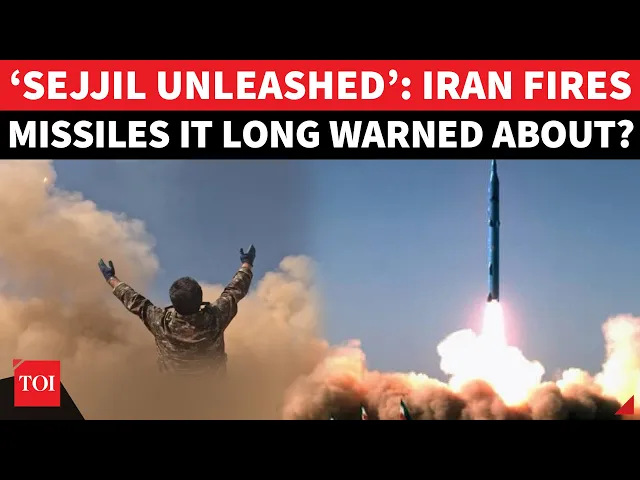
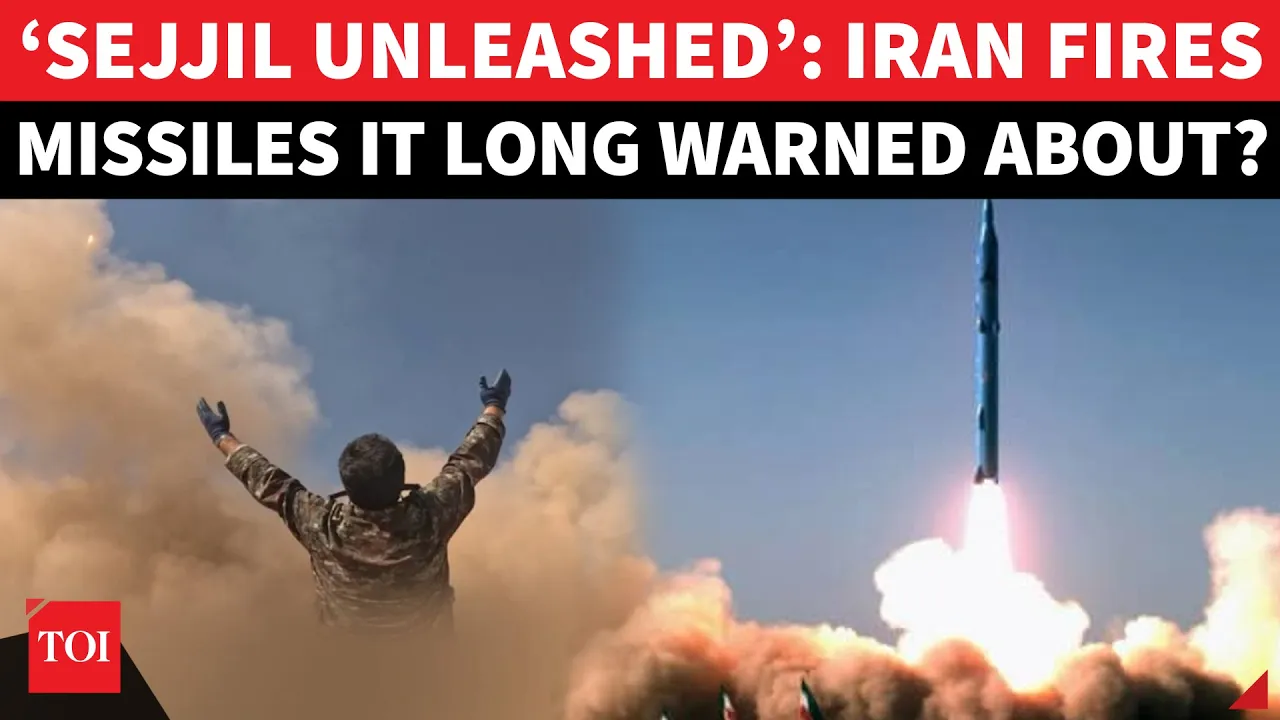
Iran has launched the 54th wave of attacks in its ongoing military campaign, marking a major escalation in the conflict. According to Iranian state broadcaster IRI, this latest barrage includes the first use of Sajill ballistic missiles since the start of the war. Iran's Islamic Revolutionary Guard Corps said the strikes form part of what it described as the first round of retaliation for workers killed at civilian factories in Iran during recent attacks.
The IRGC said the operations were aimed at both Israeli targets and American military assets across the region. The announcement comes after earlier waves of attacks in recent days. In the 52nd wave, Iranian forces reportedly launched a combined missile and drone assault targeting Israeli linked companies in an industrial sector in Tel Aviv.
During the same wave, the IRGC said it also struck three American assets in the region, including military related facilities and gathering points used by US forces. Iranian officials said additional strikes targeted Harer air base in Herbiel as well as the Ali al-Sm and Arifj bases in Kuwait using what they described as powerful missiles and combat drones. The 53rd wave of attacks reportedly included a combined launch of Fatah and Kajra hypersonic missiles along with drones directed at US forces stationed at Aldafra air base in the United Arab Emirates.
According to the IRGC statement, the Aldafra base played what Iran described as a support and intelligence role in military operations against Iranian territory. Iranian officials also claimed that Israeli command and control centers were targeted during the same barrage. With the 54th wave now underway and the first reported deployment of Sigil ballistic missiles, the conflict appears to be entering a new phase marked by heavier weapons and a broader regional reach, raising fears of further escalation across the Middle East.
at all. Israel's Iron Dome crumbles. BBE confesses to us.
Iran's cluster warheads drain Israel's missile killers dry. Israel informed the US this week that it is running critically low on ballistic missile interceptors as Iran's relentless attacks overwhelm defenses. This was reported by Semaphore which cited unnamed US officials as its source.
The US has been aware of Israel's low capacity for months as per the report which further cited one US official as saying and I quote, "It's something we expected and anticipated. " Israel had reportedly entered the current war already low on interceptors that were fired last summer's conflict with Iran. Now the long range defense system has strained under Iran's attacks.
The situation has worsened for Israel following Iran's decision to add cluster munitions to its already deadly missiles. As reported by CNN earlier, this is likely to exacerbate the depletion of Israel's stock of missile killers. Most of Iran's ballistic missiles carry about 24 bomblelets, but one of its weapons, the Cororum Shar, can be equipped with up to 80, according to experts.
The Semaphore report doesn't confirm if the US might seek to sell or share any of its own interceptors with Israel, which would pose its own strain on domestic supplies amid America's ongoing war with Iran. This was highlighted by another unnamed US official in a statement to Semaphore. The official said, and I quote, "We have all that we need to protect our bases and our personnel in the region and our interests.
Israel is coming up with solutions to address their shortage. Thrron has been retaliating to US and Israeli attacks on its territory by firing missiles and drones on regional American bases and across Tel Aviv. The Semaphore report came as US President Donald Trump said earlier this month that Washington has a virtually unlimited munition stockpile.
Meanwhile, reacting to the report, White House press secretary Carolyn Levit said that US stockpiles are more than enough to achieve Trump's goals against Iran and beyond. Israel has other ways to defend against Iranian missiles during the war, including via fighter jets, but the interceptors are among the most effective defensive weapons against long range fire. While Israelis are relatively well protected by early warnings that precede ballistic missile attacks and widely accessible bomb shelters, one bomblelet still killed two people on the outskirts of Tel Aviv last week and many others have been injured.
An Israeli military official told CNN that about half of all ballistic missiles fired at Israel during this war have been equipped with cluster munitions. The munitions represent a significant new challenge for Israel's air defenses, which have successfully intercepted most ballistic missiles, but struggled to stop the bomblelets due to their small size and the relatively little time to intercept. Meanwhile, on March 14th, Israel's defense minister said the conflict with Iran is reaching a turning point, describing the situation as a decisive moment for the country's leadership.
The global and regional confrontation with Iran, which is being spearheaded by United States President Donald Trump, and Israel's Prime Minister Benjamin Netanyahu, is now escalating significantly and entering the decisive stage that will persist for as long as it is required. I commend President Trump for the severe blow the US military dealt tonight to Iranian oil facilities. This is the fitting response to the mining in Hormuz and the extortion attempts by the Iranian terror regime.
The Israeli Air Force also continues its powerful wave of attacks in Thran and throughout Iran. Iran is employing regional and global terror and blackmail in an attempt to deter Israel and the United States from continuing the ongoing campaign, but it will be met with strong, unyielding, and uncompromising steel-like resolve. We are now entering the decisive final stretch in the struggle.
It's between the regime's desperate attempts to survive, causing everinccreasing suffering to the Iranian people and its ultimate surrender. Only the Iranian people can put an end to this through a determined struggle to overthrow the terror regime and save Iran. As Israel's interceptor crisis deepens amid Iran's ballistic onslaught, observers ask how long Netanyahu's defense stocks will hold.
Hey, hey, hey.