Hello, I'm Terry Fisher. This is the last in a series of 12 lectures on the subject of copyright. I'll be discussing today the remedies that the law makes available for copyright infringement.
As usual, I will concentrate on copyright law in the United States, but will also identify some ways in which the law in other countries differs from that in the United States, and some ways in which all countries are now constrained by multilateral copyright treaties. Also as usual, the lecture will be accompanied by various audiovisual materials, which include maps of copyright doctrine and copyright theory. The current versions of which may be downloaded from my home page.
The address of which is tfisher. org. There are three types of remedy for copyright infringement-- equitable, legal, and criminal.
The first two types are available to the prevailing plaintiffs in civil suits. In other words, a copyright owner who, in a civil lawsuit, successfully demonstrates that a defendant has engaged in copyright infringement may attain either or both equitable or legal remedies. In addition, a person who engages in some types of copyright infringement may be prosecuted by the government and, if convicted, subjected to criminal sanctions.
The three segments of this lecture will examine these three types of remedy in sequence. The primary form of equitable relief consists of injunctions. Injunctions are orders by courts directing someone to do something or, more commonly, to stop doing something.
In copyright suits, by far the most common type of injunction is an instruction to the defendant to cease engaging in the behavior that a court has deemed to be infringing. Statutory authority for the issuance of such injunctions is contained in section 502 of the copyright statute, which is set forth on your screen. As you can see, section 502 provides that "any court having jurisdiction of a civil action arising under this title may grant temporary and final injunctions on such terms as it may deem reasonable to prevent or restrain infringement of a copyright.
" Note the reference to "temporary and final injunctions. " Those adjectives allude to the fact that there are, in the American legal system, two species of injections-- permanent injunctions and so-called preliminary injunctions. Permanent injunctions, as their name suggests, are typically issued at the conclusion of a copyright infringement suit.
Preliminary injunctions, as their name suggests, are issued by a court before the conclusion of the suit-- often long before the conclusion of the suit-- when it becomes apparent that the defendant will likely in the end lose, and that allowing the defendant's behavior to continue in the meantime would cause the plaintiff serious injury. The principals governing when it's appropriate for courts to issue either of these two types of injunction are set forth on your screen. These principles were not developed in the context of copyright infringement lawsuits.
Rather, they were developed by the courts-- specifically by the federal courts-- to govern equitable relief in general. As you can see, the traditional rule was that a plaintiff, in order to obtain a permanent injunction, must show-- first, that she has suffered an irreparable injury; second, that the monetary damages would be inadequate to compensate her for that injury; third, that she would suffer more serious hardship if an injunction were denied than would the defendant if an injunction were granted; and finally, that the public interest would not be disserved by the issuance of an injunction. The traditional rules governing preliminary injunctions were slightly different.
To obtain one of these, a plaintiff was obliged to show-- first, that she is likely to suffer an irreparable injury if the defendant's conduct continues; second, that monetary damages would be inadequate to compensate her for that injury; third, that the balance of hardships, again, tilts in her favor; fourth, that the public interest would not be disturbed; and last but not least, that she is likely, at the conclusion of the lawsuit, to succeed in demonstrating the illegality of the defendant's behavior. This last factor has the effect of making judicial decisions concerning the availability of preliminary injunctive relief into provisional assessments of the merits of the plaintiff's claims. Although technically only provisional, in practice such judgments often terminate controversies.
As I say, these principles have long governed the availability of injunctive relief in general. By contrast, in copyright lawsuits, until quite recently, different standards obtained. Specifically, courts in copyright suits were more likely to grant either preliminary or permanent injunctions than in most other kinds of controversies.
Courts typically took the position that a demonstration by the plaintiff that she is likely to succeed on the merits of a copyright infringement suit gives rise to a presumption of irreparable harm sufficient to warrant issuance of a preliminary or permanent injunction. As a result, granting injunctions to prevailing plaintiffs was routine. To be sure, it was not automatic.
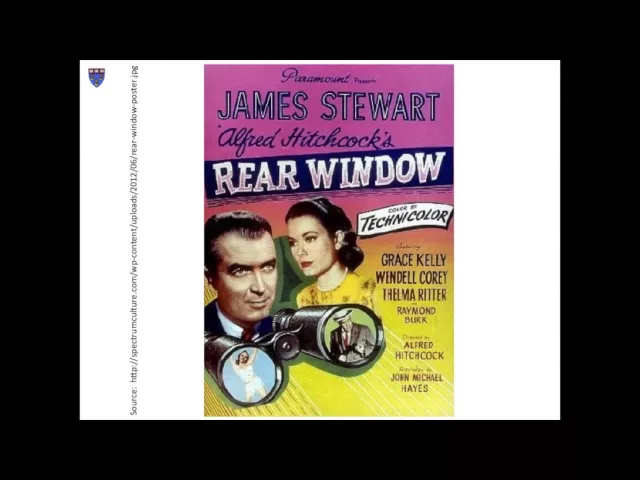
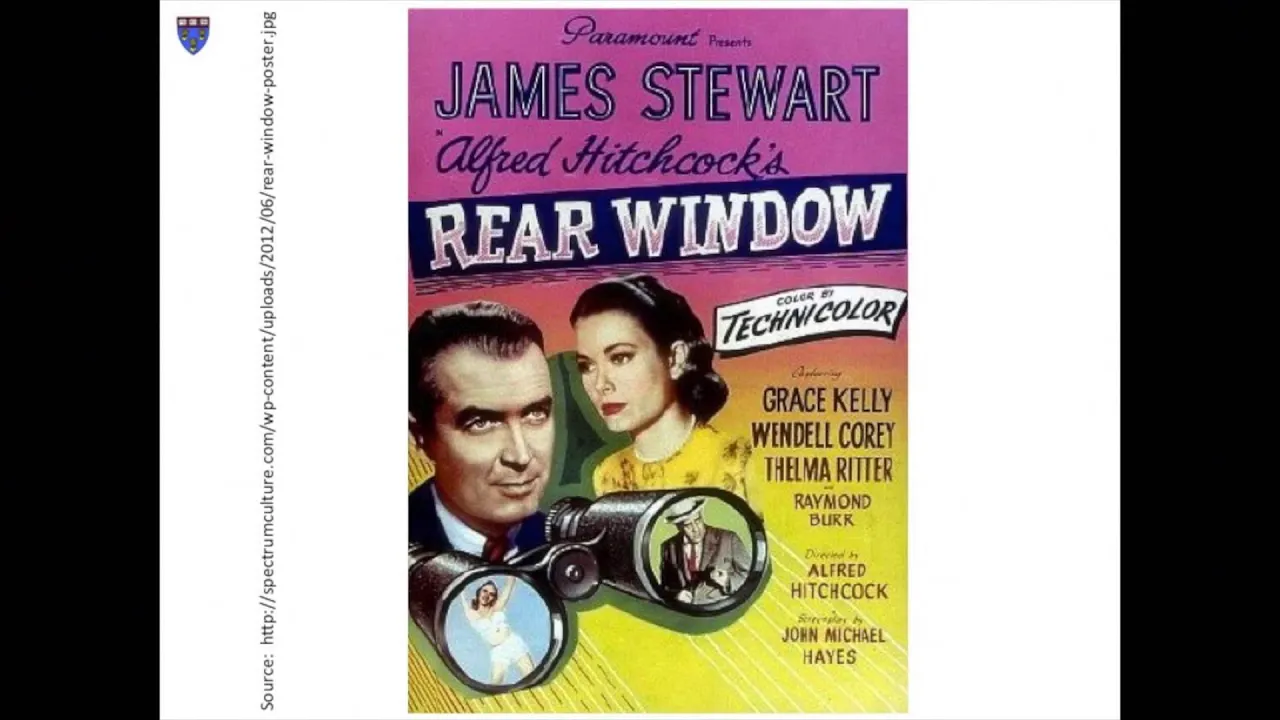
On occasions, courts would deny injunctions in special circumstances. The three most famous instances in which courts suggested that injunctions should not invariably be granted are listed on your screen. You may recall that in the case of Stewart versus Abend, the author of a short story granted a license to make a motion picture based on that story-- a license that eventually ended up in the hands of James Stewart and Alfred Hitchcock-- and resulted, in their hands, in the creation of the movie Rear Window.
Unfortunately, both for the author and for the movie makers, the author of the short story died before the end of his first 28 year copyright term. And thus, he was unable to renew the copyright. Instead, his executor renewed the copyright, and then assigned it to a third party who promptly brought suit against Hitchcock and his company, seeking to enjoin future performances of Rear Window unless and until the defendants obtained a new license.
You'll recall, I hope, that the Supreme Court eventually sided with the plaintiff-- the assignee of the renewal term. However, the Court of Appeals for the Ninth Circuit took the position that the plaintiff was not necessarily entitled to an injunction. Instead, in view of the good faith reliance by the filmmakers on the original license, a reasonable monetary award would be more appropriate than an injunction.
Another special circumstance was identified by the United States Supreme Court in the Campbell case, which I discussed in lecture number nine. You'll recall, I hope, that the Supreme Court in that case took the position that the defendant who, without permission, prepares a parody of a copyrighted work is likely to prevail under the fair use doctrine. However, Justice Souter, writing for the court, suggested that parodist would not always succeed.
After taking into account all four of the fair use factors, a court might conclude that a particular parody should not be deemed a fair use. In such circumstances, however, Souter suggested, in dictum, that the defendant might be permitted to continue to distribute his or her parody, provided he or she paid the plaintiff an appropriate damage award. Finally, in the Tasini case, the Supreme Court suggested, again in dictum, that injunctive relief could be denied when it's issuance would frustrate "the goals of copyright law.
" The upshot, in short, is that courts occasionally rejected plaintiffs' requests for injunctions. In the overwhelming majority of cases, however, prevailing plaintiffs were deemed to be entitled to injunctive relief. In 2006, the Supreme Court decided a case that changed this landscape fundamentally.
Until that date, most federal courts had dealt with patent infringement suits in much the same way they dealt with copyright infringement suits-- granting injunctive relief nearly automatically to prevailing plaintiffs. The Supreme Court, in eBay, declared that that practice could not be justified on the basis of the language of the patent statute. Henceforth, the court ruled that traditional rules, which I summarized a minute ago, should be employed to determine whether injunctive relief was appropriate in patent cases.
In particular, a plaintiff would have to establish, among other things, that the balance of hardships tilted in her favor and that the issuance of an injunction would not undermine the public interest. The opinion of the Supreme Court in the eBay case did not provide much guidance concerning what adherence to those rules would produce. However, two concurring opinions in the case did so.
Chief Justice Roberts, in an opinion joined by justices Scalia and Ginsburg, suggested that in the future federal courts, when applying the traditional rules governing equitable relief to patent disputes, should continue to be somewhat more favorably disposed to the issuance of injunctions than in non-patent cases in light of the traditional practice of granting such injunctions nearly automatically. By contrast, Justice Kennedy, in an opinion joined by justices Stevens, Souter and Breyer, identified three circumstances in which, in their judgment, court should be especially reluctant to issue injunctions-- when the plaintiff is a so-called non-practicing entity, sometimes referred to as a patent troll; when the patent at issue covers one component of a complex product, and thus issuance of an injunction would give the patentee disproportionate bargaining power when negotiating for a subsequent license; and when the patent at issue pertains to a method of doing business, a context in which patent protection, they believed, is especially problematic. Although, as you can see, Justice Kennedy was only speaking for four justices, his opinion has proven to be influential in patent law.
In the eBay decision, the Supreme Court intimated that the issuance of injunctions in copyright cases should be governed by the same principles that henceforth would govern the issuance injunctions in patent cases. As one might expect, given that clear signal, most district courts in copyright cases subsequently adopted the eBay approach. But a few continued to adhere to the traditional practice, which, as we've seen, strongly favored plaintiffs.
In 2010 and 2011, the influential Courts of Appeals in the Second and Ninth Circuits, removed any remaining doubt concerning the applicability of eBay to copyright. In the Salinger and Perfect 10 cases, those courts ruled decisively that permanent and preliminary injunctions could be granted in copyright cases only upon satisfaction of the traditional multi-factor tests. So that's where things stand today.
The net result is that it is significantly harder nowadays to obtain an injunction than it was seven years ago. This shift likely seems to you quite technical, and it is. But its impact is fundamental.
In the growing percentage of cases in which prevailing copyright plaintiffs are denied injunctive relief and are granted only damages, the courts are, in effect, creating compulsory licensing regimes forcing, in other words, copyright owners to accept a governmentally determined license fee in return for allowing defendants to continue to engage in conduct forbidden by copyright law. Plaintiffs who would prefer to charge more, or to deny permission altogether, have no choice but to accept the amount of money selected by the court and to tolerate the continuation of the defendant's behavior. Twice, earlier in this lecture series, we have discussed the merits and demerits of compulsory licensing systems.
First, from the perspective of welfare theory, and then in the context of public performance rights. At the time, we were primarily concerned with compulsory licensing systems that had been created by statute. As we saw, such statutory regimes now govern several uses of copyrighted works-- for example, covers of copyrighted songs, retransmissions of signals by cable television or satellite systems, juke boxes, derivative works based upon the restored foreign copyrights, and so forth.
But judicially created compulsory licenses implicate many of the same concerns that arise in connection with statutory compulsory licenses. I hope that you can see how the eBay decision has had the effect of sharply increasing the set of such judicial compulsory licenses. Whether that impact will be socially and culturally beneficial remains to be seen This concludes our discussion of equitable relief.
After the break, I will examine the even more complex set of rules that determine the magnitude of the monetary awards to which prevailing plaintiffs in civil suits are entitled.