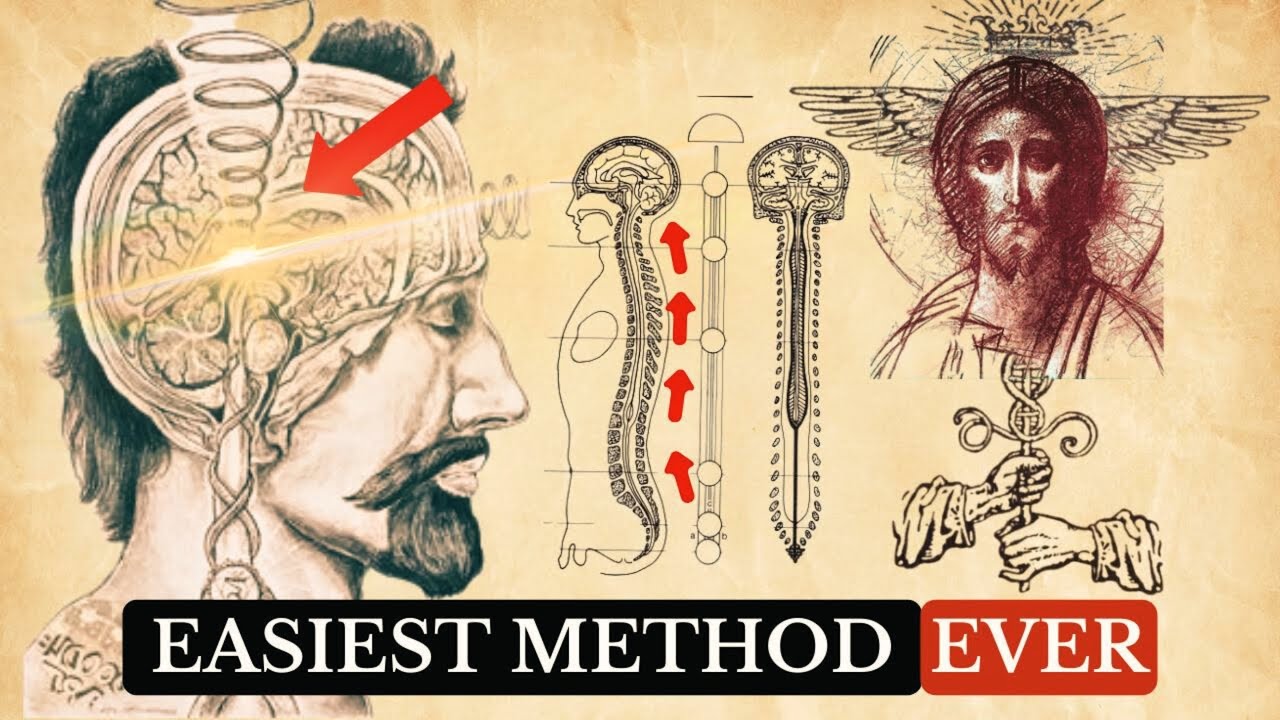
A fascinating letter has been found, written by Aurelius Lentulus, a Roman who saw Jesus Christ with his own eyes. Lentulus wrote many letters to Caesar in Rome, and in one of them, he described Jesus in great detail. This letter paints a vivid picture of what Jesus looked like and how he carried himself.
What did Lentulus really see that made him write to Caesar? Let us explore the details of this remarkable description that is making the entire Catholic Church nervous. The True Face of Jesus All around the world, we see pictures and paintings of Jesus depicted as a Caucasian man.
However, the most famous image of Jesus, created by Warner Sallman in 1940, shows Him with light eyes and is called "Head of Christ. " This image is incredibly popular and has been used on various items like prayer cards, stained glass, oil paintings, calendars, hymnals, and even nightlights. Sallman, who used to make art for advertisements, managed to spread this picture all over the world by working with two big Christian publishing companies, one for Protestants and the other for Catholics.
His work reflects a longstanding tradition where white Europeans made and shared images of Christ that looked like themselves. But let's talk more about the real Jesus. Historically, Jesus probably looked like most people from Galilee during the first century—with brown eyes and skin.
But no one really knows for sure what He looked like because there are no pictures of Him from His lifetime. While the Old Testament talks about Kings Saul and David being tall and good-looking, it doesn't say much about Jesus's looks. Even the descriptions that exist are a bit contradictory.
For instance, the Old Testament prophet Isaiah mentions that the savior to come didn't look majestic or beautiful, but the Book of Psalms says he was "fairer than the children of men," meaning he was good-looking. Here's where it gets interesting with a letter from a Roman guy named Aelius Lentulus, which gives a detailed description of Jesus. Back then, people wrote a lot of letters and we have several of them.
For example, Pontius Pilate, who was the governor of the region now known as Israel-Palestine, wrote regularly to Caesar in Rome. Pilate had a chance to see Jesus often from his balcony. We also have a letter from the high priest Gamaliel, who taught the Apostle Paul and later became a believer in Jesus after His resurrection.
This letter about Jesus is kept in the Library of Congress in Washington, D. C. The only physical description we have of Jesus comes from a letter by Lentulus, who was the Roman Consul to the Emperor Tiberius.
This letter was found in a monastery with other old documents. It dates back to the 12th year of Emperor Tiberius's rule. Historical records confirm that Lentulus was in Judea during Jesus’s trial and crucifixion.
His family is even mentioned by the Jewish historian Josephus in his book "Antiquities of the Jews. " However, there's some debate among scholars about whether this letter is genuine. In his letter to Emperor Tiberius, Lentulus describes Jesus as having a noble and lively appearance, with fair and slightly wavy hair, black eyebrows that curved strongly, deep blue eyes that looked very expressive, and a face that showed no bitterness or arrogance.
Instead, his expression was one of wisdom, kindness, and gentleness. He had a long nose, an almost blonde beard that wasn't too long, and long hair that had never been cut. His neck was slightly bent, making him look humble and approachable.
His tanned face matched the color of ripe corn and looked well-balanced. Lentulus's letter is quite detailed. He talks about Jesus’s amazing teachings, the miracles He performed, and many other incredible things about Him.
He wrote to the Roman Senate describing Jesus as a man of great influence, known as the Prophet of Truth by non-Jews and called the Son of God by His followers. Jesus had the power to bring people back to life and cure illnesses. He was described as a man of average height and pleasant appearance, with a dignified look that made people both love and respect him.
His hair was like the color of an unripe hazelnut, smooth almost to his ears, but from there it turned into darker, shiny curls that fell over his shoulders. These descriptions from Lentulus provide a rare glimpse into how Jesus might have looked and the impact He had on those around him. It's fascinating to think about how different these accounts are from the typical images we see of Jesus today.
The letter not only captures His physical traits but also highlights His spiritual presence and the profound effect He had on people, shaping not just a historical view of Jesus but also a deeply personal one. These old descriptions really make us start to wonder just how much of what we 'know' about Jesus is based on truth. How Old Art Shapes Jesus It’s important to realize how these images and descriptions from long ago still influence our understanding of historical figures like Jesus.
They remind us that our perceptions are often shaped by the cultures and times we live in, and what we see in art or read in texts isn’t always a true reflection of the past. Discussing these different views and exploring these old texts can help us get a fuller picture of historical figures, providing more depth to our understanding of history. He styled His hair down the middle, a common look among the Nazarenes, and His forehead was smooth, reflecting a serene attitude.
His face was free of wrinkles or spots, enhanced by a natural, healthy color. His facial features, like His nose and mouth, were faultless. His beard matched the color of his hair, trimmed to a moderate length with a slight curl at the end.
His expression was straightforward yet showed maturity, and His eyes, a distinct gray, held a calm clarity. When He needed to correct someone, His presence was formidable; but when giving advice, He came across as gentle and endearing. He was generally serious yet showed a cheerful side.
Although He often cried, He was never seen laughing. He stood tall and straight, with well-formed hands and arms. In conversations, He was serious, kept to Himself, and showed great modesty, truly embodying the prophetic description of being more beautiful than any man.
This description closely matches the traditional portraits that have been created over time, likely influenced by direct observations. The Greeks, too, meticulously detailed the appearances of key religious figures like the Apostles and the Virgin Mary, just as they did with their celebrated heroes from the tales of Troy. Fascinatingly, when we merge the details from Lentulus’s letter with the data from the Shroud of Turin, we can piece together a more complete physical depiction of Christ.
Professor Giovanni Judica-Cordiglia, a scholar of the Shroud of Turin with a background in forensic medicine, provided a thorough interpretation based on the shroud’s impressions. He described the figure of Christ as being of striking beauty and notable height, standing at about 6 feet with a body that was both athletic and proportionate. The Shroud, despite its damage, still reveals a face that was soft and gentle, elongated, with a broad, straight forehead.
His nose was straight, with a slight downward turn at the tip, and His cheeks were full and somewhat protruding. Based on detailed measurements, it is evident that Christ was physically superior to the average man. Further analysis of His facial features indicates a cranial capacity of 1575 cc, placing Him in a category suggesting significant brain size, with an estimated brain weight of 1492 grams, indicative of a person of exceptional intelligence.
The views on Jesus's appearance have varied across the ages. Early Christian thinkers like Justin Martyr and Origen referred to biblical texts to discuss His physical traits. Isaiah’s writings suggested that Jesus did not display any grandeur or beauty, appearing plain compared to other men.
However, other scriptures like Psalm 45 presented Him as the most handsome of men. This contradiction implies that people’s views on Jesus’s appearance might have been influenced by their personal spiritual experiences. Saint Augustine argued that the actual look of Jesus is less important to faith; what matters is acknowledging His humanity.
He believed that while many might imagine Jesus differently, He had only one true physical form. This idea aligns with Cyril of Jerusalem's teachings in the 4th century, who explained that Jesus presented Himself differently according to the needs of individuals: as a source of joy, a gateway, a mediator, or even as a sacrificial lamb for sinners. He emphasized that Jesus adapted to people's needs while maintaining His divine nature and sonship.
Let’s dig a bit deeper into how those who lived closer to Jesus’s time might have actually seen Him, blending historical facts with personal beliefs. Many Faces of Jesus These varied interpretations show us a multifaceted image of Jesus, not just as a historical figure, but as someone deeply integrated into the personal and spiritual lives of those around Him. The array of descriptions from historical, biblical, and scholarly sources paints a picture of a figure who is as diverse in His roles as He is in His representations.
This diversity not only underscores the complexity of His legacy but also reflects the personal connections people have made with Him over centuries. Each description and role that Jesus has been given serves to meet the specific needs, beliefs, and circumstances of individuals, showcasing His ability to relate uniquely and personally to each person. This personalized view of Jesus, echoed through ancient descriptions and scholarly interpretations, helps us appreciate the wide-ranging impact He has had on various cultures and individuals throughout history.
It also emphasizes that understanding Jesus’s appearance is less about physical details and more about recognizing the profound influence He has on individuals’ lives. This multifaceted approach to understanding Jesus allows us to see how He has been perceived as everything from a humble servant to a regal figure, each portrayal aimed at bringing a deeper understanding of His life and teachings to the people of that time and beyond. Exploring these diverse perspectives provides a richer understanding of how Jesus has been viewed across different eras and cultures.
It highlights the adaptability of His image to serve different purposes, whether for guidance, comfort, or inspiration. The evolving depictions of Jesus throughout history illustrate not only the adaptability of religious iconography but also the deep personal connection that people feel towards Him. This connection, fostered through various interpretations and teachings, offers a glimpse into the enduring relevance and influence of Jesus in people’s lives, transcending the simple depiction of His physical form to embrace a broader, more impactful vision of His presence and role in the world.
It’s really interesting how images of Jesus started off showing him as a young, radiant guy, kind of like the god Apollo. But then, things changed big time in the fourth century when Emperor Constantine made Christianity an official religion. Suddenly, all the pictures of Jesus started to show him as an older guy with a beard, which was a complete turnaround from those earlier, youthful depictions.
Now, here’s a cool bit of trivia: the very first images that people thought actually looked like Jesus were said to be created without any human touching them! These are known as "acheiropoietos," which basically means "not made by human hands. " This idea came about in the 7th century, and there’s a story behind it.
It goes like this: Jesus healed King Abgar of Edessa, which is now in Turkey, just by sending him a miraculous image of his face. Western Christianity has its own similar story from between the 11th and 14th centuries. It’s about how Jesus, just before he was crucified, left an image of his face on the veil of Saint Veronica, which then became known as the Volto Santo or holy face.
These images, along with a few other sacred relics, really set the standard for what people think Jesus looked like, at least in the world of art and history. These treasured relics made sure the image of Jesus as a bearded man with dark, shoulder-length hair stuck around. When the Renaissance rolled around, European artists started blending traditional religious icons with their own style of portrait painting.
They did this for many reasons—maybe to feel closer to the human side of Jesus’ suffering or just to show off their skills as artists. For example, Antonello da Messina, a 15th-century painter from Sicily, made these personal, intimate paintings of a suffering Jesus that looked a lot like regular portraits of people back then. He even signed his works with "Antonello da Messina painted me.
" Now, we’ll explore how these images of Jesus were preserved, honored, and sometimes questioned as the years went by, each adding a new layer to our understanding. Powerful Relics Keep Jesus Alive Albrecht Dürer, a German artist from the 16th century, also mixed the sacred with his own image. In a famous self-portrait from 1500, he posed straight on, like an icon, with a beard and fancy hair that made him look a lot like the traditional images of Christ.
His use of the initials AD was a clever touch because it could stand for both his own name, Albrecht Dürer, and "Anno Domini," which means "in the year of Our Lord. " This kind of artistic expression wasn’t just happening in Europe, though. Art from the 16th and 17th centuries often showed Jesus with people from different ethnic backgrounds, like Ethiopians and Indians, even though the image of Jesus often kept those European traits, influenced by European colonization and trade.
This European influence is pretty clear in a painting called "Adoration of the Magi" by the Italian artist Andrea Manna from 1505. It features three wise men from Africa, the Middle East, and Asia, each bringing fancy gifts that were popular imports at the time. Despite these diverse figures, Jesus is depicted with light skin and blue eyes, suggesting European features, which is a bit odd considering he was Middle Eastern.
The painting even has fake Hebrew writing on it, which shows a kind of complex relationship with the Jewish background of Jesus’ family. But you know, at the end of the day, it doesn’t really matter what Jesus looked like. What’s really important is the connection that believers have with him.
Every person who has been baptized in his name has something pretty special to look forward to: the promise that when our time on earth is up, we’ll get to meet Jesus face to face in the heavenly court. That meeting, in a place beyond all our understanding of time and space, might show us a side of Jesus that we could never have pictured in our minds. Christian relics have always been a big deal in the lives of believers, going way back in history.
These objects, linked to Jesus Christ and various saints, are highly valued because they’re tied to important religious events and are thought to hold spiritual power. One of the top relics out there is the True Cross—that's the cross they say Jesus was crucified on. It's been a major symbol in Christianity ever since the 300s, when St.
Helena, who was Constantine the Great's mom, supposedly found it. Pieces of this cross ended up all over Europe, and loads of churches claim they've got a piece of it. There's been a lot of debate about whether all these pieces could really all come from one cross, but that hasn't stopped people from cherishing them.
Then there’s the Crown of Thorns, the crown they say was put on Jesus' head when he was suffering before his death. This crown's story is pretty wild, with the main part kept in Notre-Dame Cathedral in Paris until it was nearly lost in a fire in 2019. Like the True Cross, people debate if it's the real deal, but it still stands as a strong symbol of what Jesus went through.
Another big one is the Holy Lance, also known as the Spear of Destiny. Legend has it that this spear was used to stab Jesus during his crucifixion. There are a few different places that claim they have the real spear, and the tales around it are pretty fascinating, mixing awe with mythical stories.
Probably the most famous—and most controversial—relic is the Shroud of Turin. This linen cloth has got an image of a man who looks like he was crucified, which many think might actually be Jesus’ burial shroud. In 1988, they did some tests that suggested it might be from medieval times, not from when Jesus was around, which stirred up a lot of debate.
Still, the shroud has a ton of people who revere it and study it, hoping it might really be a trace of Jesus. Another interesting relic is the Holy Robe, believed to be the robe Jesus wore before he was crucified. It’s said that St.
Helena found it, and it’s now kept in Trier, Germany. The robe’s history is a bit murky, but it's been in Trier since around the 12th century and gets shown to the public now and then, drawing lots of visitors. The Veil of Veronica is another cool piece.
The story goes that Veronica gave Jesus her veil to wipe his face when he was on his way to be crucified, and his face left an imprint on it. A few different churches claim they have this veil, and one of the most notable ones is kept in the Vatican, in St. Peter’s Basilica.
Could the letter of Lentulus be an authentic eyewitness account of Jesus, or is it a clever fabrication meant to influence history? We want to hear your thoughts on this intriguing possibility. Let us know what you think in the comments, and don’t forget to like and subscribe for more.



![The Story of Jesus [The Life of Jesus in 90 minutes]](https://img.youtube.com/vi/sXs2r3ubw3I/maxresdefault.jpg)