We tend to think that the world is organized around a small group of enormous superpowers that pull the strings of everything. The United States, China, the United Kingdom, maybe until recently Russia, maybe in the future, India. .
. But what if I told you that there are much smaller, seemingly insignificant countries that suddenly achieve gigantic influence on a global scale? What if we were to talk about countries that are neither the richest in the world, nor do they necessarily have nuclear weapons, large armies or a large population, but have nevertheless managed to carve out a niche for themselves on the international geopolitical chessboard?
Well, VisualPolitik viewers, in this video we are going to give you several examples of countries that, despite being relatively small, are breaking all the molds. But first it would not be out of place to shine a light on the ultimate key to its renewed influence: we are talking about what is known as soft power. And, take note, this can be much more important than you might imagine.
We could say that this type of strategy or power consists of being able to impact, influence and persuade people around the world to achieve certain objectives. In order to do this, elements such as culture, values, innovation, sports, diplomacy and even philanthropy are used. It is the opposite concept to hard power, which is exercised through coercion, the use of force or threats and economic blackmail.
A type of power in which, not surprisingly, the great powers have many advantages. In other words, in summary, while hard power depends on force, soft power depends on persuasion and attraction. Let's see, as far as influence and military presence go, we have already talked about them in a lot of videos.
It is a recurring theme on VisualPolitik. However, what we have rarely talked about is how any country can expand its relevance and international influence by resorting to persuasion. This can also be a real lifeline for the country’s companies and products.
And, believe me, it’s no joke. Many countries are already developing this line of work. So, without further ado.
. . Shall we find out which countries are able to compete head-to-head with the major powers?
How exactly are they doing it? Well, VisualPolitik viewers, we are going to look at every aspect of this new approach. And do you know what?
We are going to illustrate it with concrete examples. Let's get started. T1(THE EMERGENCE OF 'K-POWER') One of the countries that has most increased its international influence and improved its external image in recent times is.
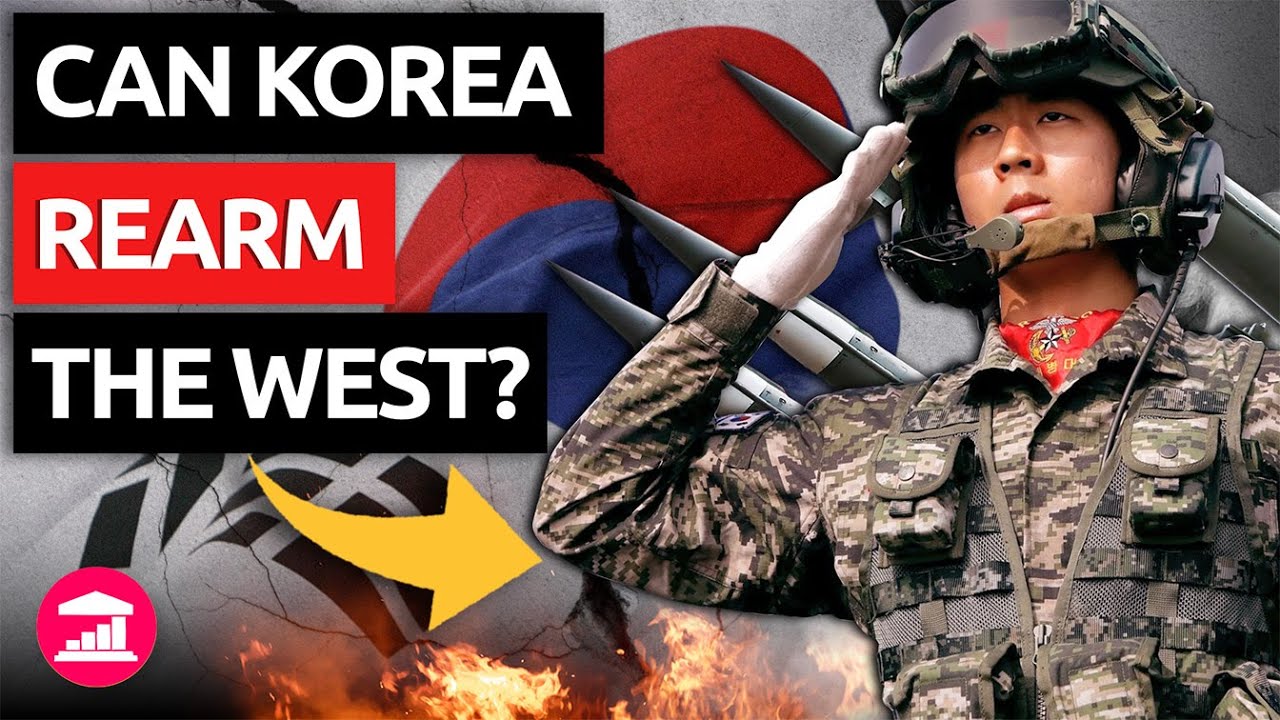
. . Yes, indeed, South Korea.
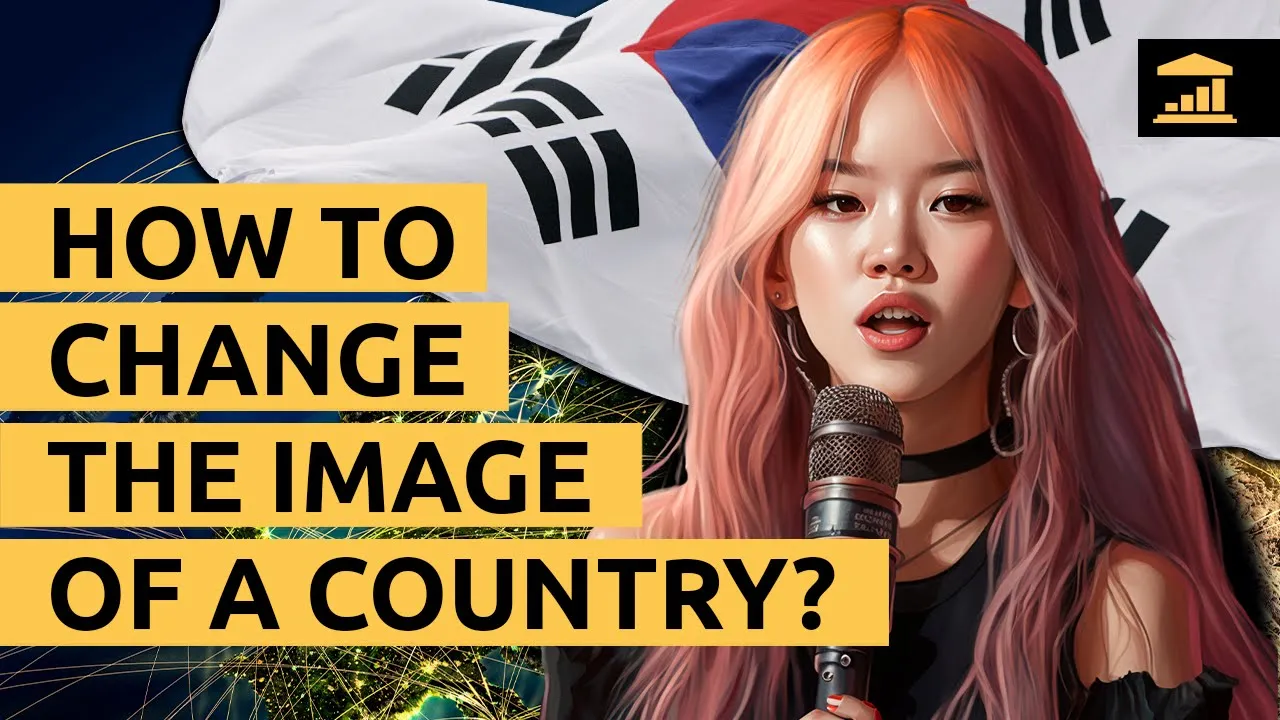
Here on VisualPolitik we have already talked about this country in several videos. We have talked about political, economic, military and even social issues, but what we have never talked about is how this country has become one of the most popular countries in the world. .
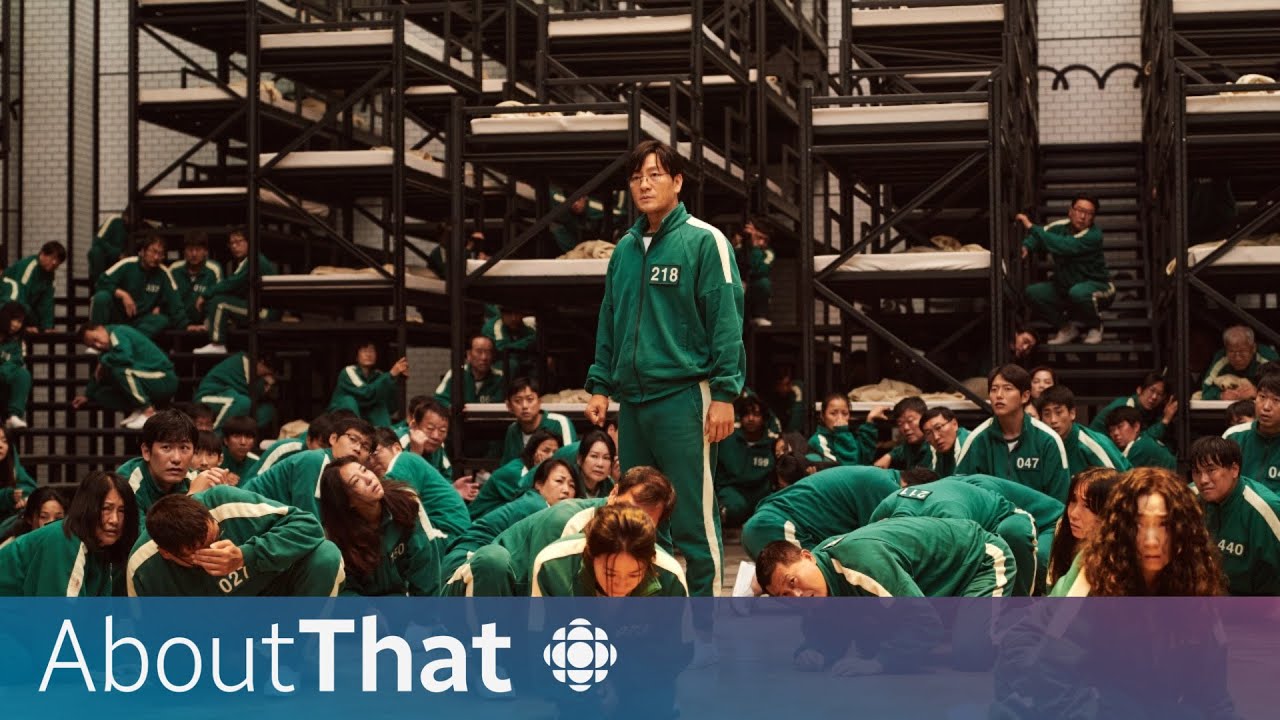
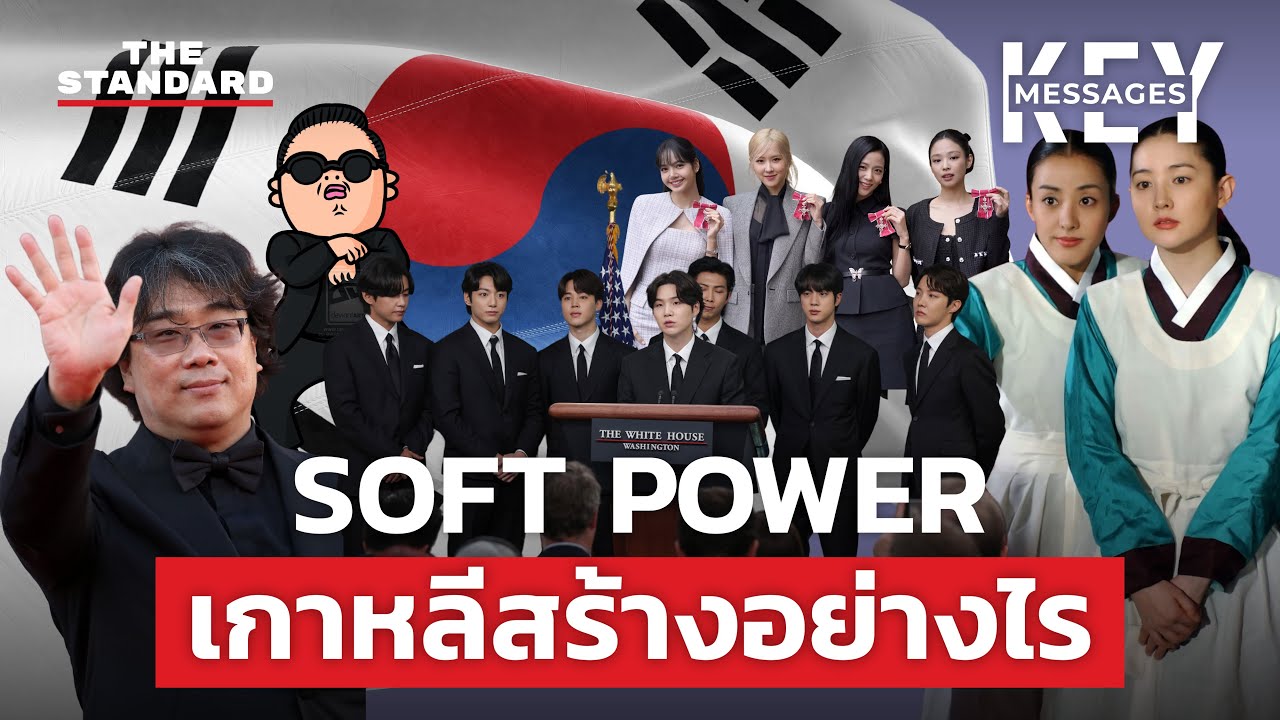
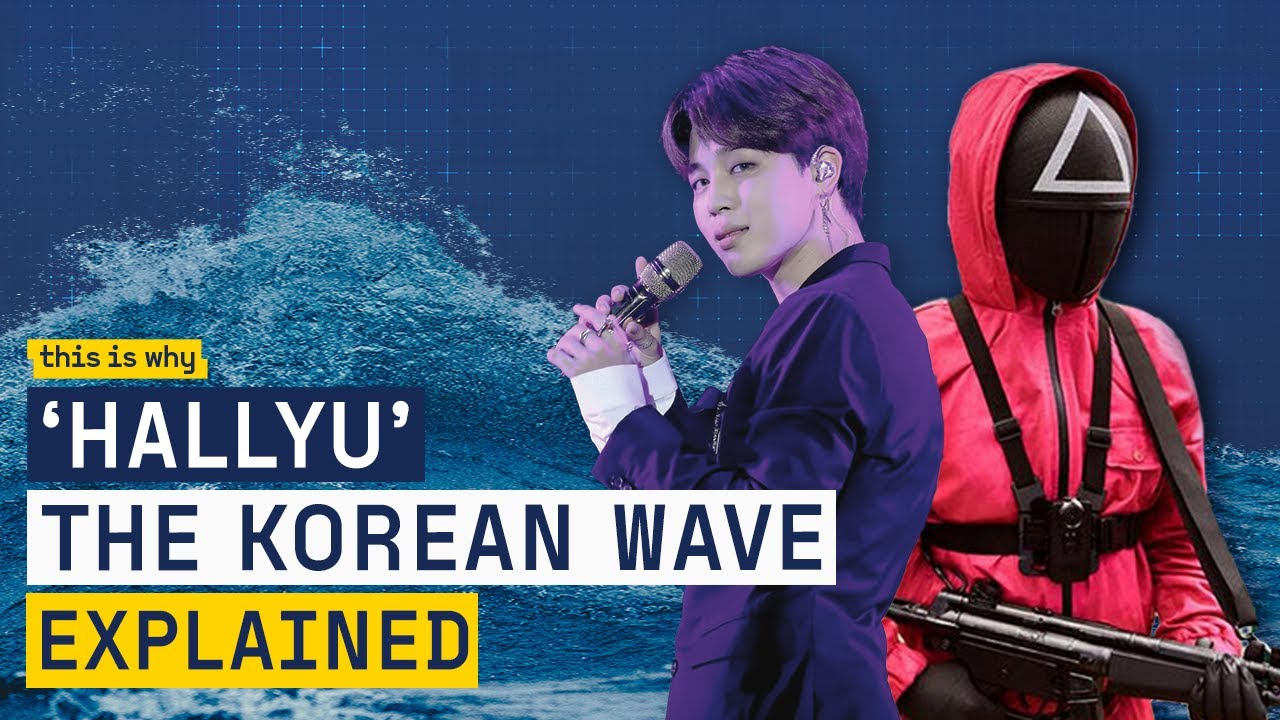
. I'm sure you’ve all heard about KPOP or Korean series that have taken Netflix by storm, such as, for example, The Squid Game. But long before all that, before Gangnam Style became the most watched video on YouTube, before groups like BTS and Black Pink conquered the world, and before the movie Parasite won four Oscars, the so-called "Korean wave" had already conquered the Asian continent.
Maybe even some of you, as a result of all this, have been encouraged to try Korean food. . .
. . A cuisine that is also becoming more and more popular.
Cinema, music, culture and gastronomy. . .
It may not seem much to us, but isn't it surprising that a country like this is having such a global impact? Have you ever thought, for example, about the cars that systematically appear in Korean TV series? If you haven't, take a look, but they are almost always either Hyundai, Genesis or Kia.
We could almost talk about a mega ad for one of this country’s most important industries. And, of course, we're not just talking about cars. But that's just one aspect of this huge global exhibition.
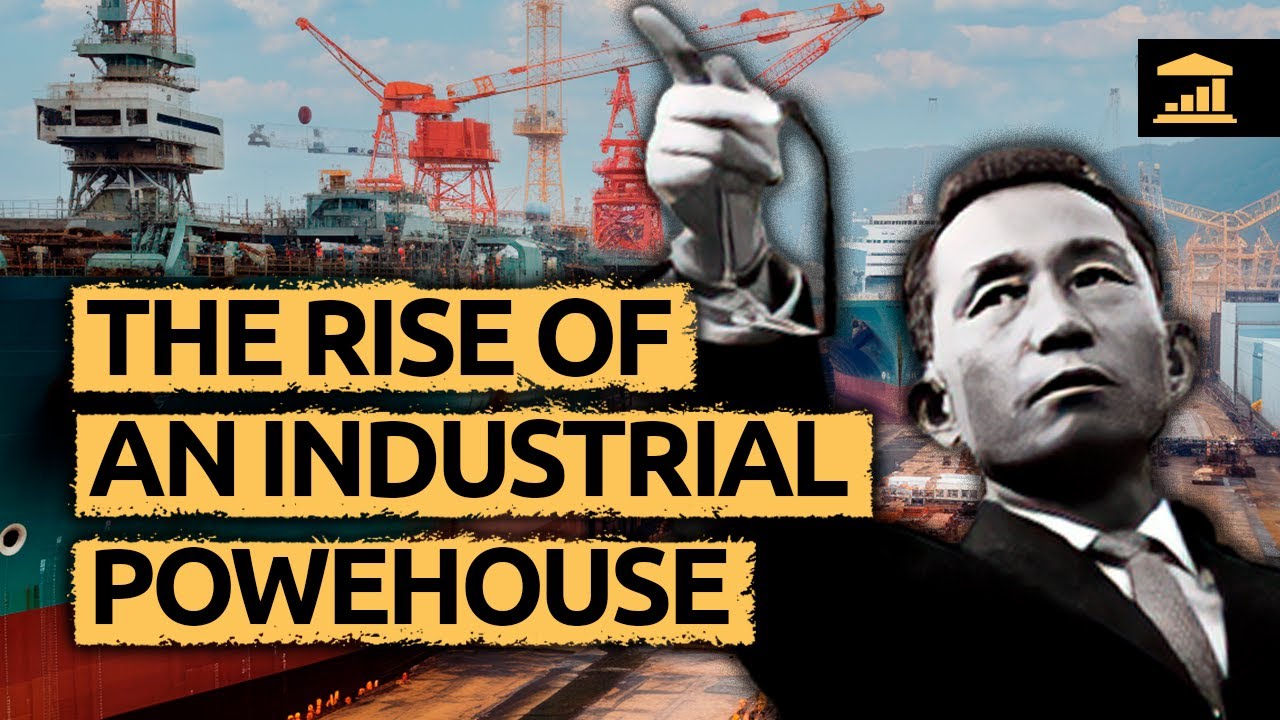
It’s a kind of exposure that, in the case of South Korea, has not come out of nowhere. Quite the contrary. We could go so far as to say that it has been part of a State strategy for several decades now.
You see, many experts believe that government support was key in the Hallyu, the Korean wave of cultural content that emerged in the 1990s. For example, in 1998, then President Kim Dae-jung [PRON: Kim Day Tsong] announced the first plan to support the Hallyu industry. The aim was to boost the cultural industry to make it a great showcase for the country.
And it was not just hot air. In just three years, the public budget allocated to the cultural industry tripled. The success was so resounding that the next government, that of Roh Moo-hyun, continued to increase investment in the cultural industry.
In fact, several laws were also established as well as government agencies aimed exclusively at promoting this cultural content both inside and outside the country. Let's see, yes, I know what you're thinking. .
. If it were as easy as putting money on the table, many countries could do the same, right? Yes, you are absolutely right.
In fact the truth is that in this case, the key to the success of the Korean wave was not really the economic contribution of the government, but above all that the process was totally directed and managed by private companies and production companies focused on making profits. Let's just say that in this case the government played a role similar to that of the State of Israel in the promotion of technology companies, as we recently told you on VisualEconomik. That is, it put up the money to support the industry, but gave it all the control.
. . With a very clear premise: they had to be competitive on their own.
That is, they had to make as much money as possible. And so, little by little, the State was nurturing a sector that could bring them a lot of international visibility. Take a look.
C1("Culture has surfaced as an indispensable element of a nation's competitiveness and economic resource that produces added value. To keep in pace with this changing global environment, Korea has adopted cultural diplomacy as a new pillar of the country's diplomatic make up" – 2010 Diplomatic White Paper of Korea) And believe me when I tell you that they take it quite seriously. For example, the South Korean Ministry of Foreign Affairs conducts research on the impact of Hallyu in each country, and based on the results, promotes fan activities and cultural events.
Another example is that the government is sponsoring 20 to 30 percent of a huge $1 billion investment fund aimed at growing and exporting Korean pop culture. As you can see, this has not come about by chance. So the question is, what for?
Well, one of the objectives of this strong commitment has been to improve South Korea's international image. A country that since its foundation in 1948 went through a devastating war and a succession of military dictatorships until the 1990s. Dictatorships that, obviously, consistently violated human rights and contributed to the country's rather negative image abroad.
For a long time, South Korea was seen as a kind of mega-factory run by satraps and huge family business conglomerates that were supported by corrupt politicians. As you can imagine, that was not the best calling card. So when democracy arrived in the country known as the Land of Morning Calm, politicians not only had to get down to work to clean up the institutions, but they also had to work hard to improve the country's image at home and abroad.
And there you have it. . .
No sooner said than done! But do you know what? There are a couple of facts that can help us understand the enormous success they have had.
For example, according to the World Tourism Organization, between 1995 and 2019, which is the latest pre-pandemic data, the number of tourists received by South Korea grew by 367 percent, from about 3. 75 million to almost 18 million. Thus tourism is becoming a huge and entirely new source of income.
Another fact that demonstrates the influence that this cultural commitment has had is the number of people who suddenly decide to study their language. We can look, for example, at the number of students who sign up for official exams every year. Well, take note, the number of TOPIK applicants has increased by almost 14,000 percent between 1997 and 2019.
In 2019 there were some 400,000 applicants, almost four times more than those who signed up, for example, for the official DELE Spanish exams. And let's not forget that Korean is a minority language globally, with just 80 million native speakers, making those figures a real milestone. As a comparison, it should be noted that Spain spends 170 million euros every year on the Cervantes Institute – basically on its head office, branches and public employees.
An institution whose essential function is to promote Spanish around the world. Well, what can I say? With the data in hand.
. . South Korea's commitment to private enterprise and competitive content has clearly been much more successful.
Especially if we also take into account that the Spanish language has the second highest number of native speakers and is much, much more influential in the world. But let's not get sidetracked. The fact is that all this impact obviously translates into a huge extra source of revenue for the South Korean economy.
And that’s not all. It is also a way to promote South Korea's political image to the rest of the world, which, in addition to increasing trade, diplomatic and political exchanges, could be particularly important in the event of a conflict, for example, with North Korea. It is clear that the things we know and value matter much more to us.
It is a strategy that countries like Israel are now also following. Have you noticed that there is more and more Israeli content on streaming platforms? Well, take note, because its implications are more important than we might think.
Take a look, for example, at this news item: N1(Fauda's Season 4 breaks viewership records in the Middle East. i24news) N2(Netflix's controversial show 'Fauda' tops Arab countries watchlist. The News) Fauda is a series focused on the Israeli-Palestinian conflict.
A Hebrew-produced series that is now helping to change the image of this conflict in Arab countries. It is an incredibly powerful loudspeaker. Of course, the use of culture is just one example.
. . But it is far from the only way to achieve similar objectives.
. . There are other possible strategies that can turn a remote and/or relatively small country in terms of population into an influential global power.
Do you want to know more? Then stay tuned. T2(THE POWER OF THE WALLET) Apart from movies, TV series and music, which are undoubtedly excellent tools for improving a country's image, the truth is that there is still a lot more.
A very clear example is the case of Qatar. And no, don't worry because we are not going to talk about the Qatar World Cup again, although the truth is that this event had a lot to do with everything we are talking about. An example of a huge political marketing campaign.
. . And an economic one.
However, there is still something more important than that. You see, as many of you probably already know, Qatar is one of the largest hydrocarbon exporters in the world. It specializes mainly in the export of liquefied natural gas, which has made it one of the richest countries on the planet.
Qatar has money galore. . .
And do you know what? There's a way to use that stash of cash to not only get profitability. .
. but also influence. As we have already told you in the past, this emirate of the Persian Gulf invests a large part of the profits from hydrocarbon exploitation through a sovereign fund called the Qatar Investment Authority.
This fund has more than $450 billion in assets, which amounts to more than $150,000 per resident and more than $1 million per Qatari national. Well, the bulk of all this money, some $400 billion, is invested in 80 different countries, with the United Kingdom having the largest number of Qatari investments with some $40 billion. For example, the Qataris own some $12 billion in real estate properties throughout the UK.
In addition, this fund is also the largest owner of real estate in London, while it also has significant investments in bricks and mortar in cities such as Paris and Washington DC. And the truth is that the list could go on ad infinitum. But of course, we're not just talking about buildings.
We are talking above all about strategic bets: For example, Qatar's claws also reach into the realm of critical infrastructure. The country has been buying all or part of ports and liquefied natural gas terminals in the rest of the world. And it also has stakes in a lot of multinationals.
For instance, they are one of the largest shareholders of the Volkswagen Group. Evidently the control of these pieces of infrastructure and its presence in the shareholding of many large companies gives the Qatari government enormous influence over the entire planet. But wait a minute, because that's not the end of it.
Qatari money also has other, more "alternative" uses. In their quest for political and social influence, they have invested heavily in the world of sports. Without going any further, and I'm sure you all know this, Qatar owns Paris Saint Germain football club.
It is their flagship. And now they want to take control of Manchester United as well. Likewise, the Arab world's leading television network, Al Jazeera, is also Qatari.
In other words, Qatar is leveraging oil and gas money to seek not only profitability but also political and economic influence. Controlling huge media outlets, major soccer clubs, critical infrastructure and large shareholdings in some of the world's most important multinationals, the Qataris are always welcomed through the front door despite being a country of just 2. 7 million inhabitants, of which just over 300,000 are nationals.
It is an extraordinary use of money to achieve not only profitability but also soft power. . .
Doha has become one of the great political capitals of the Arab world and the checkbook has played a key role. Without going any further, Qatari money has also served to boost its brotherhood with Turkey. And yes, it is true that Qatar has also developed many actions of a strictly political nature, such as supporting the Muslim Brothers, or of a military nature, such as giving the United States the largest military base in the Middle East, but the truth is that the checkbook has played a key role in making Doha much more important and influential than, for example, Kuwait, a potentially even wealthier country.
Let's just say that taking advantage of available resources to gain influence is another key to soft power. It may seem obvious to you, but the truth is that it is not so common. But, before ending this video, we cannot overlook a third way that relatively small countries have at their disposal to become great political powers in addition to the use of culture and money.
Do you know what we are referring to? Well. .
. Listen up. T3 (KINGS OF HEARTS) Another way to compete with the most powerful powers in the world is to become a standard bearer for just causes and political projects.
To tell you about this, we are going to give you two very different examples: Canada and Cuba. We are talking about two countries that play in totally different geopolitical spheres, but that have managed to exploit their strengths to achieve regional and even international relevance. Now, the question is.
. . how did they do it?
Well, in the case of Canada, what they did was to become a standard bearer for civil liberties and environmental protection. For example, Canada has been one of the countries that has taken the UN declaration on the rights of indigenous peoples most seriously. And yes, I know what you're thinking.
. . this all sounds lovely, but can you really achieve international influence with these things?
Well, the truth is, yes. This can be one of the key tools for achieving it and Canada is a clear example of this. This North American country has been one of the major promoters of important international treaties.
For example, there is the Ottawa Treaty, signed in 1997, which seeks to ban anti-personnel mines. Or the 1987 Montreal Protocol, which sets guidelines for reducing the use of chlorofluorocarbons in order to protect the ozone layer. And many of you may find all these things irrelevant, but the truth is that they all contribute to building a country's brand and increasing its international influence.
Think of it this way, everyone wants to be close to the most popular person in the class. And this is something that affects governments, companies, investments, products and professionals. It is, in a way, the marketing campaign of a lifetime applied to countries.
But what about Cuba? Why have we included such an impoverished country in this video if it is a communist dictatorship? Well, although it may seem contradictory, that is precisely the point.
A country as poor as Cuba, which has neither money, nor significant companies, nor a modern army, nor practically anything else, has managed to become one of the most influential countries in the Americas. How did it achieve this? Well, by resorting to political strategies.
In a past video here on VisualPolitik we saw how they used doctors. That would be one example. But Cuba goes much further, and if it stands out for anything it has been precisely for making intense use of the populist strategy that we could summarize as: "the subjugated countries versus the United States and Europe which are great imperialist and exploiting powers.
" This discourse has been bought and bought a lot in many Latin American countries such as Venezuela, where the Cubans first managed to establish a puppet dictatorship through Hugo Chavez. Then, with Venezuela's own oil money, they were able to finance their own revolution throughout the rest of Latin America. The idea seems brilliant.
. . Maybe evil, but brilliant.
Throughout the continent, Cuba has promoted political parties, social pressure groups and even institutional forums such as the well-known Sao Paulo Forum. Spaces from which politicians such as Rafael Correa, Evo Morales, Daniel Ortega and Manuel Celaya emerged. The idea on which the Cuban influence in Latin America was built was quite pragmatic.
The Castro regime realized that the left would not succeed in Latin America if it did not shed – at least in the face of the gallery – the old dogmas. Dogmas such as ending private property or establishing proletarian dictatorships. Beyond the purely ideological question, what interest could Cuba have in exporting its revolution?
Well, for many analysts, its primary objective would be precisely to guarantee the very existence of the Cuban regime. With the demise of the Soviet Union in the early 1990s and the severe economic and social crisis this caused in the Caribbean country, the Castros realized that they needed an international support network. A network that had to be in Latin America, countries that are close to each other, speak the same language and have more or less the same culture.
And do you know what? It turned out well, and news stories like this one are just proof of how a small, backward and poor country achieved enormous international influence. N3((50% of the gasoline produced by Venezuela is sent to Cuba, a union leader from that country says "Only 10% of the gasoline that is being produced reaches the population".
– Diario de Cuba) Anyway, as you can see, there are many ways to achieve international influence despite being a relatively small country. From South Korea's cultural content to Cuba's revolutionary policy, from Qatar's macro economic investments to Canada's philanthropy. What is clear is that if you can develop some creativity with a good global vision, virtually any country can become a major power in geopolitical influence.
And make no doubt about it, all the countries we have seen in this video have reaped great benefits with this type of strategy. So it's no trivial matter. But now, at this point it is your turn: do you think that your country could follow the example of one of these countries to have more international presence?
Do you think that this kind of power of attraction is lasting over time? Leave us your comment below. And remember, if you liked this video don't forget to like and subscribe to our channel so you don't miss any news.
Once again, thank you very much for being there. All the best and see you next time.