I'm a former Visa officer and today let's talk about what happens when you apply for a US Visa what is that [Music] process well it's going to start with you submitting an application there are three parts to this you're going to fill out the ds160 you're going to pay the mrv fee and then you're going to schedule an appointment now the government does have their own websites where you can do this unfortunately they're not always easily identifiable usra dos. these websites don't sound very official they don't even have doov endings on them which leads a
lot of people to use an agent at this stage in the process that's understandable even if you know which sites to go to these websites can be cumbersome they can be unwieldy they can kick you out you can lose information that you've already filled in you have to redo it it can take hours and if you're busy or not techsavvy then having someone who can help you do this is a good idea and could even be a good investment make sure that you're choosing someone who you know and trust who has a good reputation and
who's not going to try to take advantage of you some people I have spoken to have horror stories where the person they entrusted with this put their own address as the address where the passport should be returned after the Visa was issued and then they held it hostage for ransom and until the applicant paid them even more money they wouldn't give them their passport with the VISA in it you want to avoid that at all costs you also want to make sure that you're you're going to have the final say on anything that they submit
don't entrust everything to them and hope that they submit things correctly make sure that you know what's in the application because in the end at the visa interview you are going to be held responsible for whatever information shows up in your ds160 okay so these three steps are the first that you're going to take in order to apply for your visa after that in some places in the world you're going to go for a fingerprinting appointment in Mexico Columbia Brazil India other places you're going to have a first appointment that may be one or 2
days before your appointment for the visa interview where you're going to go for your Biometrics your fingerprints will be taken perhaps a photo will be taken or you're going to submit a photo and some documents will be checked this is going to be a step in some places in other countries however that doesn't exist and you're just going to go straight to the Embassy or the consulate for the visa interview when you arrive at the embassy or the consulate for your visa interview first what you're going to do is you're going to line up outside
there's going to be some local staff members who are out there who are going to look at your documents uh you're going to have your passport going to have your ds160 confirmation page you're going to have whatever other materials that you're bringing to your visa interview an I20 if you're applying for an F Visa a DS 20109 if you're applying for a j Visa uh any supporting documents your financial documents housing documents anything that you're bringing into your interview you're going to have they're going to look at your DS 160 confirmation page and your appointment
time they're going to make sure that you're there at the right time they might sort you into different groups who are going to enter the embassy or consulate at the the time that's right before your visa interview is scheduled for and then you're going to pass through security and enter the facility once you're on the inside there are a couple different things that may happen because every consulate and every Embassy does things slightly different but if you've not had your fingerprints taken at a different facility a few days beforehand then you're going to go to
a window where your fingerprints are confirmed they take your fingerprints they confirm that you are indeed the person who uh is presenting that passport and inside that passport then you're going to go to another window where there's going to be intake there's going to be a member of the local staff who takes all of your documents and makes sure that all the information that you're submitting is correct is your name spelled correctly is your passport number correct is your date of birth correct they're making sure that all the documents that you need are present and
that all of your information is correct in their system so that there's no misspellings there's no typos or anything like that when they print your Visa if there are any typos afterwards when you get your visa back this is bad do not travel with with it you need to contact the embassy or the conso and tell them that this has happened so that you can get a new one it's super important that all those data points are accurate or could cause you a big problem when you try to travel after that the final step is
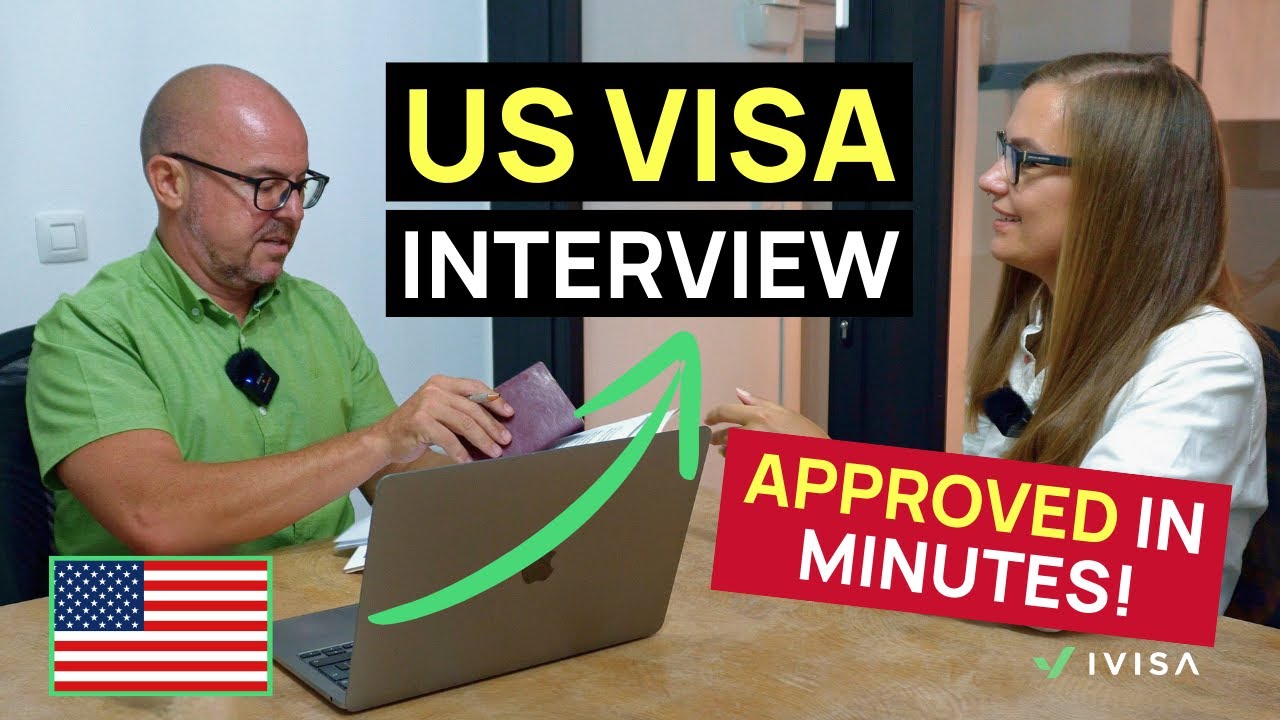
the interview that's when you go to the window where you're lining up you're going to be directed by a local staff member randomly to go up to whichever window opens up or if you have a specific Visa type there may be windows that deal with your specific Visa type and there's going to be an officer there who's an American they're going to be an American citizen Americans come in all all shapes and sizes from all parts of the world so don't think oh this person looks like they're from my country they must not be a
real American the Consular officer is an American citizen who has a consular commission who is a US Diplomat and they are the person that's going to be doing your interview and also having the final decision there's no way to appeal that to a manager you can't ask to speak to their supervisor it's that person that person is the supervisor of the process that you are undergoing that person that Consular officer will make the decision about your visa when you approach that window they're most likely going to to motion for you to pass your passport perhaps
your ds160 confirmation page perhaps your I20 not all of your documents just the documents they need in order to start the interview they're going to get that document they're going to scan a barcode and that's when your interview begins they're going to start asking you questions the most common question that they might ask you to begin is what's your purpose of travel to the US why are you going to the US why do you want to go to the US what are you going to do in the US something like that it's going to be
very general that's the starting point they're going to be reviewing your ds160 while they're asking you questions and then the questions are going to get more and more specific and more and more pointed as they try to identify information that either allows them to feel confident that they should issue you your Visa or makes them feel suspicious and leads them down the path to refusing your Visa let's talk about those possible outcomes one possible outcome at the end of the interview the Visa Officer says congratulations your Visa is approved they're going to hand you back
a piece of paper that gives you the instructions for what you should expect next and you're going to take that and you're going to leave you're going to go home you'll receive receive instructions about how to get your passport later it could be that they they send it back directly to your house it could be that they send it to the fingerprinting facility it could be that they send it to another facility where you pick it up it's different in every country that's arranged locally but there are going to be instructions on that piece of
paper that tell you what you are supposed to do next another possibility is that your Visa is going to be refused in many cases the majority of cases when a Visa is refused it's under 214b which is the Visa officer's judgment call in this case you're going to get a piece of paper that's not specific to you they haven't sing out the reasons why they refused you they handed you a stock letter that says you've been refused under 214b yada yada yada something about ties to your country you're not eligible don't read that specifically and
think oh it must mean that I don't have ties what it means is that the Visa officer did not believe that you were eligible for the visa for whatever reason they didn't believe that you were going to go to the US and then come back home without using the Visa in a way it was not intended it's not necessarily just about those ties there's also the possibility that you may be refused used under a different ineligibility in which case you will be notified of that with a different form that's going to have information checked on
it that tells you this is the reason why you were refused 6 C1 2 A1 9b2 whatever it is they're going to fill it in they're going to check it they're going to write in the specific code if it's not already on there and you're going to know exactly what the reason was what the Clause was under which they refused your Visa now the third possibili is that you're put into administrative processing which is also known as 221g what is 221g what is administrative processing this just means that the Visa officer doesn't make a decision
at the end of your interview it doesn't mean one thing for everyone it could mean the Visa officer's keyboard stopped working and they can't hit the enter button so they can't enter your Visa right now they need to get a new keyboard but they need to move on to the next applicant so they put you in 221g that that's a a random example but it can be something as simple as that it doesn't always mean that there's some type of intense check that's going to happen that's going to take 6 months all 221g means is
that they're not issuing the Visa right now and they're not refusing it right now it's just 221g now it could mean that you're going to undergo a check and it could take quite a while in which case you're going to be handed a form that either tells you you're in 221g please wait for us to contact you with further instructions or it's going to tell you that you need to do something now that could be you need to submit some other documents to us you need to submit these financial documents you need to submit this
letter from a university you need to submit your transcripts you need to submit uh your business plan whatever it is they'll mark it on that sheet and they'll tell you what you need to submit and how to submit it if they hand you a seat that tells you you need to do nothing what do you think you need to do nothing now you will see on this sheet A lot of times it's a very frustrating thing for me because there's no reason to call it a refusal even though in the regulations it's called refusal under
221g that's misleading to the public but the sheet they're going to give you is going to say you have been refused under 221g do not let this discourage you if it's 221g it's not a refusal in the way that 99 % of humans think of refusal this word as meaning what it means is that they did not take a decision right then and there at the interview means a decision will be made later maybe after they got more information from you maybe after they've done more investigation and research on their own but a decision will
be made later after that you're going to take that you're going to leave the embassy leave the consulate and you're going to follow the instructions that are on that sheet I hope that gave you a good rundown of what's going to happen on the day of your visa interview how the process goes even from when you're applying at the beginning to when you go and have your fingerprint taken all the way up until you get to that window where you're speaking to that American Consular officer who's going to make the Visa approval or rejection decision
on your application and I hope that this helps you get your visa issued