hello friends and today's the day then I'm going to explain all the essential elements of music theory in less than 30 minutes there's a challenge for you okay now there's two halves to music theory there's how music is written down and is how it's organized for most people to start with how music is organized is far more important so we're going to put how it's written down to one side and concentrate on the organization thing now this is a note now as most of you probably know sound is caused by vibration the faster vibration the
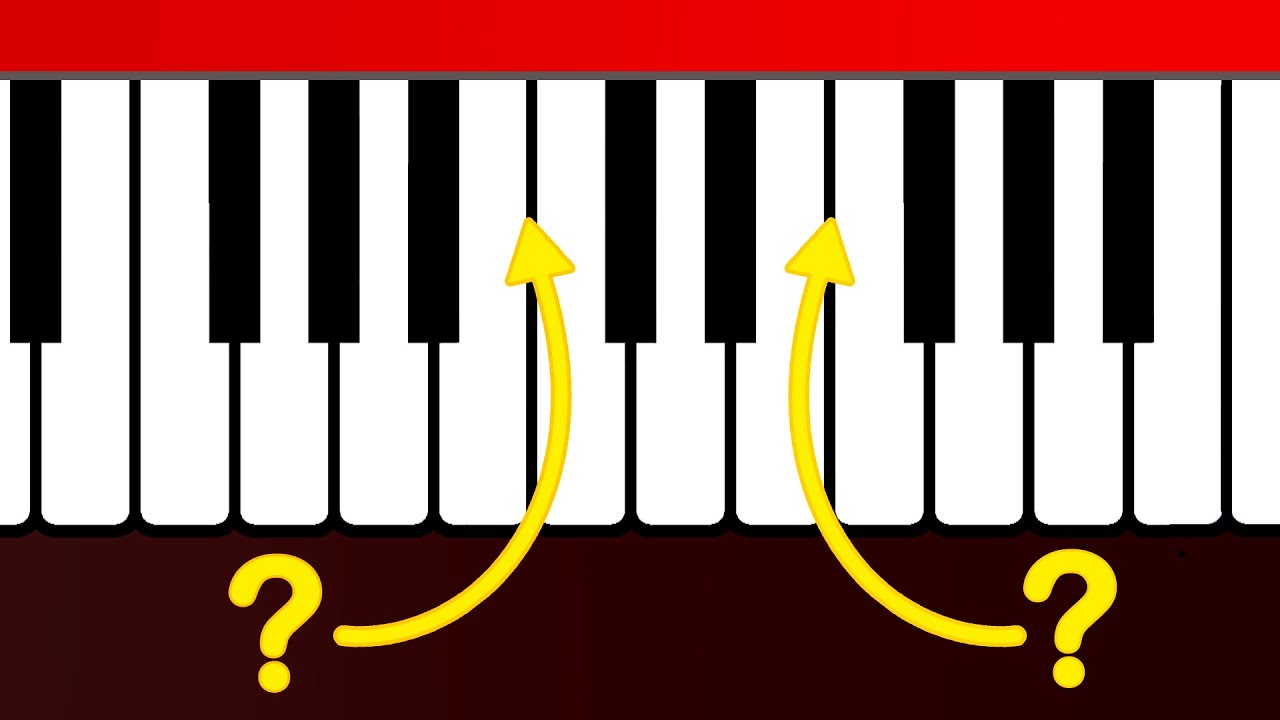
higher the note the slower the vibration the lower the note so if you for example double the frequency of that note you get that one if you have the frequency of that note you get that wrong now if you look at the camera keyboard you will notice that there's a certain symmetry certain pattern to the whole thing that there's these repeating patterns of two black notes three black notes two black notes three black notes and those are divided up every time you double the frequency the distance between that one and that one at the same
point in the pattern is called an octave okay and that's because one two three four five six seven eight okay the white there's eight white notes if you then take that octave we then divide it into 12 equal steps to get all the black and the white notes 1 2 3 4 5 6 7 8 9 10 11 12 ok now the distance between any one note and the next note up or down is called in the United States a half-step that's half step and in the United Kingdom it's called a semitone that's a semitone
to half states make a whole step as you can probably work out so if we go one two that to that is a whole step that's a whole step or in the united kingdom that's a tone that's a tone okay so half step whole step semitone tone hang on I can't go on talking about that note and this note we need to start giving notes and names and thanks to a sixth century Roman philosopher called Boethius we can do that he thought what a wonderful idea allegedly was the first to come up with this but
he thought what a great idea to give these notes names which are letters so that one is called a take a wild guess at what that one's called be exactly c d e f g now when we get back to a to the octave we call that one a again abcdefg abcdefg etc all the way up so all these days all these are B's all these are cities okay ah what was that yes the black notes what are we going to call those okay start on this one go a half step up what's that called
it's called G sharp if you go up half step that's G go up half step you get G sharp what happens if you go down you get g-flat so your half step down you get the flat note half step up you get the sharp note that one's called D go up half step we get correct D sharp go down half a step we get correct D flat ah well-spotted what happens if we play a and go down half a step a flat okay fine what happens if you play gene go up half a step yet
the same note but it's called G sharp so that note can be either G sharp or a flat it's not actually that complicated game head round it's like if you wanted to get to North Street and somebody said how'd you get there you get R go down E Street and turn right or you might say R and they've got Church Street and turn that you'll get into the same place you're just getting in there by different routes and it's very similar so half a step up from G to G sharp half a sit down from
A to A flat and G sharp and a flat turn out to be exactly the same note so we know what an octave is we know how it's divided up and we know how to name notes next question what is a scale and why does it matter that probably sounds hauntingly familiar what are you listening to though when you're hearing that scale what makes that sound like a major scale the answer is it's the pattern of intervals that's all a scale is so if you play starting any one on the keyboard interval start you start
on the bottom and you go whole step whole step half step whole step whole step whole step half step it will sound like a major scale same in UK English if you go tone tone semitone tone tone tone semitone it is omit that's what a major scale is it's a pattern of intervals start on C go up a whole step another whole step then a half step then three more whole steps one two three and a half step whole step whole step half step whole step whole step whole step half step sure UK English okay
go up a tone tone semitone tone tone tone semitone start anywhere and it will sound in a different place but you'll still be recognizably a major scale start for example on G whole step whole step half step whole step whole step don't panic we can't go to that F because we need to go up a whole step so we have to go to f-sharp and then finish off with a half step there so UK English tone tone semitone tone tone tone semitone so in order to play a scale of G major we have to use
an F sharp and F sharp is what is known as the key signature of the scale of G major in other words you can't play G major without an F sharp that is what key signatures are they define what you need in order to be able to play that scale take another one for example and start on D whole step whole step to F sharp half step whole step whole step R another whole step takes us to C sharp so in order to play the scale of D major we have to use an F sharp
in the C sharp so we have to use two sharps to play the scale of D major and that means the key Singh shift D major it's got two sharps in it F sharp and C sharp simple as that okay so far so good now you've probably heard of major and minor what is all this major and minor stuff about well they're just different scales and they're just different patterns of intervals so we know that a major scale goes whole step whole step half step whole step whole step whole step half step or tone tone
semitone tone tone tone semitone a minor scale just has a different pattern of intervals which gives it its characteristic feeling so starting on a let's go whole step half step whole step whole step half step whole step then we go to a whole step half step whole step again whole step half step whole step and then a whole step okay that is the natural minor scale let's do it in UK English start on a tone semitone tone tone semitone tone tone and if you started playing that sequence a pattern of intervals anyone on the keyboard
you get a natural minor now you may have noticed we made we managed to play that whole natural minor scale without using any back notes okay so it has the say minor has the same key signature as C major they're like sort of non identical twins and they're known so a minor is the relative minor of C major they're sort of locked together because they share the same key signature and therefore they sort of share the same scale so far so good okay so we've done major and minor scales and we've done all kinds of
other stuff key signatures let's just compare a major in a minor scale because I want to talk about intervals intervals are the distance between two notes on the keyboard so from there to there is an interval from Earth or there is an interval so if we play C major scale okay if I then play seen a chiral minor going whole step half step whole step whole step half step whole step whole step you'll notice first of all just concentrate on the first three notes okay and the major scale it goes in the minor scale it
goes so what are we going to call the interval between that note and that that that to that is called a major third because if you go up the major scale one two three three notes you get to that note you've got the minor scale you get to that note and the distance between that note and that note is called a minor third okay so a major third is made up of you go up effectively four half steps let you go one two three four and if you go to a minor third it's three half
steps one two three now but when we get beyond the third four and five are the same in both major and minor and that's why those intervals that's a fourth it's called a perfect fourth because it's the same in both major minor and that one is a perfect fifth because it's the same in major and minor and then you get my and then you get major and minor thirds and 706 and sevenths as well so but that is a minor third that's a major third this is important because the next thing we're talking about is
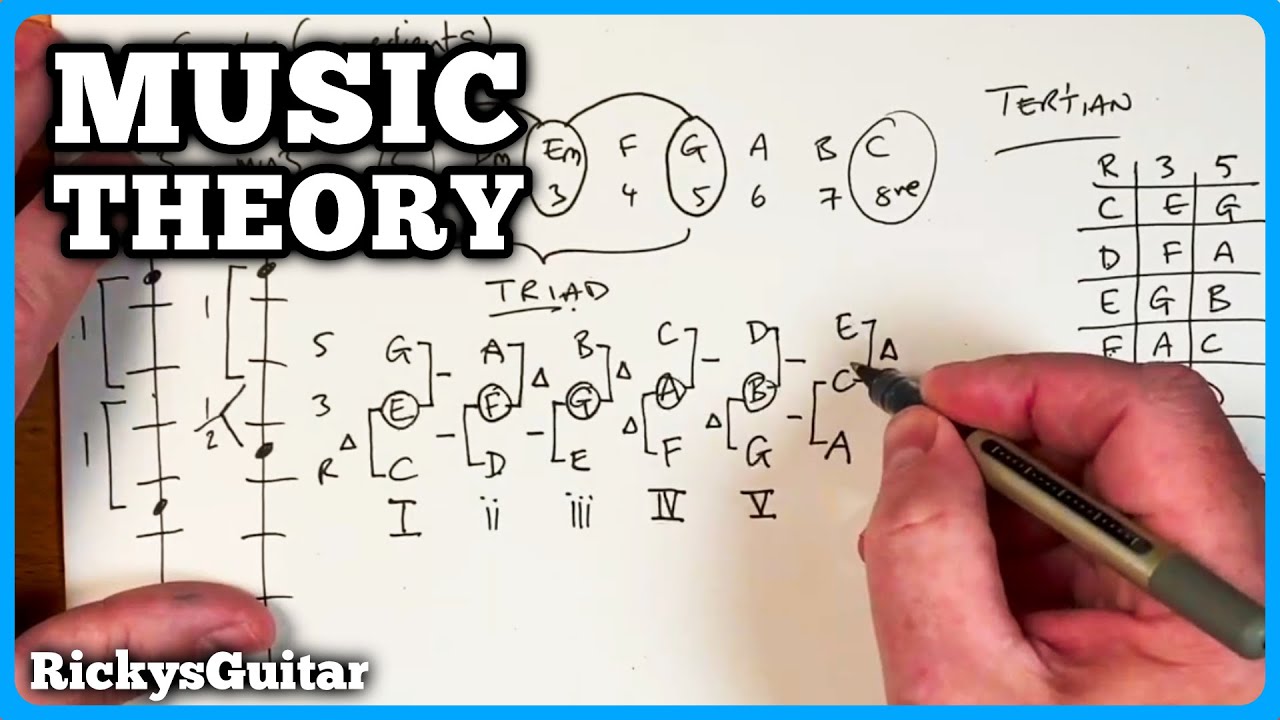
chords chords are simply playing sort of more than one nation at a time an interval is normally two notes and record is normally three or more so if we start on the first note of the scale the root that's C now try playing try this at home if you haven't done it already the third and the fifth note of the scale so one two three four five okay so play one skip one play one skip one play one and what you get is a three note chord called triad that triad is known as C major
because it's the chord formed on C and some major chord because the distance between the root and the middle note is a major third now if we go up one note what's the distance between that one and that it's not a major third it's a minor third so that is D minor okay C major D minor and if you look okay so we're going one two three four semitones or half steps up and you get a major third you build that into a chord and you get a super major chord start on D you only
go up 1 2 3 semitones so you get a minor third is the interval there so you get a minor chord so the patter in a major scale you can form a triad on each degree of the scale so that's called 1 or 2 or 3 called 4 4 5 ok and so that's how the one called 5 6 4 C major that's G that's a quarter G major then go up to a minor which is called 6 because it's the six note of the scale and that's called for because it's on the fourth leaf
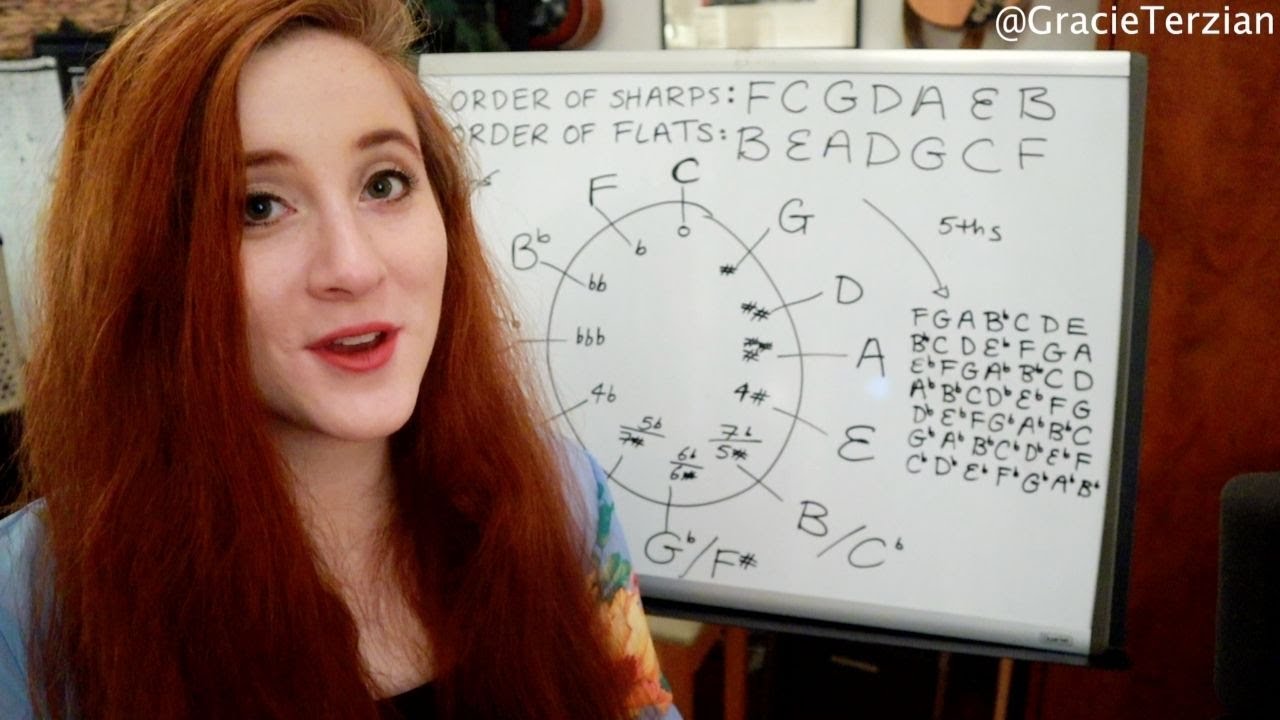
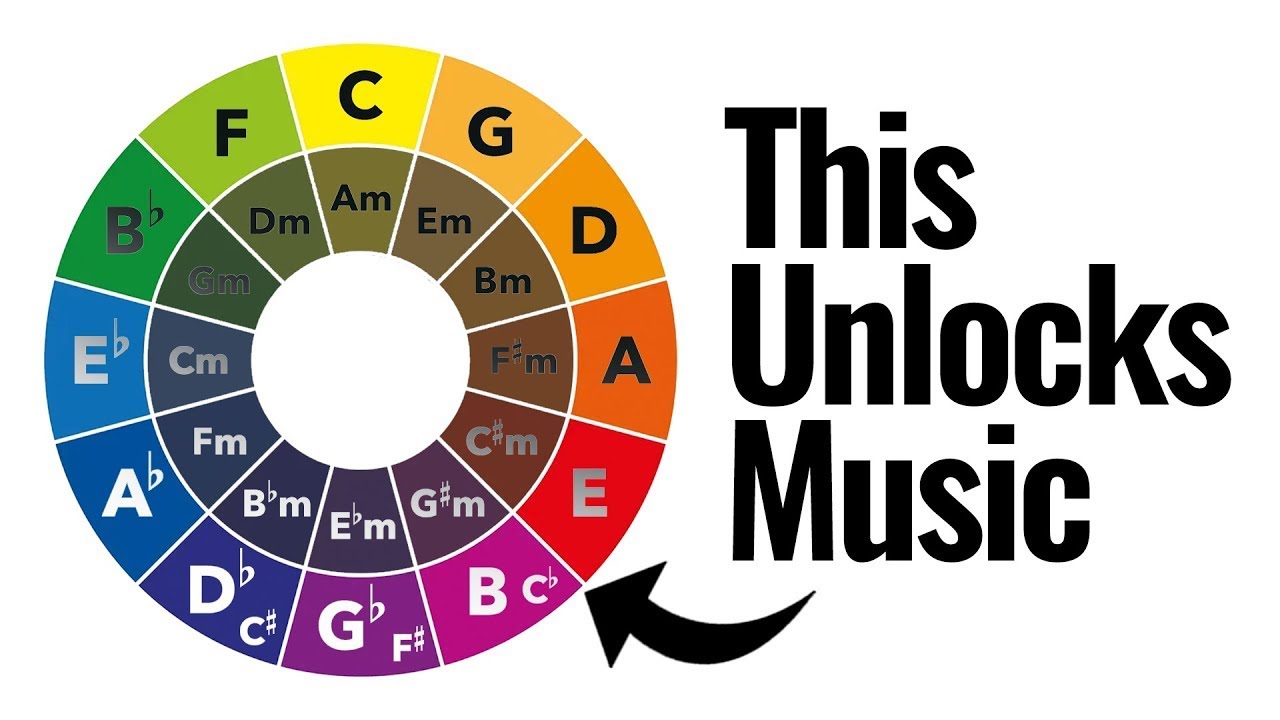
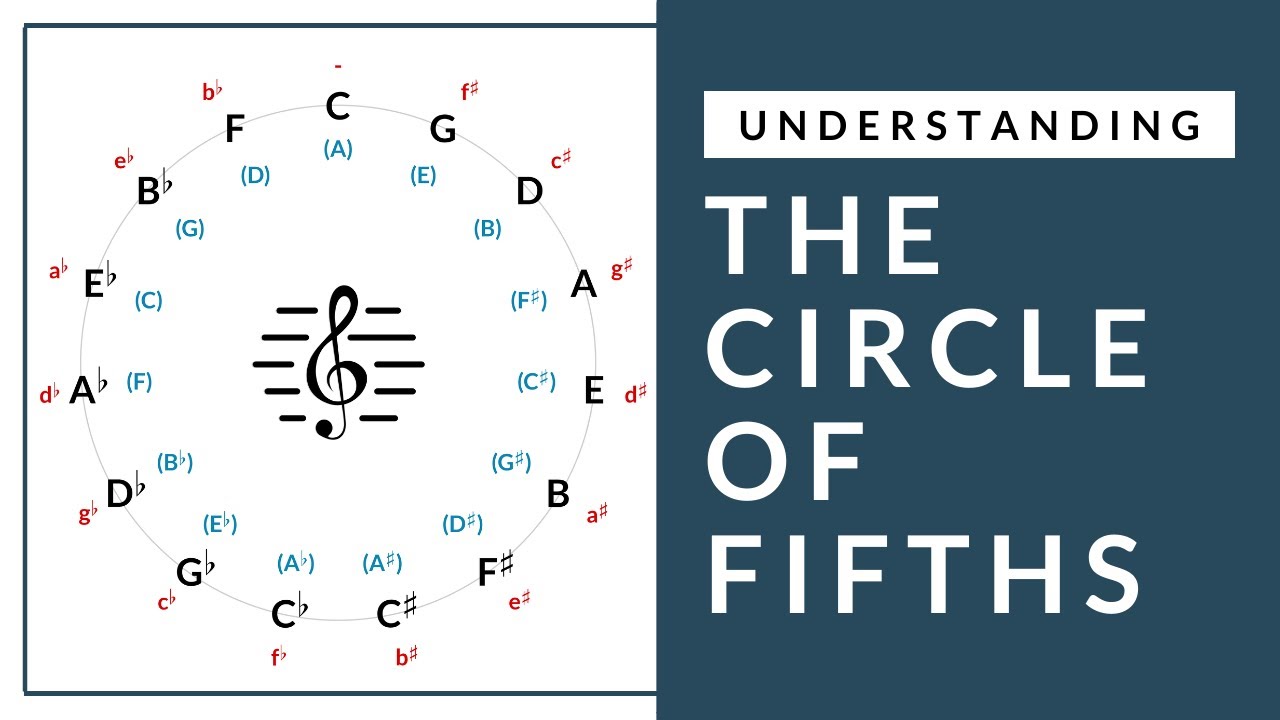
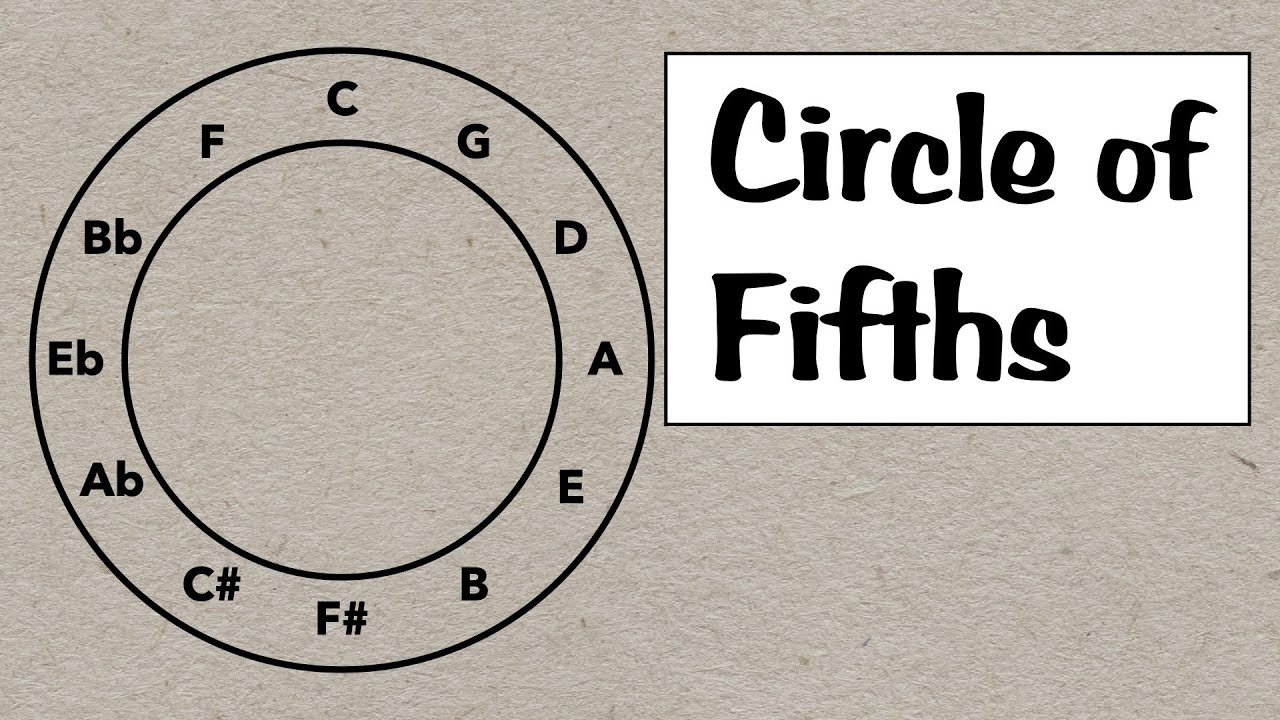
this scale there's a wonderful diagram which brings us all together this may make your brain explode but I'm going to do it anyway here is a fantastic diagram which explains how all this relates to each other and you'll need to look at it for a bit because it takes a little while to get your head round but look right at the top there is [Music] SC now as we know you can play a C major scale without any black notes there's no accidentals in it there's so there's no no sharps or flats if you go
up to the fifth note of the scale okay you get to G now when we try and play a major scale based on G as we explained before we have to use one sharp if you go up to the fifth note of the scale of G you end up on D now we play a major scale you have to use both F sharp and C sharp every time you go up a fifth you have to add a sharp to the key signature in all and it's just down to that pattern of intervals we were talking
about before so every time you'd go one tick round to clockwise so it starts on C with no swaps goes to G with one sharp goes to D with two sharps goes to a with three sharps goes to e with four sharps now what about going down if we start on C and go to the left anti-clockwise we go down 1/5 we end up on F now to make a scale of F we go tone tone semitone and this time we're going to call that b-flat noir a sharp so if you go to the left
you're going to the flat side and every time you go one step to the left you add a flat so f major has one flat in it B flat which is the next one to the right has two flats in it a flat three flats in them now the closer two things are in the circle of fifths like this they're more closely they are related you can add another circle to the circle of fifths which is inside which is all the relative - so you can see how those relative minors those are the minor scales
with the same key signature there's the major scale okay so C major has no sharps a flat a minor has no sharps or flats G major has one sharp E minor has one sharp ok this probably is a bit much to taking all in one go but do have a look at this and you can download there's a sort of a little crib sheet we put together which will explain all this everything I've said in here so you can look at it on a piece of paper and go no guy say and how does it
work ok you can look at it that's really rude you don't sound like that do you no of course you don't I'm sorry but it will allow you to work stuff out and I hope you find that useful and interesting it has been a pretty lightning tour of music theory it hasn't even really taken 30 minutes has it um but I hope for those of you who don't have any music theory at all it just starts to give you some insight into the sort of the way it's organized and the logic behind it and how
actually it's not rocket science it's just a matter of understanding how these things go together and suddenly hopefully everything will make a lot more sense to you jolly good if you've enjoyed this please remember to subscribe to this channel because we do lots of cool and wacky stuff we write lots of music we review some gear when we do sort of it's a music theory and things like this and if you want the download which is underneath this and just click the button give us your email address and we'll woman send you a download link
so that you can download our Quick Start Guide to music theory anyway from me guy mature more thank you very much indeed company and look forward to seeing you again very soon cheerio you