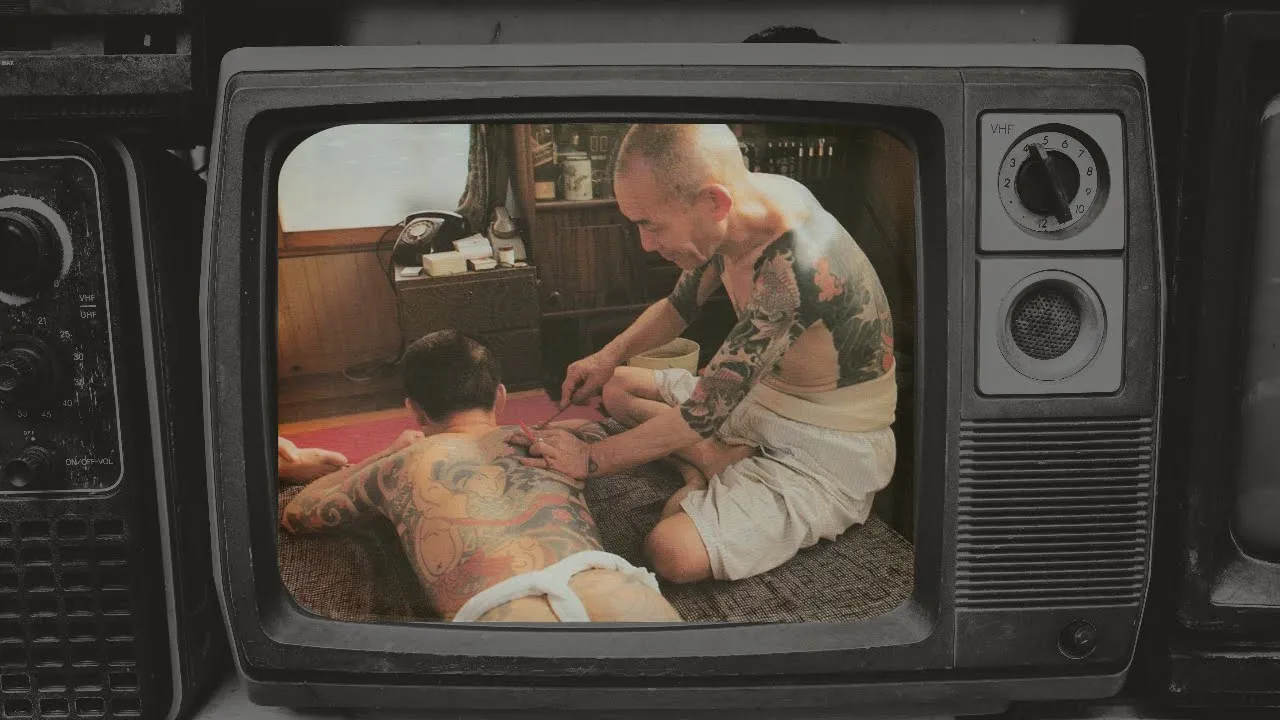
Today by popular demand we're going to be taking a look at the Japanese eras as they pertain to traditional Japanese tattooing we'll be focusing on the Taisho and the Showa eras, the characteristics of tattooing at the time, as well as the evolution of tattooing techniques throughout the periods we're also going to be taking a look at several exemplary tattoos from legendary Horishi such as Horiuno I and Horiyoshi II but before we do that let's actually take a step back and look at the Japanese time periods for reference as it pertains to traditional Japanese tattoos we
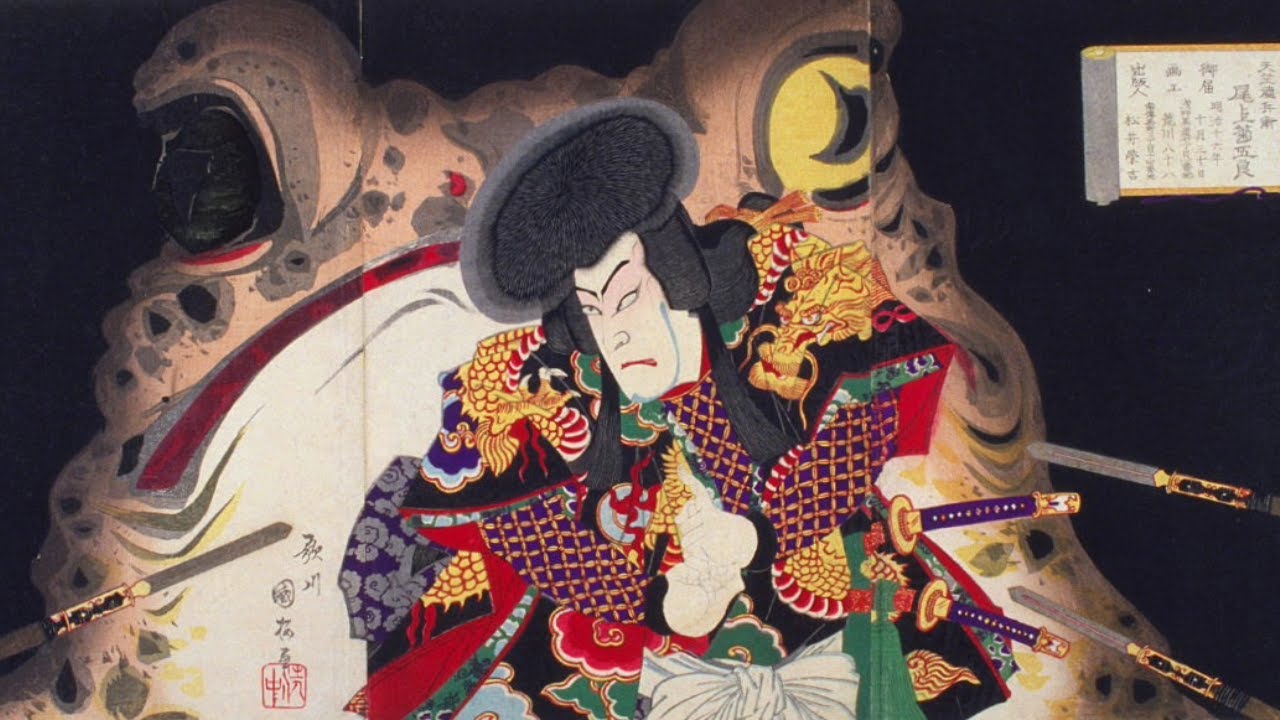
have the Edo period from 1603 all the way to 1868 and this is a time where a lot of the ukiyo-e wood block prints that would come to serve as reference for traditional Japanese tattoos would come to be then we have the Meiji period from 1868 to 1912 and this was the period where Japan was becoming a modern nation this meant that tattooing was actually frown upon as it would seem barbaric in the eyes of a civilized nation after the Meiji period we have the Taisho era spanning from 1912 to 1926 after that we have
the Showa period from 1926 to 1989 this is a period of radical change we have World War II and then we have of course the postwar environment and all the changes that all these dramatic events came to bring tattooing of course also saw a dramatic change in the techniques employed in the materials used and so on and so forth as we will be taking a look at in a few minutes after the Showa period we have the Heisei era from 1989 all the way to 2019 and finally we have the Reiwa period from 2019 all
the way to the present and so right now we're in the Reiwa era as per the Japanese time periods the Taisho era spanning from 1912 to 1926 is considered by some to be one of the more pure time periods in traditional Japanese tattooing and this is due to the lack of foreign influence one of the characteristics of the time is the use of a very limited color palette limited to base colors such as Sumi and Shu with Shu being sort of a crossover a mix between red and orange there were of course pigments available meaning
other colors were available but they were extremely dangerous and so they weren't really used in fact red itself, Shu, was so dangerous due to the amount of heavy metals in it that many people would get sick they would get fevers and chills after the tattooing sessions and so wearing the color red was seen as a sign of strength not only because the wearer went through the pains of tattooing but they also went through the pains of the fevers and the chills that accompany the use of Shu one of the anecdotes from legendary Horishi of the
later Showa period involved boiling the Shu ink so that the mercury would float to the top and then he would scoop it out and use that ink on the person right but just imagine in the Taisho period it's probable that most Horishi might not even do that and so you had a very heavy concentration of heavy metals which translated into people really getting very sick after their tattooing sessions another characteristic of the period is the use of very thick strong Sumi backgrounds they almost seem like a 90/10 sort of division of the Sumi employed versus
the skin breaks and so when you look at it from afar it really looks like this just huge canvas of black with very very thin white or really skin color accents and so with the Taisho period the backgrounds have relatively thin bars whether it's wind bars or waves right and so again very strong powerful thick black backgrounds the application of tattoos during the Taisho era really was all by hand using the hand-poke or hand-carve method Tebori and this use of an old Tebori method is actually referred to as So-Tebori so the Taisho era was really
the So-Tebori era where everything was done by hand the outlines were done by hand the shading was done by hand everything was done by hand whether impacted by the So-Tebori or All-Tebori method or not is up for the debate but another characteristic of the Taisho era was the relatively simpler character designs right you have bigger bolder simpler elements that's not to say that there weren't details within the tattoos because there were as we're about to see in a couple of minutes but they were relatively simpler bolder tattoos on a similar note even though there were
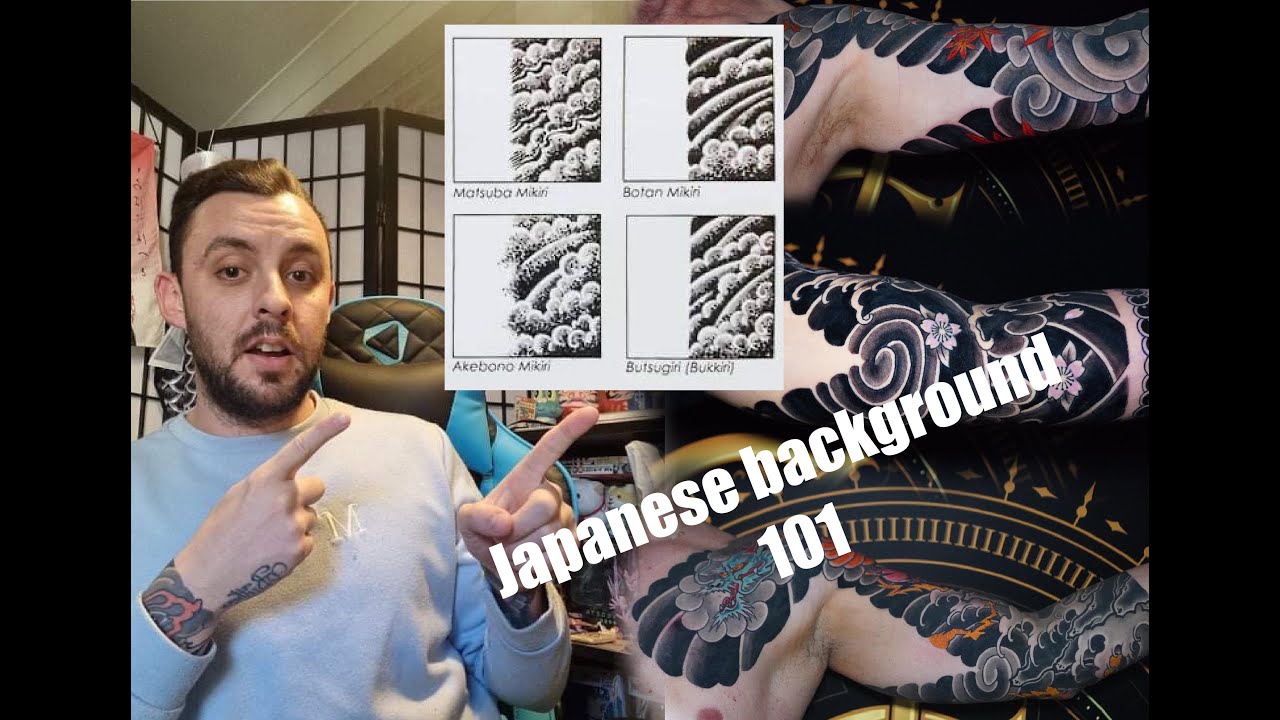
simpler character designs there was actually a wider adoption of Mikiri variations you have the Botan Mikiri, the Peony Mikiri, you have the Akebono Mikiri, The Dawn's Light Mikiri, you have the Matsuba Mikiri, the Pine Needle Mikiri, you had a lot of many different Mikiri at play of course I'm not naming them all but relative to later time such as the Showa and of course subsequent time periods there was a wider use of different Mikiri variations if you had to describe the Taisho era tattooing in very simple terms perhaps some of the terms that would come
to mind would be Simple, Bold and Powerful you had very bold and powerful backgrounds you had very simple and strong character design and everything was done by hand moving on to the Showa era from 1926 to 1989 this was a relatively long time period of dramatic dramatic change during this time the world was at war and then it was not at war and so you had the post-war period Japan opened up to the world and there was influence from the outside from the West particularly strong influence from the Americas and so all these influences would
come to of course impact the world of traditional Japanese tattooing by introduction of the American GIs and the Americans you had the introduction of more colors you had the introduction of more industry standard ink which was relatively safer and of course it also offered that wider variety of colors that Japanese Horishi could actually employ in their work the Americans also introduced the use of the tattooing machine which would come to really change and impact the way that tattoos were done in Japan some Horishi stuck to their guns and they stayed Tebori-only others welcomed the machine
and its efficiencies with open arms and adopted a machine-only approach and others took a hybrid approach where they would use the machine for its efficiency for its precision for outlining and then they would do the shading by Tebori this introduction of colors of the machine of foreign influence undoubtedly had a very big impact in the world of traditional Japanese tattooing and Japanese Horishi and we would see dramatic changes in the ways that tattoos were done we would see more dynamic styles come into fruition the backgrounds were more dynamic you would see movement in the wind
in the waves and the clouds you would see more movement in the character design the backgrounds themselves would change and there would be larger skin breaks more gradation into the let's say the wind bars for example where before it might be a 90/10 of black to let's say gray or just skin color and now it might be more of a 60/40 to take a random example right you would have this gradation of color in the backgrounds black gray skin this might seem hard to visualize but of course in a few minutes we'll be taking a
look at some pictures representative of the style of the times and it will make a lot more sense when you see what I mean by the skin breaks you of course also had an evolution in character design with a lot more details coming into play a lot more details in let's say the clothing the armor and so on and so forth of the characters in the backgrounds in the characters themselves right there was an evolution in the level of detail that was possible of course by machine but even those doing Tebori-only also saw a huge
change in the level of detail that was being deployed in the tattoo compositions lastly pertaining to the Mikiri we also saw a rather narrowing of the adoption of the different Mikiri types where the more prevalent Mikiri types were the Botan Mikiri the Peony Mikiri and the Bukkiri which was the straight cut-off Mikiri right which was somewhat of a feat of precision and so it came to be quite popular from the Showa era onwards of course I'm focusing on very marked characteristics at a very high level of the times but of course just because the Taisho
period ended doesn't mean that people are still not doing Taisho style tattoos even today right in fact our good friend London Slade who we had the first the figure behind the ink interview with actually focuses on Taisho era style tattoos and you can see a very powerful employment of that limited color palette and of those Taisho era style backgrounds so I encourage you to check that interview out and check out his compositions now I've been talking a lot about the characteristics of the different styles and the Taisho and the Showa eras but let's actually take
a look at some of the exemplary compositions of the times by Masters such as Horiuno I and Horiyoshi II so one we have here is a tattoo by the legendary Horishi Horiuno I but before we get to analyzing this tattoo let's actually take a step back and talk about the person himself Horiuno I was one of the legendary Horishi that would come to establish a quite powerful family in the world of Japanese tattooing and his tattoos would come to have an amazing impact not just on tattooers of the time but many of the tattooers to
come in fact Horiuno I and his family established what was then the Kanda Choyu Kai a tattoo club if you will which would then expand and evolve to become the Edo Choyu Kai Edo being the name for the old name for Tokyo and this actually a tattoo club that was very much well alive today so this tattoo composition is actually titled Namikiri Chojun and we can see Chojun here one of the Suikoden Outlaws cutting through the waves and thus the name Namikiri Namikiri meaning cutting through the waves we can see a water background waves at
the bottom of this bodysuit we see Chojun with his sword cutting through the waves he's tattooed with the dragon and then of course you have other elements in the picture to accentuate the scene now of course what you're seeing here that is very apparent to the eye is the limited color palette you really have two base ingredients that being Sumi and the Shu Sumi being that soot from different substances depending on the ingredients and again that Shu being that crossover between red and orange what some would call vermilion and if you recall from previous interviews
such as the interview with London Slade Sumi actually has many different hues depending on the source materials of the ink some Sumi can have bluish hues other Sumi ink can have greenish hues brownish hues so on and so forth and so depending on the Sumi ink that you use and how you let's say water it down you can have a lot of many different colors at play such as we see here we see a combination of blacks grays reds oranges and so on and so forth we can also see here the relatively let's call it
90/10 combination of the of the background right the skin breaks it really very much looks like an almost all black background right and those very very fine skin accents or skin breaks provide that contrast so it's a very high contrast tattoo and very much representative of the Taisho era moving along here we have another piece by Horiuno I this piece is titled Kinezumi Koboshi Gaiden and what we see here is a monk facing off against a feral cat and again very very traditional Taisho style tattoo very limited color palette very very powerful background you can
see the red lightning you can see the red Momiji you can see the different shades of gray and how they make the cat obviously stand out from the all black background and the character himself the monk himself has different shades of black now important to note is the age of the wearer you can see that he's a gentleman of advanced age and even then this tattoo actually looks pretty darn fantastic it has stood the test of time the test of let's say sun exposure right and even though it's been exposed to a lot of sun
even though it's been exposed to the degradation that comes with time it still very much looks like a very powerful well preserved tattoo this next piece that we're looking at right now is actually by Horiuno II and who we have here is Takiyasha-hime and you can see her holding a parasol and a scroll in the background you can see clouds and chrysanthemum or Kiku and in her robes you can actually see a lot of details even though this was a Taisho era style tattoo done So-Tebori all by hand you can still see that even then
the patterns and the clothing design was actually rather advanced you can see Momiji in this clothing pattern and you can see many different levels of detail in here of course the first thing that stands out is the limited color palette but even with the limited color palette you see reds you see brows you see oranges you see blacks and so on and so forth again very limited use of the skin brakes to accentuate the body and the contrast and so very representative piece of the times the last piece we're looking here from a Taisho era
style perspective is a Munewari suit and this is a Kiku Chirashi or scattered chrysanthemums and of course I sound like a broken record by now but what you can see really is limited color palette reds grays black fantastic it looks fantastic it looks again very high contrast very powerful and this just goes to show simple doesn't mean bad in fact simple can mean quite fantastic lastly I'll note the Mikiri variation employed here of course Botan Mikiri the Peony Mikiri which is of course again very representative of the times so now let's take a dive into
the Showa era style of tattoos here we have a work by Horiyoshi II this composition is titled Sumizome Sumizome being the spirit of a cherry blossom tree and some of the first things that come to mind when you look at this piece is just one just how colorful it is and also two the level of details you can see a lot of colors being employed here you see reds you see greens you see yellows blacks many colors you also see a lot of detail in the robes of the spirit here of the cherry blossom spirit
an incredible amount of detail in the clothing now you might look at this and say of course that's just the use of machine at play but actually no because this was actually done by Tebori and it just goes to show the evolution of styles right so looking at this composition right here not only is it a beautiful incredible composition but really the colors and the level of details alone go on to show that really this is a different style this is a different era if we move along to the front of this gentleman also has
a Munewari bodysuit and what we we're seeing here is a Kumadori Chirashi or the Kabuki makeup scattered throughout the bodysuit here and we see again a lot of color but more importantly we also see a lot of dynamism in the background now this dynamism was really something that Horiyoshi II Mr Kuronuma came to excel at and he really was one of the pioneers of this very dynamic background style this is an excellent composition just to represent the Showa style because again a lot of colors being employed a lot of details and a lot of dynamism
in the backgrounds you can also look at the backgrounds themselves and notice how the skin breaks are larger also notice the gradation in the colors in the backgrounds right it's not all black you see a lot more gray you see a lot more skin and so this style of background would really come to be prominent in the Showa era and beyond moving on to a third example by Horiyoshi II this is a fantastic back piece of Orochimaru and again we see extremely dynamic background at play extremely detailed piece if you look at the details in
the clothing of Orochimaru here a lot of details in the robes a lot of details in the clothing in the jewelry and so on and so forth you can see in the bottom rocks waves at the top you see clouds swirling a lot of wind moving around and of course the Orochi the giant serpent in there with really different degrees of black and gray showing that this is very much a Showa era tattoo the front of this gentleman is no less impressive you see again extreme movement in the background here this background is insane the
amount of movement in here in the clouds in the winds we have Jiraiya and Tsunade-hime you have the the toad the giant toad and the giant slug or giant snail and of course you have Orochi or giant serpents throughout red lightning Momiji red green gray blue many colors many details Jiraiya and Tsunade-hime themselves have a lot of details in their clothing in their weaponry and so on and so forth and so again this is an extremely good example of how the Showa era style came to be very powerful very dynamic and very different from the
previous Taisho era so just to recap we noticed a lot of different a lot of marked differences in the Taisho and Showa era style tattoos the Taisho era very limited collar palette very strong bold mostly black backgrounds and relatively simpler character design the Showa era extremely dynamic backgrounds and character designs extremely detailed work a lot more color because of course industry standard inks came into play came into the world of traditional Japanese tattooing and then also markedly different in the backgrounds a lot more skin breaks a lot more gradation in the backgrounds a lot more
of the skin being shown a lot more black with gray gradations at play both eras incredible tattooing styles both era styles very much well alive today and also incredibly legendary Horishi from each era that would come to impact the world of Japanese tattooing and beyond now this was a very high level comparison or view into the world of traditional Japanese tattooing in the Taisho and the Showa eras but if you'd like to see more in-depth discussion if you'd like to see other eras being covered or just any other topics just let me know and I'll
make sure to create some content for everyone to watch for everyone to hear and enjoy thank you very much for watching like the video subscribe and stay tuned for more great content in the world of Wabori if you would like to learn more about the world of traditional Japanese tattooing follow the Waboripedia Instagram page hit like and subscribe in the YouTube and Spotify channels and stay tuned for the meanings and stories behind Japanese tattooing Horishi interviews and more
![Horisaru [Traditional Japanese Tattooer Interview]](https://img.youtube.com/vi/WvJ5YCME1xA/maxresdefault.jpg)
![The Buddhist Deity Fudo Myoo [History and Traditional Japanese Tattoos]](https://img.youtube.com/vi/1J0BiFaArEw/maxresdefault.jpg)

![Tutti Serra [Traditional Japanese Tattooer Interview]](https://img.youtube.com/vi/j-aK3--8Y4g/maxresdefault.jpg)
![Japanese Tattoo Master - Asakusa Horicho II Interview [ENG/ESP/JPN SUBS]](https://img.youtube.com/vi/LUYH1VXTWWU/maxresdefault.jpg)
![Rico Daruma [Traditional Japanese Tattooer Interview]](https://img.youtube.com/vi/x3TIjiHkiRU/maxresdefault.jpg)
![The Suikoden Outlaw Chojun [History and Traditional Japanese Tattoos]](https://img.youtube.com/vi/FqqBiRKRfhU/maxresdefault.jpg)
![Kian Horisumi [Traditional Japanese Tattooer Interview]](https://img.youtube.com/vi/TV5_eHhn9w0/maxresdefault.jpg)
![The Buddhist God of Hell Enma [History and Traditional Japanese Tattoos]](https://img.youtube.com/vi/Fkb5JIMzpj8/maxresdefault.jpg)
![Yutaro Warriorism [Traditional Japanese Tattooer Interview]](https://img.youtube.com/vi/bazkfY7A9BE/maxresdefault.jpg)
![Hugo Hab [Traditional Japanese Tattooer Interview] [ENG/ESP SUBS]](https://img.youtube.com/vi/VMcXq-UVbzk/maxresdefault.jpg)
![LondonSlade [Traditional Japanese Tattooer Interview]](https://img.youtube.com/vi/bWUkDkFuOXI/maxresdefault.jpg)