The Crescent Moon is everywhere: on flags, on mosques, woven into traditions. It's a symbol of faith, but it didn't start there. Before Islam, the Crescent Moon meant something else; it was a god the Sumerians called Nana.
Later, he was known as Sin. He ruled time and the night sky. People prayed to him; kings sought his favor.
His temples rose in Er and Haren. Nana was a god of precision; he measured time, ruled the night, and watched over the tides. Nana was revered across Sumer, Akkad, and beyond for his control over time and cycles.
The phases of the moon dictated calendars, harvests, and rituals. Nana wasn't alone; he was the son of Enlil, one of the most powerful figures in the ancient pantheon. Enlil commanded the Earth, the air, and the fate of humanity.
Nana followed his father's orders. His Crescent Moon became a sacred symbol. Archaeology tells us that Nana's worship spread far and wide.
Temples dedicated to him, like the great Ziggurat of Er, were centers of religion and science where priests studied the stars and charted the movements of celestial bodies. By the time Nana's worship reached the deserts of Arabia, his identity began to shift. In pre-Islamic Mecca, we find Hubal, a deity worshiped at the Kaaba.
Many scholars have speculated that his cult carried echoes of Nana/Sin. The Crescent Moon, a hallmark of lunar worship, remained a prominent symbol. Eventually, the worship of multiple deities, including Hubal, gave way to the rise of monotheism.
The identity of the supreme god solidified as Allah, absorbing the celestial legacy of Nana/Sin. Nana's temples fell; his name faded. Yet, the Crescent Moon survived.
It moved from temple walls to religious banners, from pagan rituals to monotheistic faiths. Was that by chance, or was it intentional? Did the Anunnaki leave behind more than ruins and myths?
Did they leave symbols meant to endure? It's the 5th century CE. The deserts of Arabia stretch endlessly under the scorching sun, untouched by the religion of Islam that would emerge a century later.
The world of 5th century Arabia was diverse and complex. Jews, Christians, Zoroastrians, and polytheists all coexisted, with Arabian polytheism in the top position among these belief systems. At the heart of this was the city of Mecca, a place of religious importance long before the prophet Muhammad was born.
Mecca, known as Baka in ancient times, served as the central hub of religious activity for the region. Allah, the Kaaba, a massive cube-shaped structure known as the ancient house, wasn't yet the monotheistic symbol it would one day become. Back then, it was a shrine that housed 360 idols, each representing a different deity revered by the tribes of Arabia.
The tribes honored their gods in a ritual that involved circling the Kaaba in a procession, like that of the moon cycles. This practice of celestial symbolism would later become a feature of Islamic worship. Even the term "Islam," meaning submission to God, raises a provocative question: Which god among the gods enshrined within the Kaaba?
Names like Manaf, Manat, and Duara appear. These gods were revered by various tribes, their images placed both inside and around the Kaaba. Each year during the Lunar New Year, warring tribes would set aside their conflicts to make a pilgrimage to Mecca.
They would encircle the Kaaba, offering sacrifices and performing rituals of prostration. Some scholars believe this encirclement symbolized the 365 days of the year, just like the celestial cycles that governed life in the ancient world. Among the pantheon of Arabian gods, one deity stood out: Hubal.
He was considered the chief god of the Kaaba, worshiped by the Quraysh, the tribe that served as its guardians. Many scholars argue that the Kaaba itself was primarily dedicated to Hubal during this period. His image, likely crafted in human form, held a place of prominence within the shrine.
Hubal's arrival likely coincided with the transformation of Mecca from a local sanctuary to a pan-Arabian spiritual center. Before his idol, rituals such as the casting of lots with arrows took place—practices steeped in divination and fate. Scholars note that Hubal's name and attributes bear a striking resemblance to Baal, the chief god of the Canaanite pantheon.
The Phoenicians, Baal's original worshippers, spread his influence across the ancient world. It seems Hubal carried echoes of this ancient tradition into Arabia. According to Ibn Kathir, one of Islam's most respected historians, a pivotal event involved the Well of Zamzam, located near the Kaaba.
Abd al-Muttalib, the grandfather of Muhammad, is said to have faced fierce opposition from the Quraysh tribes when he attempted to restore the well. The Quraysh, guardians of the Kaaba and devotees of Hubal, saw this as a provocation. To resolve the conflict, Abd al-Muttalib made a vow: if he were blessed with 10 sons who grew to adulthood and protected him, he would sacrifice one of them at the Kaaba as an offering to Allah.
Baal's myths portray him as a warrior—a god who battled chaos to bring order to the world. In one of the most famous stories, Baal defeats Yam, the sea god, to establish his rule; later, he confronts Mot, the god of death. Temples dedicated to Baal were constructed across the ancient Near East, from the bustling cities of Phoenicia to the high places of Canaan.
These temples were centers of ritual where offerings, including animals and sometimes even humans, were made to ensure Baal's favor. Baal was not universally loved; in the Hebrew Bible, he is the rival to Yahweh, the god of Israel. The Israelites saw Baal worship as a direct threat to their monotheistic covenant, and the name Baal became synonymous with idolatry and rebellion against their god.
Baal's story doesn't begin in Canaan; his roots trace back to older traditions—traditions connected to the gods of Mesopotamia. Many scholars believe that Baal shares traits with Enlil, the chief god of the Sumerian Anunnaki. Like Baal, Enlil was a sky god—a figure of authority who controlled the weather and wielded the power of storms.
Some argue that the sacrifices made to Baal, especially the more extreme practices, reflect an attempt to. . .
Appease the same celestial beings who demanded devotion in the earliest myths. In the eastern corner of the Kaaba, within its sacred walls, there is a relic more mysterious than any—the Black Stone, al-Hajar Al-Aswad. Millions of hands have reached out to touch it; millions of lips to kiss it.
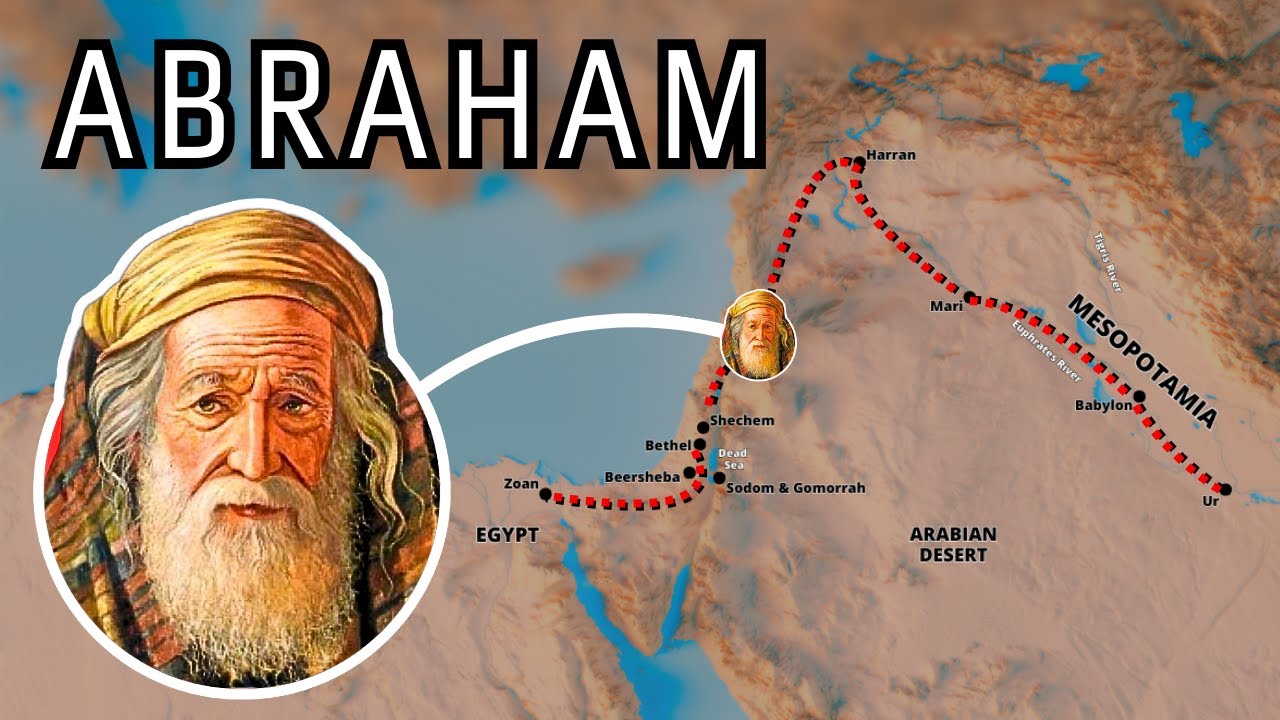
Yet its true story sits on the border between myth and reality: a fragment of the cosmos, a gift from heaven, or a remnant of something older, lost to time. Islamic tradition tells us that the Black Stone was sent down from Paradise itself. When Ibrahim, known to many as Abraham, and his son Ismael raised the Kaaba, they sought a unique stone to mark its corner.
Ibrahim prayed, and the angel Jabriel brought it from the heavens. Its surface was said to gleam with a pure white radiance, untouched by sin. But over millennia, it darkened, absorbing the sins of those who touched it in repentance.
Today, it rests in fragments, encased in a silver frame. In 930 AD, the Qarmatians, a revolutionary sect, desecrated the Kaaba, stealing the stone and holding it hostage for over 20 years. When it was finally returned, it was no longer whole—broken into pieces by the chaos of time.
Could this sacred object be a meteorite, a fragment of the cosmos hurled to Earth? Many believe so. Ancient cultures often revered celestial stones as divine gifts, and the Black Stone fits the profile.
Others suggest it may be volcanic basalt or impact glass, formed by forces beyond human comprehension. And then there are voices that speak of a relic predating Islam, tied to the gods worshiped at the Kaaba before its transformation. If true, the Black Stone could be a relic of a much older world.
Could the Black Stone trace all the way back to the Anunnaki, the celestial beings of Sumerian myth? If the Black Stone is indeed a meteorite, its placement at the Kaaba might be a marker left by those who were once worshiped as gods. Some even suggest the Kaaba itself, with its sacred geometry and cosmic alignment, could be a site of ancient power tied to forces beyond our understanding.
Could the Black Stone be an artifact of extraterrestrial origin, or perhaps it was part of an ancient technology—a device beyond comprehension, hidden in plain sight, its true purpose long forgotten? In monotheistic tradition, Allah and Yahweh are one and the same, the god of Abrahamic faiths worshiped by Jews, Christians, and Muslims. This shared identity ties Yahweh, and by extension Allah, back to the ancient figures of Enlil and Nanna.
Yahweh's judgment and authority is Enlil's, and the lunar symbolism and cosmic order of Allah is Nanna's. This link to the Anunnaki casts a shadow of mystery over the evolution of monotheism in Abrahamic traditions. The heavens are a reflection of divine glory, with celestial events seen as signs of God's will.
The Islamic calendar, rooted in lunar cycles, ties worship to the rhythm of the cosmos. The Anunnaki, those who came from heaven, were equally connected to the stars and planets. Their temples were built with precise astronomical alignments, serving as markers of their bond with the heavens.
Both traditions point to a shared belief: the cosmos is not random; it is a map of divine intent. The Anunnaki were said to have come from the heavens, shaped humanity, and ruled as gods. Their myths, centered on celestial power and divine hierarchy, may have laid the foundation for later religious systems.
Could the worship of Allah and Yahweh, as different as it seems, have Anunnaki echoes? Are the characteristics of Enlil and Nanna woven into the fabric of these later gods? Evidence of a legacy older than we think.
The connections remain hidden in plain sight, etched into sacred texts, ancient temples, and the rhythms of the cosmos. Are Yahweh and Allah the culmination of ancient myths, or the final echoes of gods who once walked the Earth? The Anunnaki shadow stretches across time, hidden in scripture, tradition, and the stars themselves.
Perhaps the truth isn't lost; it's waiting right where it's always been for those ready to see.



![The Unbelievable Origins of Islam: From Stone-Preaching-Polytheism to Allah | [Documentary]](https://img.youtube.com/vi/8hzQkq-3fZg/maxresdefault.jpg)