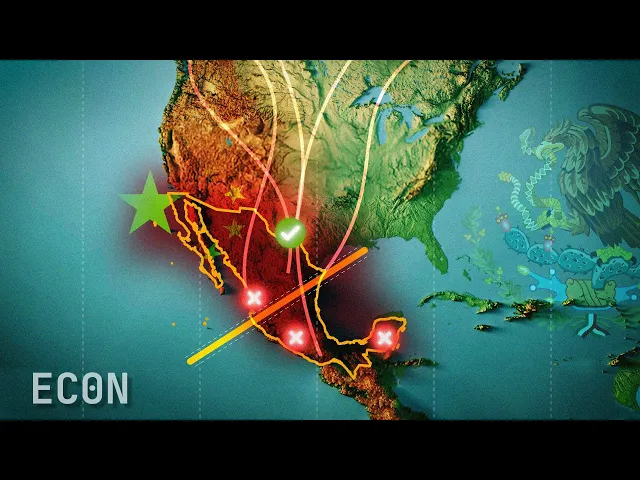
Since the 1980s, people in Mexico and around the world have repeatedly predicted that Mexico’s economy is just about to take off. But it hasn’t happened, and other countries have caught up and moved ahead. In 1980, for instance, Mexico’s GDP per capita was almost double South Korean and 30% higher than Taiwan's.
Today, South Korean GDP per capita is twice Mexico’s and Taiwan's is almost three times as much. China, which had one-twelfth of Mexico’s GDP per capita in 1980, surpassed Mexico in 2022. Mexico, with a population of nearly 130 million people, a rich cultural history, great diversity, and a favorable geography with abundant natural resources, ranks among the fifteen largest economies in the world and is the second largest in Latin America.
Its economy is a mixed, developing market with a strong manufacturing base, and its exports, primarily to the United States, are performing exceptionally well, making it highly dependent on trade. Mexico has a young and growing labor force, abundant natural resources, and access to export markets thanks to its strategic location next to the United States and its membership in the North American Free Trade Agreement (NAFTA). NAFTA was a trade agreement between the United States, Canada, and Mexico that eliminated most trade barriers and tariffs between the three countries.
In the 20 years since NAFTA went into effect, Mexico has become a global manufacturing leader and a prime destination for investors and multinationals around the world. After macroeconomic crises in the mid-1990s, Mexico undertook bold reforms, from liberalizing its economic policies to investing in education. But, while these efforts brought some benefits, they failed to spur significant economic growth.
Between 1980 and 2022, the economy grew by just over 2% annually on average, limiting progress in closing the gap with high-income economies. In 2023, the economy grew by 3. 2%, while in the first half of 2024, growth slowed to 1.
8%, reflecting a moderation after the post-pandemic rebound. While other emerging economies like China, India, Indonesia, and Brazil are growing fast. When Mexico signed the North American Free Trade Agreement more than 20 years ago, the hope was that the economy would be swept forward by a rising wave of globalization.
By many measures, that hope has been amply fulfilled. Mexico’s foreign-trade volume climbed steadily after NAFTA entered into force, roughly doubling, to more than 60% of GDP. Net foreign investment inflows relative to GDP tripled.
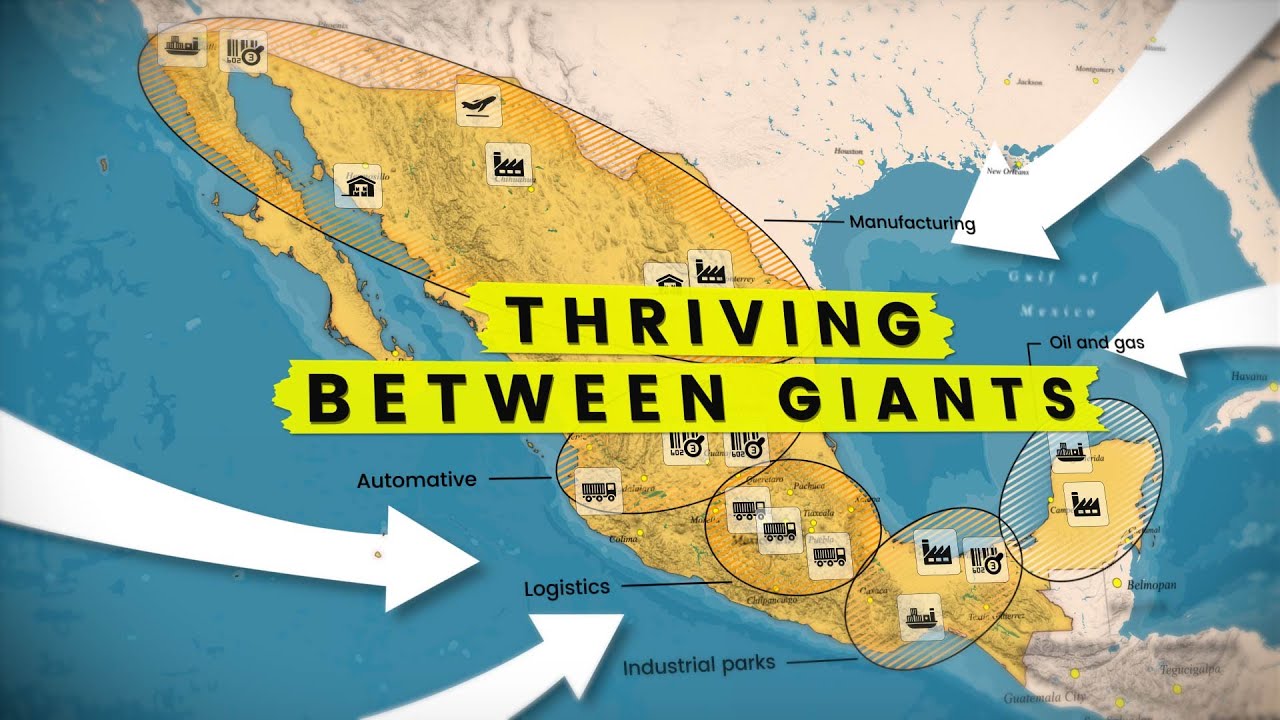
Though Mexico is an oil exporter, its manufactured exports have led the way, as the economy has become ever more tightly integrated into North American supply chains. Like so many other countries, Mexico was initially hit hard by Chinese competition in global markets, particularly after China became a member of the World Trade Organization at the end of 2001. Thereafter, Mexico’s share of American imports dropped while China’s soared.
China offered a much larger workforce at lower wages, making goods that were substitutes for those made in Mexican factories. However, over recent years both China and Mexico have seen rising labor costs. Notably, China has experienced a significantly steeper increase, making Mexico a more attractive option for manufacturers seeking lower labor costs.
Despite this opportunity, Mexico has struggled to capitalize on it. This index of real GDP per capita shows that Mexico has lagged in achieving significant growth compared to other Latin American nations and emerging Asian economies. Despite its considerable potential to become a high-growth economy, this promise remains largely unfulfilled.
So what is holding Mexico back? Persistent challenges, like low productivity and high inequalities, have impeded Mexico's progress, preventing it from reaching its full economic potential. Nonetheless, Mexico’s close economic ties to the United States meant that the latter’s housing bust and lacklustre recovery sapped Mexican growth.
Since 1980, output per worker in Mexico has grown by only 0. 8% per year. Output per worker measures how much each person can produce within a certain amount of time.
When workers produce more in the same timeframe, it leads to improved standards of living and economic growth. Additionally, total factor productivity (TFP) has also declined since 1980. TFP reflects how efficiently we use resources—such as people, machines, and materials—to produce goods and services, focusing on smarter, more effective ways of working.
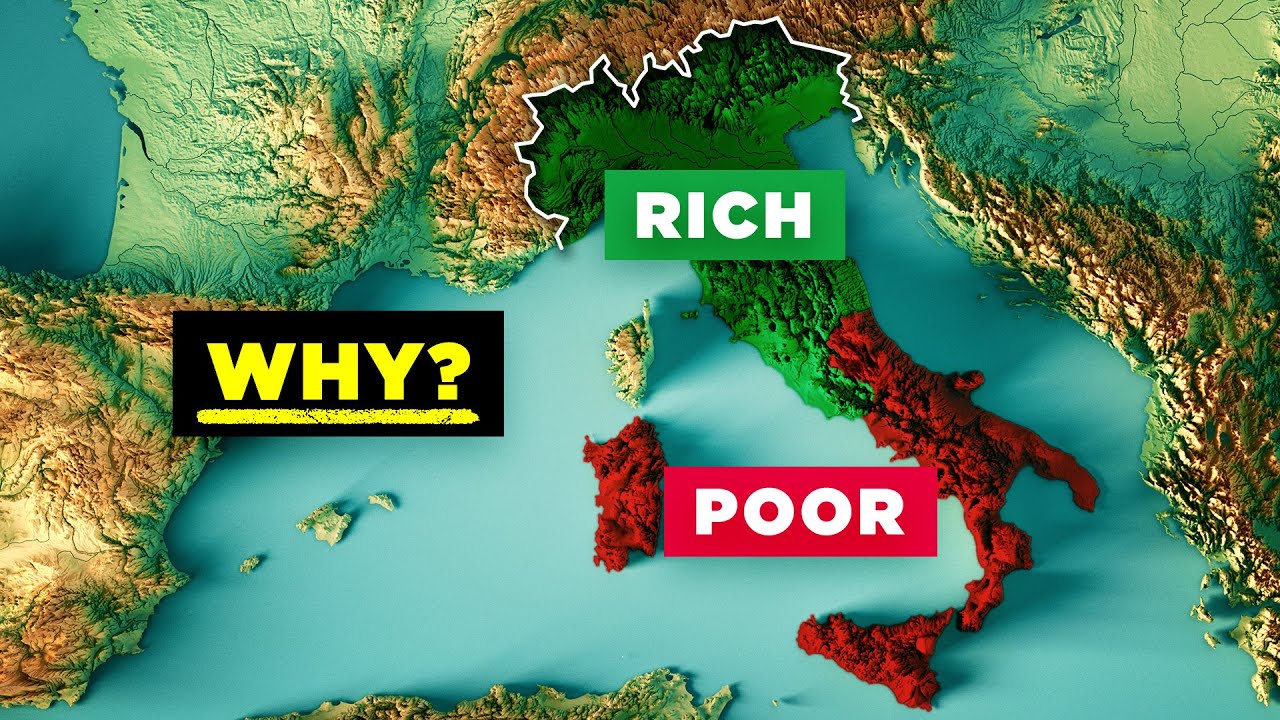
Today, workers in OECD countries, a club of mostly rich countries, produce nearly 50% more value per worker than their Mexican peers. The root cause is a chronic productivity problem that stems from the economy’s two-speed nature - what economists call “The Tale Of Two Mexicos”. A modern, fast-growing Mexico, with globally competitive multinationals and cutting-edge manufacturing plants, exists amid a far larger group of traditional Mexican enterprises that do not contribute to growth.
These two Mexicos are moving in opposite directions. The largest companies are raising productivity by an impressive 5. 8 percent a year, while the productivity of small, slow-growing enterprises is falling by 6.
5 percent a year. And with employment growing faster in traditional Mexico, more labor is shifting to low-productivity work. The traditional small and medium-sized businesses remain small and informal because they have reasons to do so and don’t have access to the capital they need to grow and operate.
That is no surprise given only 37% of Mexicans over 15 years old have a bank account. Some 86% of all payments in Mexico are in cash. Mexico is an anomaly both in Latin America and among emerging-economy peers such as Kenya and India.
In those places 54%, 82% and 80% of people are banked, despite Mexico being richer. Its GDP per person is close to $25,000, around three to four times higher than in Kenya and India. This shortfall is not just inconvenient.
Counting cash adds to business costs, and those without accounts have little access to credit, slowing consumption and investment. There are several reasons why so few Mexicans have access to financial services. Mexican banks are generally conservative, and in rural areas, branches can be hard to reach.
Furthermore, banks tend to overlook the less well-off; only a fifth of the poorest 20% of Mexicans have accounts. Surveys show that many Mexicans do not trust banks. Successive Mexican governments have tried to improve access to financial institutions.
In 2018, a law was introduced to regulate the fintech industry, which is now booming. A digital payment system using QR codes and contactless payments was introduced in 2019 while financial literacy was included in the school curriculum. This two-speed economy of Mexico contributes to high income inequality.
Mexico is one of the most unequal countries in Latin America, where the richest 10% of the population holds a large portion of the national wealth, with a Gini coefficient of 0. 43. Since 1989, inequality in Mexico has risen, declined, and risen again.
Although Mexican authorities have implemented public policies such as the National Care System to address inequality, these efforts have had limited impact due to high levels of corruption. According to Transparency International's 2022 Corruption Perceptions Index, Mexico scored 31 on a scale from 0 to 100, where 0 indicates highly corrupt and 100 indicates very clean. Bribery, embezzlement and procurement corruption are all common practices in Mexican public service.
The mining sector, healthcare sector and energy sector are especially vulnerable to corruption. Also Corruption is a significant risk for companies operating in Mexico. Bribery is widespread in the country's judiciary and police.
Business registration processes, including getting construction permits and licenses, are negatively influenced by corruption. Organized crime continues to be a very problematic factor for business, imposing large costs on companies. Corruption within government institutions stifles economic growth, leaving Mexico's middle class struggling.
In recent decades, Mexico, like many emerging markets, has witnessed the growth of its middle class. Their incomes have risen—an increase of more than 50% in real terms since they first came together 16 years ago. More people like them have bought cars, fancy TVs, smartphones and nice clothes.
But recently the middle class, long neglected by politicians. The OECD, a club of mostly rich countries, defines it as earning 75% to 200% of the median income of the country where you live. In Mexico almost half the population of 126m meets that definition of middle class.
Much of this growth can be attributed to NAFTA, which brought jobs and cheaper goods to the country when it was implemented in 1994. This expanding middle class is now a vital part of the economy. In Mexico, many of its members own small- and medium-sized businesses that provide most of the jobs in the country.
However, despite these economic gains, Mexico faces challenges in other areas. The country ranked 56th of 78 nations in the most recent PISA ranking, a test of 15-year-olds' skills in science, math, and reading. Additionally, a survey revealed that less than half of Mexicans are satisfied with the state of public health care.
While services and access to them have improved over the past decade, progress has been limited—one-sixth of Mexicans still lack effective access to health care. So, there are two “missing middles” holding Mexico back: a robust cohort of midsize companies and a solid middle class with growing spending power. Both of these middles will need to be filled if Mexico is to have a new chance at generating sustainable growth that benefits a broad base of the population.
If we focus solely on the broader economy, it's clear that other sectors are thriving, we can see that other areas are growing well, driven by resilient domestic demand supported by a strong labor market. The labour market is strong, with unemployment low and broader measures of unemployment confirming the strength. Labour market participation is increasing for women, although it remains significantly lower than in regional peers and other OECD countries.
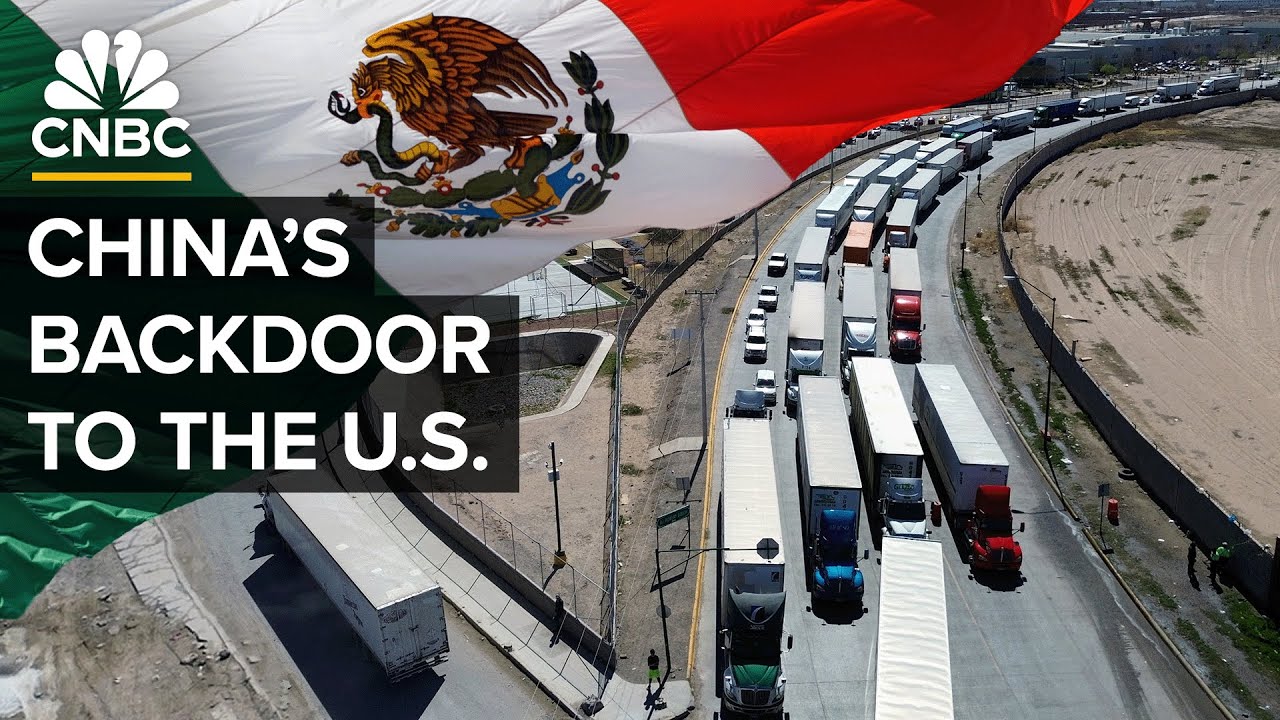
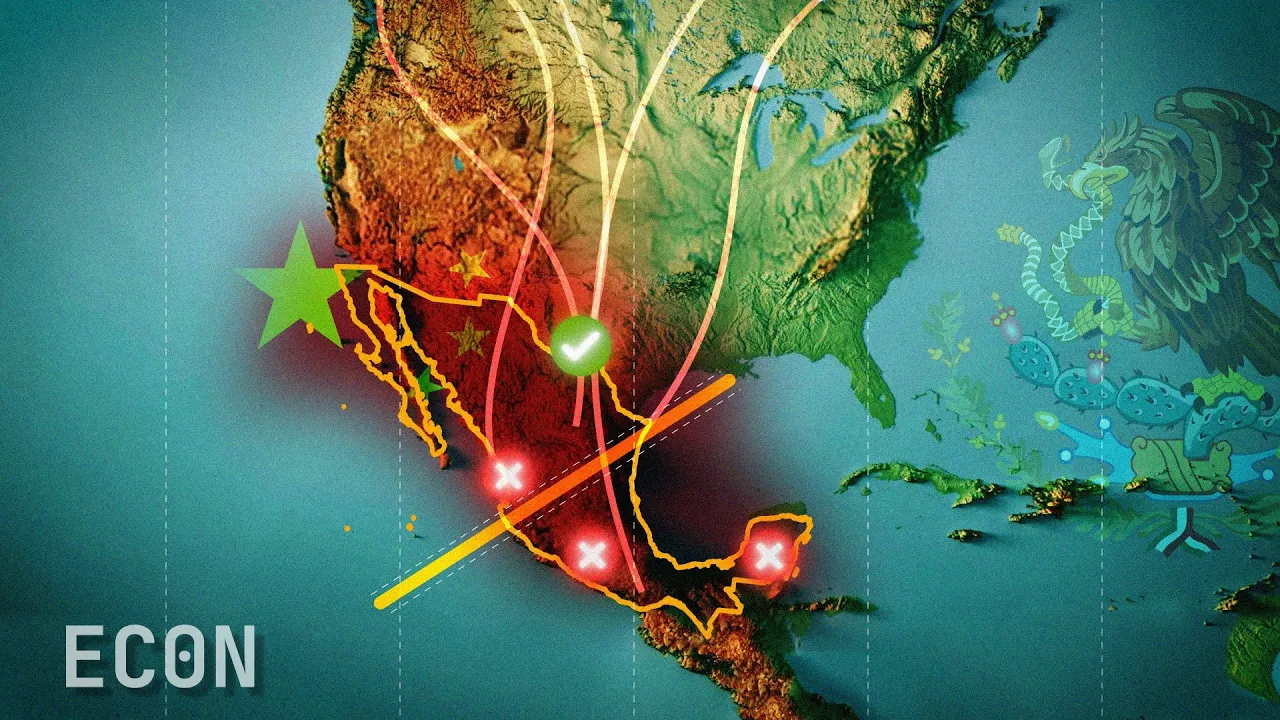
In 2023, Tesla delayed a planned expansion of its factory in Shanghai and instead announced a new $15 billion plant in northern Mexico. Hundreds of other multinational companies, including Walmart, Amazon, Samsung, and Nissan are also shifting production from Asia to Mexico. As the United States pursues “de-risking” from China, companies are attracted to Mexico’s manufacturing-based economy, free trade agreements with the United States, Canada, Japan, the EU and several Latin American countries.
Foreign direct investment into Mexico has skyrocketed in the past two years, with outflows of FDI from the United States almost tripling in 2022. In a sign that “nearshoring” is already underway, Mexican exports are now reaching record-high levels. In 2023, Mexico became the United States’ top trading partner.
In addition to manufacturing, agriculture is another bright spot in the Mexican economy. Mexico exported agricultural goods worth $39. 5bn last year, around 10% of the country’s total exports.
Agriculture, which accounts for 4% of Mexico’s GDP, grew by 2% last year. Mexico has exported food for centuries. But the more recent boom has its roots in the North American Free Trade Agreement.
If the industry is to expand, Mexico will have to export its food to other countries in addition to the United States. That should be easy: by some counts Mexico is a signatory to more free-trade agreements than any other country. Mexico’s failure to grow remains a puzzle, for which there is no simple explanation.
It is unlikely that a single grand strategy – whether it is opening up the oil sector, improving access to finance, fighting informality, or, for that matter, altering industrial policy – can unlock the gates to rapid, broad-based growth. Mexico can accelerate its productivity and raise GDP growth to 3. 5 percent a year or even higher.
Reaching this goal depends on crafting the right approaches, enlisting the aid of the private sector, and translating broad agreements into detailed policies and legislation, as well as implementing them throughout the country. Most important of all, Mexico needs to become a place where those who do not play by the rules will be penalized and where formal, compliant companies are free to go as far as the energies and talent of their workers can take them. This cannot happen overnight, but will take a sustained effort for many years.
Mexico is a country of opportunities, The biggest opportunity would come from boosting the highly productive formal sector. Unless the government does that, Mexico’s growth will remain mediocre.