Hello, Brains! Are you burned out? Have you been burned out?
I feel like I’m burning out. Am I burned out? What is burnout?
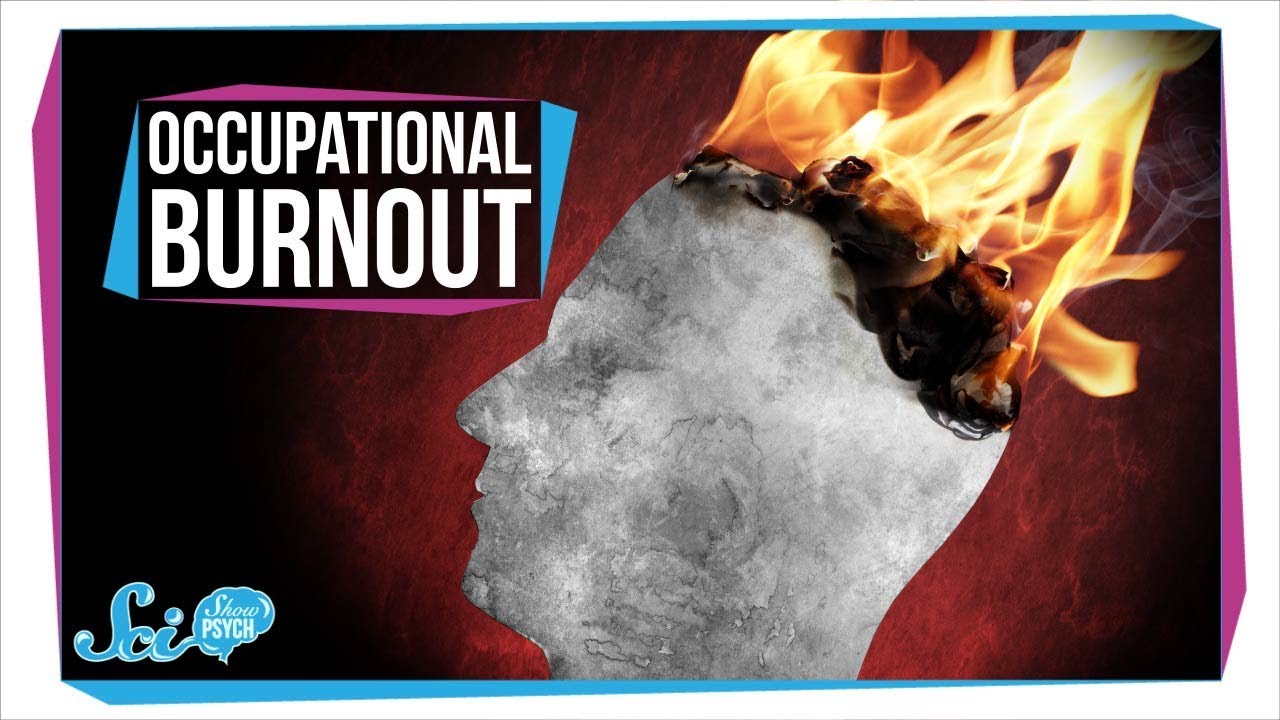
“Burnout” is a state of physical, mental, or emotional exhaustion. The term was coined in the 1970s by the American psychologist Herbert Freudenberger, who used it to describe the consequences of severe stress and high ideals in “helping” professions. Since then, the concept has expanded to include any profession.
The main researchers who study burnout define it as “a psychological syndrome emerging as a prolonged response to chronic interpersonal stressors on the job” That doesn’t mean things outside work can’t create a sense of physical, mental, or emotional exhaustion but for the purposes of this video I want to clarify what we know about “burnout” in terms of what most mental health professionals probably mean when they use the term which is occupational burnout. Why? The ICD-11, which is a diagnostic manual, includes burn-out specifically as a workplace phenomenon, and defines it as “A syndrome conceptualized as resulting from chronic workplace stress that has not been successfully managed.
” One of the brains explains it as: “Soul sucking emptiness and despair where caring and passion for my work used to exist. A lack of joy in success, and mounting dread of my failures. Exhaustion, apathy, and dread every time I think about work.
Desire to curl up and never move. ” Which is. .
. actually pretty accurate. According to the ICD-11, occupational burnout isn’t just about being tired.
In fact: it’s characterized by 3 dimensions: Feelings of energy depletion or exhaustion. Increased mental distance from one’s job, or feelings of negativism or cynicism related to one's job; And reduced professional efficacy. While employees are often quick to blame themselves and may even try to hide the fact that they’re struggling, the researchers who study burnout recognize that it’s a systemic issue, caused by a mismatch between people and their work.
And they’ve identified 6 dimensions in which those mismatches tend to happen: Workload (too much work, not enough resources) Control (micromanagement, lack of influence, accountability without power) Reward (which means not enough pay or acknowledgment, or satisfaction) Community (which can include isolation, conflict, disrespect) Fairness (including discrimination, favoritism) And Values (things like ethical conflicts, or meaningless tasks) A few mismatches are tolerable, but significant mismatches or mismatches in areas that are important to someone can lead to burnout. Addressing those mismatches can increase engagement, which is protective against burnout. Burnout disproportionately affects those with ADHD and other mental health conditions including PTSD.
And, currently, most workplaces don’t do a great job of preventing it. In fact, they may encourage employees to push through it, but doing so actually makes it worse. Even once the stressor is over, the damage is done and often, long lasting.
So burnout as a workplace phenomenon is a term we need to know and be able to talk about with our employers, employees, patients, and partners. Here are some helpful things to remember when talking about it: People don’t burn out because they’re weak. They burn out because of a mismatch between them and their work that they’ve pushed through long enough trying to be good employees that their brains and/or bodies have essentially gone on strike and refuse to keep working under these conditions.
So reversing burnout isn’t something they can do on their own by taking a vacation. They and the organization have to address the mismatch. Someone with ADHD excitedly hyperfocusing on a project and then being exhausted and needing recovery time is not the same as burnout.
That’s just how our brains work. And trying to force somebody to work differently in order to prevent burnout can actually contribute to it. So can taking work off our plate that we feel effective at and find rewarding.
Again, it’s about the fit between people and their work. When addressing burnout, we can’t forget to account for the people part. Burnout is something that should be tackled in collaboration.
Finally, Addressing burnout is good for everyone. If it’s caught early and the mismatches are addressed, it can be easy to recover from. But chronic burnout can take months or even years to get back to where we can work effectively.
Employers and employees have the same goal: for the employee to be able to work well and contribute. And we can’t do that if we’re burned out. I’ve linked to more information in the description below and I’ll be doing more episodes on this topic in the future.
But in the meantime, let's start talking about it. This episode is sponsored by the Hero's Journal, which is a personal planner designed to turn your goal into an epic adventure. I talked about the original Hero's Journal in this episode.
It was designed for ADHD brains by ADHD brains, and it's based on science and fantasy nerdiness all of which I really appreciate. I'm talking about it again because A) I still really love it and B) they have a new version available. "Magic Academy.
" And it's even more impressive. The artwork is just as beautiful, super fun, and it changes every day to encourage you to come back and continue your adventure. And it can now ship internationally.
If you have trouble staying focused on your goals, which most of us with ADHD do, this is a fantastic planner that's designed to help. The first few pages guide you to define your overall quest. Something I'm working on right now is learning to have fun.
Every day there's space to choose a quest for that day, something to move you toward your bigger quest, you can write out your schedule and then define your priorities for the day to help you stay focused. There's even space to identify your allies and your threats. Things that might get in the way of your goals and things that can help.
The pages are undated so you can start using it whenever, and if you're like me and forget to use your daily planner daily, there's no wasted space or shame of missing days. I love this journal so much because it's incredibly ADHD friendly, and it's designed to help us drop the shame we so often feel about having trouble sticking to our goals. And help us build a positive narrative about productivity instead.
If you'd like to try the Hero's journal or buy one for a friend, click on the link in the description below, and use the code 'howtoadhd'. Thank you to my Brain Advocates and all my Patreon Brains. Your support gives my team and I more control over the kind of content we make, and allows us to adjust our workload when we need to without losing the reward of being able to pay rent.
Which helps us not burn out. Like, subscribe, click all the things and I will see you next video! Bye brains!