Does art need purpose? Can you even make purposeless art? On this channel, we’ve discussed certain definitions of art and what art should do, but we haven’t discussed if art should even do anything.
Does art need to have a purpose? What if you want to make art just for the sake of making art? What if you want to make Art For Art’s Sake?
As always, there’s a livestream later after this video, like, subscribe and check out my Patreon if you like what I do. Every single patron is in the credits at the end of my videos. Thank you!
This is Nocturne in Black and Gold - The Falling Rocket completed in 1877 by James Whistler. It was, as you might imagine, controversial for the time. It’s almost abstract, though we can also clearly see the influence of Japanese art, representing a foggy night-scene of a London fireworks show.
Many people at the time didn’t get it or appreciated it, including art critic John Ruskin who would say “I have seen, and heard, much of Cockney impudence before now; but never expected to hear a coxcomb ask two hundred guineas for flinging a pot of paint in the public’s face. ”. Because of Ruskin’s influence, Whistler’s reputation in the art world, and on the art market, plummeted, stripping him away from his artistic and financial success.
Following that, Whistler sued Ruskin for libel. The fundamental rights of the art critic were at play here, but more interestingly, the painting itself went on trial. For two days, it was debated whether or not the artwork was indeed worthy of Ruskin’s harsh criticism or not.
John Holder, Ruskin’s attorney, would question Whistler on how long it took him to complete the painting. 2 days, answered Whistler. Holder then inquired if 2 days of work were worth asking 200 guineas.
“No,” Whistler answered, “I ask it for the knowledge I have gained in the work of a lifetime. ” This saga, though definitely interesting, would be won by Whistler who was awarded 1 farthing in damages, which is literally one millionth of the 1000 pounds he sued Ruskin for. Whistler would later declare bankruptcy.
Now, the reason I’m bringing up Nocturne in Black and Gold and the whole trial associated with it, is because it’s been seen as a prime example of the concept of Art for Art’s Sake: the idea that there’s no need for there to be a purpose guiding a work of art, that the production of the work of art, in itself, is enough to justify it. Theophile Gautier would popularise the concept “l’art pour l’art” saying: “Nothing is really beautiful unless it is useless; everything useful is ugly, for it expresses a need, and the needs of man are ignoble and disgusting, like his poor weak nature. The most useful place in a house is the lavatory.
” Art for art’s sake was quite popular in the bohemian milieu in Paris and would become popular in England with Aestheticism, an art movement built around the notion of art for art’s sake, or, in this case, art for beauty and nothing more. The reason why many Bohemians and rebels would associate to this train of thought is because, as they would see it, it would free them from the necessity of having to do art for a political cause, for a religious cause, for a moral cause or, to put it simply, many artists wanted to free themselves from having to create didactic art, meaning art that tries to communicate or educate. Art had traditionally been didactic: we can think of religious, historical, political or allegorical paintings.
Artists wanted to do art for themselves, by themselves, without the pressure to do it for some greater cause. “Art should be independent of all clap-trap—should stand alone, and appeal to the artistic sense of eye or ear […]” And though this appeal to freedom might be compelling, many artists and philosophers disagree with it, still to this day. Picasso would call it a hoax, John Ruskin, as you may imagine, also criticized it, George Sand would say: “Art for art's sake is an empty phrase.
Art for the sake of truth, art for the sake of the good and the beautiful, that is the faith I am searching for. ”, Gustave Courbet would say “I have studied the art of the masters and the art of the moderns, avoiding any preconceived system and without prejudice. I have no more wanted to imitate the former than to copy the latter; nor have I thought of achieving the idle aim of art for art's sake.
” In his Twilight of the Idols, Nietzsche would say: “If art is deprived of the purpose of preaching morality and of improving mankind, it does not by any means follow that art is absolutely pointless, purposeless, senseless, in short l’art pour l’art—a snake which bites its own tail. “No purpose at all is better than a moral purpose! ”—thus does pure passion speak.
A psychologist, on the other hand, puts the question: what does all art do? does it not praise? does it not glorify?
does it not select? does it not bring things into prominence? In all this it strengthens or weakens certain valuations.
Is this only a secondary matter? an accident? something in which the artist’s instinct has no share?
Or is it not rather the very prerequisite which enables the artist to accomplish something? . .
. Is his most fundamental instinct concerned with art? Is it not rather concerned with the purpose of art, with life?
with a certain desirable kind of life? Art is the great stimulus to life; how can it be regarded as purposeless, as pointless, as l’art pour l’art? ” Nietzsche, if I understand this quote correctly, goes as far as saying that art for art’s sake, art without purpose, is impossible.
Art, even though it may not preach morality or set out to improve mankind, still interacts with life, selects, praises, glorifies, strengthens or weakens certain valuations… That, in itself, is a purpose, it’s a statement, and it’s necessary to make any art. Finally, a last critique of the concept of Art for Art’s Sake comes from Walter Benjamin in his incredibly influential 1936 essay The Work of Art in the Age of Mechanical Reproduction. Benjamin had left Germany in 1933.
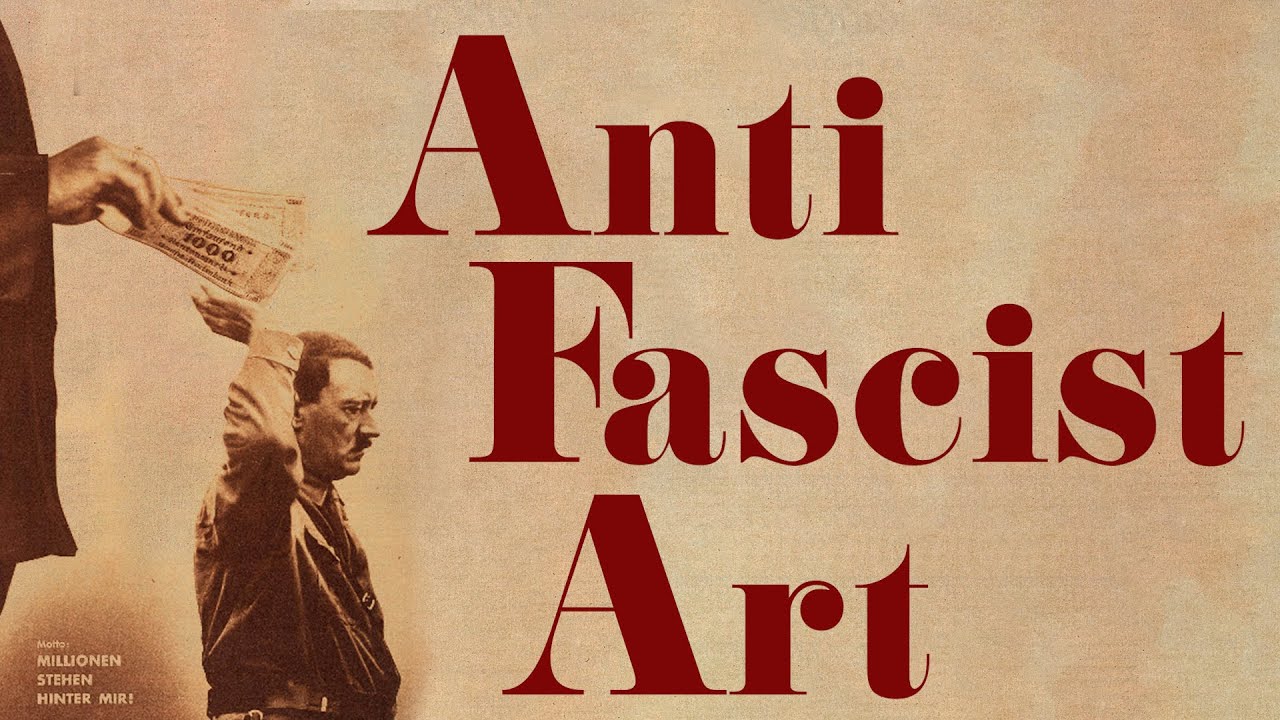
He was German, marxist and Jewish so he had good reasons to fear and criticize fascism, which he did more overtly in the epilogue of his essay. He explains that, in this new modern world, a new proletariat, a new working class, has emerged and wants to eliminate the capitalist structures of property. Fascism organizes this working class, but maintains property relations, meaning it’s only giving the masses an appearance of organisation and Benjamin sees in Fascism “the introduction of aesthetics into political life.
” And Benjamin links this introduction of aesthetics into political life to war. War is the only thing that can organize and mobilize enough people away from attacking traditional property systems. War gives a common goal, it brings the nation together, it mobilizes a people and their ressources towards a common goal which, in theory, should bring them power and supremacy.
Benjamin uses the Futurist Manifesto on the Ethiopian Colonial War to illustrate this point: “War is beautiful because it combines the gunfire, the cannonades, the cease-fire, the scents, and the stench of putrefaction into a symphony. War is beautiful because it creates new architecture, like that of the big tanks, the geometrical formation flights, the smoke spirals from burning villages, and many others. .
. . ” And Benjamin concludes his whole essay: “Fiat ars—pereat mundus,” (Let art be created, though the world perish) says Fascism, and, as Marinetti admits, expects war to supply the artistic gratification of a sense perception that has been changed by technology.
This is evidently the consummation of “l’art pour l’art. ” Mankind, which in Homer’s time was an object of contemplation for the Olympian gods, now is one for itself. Its self-alienation has reached such a degree that it can experience its own destruction as an aesthetic pleasure of the first order.
This is the situation of politics which Fascism is rendering aesthetic. Communism responds by politicizing art. ” Art for Art’s Sake, as you have seen, can be freeing, it can liberate one from the burden of having to do anything outside of beauty.
You can create art without purpose, you can do it for fun just for the sake of making it. The purpose of art can just be art in itself and that can be freeing in a way.
But, as we’ve seen, some might say that this feeling of freeing yourself by not having a purpose, doing art just for the sake of doing art and nothing more, if that is even possible, lacks an engagement with the world, an engagement with life.
Making art because it looks cool and nothing more, making art because it’s nice, making art because it’s art is absolutely and utterly boring. There’s this concept by Marcel Duchamps which I feel beautifully ties in here and it’s the concept of retinal art. Retinal art, as opposed to the art which appeals to the mind, is an art which only appeals to the eye.
It’s an art that doesn’t ask the viewer to engage, it only requires a passive stare from the viewer to appreciate it. I feel like Art for Art’s Sake overlaps with this idea. Without a broader purpose, without the will to engage with the world and with life, your art is, at best, decoration.
Some would go as far as saying that this art encourages passivity, a false apolitical disconnection from the world, and that its ultimate conclusion is the aesthetic appreciation of its own destruction. If you ask me, and I’ve said it already, Art does need a purpose. Art is, at least to me, a unifying way of interacting, exchanging, communicating different experiences, thoughts, ideas and visions of the world.
Through my own experience of looking at a work of art, I can be challenged, not only by that work of art in itself, but by the ensuing conversations about that work of art. There’s nothing more stale, superficial and boring than a purposeless work of art, a work of art whose only purpose is to simply be a work of art. My purpose is more than to simply be a human, the purpose of my videos are more than to simply be videos and the purpose of my Patreon page is more than to simply be a Patreon page, it’s to support this channel which, if you enjoy, you can do on patreon.
com/thecanvas. Thank you to Mike Wex, Roman Brendel and every other patron who already do support me and, again, see you later today for the stream! Thank you!