In Jerusalem, on April 11th, 1961, Adolf Eichmann stood trial for crimes against humanity. Eichmann had been a Nazi official tasked with organizing the transport of over 1. 5 million European Jews to ghettos and concentration camps.
He was popularly described as an evil mastermind who orchestrated atrocities from a cushy German office, and many were eager to see the so-called “desk murderer” tried for his crimes. But the squeamish man who took the stand seemed more like a dull bureaucrat than a sadistic killer. The disparity between Eichmann’s nature and his actions was unsettling for many viewers, but for philosopher Hannah Arendt, this contradiction inspired a disturbing revelation.
Arendt was a German Jew who fled her homeland in 1933 after being briefly imprisoned by the German secret police. As a refugee in France and then the United States, she dedicated herself to understanding how the Nazi regime came to power, and more specifically, how it inspired so many atrocities. A common opinion at the time was that the Third Reich was a historical oddity; a perfect storm of uniquely evil leaders supported by German citizens looking for revenge after their defeat in World War I.
But Arendt believed the true conditions behind this unprecedented rise of totalitarianism weren’t specific to Germany. Throughout the 1950s, Arendt developed a theory of the human condition that divided life into three facets: labor— in which we satisfy our material needs and desires; work— in which we build the world’s physical and cultural infrastructure; and action— in which we publicly articulate our values to collectively shape the world around us. It was this last facet, the life of action, that Arendt believed was under attack, both in Germany and many other industrialized societies.
She saw modernity as an age ruled by labor, where individuals mainly appear in the social world to produce and consume goods and services rather than share ideas and shape communities. Arendt believed this had fostered societies and ideologies where individuals were seen only for their economic value, rather than their moral and political capacities. She believed this isolated people from their neighbors and their sense of self.
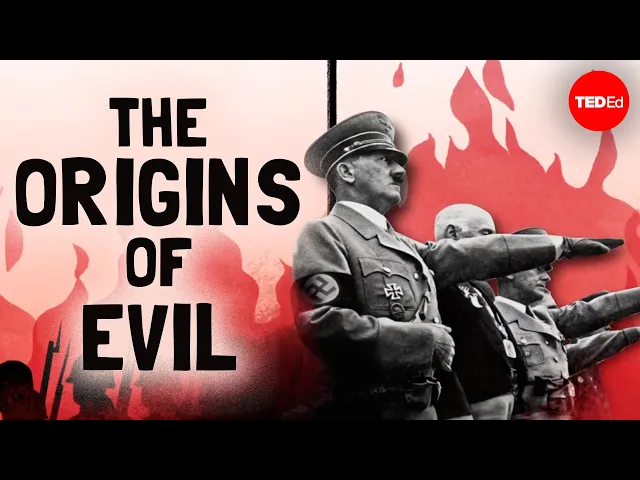
And in her 1951 book, “The Origins of Totalitarianism,” Arendt argued these conditions provided fertile ground for totalitarian regimes, which use fear and violence to increase isolation and make it dangerous to publicly engage as freethinking political agents. In this lonely state, participating in the regime becomes the only way to recover a sense of identity and community. Arendt believed it was this kind of environment where Eichmann committed his crimes.
Most people expected the Jewish German philosopher to judge the ex-Nazi harshly. But while she condemned his monstrous actions, Arendt saw no evidence that Eichmann himself was uniquely evil. She saw him as a distinctly ordinary man who considered diligent obedience the highest form of civic duty.
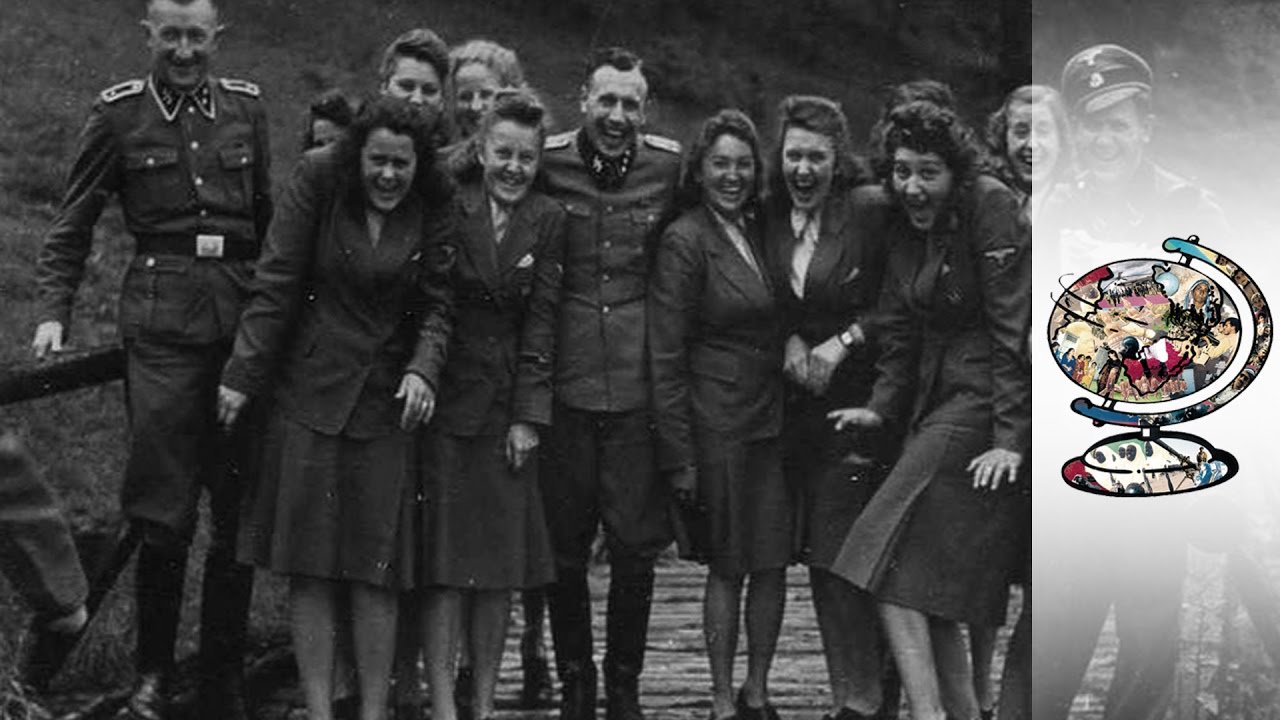
And for Arendt, it was exactly this ordinariness that was most terrifying. Her point wasn't just that anyone could do what Eichmann did, but that his story suggested ordinary people could willingly accept their societal role— even when it contributed to genocide. Arendt called this phenomenon “the banality of evil,” and warned that it can emerge whenever society inhibits our ability to think; or more specifically, to question our beliefs and actions in a self-reflective internal dialogue.
Arendt believed this kind of thinking is the only way to confront moral problems, and that our responsibility to self-reflect is especially important when independent thought is threatened. She acknowledged that critical thinking in oppressive spaces is a defiant act that requires personal courage. But it must be done regardless, which is why Arendt still held Eichmann accountable.
This thread runs throughout Arendt's work, where she continually insisted that thinking was our greatest weapon against the threats of modernity. Namely, a relentless drive for economic and technological development which would increase social alienation and inhibit human freedom. To foster this essential value, Arendt believed we need to create formal and informal forums that allowed for open conversations about shaping our collective future.
These might include townhall meetings, self-governing workplaces, or student unions. But whatever shape they take, what’s most important to Arendt is that they value open dialogue and critical self-reflection.