Scribe
Scribe

Ti piace? Rendi Scribe ancora migliore lasciando una recensione

Ottieni l'estensione Chrome

Sfoglia

  • Video Popolari
  • Video Recenti
  • Tutti i Canali

Strumenti Gratuiti

  • Scaricatore di Sottotitoli Video
  • Generatore di Timestamp Video
  • Riassuntore di Video
  • Contatore di Parole Video
  • Analizzatore di Titoli Video
  • Ricerca Trascrizioni Video
  • Analisi Video
  • Creatore di Capitoli Video
  • Generatore di Quiz Video
  • Chat con Video

Prodotto

  • Prezzi
  • Blog
  • Ottieni l'estensione Chrome

Developers

  • Transcript API
  • API Documentation

Legale

  • Termini
  • Privacy
  • Supporto
  • Mappa del sito

Copyright © 2026. Realizzato con ♥ da Scribe

— Se questo ha reso la tua vita più facile (o almeno un po' meno caotica), lascia una recensione! Promettiamo che ci renderà felici. 😊

Related Videos

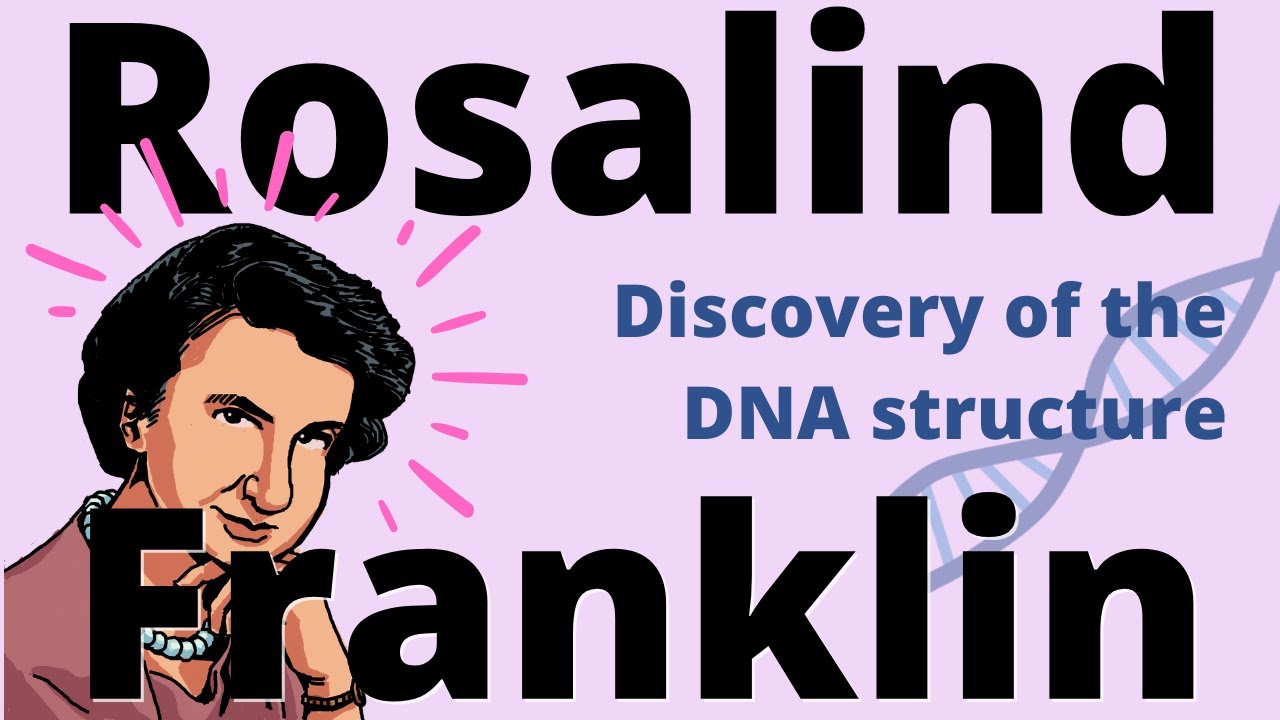
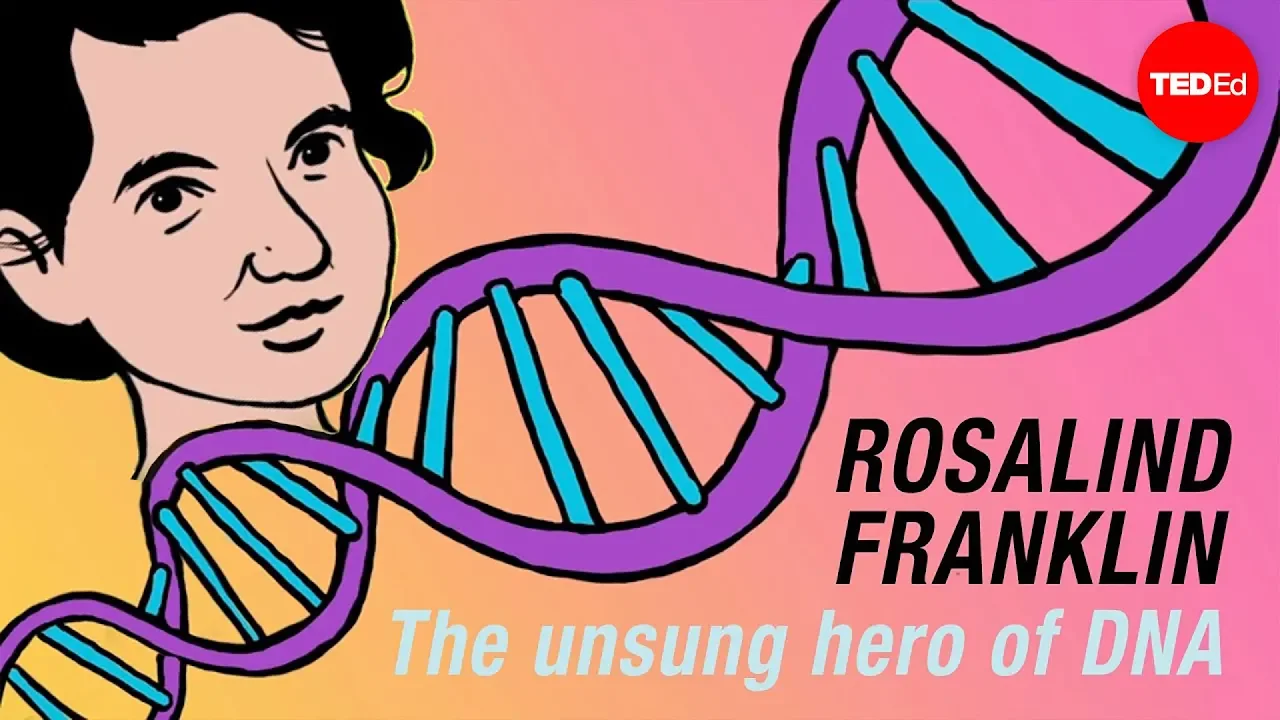
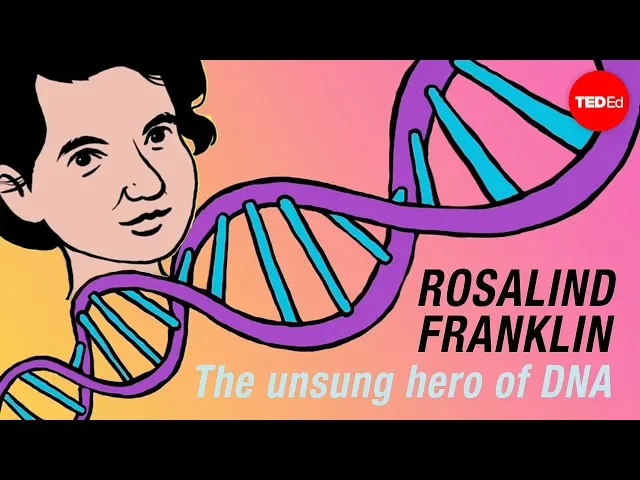
Rosalind Franklin: DNA's unsung hero - Cláudio L. Guerra

Video thumbnail
1.52M578 Parole2m readGrade 9
Condividi
Channel
TED-Ed
The discovery of the structure of DNA was one of the most important scientific achievements in the last century, in human history, in fact. The now-famous double helix is almost synonymous with Watson and Crick, two of the scientists who won the Nobel Prize for figuring it out. But there's another name you may know, too, Rosalind Franklin.
You may have heard that her data supported Watson and Crick's brilliant idea, or that she was a plain-dressing, belligerent scientist, which is how Watson actually described her in "The Double Helix. " But thanks to Franklin's biographers, who investigated her life and interviewed many people close to her, we now know that that account is far from true, and her scientific contributions have been vastly underplayed. Let's hear the real story.
Rosalind Elsie Franklin was born in London in 1920. She wanted to be a scientist ever since she was a teenager, which wasn't a common or easy career path for girls at that time. But she excelled at science anyway.
She won a scholarship to Cambridge to study chemistry, where she earned her Ph. D. , and she later conducted research on the structure of coal that led to better gas masks for the British during World War II.
In 1951, she joined King's College to use x-ray techniques to study the structure of DNA, then one of the hottest topics in science. Franklin upgraded the x-ray lab and got to work shining high-energy x-rays on tiny, wet crystals of DNA. But the acadmemic culture at the time wasn't very friendly to women, and Franklin was isolated from her colleagues.
She clashed with Maurice Wilkins, a labmate who assumed Franklin had been hired as his assistant. But Franklin kept working, and in 1952, she obtained Photo 51, the most famous x-ray image of DNA. Just getting the image took 100 hours, the calculations necessary to analyze it would take a year.
Meanwhile, the American biologist James Watson and the British physicist Francis Crick were also working on finding DNA's structure. Without Franklin's knowledge, Wilkins took Photo 51 and showed it to Watson and Crick. Instead of calculating the exact position of every atom, they did a quick analysis of Franklin's data and used that to build a few potential structures.
Eventually, they arrived at the right one. DNA is made of two helicoidal strands, one opposite the other with bases in the center like rungs of a ladder. Watson and Crick published their model in April 1953.
Meanwhile, Franklin had finished her calculations, come to the same conclusion, and submitted her own manuscript. The journal published the manuscripts together, but put Franklin's last, making it look like her experiments just confirmed Watson and Crick's breakthrough instead of inspiring it. But Franklin had already stopped working on DNA and died of cancer in 1958, never knowing that Watson and Crick had seen her photographs.
Watson, Crick, and Wilkins won the Nobel Prize in 1962 for their work on DNA. It's often said that Franklin would have been recognized by a Nobel Prize if only they could be awarded posthumously. And, in fact, it's possible she could have won twice.
Her work on the structure of viruses led to a Nobel for a colleague in 1982. It's time to tell the story of a brave woman who fought sexism in science, and whose work revolutionized medicine, biology, and agriculture. It's time to honor Rosalind Elsie Franklin, the unsung mother of the double helix.
Video correlati
The DNA Double Helix Discovery — HHMI BioInteractive Video
17:09
The DNA Double Helix Discovery — HHMI BioI...
biointeractive
1,125,841 views
Humans are all almost exactly the same... almost  - Greg Foot
5:34
Humans are all almost exactly the same... ...
TED-Ed
205,532 views
Everyone was Wrong about Ghengis Khan
9:45
Everyone was Wrong about Ghengis Khan
SciShow
847,374 views
What can DNA tests really tell us about our ancestry? - Prosanta Chakrabarty
6:45
What can DNA tests really tell us about ou...
TED-Ed
1,170,900 views
Parallel Worlds Probably Exist. Here’s Why
20:00
Parallel Worlds Probably Exist. Here’s Why
Veritasium
23,223,700 views
The Story of ROSALIND FRANKLIN - How She Discovered the Structure of DNA
5:36
The Story of ROSALIND FRANKLIN - How She D...
Henrik's Lab
12,750 views
How the Genius of Marie Curie Killed Her
12:59
How the Genius of Marie Curie Killed Her
Newsthink
2,491,970 views
MASS PSYCHOSIS - How an Entire Population Becomes MENTALLY ILL
21:49
MASS PSYCHOSIS - How an Entire Population ...
After Skool
8,290,421 views
What are warts — and how do you get rid of them? - Cella Wright
5:14
What are warts — and how do you get rid of...
TED-Ed
282,932 views
The unselfish gene | Denis Noble challenges Richard Dawkins
14:24
The unselfish gene | Denis Noble challenge...
The Institute of Art and Ideas
308,203 views
The hidden history of DNA - with Gareth Williams
55:18
The hidden history of DNA - with Gareth Wi...
The Royal Institution
52,442 views
How We Misunderstood HILLFORTS
16:31
How We Misunderstood HILLFORTS
Paul Whitewick
153,139 views
Why we say “OK”
5:22
Why we say “OK”
Vox
9,666,634 views
Seven Million Years of Human Evolution #datavisualization
6:23
Seven Million Years of Human Evolution #da...
American Museum of Natural History
2,646,469 views
Former FBI Agent Explains How to Read Body Language | Tradecraft | WIRED
14:44
Former FBI Agent Explains How to Read Body...
WIRED
51,778,942 views
Is this the most valuable thing in the ocean? - David Biello
5:37
Is this the most valuable thing in the oce...
TED-Ed
103,635 views
We Need to Rethink Exercise - The Workout Paradox
12:00
We Need to Rethink Exercise - The Workout ...
Kurzgesagt – In a Nutshell
6,488,220 views
How I discovered DNA - James Watson
20:15
How I discovered DNA - James Watson
TED-Ed
318,555 views
How Rosalind Franklin changed history
9:53
How Rosalind Franklin changed history
kingsmedicine
33,187 views
How the discovery of DNA changed the world – and my life | BBC Ideas
5:55
How the discovery of DNA changed the world...
BBC Ideas
13,462 views