I did not notice this at first because the change was so subtle. Sitting down still felt normal, but getting up from a chair began to feel a little slower, a little less automatic. My legs could still move, but they were no longer responding with the same confidence they once did.
After years of working with older adults, I can tell you this is often how the shift begins. Not with a major injury, not with sudden pain, just with that quiet moment of hesitation when the body no longer responds as smoothly as it used to. Most people are told the same thing.
Walk more. Keep moving. And to be fair, walking does help.
But walking alone does not always rebuild the kind of strength and control your body needs to rise from a chair, steady itself, and feel secure on your feet again. What most people never get told is that the missing piece is often much more specific. It is not just movement.
It is the right movement in the right position, waking up the muscles daily life depends on most. And that matters more than it may sound. The National Institute on Aging says about 30% of adults over 70 have trouble with walking, getting up out of a chair, or climbing stairs.
The CDC's 30-second chair stand assessment also shows that below-average scores can signal fall risk. For adults ages 75 to 79, that means fewer than 11 stands for men and fewer than 10 for women in 30 seconds. In other words, standing up from a chair is not a small task.
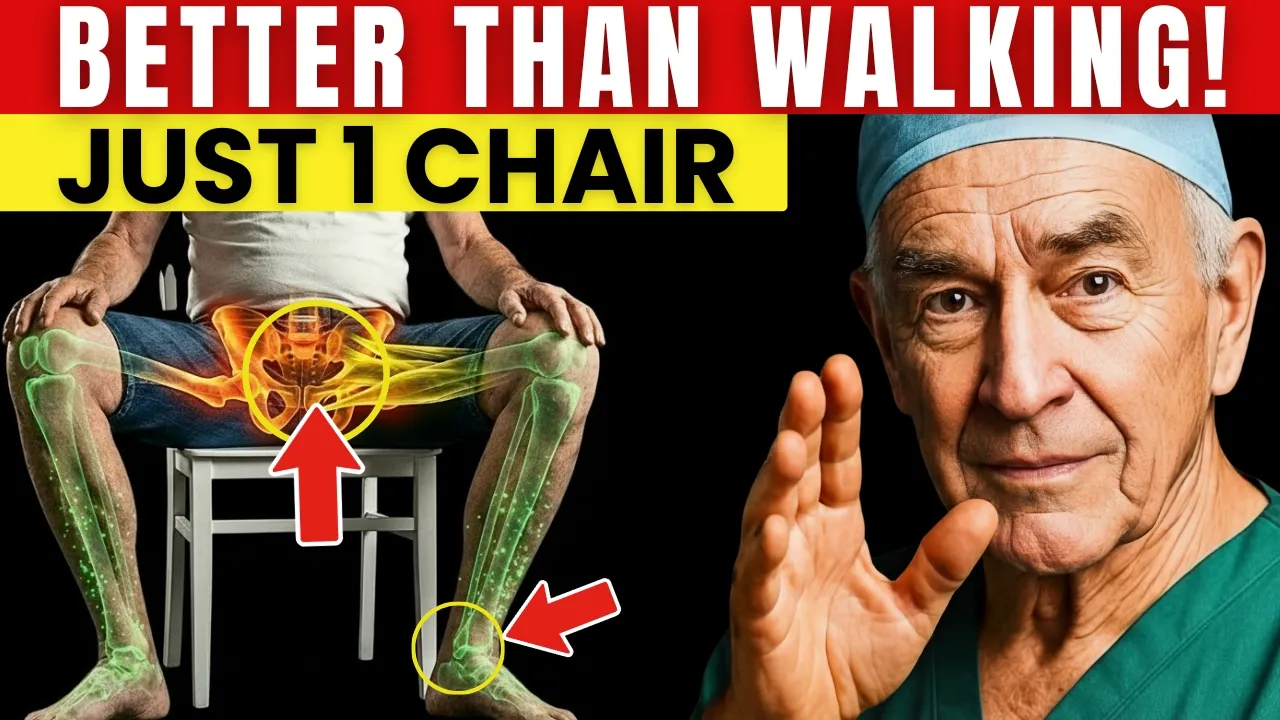
It is one of the clearest signs of how well strength, balance, and independence are holding up. In this video, I will walk you through five simple expert-approved movements you can do with just one chair. They build from the ground up, from ankle control to hip stability, all the way to the one movement that matters most.
And number one, chair sit-to-stand, is the one I especially want you to stay for. Before we continue, let me ask you something. How old are you?
And where are you watching from? Leave a comment below and let me know. I take the time to read through the comments, and I truly appreciate hearing from you.
If this kind of information is helpful to you, please like, share, and subscribe so you never miss future videos like this. Number five, seated ankle circles. This may look too gentle to matter.
That is exactly why so many people ignore it. But what makes it more important than it looks is that the ankles are often one of the first places the body loses those small corrections that keep you steady when you turn, step, or catch yourself after a slight wobble. Seated ankle circles are simple.
You sit tall in a sturdy chair, lift one foot slightly, and slowly draw a circle with your toes. It is a small way to wake up the joint, the muscles around it, and your body's sense of where the foot is in space. If you have ever stood up and felt stiff for those first few seconds, or noticed that turning in the kitchen feels less smooth than it used to, this is often part of the reason.
A 2021 study in PLOS One looked at 88 community-dwelling older adults and found that 86% had limited ankle mobility. The same study found that ankle range of motion was one of the strongest predictors of dynamic balance and mobility. An earlier study in physical therapy involving 34 women ages 64 to 87 also found a strong link between ankle range of motion and balance, especially in gait-related performance.
That matters because better ankle motion is not just about flexibility. It helps the body react more quickly and move more securely in everyday life. To do this well, sit near the front of the chair with both feet flat.
Lift your right foot just enough to clear the floor. Then draw 10 slow circles clockwise and 10 counterclockwise. Repeat on the other side.
The key is to move slowly enough that the ankle does the work, not the whole leg. Chuck, one important detail that makes a real difference is keeping the circles full and controlled instead of small and rushed. Start with one or two rounds on each foot.
Over time, you may notice that standing and taking those first few steps feels less stiff and less uncertain. It is a small movement, but it opens the door to something bigger. And the next one starts building the kind of inner leg stability most people do not notice until it begins to fade.
Number four, seated knee squeezes. This is one of those movements people rarely think about. It looks small.
It feels simple. But what makes it more important than it seems is that it wakes up the inner thigh muscles, which help keep your legs steady when you shift your weight or catch yourself from drifting sideways. Seated knee squeezes are exactly what they sound like.
You sit upright in a sturdy chair, place a folded towel or small pillow between your knees, and gently squeeze inward. That is all. But this targets a part of stability that walking often misses.
If you have ever turned around in the kitchen and felt a little unsteady, or noticed your legs do not feel as connected as they used to, this is often part of the reason. Researchers have paid close attention to these muscles because they help control walking and foot placement, and because sideways falls carry a higher risk of hip injury. A 2019 study in Aging Clinical and Experimental Research looked at 81 community-dwelling older adults and found that hip adductor strength contributed to balance in a narrow standing position.
An earlier trial in Clinical Biomechanics found that older adults who trained the hip muscles for 8 weeks improved adductor strength by 18% and increased stabilizing lateral steps by 43% in a higher load balance test. That matters because stronger inner thighs help the body respond faster when balance shifts sideways. To do this movement, sit tall with both feet flat on the floor.
Place the towel or pillow between your knees, then squeeze inward firmly but without straining. Hold for about 3 to 5 seconds, then slowly release. Start with 8 to 10 repetitions.
The key is not squeezing as hard as you can. The key is a steady squeeze, a calm hold, and a controlled release. Keep your shoulders relaxed and your breathing normal while the inner thighs do the work.
Done consistently, this movement can make your legs feel more connected and more dependable. And the next exercise starts building that same control into the stepping pattern itself. Number three, seated marching.
This is where things start to feel more practical. So far, you have been waking up the ankles and inner thighs. Now you begin training the stepping pattern itself.
That may sound simple, but lifting one leg cleanly, lowering it with control, and repeating on the other side plays a big role in how steady and confident walking feels. Seated marching means sitting tall in a sturdy chair and lifting one knee at a time as if you are marching in place. It does not look like much, but it helps wake up the front of the hips, the thighs, and the timing between the legs and trunk.
If your feet feel slow to get going after you stand up, or climbing a curb or stair feels less automatic than it used to, this is often part of the reason. T A 2021 study in Archives of Gerontology and Geriatrics followed 433 community-dwelling older adults for 12 months and found that hip flexor strength was a primary determinant of future functional decline. And in a 2018 study in the Journal of Physical Therapy Science, frail older adults who followed a daily program built around marching in place and chair rising for 12 weeks improved their Barthel Index by 11.
6% chair stand power by 33% and 10-m walk time by 14. 6% compared with a non-exercise group. That matters because this movement is not just about lifting the legs while sitting.
It helps preserve the stepping pattern daily life depends on. To do this movement, sit near the front of the chair with your back tall and both feet flat on the floor. Lift your right knee slowly, only as high as you can without leaning back.
Then lower it with control. Repeat on the left side. Keep alternating for 10 to 20 total marches.
The key is not speed. The key is lifting from the hip, staying tall through the chest, and placing the foot back down gently instead of dropping it. One important detail that makes a big difference is keeping the movement clean.
If your body rocks backward every time the knee lifts, you are using momentum instead of training the hip to do its job. Start slowly. Breathe normally.
And if one side feels weaker or heavier, pay attention to that. Because many people discover one leg has quietly stopped helping as much as it used to. This movement helps the body remember how to step again with more control.
And the next exercise builds the side-to-side hip stability that makes every step safer. Number two, seated hip abduction press. This is where many older adults begin to feel a real difference in steadiness.
So far, you have worked on ankle control, inner leg support, and the stepping pattern. But none of that feels secure if the hips cannot keep the body stable from side to side. That is the hidden weakness many people miss.
They think the problem is only in the knees or feet, when the outer hip muscles often decide whether a step feels controlled or shaky. Seated hip abduction press is a simple way to train that missing piece. You sit tall in a sturdy chair, place your hands on the outside of your knees, or loop a light band above the knees, and gently press outward.
It does not look like much, but these muscles help control side-to-side stability when you stand, shift your weight, or move from one foot to the other. If you have ever felt your body drift a little when turning around, or noticed that one leg does not hold you as confidently as it used to, this is often part of the reason. A 2020 study in clinical interventions in aging tested 60 adults over 65, with an average age of 82, and found that hip abductor strength could help distinguish older fallers from non-fallers.
Hip abductor isometric strength reached an AUC of 0. 8, with 90. 6% sensitivity at the clinical cutoff.
And in an 8-week trial published in clinical biomechanics, older adults who trained the hip muscles improved peak torque by 14% to 18% and increased stabilizing lateral steps by 43% in a higher load balance test. That matters because these muscles are closely tied to fall risk and to how well the body catches itself when balance shifts sideways. To do this movement, sit near the front of the chair with both feet flat and about hip width apart.
Press your knees outward into your hands or the band. Hold for about 4 seconds, then return slowly. Start with eight repetitions and build toward 10 to 12.
The key is not pushing as hard as possible. The key is feeling the work on the outside of the hips while the rest of the body stays quiet. Keep your feet planted and your chest lifted so the hips do the work instead of the whole body leaning.
This movement gives your steps a stronger foundation. It helps the body feel more centered and more stable. And that brings us to the final movement, the one that ties everything together and matters most after 70.
Number one, chair sit to stand. This is the movement that ties everything together. It looks ordinary because you have done it your whole life, but that is exactly why it matters so much.
Standing up from a chair is not just another exercise. It is one of the clearest signs of whether your legs, hips, balance, and timing are still working together the way they need to after 70. Chair sit to stand is exactly what it sounds like.
You sit in a sturdy chair, place your feet under you, lean slightly forward, and stand up with control before sitting back down the same way. That may sound simple, but this movement sits behind getting out of bed, getting up from the table, using the bathroom safely, and rising from a chair without that moment of doubt. When this starts to feel harder, daily life starts getting smaller.
When it gets stronger, daily life usually opens back up again. A large study in physical therapy found that older adults who needed 10 seconds or more to complete the five times sit to stand test had a significantly higher risk of later disability. Over the 2-year follow-up, 161 participants, or 3.
7%, developed disability, and poor sit to stand performance was linked to an 88% higher risk. The classic 30-second chair stand study in research quarterly for exercise and sport also established this test as a valid indicator of lower body strength in community-dwelling older adults. That matters because the ability to stand up well is not a small detail.
It is one of the strongest everyday signs of whether independence is being preserved or slowly slipping away. To do this movement safely, sit near the front of a sturdy chair with your feet about hip width apart and slightly back under your knees. Chuck, lean your chest forward just enough to bring your nose over your toes, then press through your feet and stand up.
Pause for a moment at the top, then lower yourself back down slowly and with control. Start with five repetitions. If that feels manageable, work toward eight, then 10.
The key is not speed. The key is control on the way up and especially on the way down. One important detail that makes a huge difference is this.
Do not throw your body upward with momentum if you can avoid it. That quick rocking motion may get you standing, but it does not teach the legs to do the work cleanly. Use your hands on the chair at first if needed.
That is not failure. It is simply where many people begin. This is the movement that changes everything because it is not just building strength.
It is rebuilding trust. Trust in your legs. Trust in your balance.
Trust that when you need to stand, your body will answer. What makes these movements so powerful is not that any one of them looks impressive. It is that together, they rebuild the exact pieces daily life depends on most after 70.
A little more ankle control. Better support through the inner legs. A stronger stepping pattern.
More side-to-side stability through the hips. And finally, the ability to rise from a chair with more confidence and less hesitation. That is how real strength often comes back.
Not through one hard workout. Not through doing more for the sake of doing more. But through simple movements that teach the body how to respond again.
That is where many older adults begin to feel the change. Standing up feels smoother. Turning around feels steadier.
Walking through the house feels less uncertain. And that is the deeper point of this video. These exercises are not just about fitness.
They are about staying involved in your own life. They are about keeping the freedom to move around your home, get where you want to go, and trust your body a little more each day. The body does change with age, but it can still respond when you give it the right kind of work.
So start Use one chair. Move carefully, stay consistent, and let these small movements build something much bigger over time. If this video was helpful to you, please subscribe to the channel so you do not miss future videos like this.
Thank you so much for watching, and I will see you in the next video.