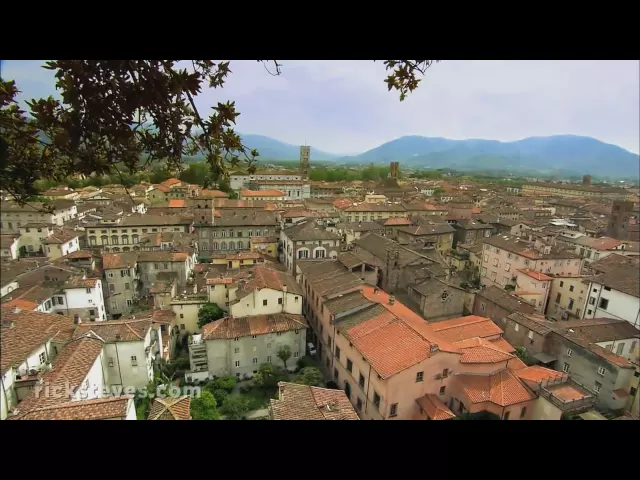
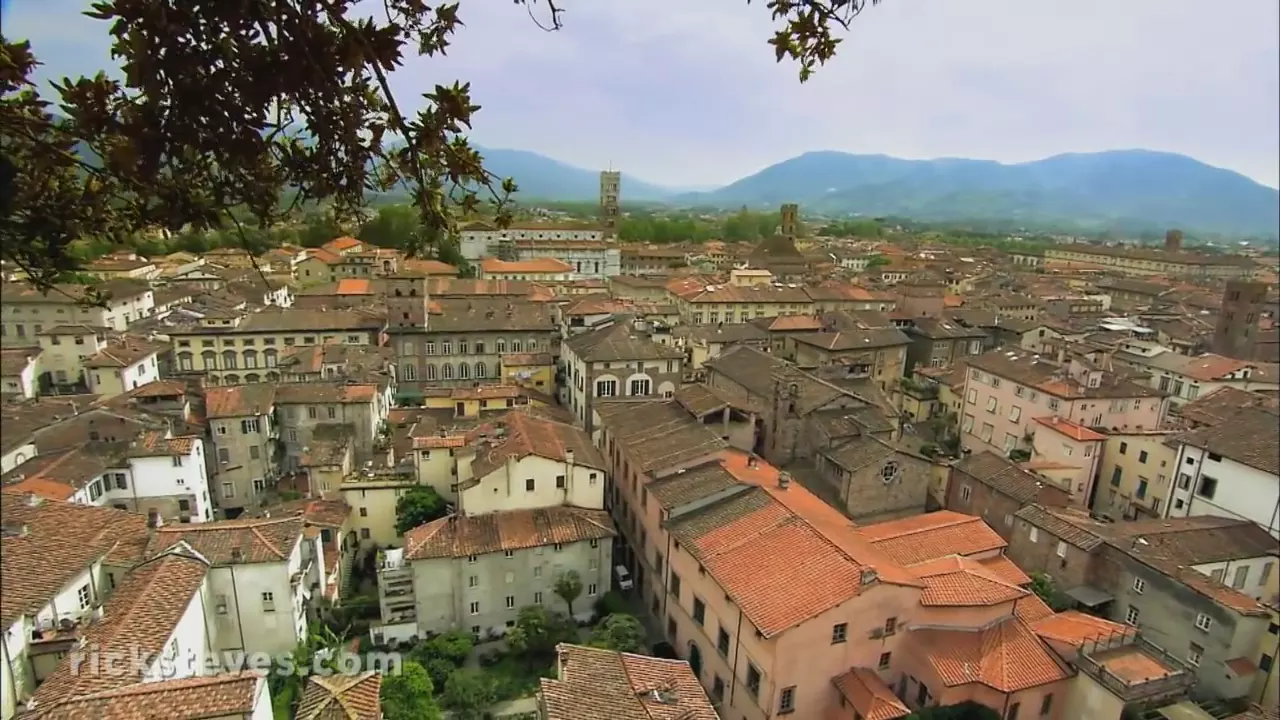
Beautifully preserved Lucca is contained entirely within its iconic ramparts. Most cities tear down their walls to make way for modern traffic. But Lucca kept its walls—effectively keeping out both traffic and, it seems, the stress of the modern world.
The city is a bit of a paradox; while it has Europe's mightiest Renaissance wall, it hasn't seen a battle since 1430. Locals, like my friend and fellow tour guide Gabriele Calabrese, treat their ramparts like a circular park. And, with plenty of rental bikes available, visitors can enjoy a lazy pedal around its two and a half mile circuit as well.
So, Gabriele, this is a Renaissance wall. What's the difference between a Renaissance wall and a medieval wall? Medieval wall is thin because they had no problem with arrows or stones.
But in the Renaissance time the cannons they became very strong and they became a problem so that's why it was so thick. Lucca's wall didn't come cheap. But all that hard work and investment combined with clever diplomacy earned the city a long period of independence.
And, to this day, the proud Luccasi have a strong sense of identity. Rather than showcasing famous monuments, Lucca's appeal is in its relaxed old world ambiance. Stroll around.
Take time to let the city unfold. Romanesque churches seem to be around every corner. .
. as do inviting piazzas busy with children at play. The main pedestrian drag is Via Fillungo.
Strolling here, past elegant old store fronts, you'll get a glimpse of Lucca's rich past as well as its charming present. Piazza Amphitheater was built around an ancient Roman arena. While the arena's long gone, its oval shape is a reminder of the city's classical heritage.
Locals have been gathering here for two thousand years— today's attraction. . .
a flower market. Piazza San Michele also has ancient roots. It's hosted a market since Roman times, when it was the forum.
Today, it's dominated by the Church of San Michele. Towering above its fancy Romanesque façade, the archangel Michael stands ready to flap his wings—which, thanks to a crude mechanical contraption, he actually did on special occasions. In its heyday, Lucca packed over 100 towers within its walls.
Each tower was the home and private fortress of a wealthy merchant family. Towers were single rooms stacked atop each other: shop, living room, and then the kitchen. This one, Lucca's tallest surviving tower, is famous for being capped with a bushy little forest.
Those making the climb are rewarded with commanding city views—all in the shade of its amazing trees. Nearby, the church of San Giovanni hosts nightly concerts celebrating the music of hometown composer Giacomo Puccini. He was one of Italy's greatest opera composers.
Puccini's delightful arias seem to capture the spirit of this wonderful corner of Italy.