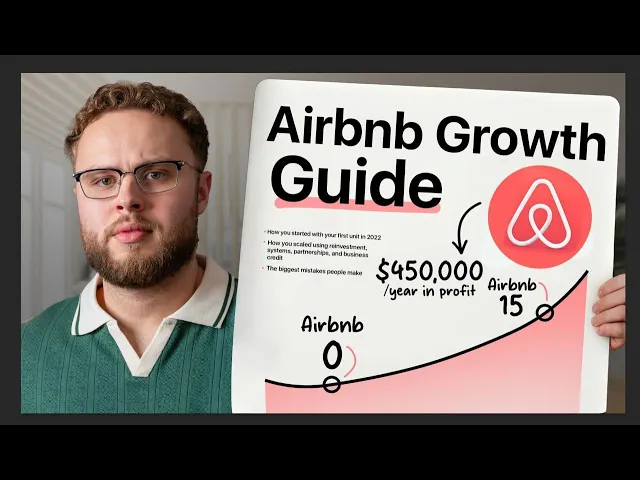
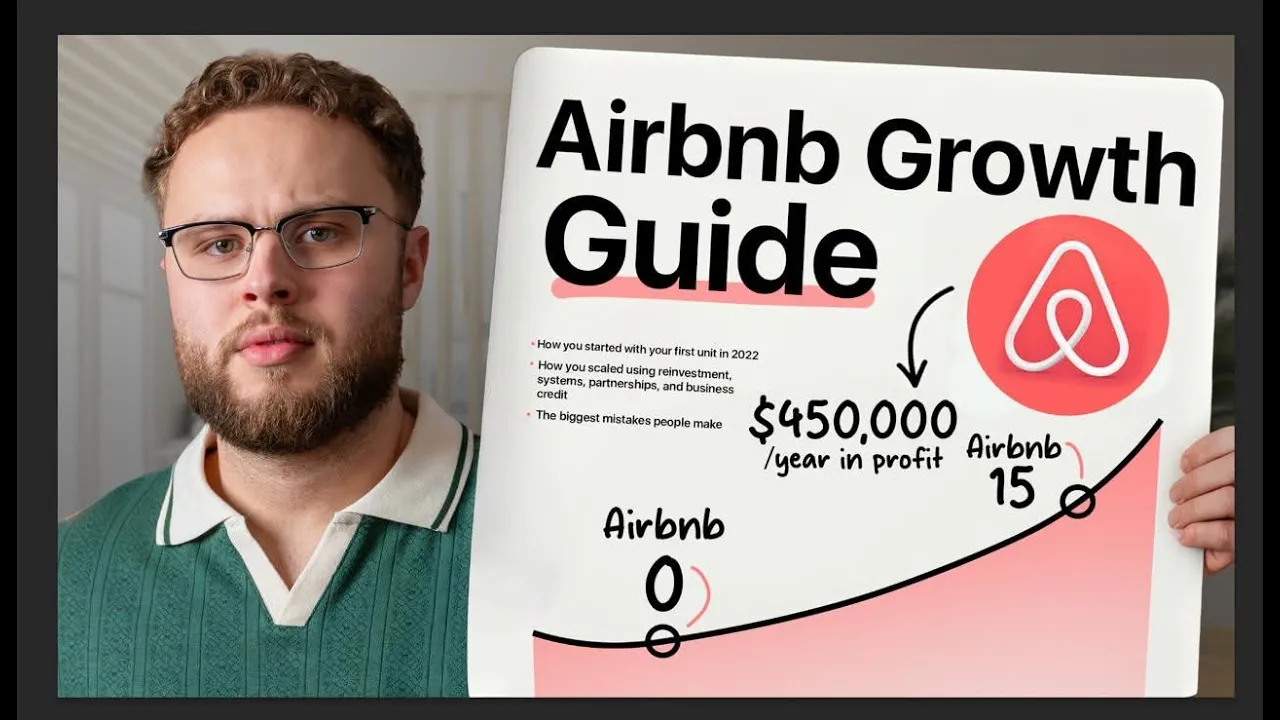
3 and 1/2 years ago, I had zero Airbnbs. No properties, no experience, nothing. Today, I have 15 Airbnbs.
I don't own a single one of them. And across the portfolio, we're doing about $450,000 a year in profit. All of this is through something called rental arbitrage.
And if you don't know who I am, my name is Lucas Maul. I've been hosting Airbnbs for almost 4 years now, and this is exactly what I do. So, back in 2022, I wasn't in some crazy position.
I didn't have a bunch of money. I didn't own property and I didn't have some big network. I just knew I wanted to make more money and have more freedom.
And I came across Airbnb, specifically rental arbitrage, which is basically renting a property long-term from a landlord and then listing it on Airbnb for short-term stays. So instead of buying property, you're controlling the property. At first, I was like, there's no way this actually works.
But the more I looked into it, the more I realized people are actually doing this at scale. And just to be fully transparent with you, I didn't do this all alone. I actually started this business with one of my best friends from middle school.
So, this wasn't some random partnership. This was someone I already trusted. A lot of these units are split between us and I also have a couple units that I run by myself.
But everything I'm about to break down, I've actually gone through and done. So, whether you're doing this solo or with a partner, this model works. So, getting the first Airbnb was honestly the hardest part.
Not because it's complicated, but because you don't have any proof yet. We had to figure out how to find a deal, how to convince the landlords, and how to set up the place the right way and set up the pricing correctly. And I remember thinking like, like, what if this doesn't work out?
But we still went for it. We locked in our first unit, furnished it, listed it, and once that first booking came in for $600, that's when it changed everything. This is crazy, right?
>> Because now it wasn't just theory anymore. It was real. At that point, it was just us figuring it out.
No big team, no crazy systems, just us learning as we went. We were literally doing the cleanings and and doing all that stuff ourselves. After the first unit started working, we didn't go celebrate and spend all the money that we made.
We reinvested literally everything we made with Airbnb. And that's something a lot of people mess up. They get a little bit of cash flow and they start overspending instead of actually scaling their business.
For us, it was like, "All right, how do we get unit number two, then number three, number four, number five? " And each time we got better, better deals, better setup, better pricing, and the confidence just started going up like crazy when we started talking to these landlords. Once we got past like four or five units, that's when I realized this isn't a side hustle anymore.
This is a legit business. And I had to start acting like it. I couldn't be the one doing everything, making all the calls, cleaning the places.
So, we started putting systems in place. We hired our cleaners. We automated our messages.
We hired a team to do the handyman stuff, better pricing strategies because if we didn't build systems, we were going to burn out. And that's where most people get stuck in this business. This is also around the point where we started leveraging business credit.
Up until our first few units, we were using mostly cash to reinvest everything to scale. But after that, we started using 0% interest business credit cards like Chase business credit cards, Amex business credit cards that give you 12 months to pay that off with no interest. and we were able to access through funding relationships and brokers which is actually something that I now give to my students my mentorship as well.
So instead of waiting to stack a ton of cash, we're able to move faster and scale way more efficiently using that business funding. And this is also where partnerships can actually help you scale faster if you have the right person. Now today, across all units between me and my partners, we're at 15 Airbnbs total.
Some of those are mined directly and some of those are split deals, but overall the portfolio is doing around $450,000 a year in profit. And just to say it again, none of these properties are owned by us. This is all rental arbitrage.
We're renting these properties from landlords and turning them into short-term rentals on Airbnb with their permission, of course. That's how we scaled this without needing to buy real estate. And then it come just from working harder.
It came from leverage, better deals, better systems, better partnerships, and thinking bigger than just one unit, two units. Now, let me be real with you. There's a lot of misinformation out there about Airbnb arbitrage.
People think you need to own property. No, you don't. You need a ton of money.
No, you don't. That it's passive right away. Honestly, it's not.
And the biggest mistakes I see beginners make are picking bad deals, not actually learning the business first, and quitting way too early. Another big one is partnerships. People either avoid them completely or go into them the wrong way.
The right partnership can help you scale fast. The wrong one will slow you down. If I had to start all over again today from zero, this is exactly what I would do.
First, I would actually learn the model properly. And what I mean by that is don't just jump into this business blindly. You need to understand how this actually works as a business.
You need to learn how to pitch this to landlords so they actually say yes. And if you don't know what you're talking about, you're not going to be able to pitch them. You need to explain what the benefits are to them, how you're protecting their property, things like short-term rental insurance, you know, how you're preventing parties, how you're making sure that you handle guest communication, guest issues.
You need to sound like an expert in the field even though you've never done this before. because when you're talking to a landlord, you need to sound like you've done this before, even if you haven't. So, you need to study how people are actually running this business model the right way.
Second is you want to pick the right market. I'm not going to go super in-depth on this, but you don't want something that's completely saturated. You don't want Miami or Atlanta, and you also don't want something that's super restricted that you can't operate.
The sweet spot is markets with some light restrictions because most people avoid those because they don't want to apply for the permits. But if you're willing to go to the permits and the rules, you can get into those markets and make some pretty good money. The third is lock in one solid deal, not five bad ones, one good one.
And ideally, bigger is better. Three, four, fivebedroom properties perform way better than a one or a two-bedroom. If you go for a one bed, one bath, your margins are going to be very tight.
Your revenue is going to be pretty low, and you're going to be stressed out. It's just as much stress as a bigger Airbnb. The fourth thing is that you want to systemize it immediately.
Don't wait until you're overwhelmed. Get your cleaners in place. Hire a handyman from Task Rabbit.
Set up the automated messages so that you don't have to manually send everything. Build this like a business from day one and you're going to get rewarded for it. And fifth, reinvest and scale.
If you're trying to turn this into something real, you can't just spend all the money you make from Airbnb. You need to put it back into the business so that you can grow faster. That's how you go from one unit to multiple extremely fast.
That's literally the blueprint I would follow again today. And look, if you're watching this and you're serious about starting Airbnb, I help people oneonone start this business the right way, step by step, from getting your first unit to scaling it into an actual six-figure business. So, if you want help with that, just DM me BNB on Instagram or just hit the link in the description where you can book a call with me and apply for my one-on-one mentorship.
I'll show you exactly what this could look like for you.