Have you ever noticed that the most consistent people in [music] the world don't talk about motivation? They don't wake up every day feeling inspired. They don't wait for the perfect moment.
[music] They simply show up and do what needs to be done every single day. No negotiation. While some wait to feel the urge, these people have already done it.
While many seek cheap motivation in YouTube videos, these people have already trained, [music] studied, and performed. And when some ask how these people do it, the answer is never about feelings. It's about something much older and much deeper.
In 10th century Japan during the Hyan period, there was a concept that separated ordinary men from legendary ones. [music] This concept didn't speak of physical strength, nor of intelligence. [music] This concept spoke of something the Japanese called Yamato Damashi, the Japanese [music] spirit, the soul that moves the body even when the mind wants to stop.
This concept built unbeatable [music] warriors. It created generals who changed history. And it was brutally distorted centuries later during World War II when the Japanese government used it for militaristic propaganda and extreme nationalism.
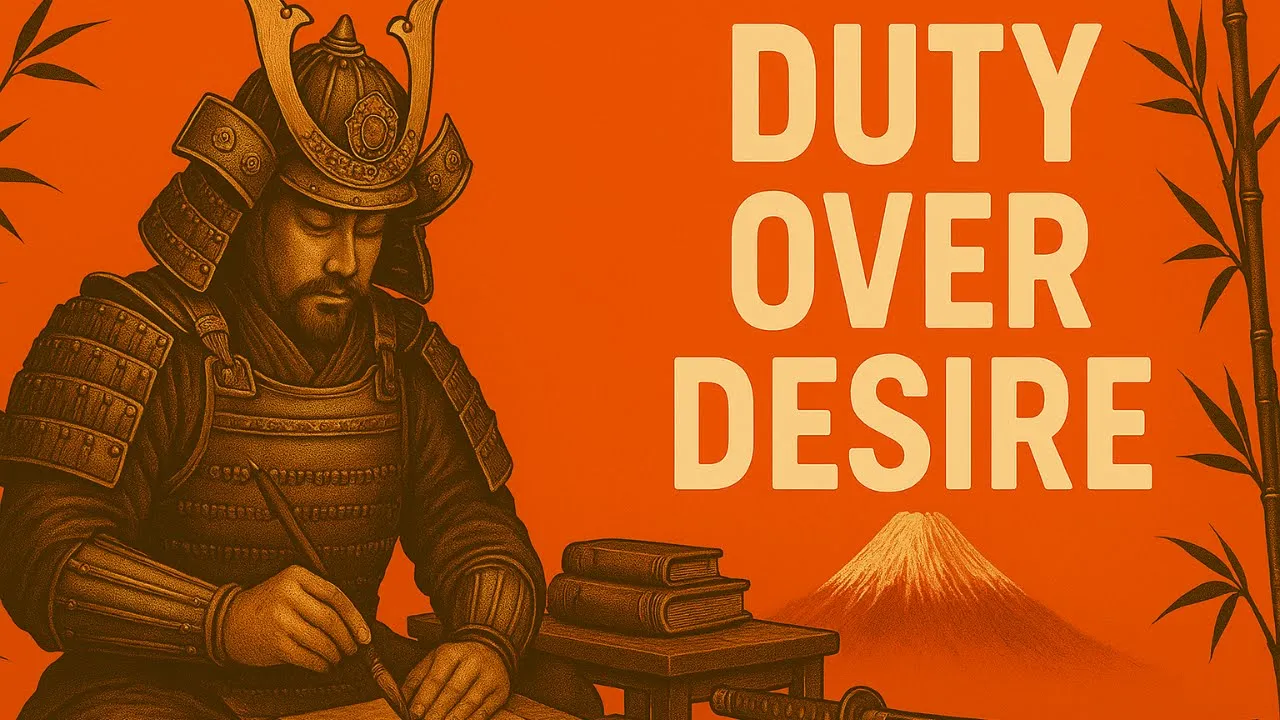
But the original essence of Yamato Damashi had nothing to do with war or empire. It was about one simple and devastatingly powerful thing, duty over sentiment. Today you'll discover what this ancient concept really means and how it can transform you from someone who knows a lot but does little into someone who simply can't stop taking action.
But first I need to tell you the story of a man who had all the knowledge in the world and no courage to [music] use it. I need to make something clear here before we begin. There are two types of motivation.
cheap motivation which we can call excitement and there is motivation that is important [music] which is the reason for action we can call this second motivation icky guy if you watch the last video on the channel you know what [music] I'm talking about in this video we're going to talk about how the first type of motivation which is excitement doesn't have the power to get you where you need to be making this clear right from the start so there's no confusion in your minds before we go to the video, I invite you to subscribe to the channel, like it below, and comment. What's the action you put off the most in your life? What's the plan you want to achieve and already know exactly what to do, but always stop and seek more knowledge before acting.
Leave a comment, but also help others who comment. Maybe some of them need advice in an area you're proficient in, or something you've dealt with before. Let's create a community of people who help [music] each other and want everyone to improve.
Thank you very much for your time and attention. Back to the video. Chapter 1.
The man who knew everything and did nothing. Year 950, Han period, Japan. Tatayoshi was 24 years old and had already read more books than men of 60.
The son of a noble family, [music] he had access to Chinese classics, Buddhist texts, and the teachings of Confucious. While other young nobles wasted their time on parties and poetry, Tatayoshi [music] studied military strategy, battle tactics, and the philosophy of war. He had a dream to become a great warrior, perhaps even a general who would change the fate of Japan.
But he had a devastating problem. He couldn't act. Every morning, Tatayoshi woke with grand plans.
Today would be the day. Today, he would begin real training. Today [music] he would pick up his sword and train until his hands bled.
But then something would happen. He would find a new book, a text on a technique [music] he hadn't yet fully mastered. And he would think, "How can I train without fully understanding the theory first?
He read, [music] he studied, he memorized, and when he finally felt ready to act, the day was over. Tomorrow, [music] he promised himself. Tomorrow I'll start.
The household servants began to whisper. The other nobles laughed behind their backs. Tadoshi, the warrior of books, they mocked.
He can kill you with knowledge, but never with a sword. The truth hurt because it was real. He had enough technical knowledge to train soldiers.
But he himself had never sweated, [music] never felt the burn in his muscles after hours of training, never faced the real discomfort that turns theory into skill. His father, [music] a stern man who had served as a military adviser, looked at him one day and said something that would break any [music] man. You have the head of a general and the heart of a scribe.
Knowledge without action is worthless. You are [music] a ghost pretending to be alive. Tatayoshi [music] didn't sleep that night.
His father's words echoed like thunder. He knew [music] it was true. All that knowledge, all those years of studying, and he remained exactly the [music] same, weak, hesitant, trapped inside his own head.
The next morning, something different [music] happened. He didn't open a book. He left.
Chapter 2. The meeting in the forest. Tadoshi walked aimlessly through the forest near his family's estate.
The air was chilly. The sun had barely risen. He didn't know what he was looking for.
Maybe clarity, maybe an excuse to get back to his books. That's when he heard it. [music] A rhythmic, repetitive sound, metal cutting through air, wood hitting wood.
He followed the sound to a small clearing, and there stood a man. He must have been around 50, with graying hair tied back in a simple bun, his body marked by old scars. He moved with a wooden sword, performing the same movements over and over, hundreds of times.
The same cut, the same posture, the same breathing. Tayoshi watched, mesmerized. [music] There was no emotion on the man's face, no expression of effort or pleasure, [music] just movement, pure, constant, relentless.
When the man finally stopped, [music] Tatayoshi approached. Master," he began, using the term of respect without even knowing if the man deserved the title. "I've watched you train.
[music] You have a discipline I've never seen. Please teach me. " The man looked him over from head to toe.
He saw the fine clothes, the soft hands, the posture of someone who had never worked a day. "No," he said simply, and began to turn away. "Wait," Tatayoshi despared.
"I've studied all the techniques. [music] I know, Sunsu. I know the strategies of Chinese generals.
I can learn quickly. The man stopped. [music] He turned slowly.
His eyes were hard as stone. You know techniques? Good.
Use them yourself. And he continued walking. Tayoshi felt something burn in his chest.
Shame, [music] anger, desperation. Please, he cried. I need to change.
I need to become more than I am. The man stopped again. [music] This time he was silent for a long time.
Finally, without turning around, he said, "You're going to give up. " "I won't," Tatayoshi replied immediately. [music] "Everyone gives up.
I am not going. " The man turned. He studied Tatoshi's face.
He saw despair there. But despair wasn't enough. Despair was just another feeling, and feelings pass.
But perhaps, perhaps this young noble needed to figure this out for himself. Tomorrow, [music] the man said, before sunrise here. If you show up, I'll consider teaching you.
If you don't, [music] don't ever come back. Tayoshi nodded fervently. I'll be here, [music] I promise.
The man almost laughed, promises, as if promises meant anything. Chapter 3. The first day, Tatayoshi didn't sleep that night.
Every time he closed his eyes, he saw the man's stern face. He heard the voice. You're going [music] to give up.
He couldn't give up. Not this time. He arrived at the clearing an hour before dawn.
It was dark and cold. He waited, shivering, until the first rays of sunlight touched the trees. The man appeared like a ghost without a sound.
Suddenly, he was simply there. He looked at Tatayoshi with something that might have been surprise or disappointment. It was hard to tell.
You came, the [music] man said. It wasn't a compliment. It was an observation.
I said I would come. Words, the man murmured. Today I will find out if you have anything more than words.
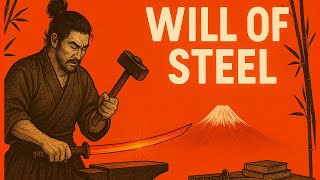
What followed was hell. The man who finally revealed his name as Kaido started simply. [music] A basic stance, crouching, knees bent, back straight, arms extended, holding a wooden sword.
This position, he explained, was the foundation of everything. How long? [music] Tadoshi asked.
Until I tell you to stop. 2 minutes later, Tatayoshi's legs were shaking. 5 minutes later, he was in a cold [music] sweat.
10 minutes later, every fiber of his body screamed to move, [music] to straighten, to stop. Master, I don't. [music] Silence.
Kito cut in. He was sitting on a rock staring at [music] Tadayoshi with the same impassive expression. Your mind is telling you to stop.
It lies. 15 minutes. Tayoshi felt tears in his eyes.
Not of sadness, of pure physical agony. I I can't stop it, Kito said suddenly. Tatayoshi slumped forward, breathing as if he'd run a marathon.
His legs wouldn't stop shaking. [music] He looked at Kao, hoping for what? understanding, encouragement.
What he saw was disappointment. 15 [music] minutes, Kito said. And you already want to give up.
Do you think battles last 15 minutes? Do you think enemies wait for you to get comfortable? Tatayoshi lowered his head.
The shame was overwhelming. "Go home," Kao said, [music] standing up. "You don't have what it takes.
" Something broke inside Tatayoshi. [music] "No, something woke up. " No, he said, forcing himself to stand on shaky [music] legs again.
I'll do it again. Kito looked at him with new [music] interest. You think motivation will save you?
This anger you feel now, it will pass. Tomorrow you'll wake up and you won't want to go back. I'll be back.
Why? Kao asked. It wasn't a rhetorical question.
It was a test. Tadayoshi opened his mouth, closed it. He had no answer.
Why would he come back? Because he wanted to be a warrior. Because he was ashamed.
These were feelings. And Kao was right. Feelings pass.
You don't know, Kao said. And because you don't know, you won't last. He began walking away.
[music] Wait, Tayoshi shouted. Tell me then, tell me why I should go back. Kao stopped.
[music] He turned around slowly. Because it's your duty. Duty?
Tayoshi [music] repeated confused. Duty to whom? With yourself.
With the man you promised to become. Motivation is a feeling. [music] Duty is an order.
Feelings change with the wind. Duty remains even in the storm. Kaio took another step and then stopped again.
We Japanese have a word for that. Yamato damashi. The Japanese spirit.
It's not about feeling like [music] it. It's about doing it because it's who you are. Chapter 4.
The second day and the first lesson. Tatayoshi returned the next day. Not because he wanted to.
[music] His entire body achd. His legs could barely support his weight. Every muscle protested.
But he remembered Kao's words. Duty remains even [music] in the storm. Kao was there waiting.
This time his face showed something different. Not approval, [music] but recognition. You're back, he said.
I said I'd be back. Yesterday you said it with emotion. Today you say it with weariness.
Which is truer? Tayoshi [music] thought. Today, he admitted exactly.
Yesterday you were motivated. Today you're doing your duty. One disappears, the other doesn't.
Kao made him assume the same posture as [music] yesterday. This time before he began, he explained, "Yamato damashi isn't something you feel. It's something you do [music] until you become who you do.
I'll teach you. " "What did you [music] study in the books? " Kao asked as Tadoshi held his posture.
"Battle strategies? " [music] Tadoshi replied through gritted teeth. "Tacts, formations, and that made you a warrior?
No. Why not? Tatoshi didn't respond immediately.
[music] He was focused on the pain. Because I didn't act. Partially correct.
Kao said, [music] "Chinese knowledge. All that studying you did is valuable. The classics teach strategy.
They teach [music] wisdom. But there's an old saying, knowledge is of little use without Yamato Damashi. " Tadoshi felt [music] his legs start to tremble again.
Do you know what that means? Kao continued. It means you can know how to win every battle in the world.
But if you don't have the soul to show up on the battlefield, that knowledge is worthless. Yamato Damashi is the soul that turns knowledge into action. It's the [music] spirit that keeps you moving when every part of you wants to stop.
Tardy's legs gave way. He fell. 20 minutes this time.
5 minutes more than yesterday. [music] Kao nodded. Progress.
Not because you've gotten stronger. Your body is weaker than it was yesterday. [music] You've progressed because you've learned that pain isn't the enemy.
Hesitation is the enemy. Centuries later, [music] a human behavior researcher at the University of Tokyo who studied samurai culture for more than 15 years would explain the concept of Yamato Damashi during the Han period was [music] not about militarism. It was about the distinction between imported intellectual knowledge and innate [music] practical wisdom.
The Japanese recognized that studying Chinese theories was important, but without the ability to act decisively, without the spirit, that knowledge remained sterile. [music] It was the difference between knowing about swimming and actually swimming. Chapter 5.
The lesson of the river. Third day, Tatayoshi arrived just in time for dawn. Kao [music] was waiting, but this time they didn't stay in the clearing.
"Today you'll understand the difference between doing it when you want to [music] and doing it because you have to. " Kito said, "Follow me. " They walked to a nearby river.
The water was fast and cold. Kao pointed to a rock in the middle of the river. "You will stay on that rock, fighting stunts, until I tell you to leave.
" Tatoshi looked at the icy water. For how long? Until you understand.
Tatayoshi stepped into the river. The water was so cold it cut like knives. He jumped onto the rock, [music] slipped, almost fell, but managed to catch his balance.
He assumed his stance. The water lapped at his legs. [music] The cold was unbearable.
5 minutes and he was shaking uncontrollably. 10 minutes and he couldn't feel his feet. [music] 15 minutes and he was starting to panic.
Every cell in his body screamed, "Get out of here! " He looked at Kaio on the shore. The old man sat motionless, staring at him.
"Master! " Tayoshi shouted. "I can't take it.
" "Your ancestors endured," Kao shouted back. "They stood on battlefields for days. They marched with open wounds.
They fought until their last breath. And you can't handle cold water. " "But why?
" Tadayoshi shouted [music] back. Why do I have to do this? Because it is your duty, Kito roared.
His voice echoed [music] through the forest. You asked me to teach you. You promised to become a warrior.
That's not a request. It's a declaration, and declarations demand duty. Tatayoshi closed his eyes.
Tears streamed down his face, mixing with the river water. He thought about [music] giving up. He thought about leaving.
It would be so easy. But then he remembered his father's face. You have the mind of a general and the heart of a scribe, the laughter of the other nobles, the warrior of books.
All those years studying, [music] reading, planning, and nothing changing. He wasn't that man anymore. Not now, not here.
The cold [music] remained, the pain remained. But something shifted inside him. [music] He stopped fighting it.
He accepted it. I'm here because I choose to be. [music] I stay because I must.
He didn't even realize how much time passed. Kito eventually shouted, "Get out! " Tadoshi jumped off the rock.
His legs were barely responding. Kaiito helped him out of the river and led him to a fire that was already lit. 45 minutes, [music] Kaio said.
"You stayed 45 minutes. " Tadayoshi stared at him in disbelief. It felt like hours.
[music] Do you know what happened there? " Kaido asked. "For the first 15 minutes, you fought the discomfort.
It exhausted you. Then something changed. You stopped fighting.
You accepted that the cold was your duty. And when you accepted it, paradoxically, it became easier. Not because the pain lessened, but because you stopped adding mental suffering to the physical pain.
" Kao added fuel to the fire. This is Yamato Damashi. It's not about not feeling.
It's about not letting feelings dictate [music] your actions. Did you feel cold? Yes.
Did you feel like leaving? Yes. But you stayed because duty doesn't negotiate with discomfort.
Chapter 6. The master explains the origin. That night, Kao allowed Tadayoshi to return home early, but first they sat by the river listening to the rushing water.
Do you know why I taught you about Yamato Damashi? Kaiito asked. Tatayoshi shook his head.
Because you're exactly the kind of man this concept was created to save. Kao looked up at the stars. [music] Centuries ago, our elite studied the Chinese classics, Buddhism, Confucianism, strategy, [music] philosophy.
They were brilliant men. But many of them were like you. They knew everything and did nothing.
Knowledge without soul, theory without practice. It was then that our ancestors realized something. [music] They needed a word to describe what separated the men who just knew from the men who actually did.
It wasn't enough to have kazukai, Chinese knowledge. You needed to have Yamato damashi, the native spirit, the soul that makes you act even when you don't want to. It wasn't about being anti-Chinese or anti-forign, Kao continued.
It was about recognizing that knowledge is the tool, but spirit is the craftsman. You can have the best sword in the world, but if you don't have the courage to wield it, it's [music] just pretty metal. Tadayoshi absorbed every word.
Do you know what [music] truth those ancients discovered? Kao asked. That practical wisdom, the ability to solve real problems, [music] to make decisions under pressure, to act when action is necessary, doesn't come from books.
It comes [music] from doing, from showing up, from doing your duty when every part of you wants to run away. Yamato damashi was this. The difference between the scholar who debates war and the warrior who fights in war.
Between the poet who writes about courage and the man who acts with courage. Between you 3 days ago and you now chapter 7, the great temptation. Week two.
Tadoshi [music] had made progress. He could hold poses for longer periods. His muscles were beginning to respond.
[music] But then came the real test. It was the full moon festival. All the elite would be there.
[music] Music, poetry, sake celebration. Tatayoshi was invited. [music] The night before he could barely sleep.
Not from excitement, from internal conflict. He'd trained seven days straight. One night wouldn't make a difference, right?
He deserved rest. He deserved fun. On the morning of the eighth day, he did not appear in the clearing.
Kao waited. He watched the sun rise completely. Tadayoshi didn't come.
Tadayoshi was at home sleeping after a night of partying. [music] When he woke up, it was already late and guilt crushed him immediately. He had broken [music] down after a week after all those promises.
The next day, he went to the clearing expecting to find it empty. Kito [music] would be so disappointed he probably wouldn't come anymore. But Kito was there waiting.
His face didn't show anger. It showed something worse. Sadness.
You missed [music] it, Kao said. I'm It was the festival. I silence.
Kito cut in not angrily, wearily. You don't owe me an explanation. You owe yourself one, [music] and you failed.
Tadoshi felt tears well up in his eyes. I'm sorry. Please let me continue.
It was [music] a mistake. It was a choice. Kaiito corrected.
You chose comfort over duty, pleasure over promise. And you know [music] what that proves? That you still don't understand Yamato Damashi.
You still think it's about doing it when it's convenient. Kito [music] started to turn to leave. Wait.
Tayoshi begged. Give me one more chance. I understand now.
[music] I really understand. Do you understand? Kaio turned.
Then explain to me what is Yamato Damashi? Tatoshi took a deep breath. It's it's [music] doing it even when you don't want to.
Partially correct. Continue. It's duty [music] over feeling.
That's a consequence, not an essence. Deeper. Tadoshi closed his eyes.
He thought of everything he had learned. The cold of the river, the pain of the postures. And then he [music] understood, "It's who you are, not what you do.
It's your identity. When I break it, I'm not breaking a habit. I'm betraying who I declared myself to be.
" Kao was silent for a long moment. Then he nodded. "Now you're beginning to understand.
" "Yesterday you chose pleasure," Kao continued. "Today you must choose consequence. Every choice has a price.
Yesterday's price is paid today. What Kaio did next completely broke Tadoshi. He made him hold the pose for 2 hours non-stop.
No mercy. As Tatayoshi fell trembling and crying, Kao said, "This pain, you chose it yesterday. When you break your duty, [music] you don't escape consequences.
You only postpone them and they come back worse. " It was at that moment that Tatayoshi realized something that [music] would change his entire understanding of discipline. The problem was never not knowing what to do.
The problem was that he was playing the [music] wrong game. Chapter 8. Identity not action.
The next day, Kao began teaching differently. Instead of focusing on physical training, [music] he made Tatayoshi sit. Do you think discipline is about doing difficult things?
Kao asked. It is not. No, discipline is about being someone for whom these things are non-negotiable.
[music] There's a huge difference between I should train and I am someone who trains. One is [music] desire. The other is identity.
Kao drew in the dirt. Look, when you [music] say I want to be a warrior, you're creating distance between who you are now and who you want to be. This [music] distance allows for negotiation.
I want to but not today. I want to but I'm tired. But when you say I am a warrior, there is no distance.
There is no negotiation. Warriors train not because they want to because it's what warriors do. It's identity, not choice.
Tatoshi felt something click in his head. So Yamato Damashi isn't about forcing action. Exactly.
Kao smiled for the first time in weeks. Yamato damashi is about embodying an identity so [music] completely that the action flows naturally. You stop asking, "Should I?
" and start simply doing it because it's impossible not to. It's who you are. Think of the great warriors of the past, Kao [music] continued.
They didn't wake up every day deciding whether to train. That question didn't even exist. They were warriors.
Warriors [music] train. It's that simple. The problem with your book knowledge wasn't that you had knowledge, Kito explained.
[music] It was that you identified yourself as a scholar who wanted to be a warrior, not as a warrior who studies. Do you see the difference? Tadoshi [music] saw clearly for the first time.
In the coming months, Kito said, [music] "I will teach you how to change your identity. Not through thought, through repetition so consistent [music] that your body and mind have no choice but to accept you are no longer who you were. Chapter [music] nine.
The transformation. The following months were brutal. But something fundamental changed in Tadayoshi.
He stopped negotiating with himself. Kao taught him a simple principle. Decide once, act a thousand times.
Tadoshi decided who he was, not who [music] he wanted to be, who he was. And then he lived as that person without question for 90 days. Every day before sunrise.
No exceptions. No, just not [music] today. No, I'm too tired.
The question, "Am I going to train today? " [music] simply no longer existed. Of course, he would.
Warriors train. And he was a warrior. Something strange started happening in week six.
Tatayoshi would wake up before his alarm. His body would automatically begin preparing. By week 8, he realized he no longer thought about training.
He simply showed up. Kaio watched with satisfaction. See what happened?
Your brain finally accepted it. [music] You're not forcing it anymore. It's flowing.
But the real transformation came on day 63. Tatayoshi woke up sick, fever, body aching, mind foggy. The ancient voice whispered, "Today you must rest.
" He got up [music] anyway. He staggered into the clearing. Kao was there and immediately saw his condition.
"You're sick," Kao said. "I am. " "Why did you come?
" Tayoshi replied without thinking. "Because that's who I am. " Kaiito smiled.
Not a small smile, a huge smile of genuine pride. Now you understand. [music] Yamato Damashi isn't about being strong.
It's about being unshakable. [music] Not in power, but in identity. Go home, Kao said gently.
Rest today, but you've already proven [music] your point. You didn't come because you had to prove yourself to me. You came because you can't help but come.
You've changed. Tatoshi returned home, but something had fundamentally [music] changed. He didn't feel guilty about resting because it wasn't a break.
It was strategy. Warriors rest to fight better tomorrow. Weak [music] people rest because they're afraid to fight.
The difference intention, [music] identity, purpose. Chapter 10. The final lesson.
Day 90. Three months of non-stop training. Tatay Yoshi was no longer the same man.
[music] Physically, he was transformed. Muscles where there had been softness, calluses where there had been soft skin. [music] But the real change was invisible.
Kao sat him down for the last time. You've completed your ango, your intensive training period. Now, I'll tell you the truth you needed to discover for yourself.
Yamato Damashi was never about training. It was about death and rebirth. The Tayoshi who arrived here 3 months ago, that man who knew everything and did nothing, [music] he died.
Every single day when you woke up and chose duty over comfort, you were killing him and being born a new. The books you read weren't wrong. Kao continued, "The knowledge you have is valuable, but knowledge without a soul is a corpse.
Beautiful perhaps, but dead. Yamato Damashi [music] is the soul that animates knowledge. It's what transforms information into wisdom, theory into practice, [music] intention into reality.
Kao stood up. There's one last thing I need to show you. He led Tatayoshi to an open field.
There, waiting were 20 armed men, soldiers, real warriors. These men, Kao explained, are from a nearby clan. They need an instructor, someone who understands strategy, but has also proven they can execute.
Someone who has Yamato Damashi. Tatayoshi looked at the men then at Kaio. You are recommending me.
No. Kao [music] said, I'm handing you your duty. You spent 3 months learning to be a warrior.
[music] Now you will teach others to be warriors. Not through books, though your books are useful. Through example, through identity, through Yamato Damashi.
Tatayoshi felt something tighten in his throat. I I don't know if I'm ready. No one is, Kao said.
But warriors don't wait to feel [music] ready. They show up and become ready through action. You know that now.
Chapter 11. The true meaning. Kao pulled Tayoshi aside before introducing him to the soldiers.
Let me tell [music] you something about Yamato Damashi that few understand. There's an old saying our ancestors used to [music] say, "Knowledge is of little use without Yamato Damashi. " You've heard this from me before, but now I'll explain why it matters so much.
For a while, Kao explained, "Our elite were obsessed with Chinese culture. " And it was true the Chinese had incredible knowledge, philosophy, strategy, art. But some Japanese nobles began to realize a problem.
They knew all about war, but had never fought. They knew all about governing but couldn't make difficult decisions. They knew all about courage but had never tested it.
They had karazukai Chinese knowledge but they did not have yamato damashi the spirit to use that knowledge and knowledge without spirit is useless. You were exactly like that 3 months ago. Kito [music] said looking tadoshi in the eye.
You had all the knowledge of military strategy from the Chinese classics. You could quote Sununsu, debate tactics, explain formations, but [music] you had never sweated, never felt your muscles burn, never forced your body to do something your mind told you was impossible. Your knowledge was dead because you had no soul to animate it.
[music] Kaio continued, "Yamato Damashi doesn't reject foreign knowledge. He completes it. He takes theory and turns it into practice.
[music] He takes I know and turns it into I do. " That's the true meaning of the [music] concept. Kito said it's not about being Japanese versus being Chinese.
It's about recognizing that wisdom comes from two sources. [music] Intellectual knowledge and lived experience and lived experience. The spirit that makes you act, suffer, persist, transform.
That is Yamato Damashi. Tatayoshi nodded slowly. Everything made sense now.
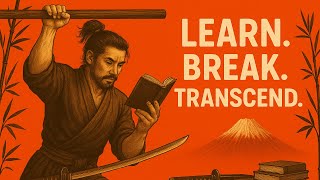
It wasn't about denying his studies. >> [music] >> It was about completing them with action. It was about becoming the bridge between theory and reality.
Now go, [music] Kao said, and teach these men not just what you know. Teach them [music] who you have become. Chapter 12.
5 years later. 5 years had passed since [music] that first day in the clearing. Tatayoshi, now 29, had become exactly what he had dreamed of.
Not just a warrior, a general, a leader who men followed not out of fear but out of respect. He commanded 300 soldiers. He had won three important battles.
But more importantly, he had taught what Kao had taught him. Yamato Damashi. Their soldiers weren't the strongest.
They didn't have the best equipment. But they had something enemy armies didn't. [music] They didn't negotiate.
When the order came, they executed it without hesitation, [music] without internal questioning. Not because they were blind, but because they had an identity. We are Tatayoshi's soldiers, they said.
[music] And Tatayoshi's soldiers don't break. One day, a young recruit [music] came to Tayoshi. He reminded Tatoshi of himself.
Intelligent, studious, but weak. General, the young man said, I read all the manuals. I know all the techniques, but in training camp, I freeze.
I know what to do, but I can't [music] do it. Why? Toohi smiled.
He had waited years for this question. Because he knew that one day [music] he would have the chance to pass on what Kaio had passed on to him. Because you have knowledge without a soul.
[music] Tadoshi said, "Knowledge tells you what to do. Yamato Damashi makes you do it. Come with me tomorrow before sunrise.
I will teach you what no book can teach. And the next [music] day in a clearing in the forest, a new cycle began. A Japanese historian specializing in the Han period who has devoted [music] years to studying the evolution of cultural concepts explains, "What modern people don't understand about Yamato Damashi is that he wasn't anti-intellectual.
He was pro-ction. " The Han elite was so absorbed in [music] studying Chinese classics that it was becoming ineffective. Yamato [music] Damashi was the antidote, not rejecting knowledge, but insisting that knowledge without execution was worthless.
It was a call to complement theory with practice, study with action, thought with movement. Tona chapter 13, [music] Distortion and Return. Tatayoshi lived to be 67.
He saw a lot change in Japan, but he never forgot what Kao taught him. And he never stopped living by Yamato Damashi. But the story of Yamato Damashi did not end with men like Tatayoshi and Kao.
Centuries later, during the period leading up to World War II, the concept was hijacked. Militaristic governments took Yamato damashi, this beautiful concept of complimenting knowledge with action, of having the spirit to execute, and twisted it into something horrific. They said Yamato Damashi meant dying for the emperor, that it meant blind nationalism, that the Japanese spirit was superior to all others, [music] that soldiers should fight to the death not out of personal duty, but out of fanatical obedience.
This wasn't Yamato Damashi. It was propaganda using the name of something sacred. The real Yamato Damashi, the one Kito [music] taught, the one who transformed Tadayoshi, had nothing to do with national superiority.
[music] It had to do with personal superiority, not about being better than others, about being better than you were yesterday. It was about the internal war, about killing the version of yourself that negotiates, that postpones, [music] that knows but doesn't act. and being born as someone who simply executes, not out of emotion, out of identity.
Today, the term Yamato damashi bears scars from this dark period. Many Japanese avoid using it. But the essence, the truth we speak today has never died.
It lives every time someone chooses duty over feeling. Every time someone shows up when they [music] don't want to. Every time someone turns knowledge into action, theory into practice, intention into reality.
Chapter 14. Applying Yamato Damashi. Today, you don't have to be a samurai to experience Yamato Damashi.
You don't even have to be Japanese. Because at its core, Yamato Damashi isn't about culture. It's about universal human truth.
The truth is this. Motivation or excitement is a lie. Motivation is a feeling.
and feelings change with the wind. You're motivated on Monday. Wednesday, you're tired.
Friday, you give up. Sunday, you promise to start again. This cycle kills dreams.
[music] It kills potential. It kills who you could be. Yamato damashi is the answer.
And it works like this. First, stop making promises about what you'll do. Make declarations about who you are.
Don't say, "I [music] go to the gym. " Say, "I'm someone who works out. " Don't say, "I should read more.
" Say, "I'm someone who reads every day. " The difference seems small, but it changes everything. Second, understand that duty is non-negotiable.
When you say, "I am someone who does X," you're not creating a purpose. You're creating an identity. And >> [music] >> identity doesn't have days off.
You don't have a day off from being you. You are you every [music] single day. Third, accept that transformation requires pain.
It hurts a lot to break the cycle of comfort, to try to create good habits [music] and abandon bad ones, to give up your desires. But pain is like a bitter pill. It's uncomfortable at first, but eventually you heal.
Fourth, knowledge without action is an illusion. You can study training for years and remain weak. You can read about business and remain broke.
You can learn about relationships and remain alone. Why? Because you have karazukai knowledge but not Yamato damashi the spirit to execute.
Knowledge shows you the way. Yamato damashi [music] makes you walk. Fifth, consistency trumps intensity.
Tatoshi didn't become a warrior in one day of intense training. He became one in 90 days of showing up every single day. [music] even when sick, even when tired, even when he didn't want to.
Transformation doesn't come from one heroic effort. It comes from a thousand small acts of duty fulfilled. So don't focus on impossible tasks.
Instead of trying to study 16 hours in a single day, focus on studying 3 or 4 hours, but consistently every day without stopping. Don't worry about the number of hours per day. Worry about the number of days you'll maintain that habit.
But there's one final secret that Kaiito taught Tatayoshi only on the last day. A secret that completely changes how you view discipline. And it's something you've probably never heard before.
Chapter 15. The final secret. On the last day of Tatayoshi's training, after a full 90 days, Kao said something that sounded like a contradiction.
Now that you've learned Yamato Damashi, I'll teach you when to break it. Tayoshi was confused. Break?
But you said duty is non-negotiable. And it doesn't negotiate, [music] Kaio confirmed. But there's a difference between breaking out of weakness and adjusting out of wisdom.
Let me [music] explain. Kito continued. Yamato damashi isn't about self-punishment.
It's not about destroying your body or mind in the name of blind [music] consistency. It's about serving your greater purpose, not about rigidly following rules. If you're truly sick, not lazy, but truly sick, resting isn't breaking Yamato Damashi.
It's honoring him because you're resting to serve better [music] tomorrow. Not running away because you don't want to do today. See the difference?
Tadayoshi saw it was about intention. Warriors rest strategically to fight harder. Kao said, "Cowards rest [music] emotionally to avoid fighting.
Same action, opposite intention. The test is simple, [music] Kaiito explained. Ask, "Why am I stopping today?
" If the answer is because I don't want to do it or because it's hard or because I deserve a break, you're negotiating. Kill that thought. Execute.
But if the answer is because my body needs recovery so I can perform better tomorrow, that's not negotiating. It's strategy. [music] Yamato damashi without wisdom is fanaticism.
Kao [music] continued, "Yamato damashi with wisdom is mastery. Never confuse the two. " That was the final lesson and it was the most important one because Yamato Damashi's goal was never to create robots that [music] execute blindly.
It was to create warriors who execute with purpose, who understand that discipline serves something greater. That duty is not a prison. It is the freedom to decide once and live a thousand times without the burden of constant decisions.
Tat Yoshi's story ends. But the truth he discovered doesn't. [music] That truth is available to you now today in this moment.
You don't need more motivation. Motivation is fuel that runs out. You need Yamato Damashi.
You need an identity so strong that action isn't a choice. [music] It's an inevitability. You need to understand that all the knowledge you have, all the courses, books, videos, strategies are worthless without the spirit to execute.
Knowledge is of little use without Yamato Damashi. You need to accept that the person you are now, the one who knows but doesn't act, who plans but doesn't execute, who promises but doesn't deliver, that person has to cease to exist. And it's you who can defeat them [music] every single day by fulfilling your duty.
By taking action when [music] you don't want to, by being consistent when it's inconvenient. And in that person's place, something new is born. Someone unwavering.
Someone who [music] doesn't negotiate. Someone people look at and think, "How does he do it? " And the answer is simple.
He doesn't. He is. This is Yamato Damashi.
It's not a Japanese technique. It's human truth. It's the difference between dreaming and living, between wanting and being, between [music] dead knowledge and living wisdom.
And when you finally understand this, not intellectually but viscerally deep in your soul, you'll realize you'll never need motivation again because you won't be doing things. You'll be being someone. And this person simply cannot help but act.
If this video changed your perspective on discipline and action, I invite you to subscribe to the channel and activate the bell so you don't miss future content. If you're watching on your phone, I invite you to hype the video, too, to help this content reach more people. Remember, knowledge without Yamato Damashi is just dead information taking up space in your head.
Knowledge with Yamato Damashi is the power to transform your life. >> [music] >> The choice is yours, but choose quickly because every day you put it off, the old you grows stronger. And one day it will win unless you defeat him today.
If you've watched this far, thank you very much for your attention. You've already proven that you have something most people don't. Now use it.
[music] Take action. Be present. Walk with honor.
Follow the path. See you in the next video.