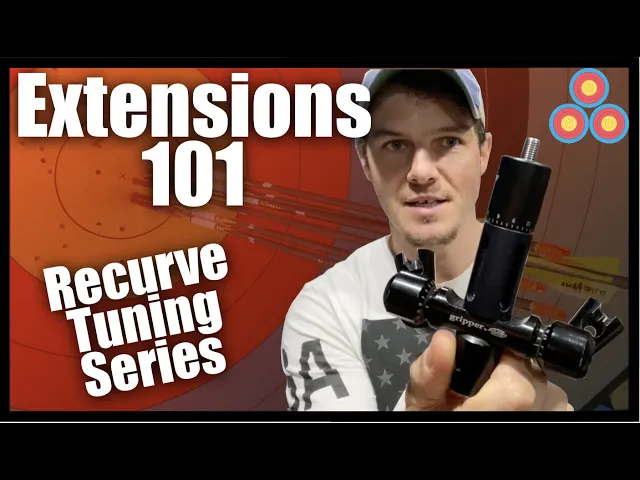
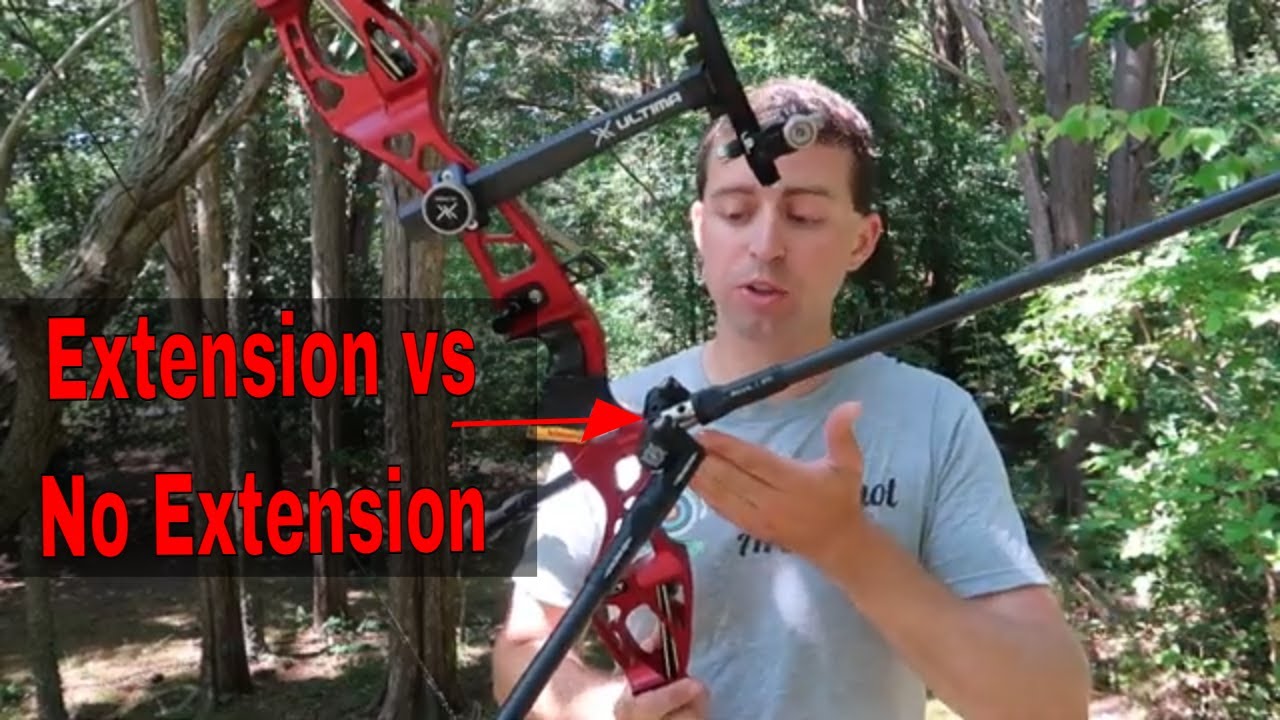
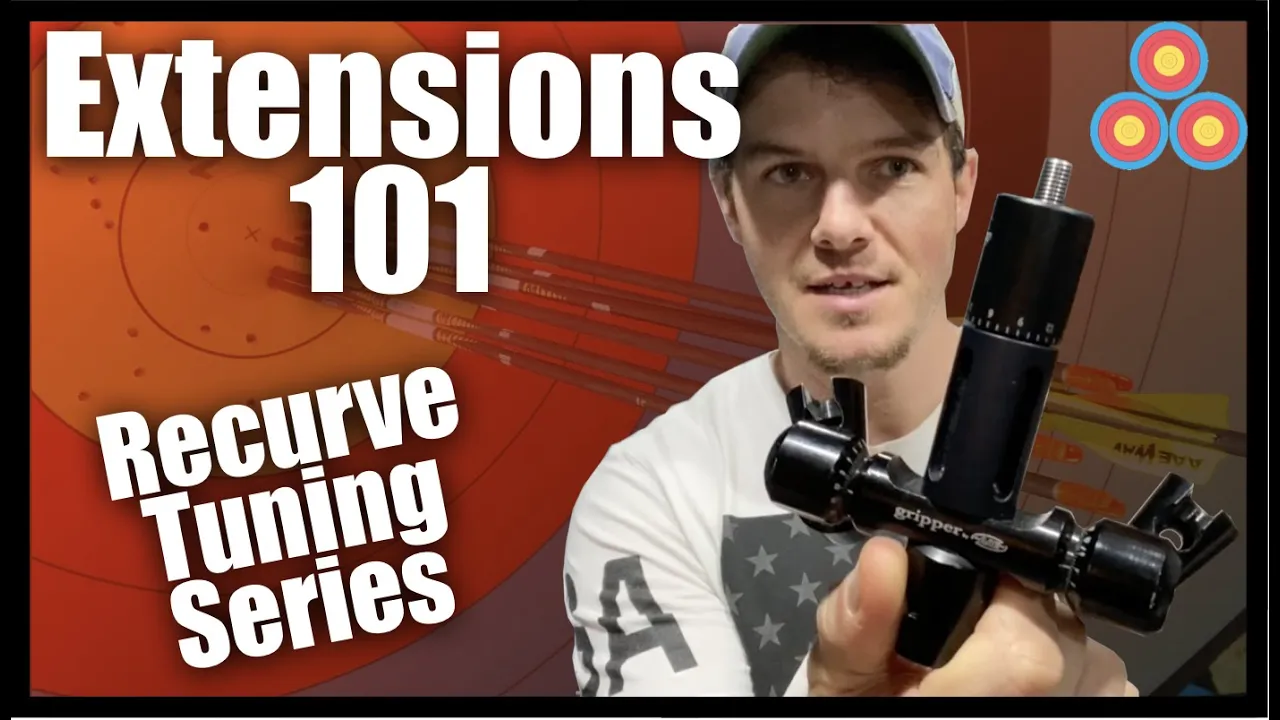
you're watching the Jake Kaminski YouTube channel how's it going I'm Jay Kaminski two-time Olympic silver medals from the sport of archery and today I'm here to talk to you about extensions the good the bad the ugly what to look for some new ones that I've worked on designing and some other features of some other ones before I get into that I'd really appreciate you guys share in this video letting everybody know that I am back out there pushing more content out please hit that subscribe button and the notification about to be notified every time a
new video is uploaded this channel trying to do stuff at least bi-weekly not only am I going to be doing forum stuff and tuning stuff but I also I'm going to get into arrow building tournament prep mental prep physical stuff including some workout stuff some some warm-up stuff some stretching stuff lots and lots of different things you won't be notified unless you hit that notification bell so with that being said let's get into it so the extension is actually in my opinion the most critical part of the entire stabilization system the little bit of experiment
the lot of the experimenting that I've done with my extension has been quite eye-opening as far as how the bow reacts how the bow feels and ultimately how good the bow shoots so I don't know the exact history of the extension I'm gonna assume that recurve shooters or people when the V bars so to side rods started becoming popular and attached to the bow people started using extensions to get that V bar block away from their arm so they'd have room as the bow is swinging but with today's double adjustable V bar brackets and all
that stuff it's really not necessary and even when I had the V bar mounted directly to the riser I never had arm clearances unless I really narrowed these stabilizers up and will put the V bars themselves close together but today we don't have to worry about that in the stabilization video which I'll put a link to up here as well as in the description below I talked about the history of stabilization and how when compounds went from there aiming pattern was this big to this like from old-school stabilization a new school school stabilization and then
their group went from this to this there was a direct relationship between how they aimed like how tightly they aimed and where their arrows impacted in my experience with a recurve my group my aiming pattern went from this so I'm talking 70 metres old-school stabilization my aiming pattern was in the blue in any direction just within the blue that's how big my sight picture was and my groups were you know about the size of the apron once I switched to modern stabilizers my aiming pattern went from the blue at 70 meters to less than the
size of the gold at 70 meters but my groups went from this to this they didn't really change a whole lot so I've always been confused and very intrigued as to why that is why the compounds have a direct relationship between they're aiming pattern in their groups and why recurve does not my theory is that when compounds are at full draw they have a stop to pull against so not only does their draw lengths not change especially when they're like shaking or under pressure or whatever their drawings not changing because they're pulled against a wall
but also the each individual limb is not changing how much pressure it is putting on the bow or the arrow then if you watch a recurve shooter shake not only is their draw length changing so not only are they at full draw and as they're shaking draw length is changing and of course that's exaggerated but also while they're at full draw they're shaking vertically too which is moving the string independent of the riser and each individual limb tip if you watch them they're curling and uncurling different from each other so we're all so we're not
just affecting our draw length but we're also affecting essentially our tiller at full draw while we're shaking while we're exerting on the bow as we're exerting different pressures things like that all that stuff is changing but with a compound it doesn't because they have a wall to pull against so in about 2011 I set out to figure out why the aiming pattern and a grouping pattern did not directly correlate for a recurve when I first started playing with things we were playing with a thin stabilizer not necessarily a thin stabilizer but a weak stabilizer so
weak meaning it was easily bent easy to be bent and to do it with a thick stabilizer like was on the market come that time they would have to make the wall thickness so thin that it would be very very brittle and not very durable at all so they shrunk the outside diameter as well because that also reduces the actual stiffness of the rod itself and we could still keep a higher modulus carbon to keep that durability up so a byproduct of what I was trying to come up with was making the rods thinner and
so I did stumble upon something that was shocking I stumbled upon a self aiming property to where if the bar was weak enough but not too weak if I had a bobble like a wind would blow me or I just have a random movement on the by sight picture the rod would absorb it and then snap me back to where I was aiming but not be so weak that it would snap me past that point I worked quite a bit with AAE to design this one this is the Avant ax and it definitely worked out
quite well as far as that property goes but I still did not see a group pattern get any better I started playing around with extensions like this this is a extension that's made out of a bee stinger it's not the competition series it's the better one the Premier or something like that as far as what this actual rod is but I've stumbled upon this one felt best and we saw the least amount of residual vibration after the shot using this particular bill with a three inch extension with an inch of disconnect in between it got
better when I made it a inch and a half end cap and then a half inch end cap and put the disconnect towards the bow it made it even better but it became so delicate that they broke apart all the time it wouldn't work so this one is one that I shot in the 2012 Olympic Games and it ended up working out quite well but it still didn't answer the question as to what the difference is between compound and recurve I already talked a little bit about the limb tips curling and uncurling so I'm gonna
explain to you why that's important so the idea of stabilisation is to clamp your bow down in space to allow the arrow to be delivered before the bow starts moving again and doing what it wants now that is very helpful with a compound because they have a wall and they have there's no way that they're two limbs can work independently of each other when they're pulled against the wall there's just at the wall and that is what it is with a recurve again not that simple so the whole idea is what if the limb was
here on one shot when I let go compared to here on one shot when I let go they're gonna completely change the way the arrow is being pushed so the modern stabilization system being so stiff so rigid with no rubber damper it is gonna want to clamp the riser and the bow down in space as the arrow is being delivered before it snaps back to its natural position that it wants to be in that is a very good thing for compound again but for recurve I'm not convinced that that's optimal I'm also not convinced that
old-school stabilizing tech with really weak rubber dampers weak stabilizers and the like are also good for it because then it's just letting the bow flop all over the place and do what it wants I believe that it needs to be controlled but controlled just enough to allow the limbs as the arrow is being delivered to kind of recenter themselves and then push the arrow so that needs a little you need a little bit of give within the stabilization system to let the limbs kind of come back to their natural state to then push the arrow
down instead of either being clamped down in the wrong place where the arrow is delivered and then they come back or it's so weak that they're in the wrong place and then they do all sorts of stuff as the arrow is delivered so I hope that that little move movement kind of illustrate what I'm trying to get at so while I was going throughout my experimentation and extensions I was taking a 3 inch extension with a 1 inch disconnect to a 3 inch extension with the uncaps blooded against each other that felt horrible a solid
aluminum one felt horrible one with a weaker rod itself also felt horrible even with the same dimensions just a different modulus carbon in the inside it just didn't feel right I tried it with longer ones go to a four inch with an inch in the center didn't work 4 inch with 2 inches in the center didn't work it just didn't feel the same didn't have that same dynamic feel but this one always felt that way no matter what type of extensions no matter what type of angles on the v bars no matter what type of
dampers all sorts of stuff this one just ended up working the best it felt the best and it definitely grouped better too so when I was trying all sorts of other ones like this is a winning win one it didn't feel good you know there's a million of them out there and this was the only one that I stumbled on that worked well and this one's custom made as you can tell it's been smashed a bunch spent glued broke apart reglued lots of lots of issues the extension sees a whole lot of forces exerted on
it as opposed being you know vibrating as you're setting the bow down as you're breaking it down and putting it back together and ultimately this epoxy just kept failing and I had to keep renewing it myself that just won't work for a consumer so we never really went to market with this specific one the bee stinger did come out with one that was the same dimensions with a different end cap setting because this one kept breaking free but it didn't have the same dynamic feel that this one did for whatever reason so because the the
bee stinger one felt really good in 3 inches but felt terrible and 4 inches you know I know as an archer that there are lots of different preferences out there for different sized quick different sized extensions so I wanted to have it as short as possible because I believe that you know there was some people out there that don't run extensions they run the v-bar bracket directly on the bow and that's okay so I wanted to try to appease to them by running a very having a short one available but also needing to have one
long enough to be available for the people who want the longer extensions as well but I needed the ability to tune it to make it work in a manner that you could adjust it to get the feel that you are looking for and also get rid of that issue when I went from the three-inch be singer to the 4-inch beasting or still didn't feel good so this is what I came up with this is the AAE gold extension here that I came up with and it is it adjustable so you can see it's two pieces
this spot and this spot this spot in this spot are separate of each other they're connected with a 5 16 24 bolt but there's a actual piece of urethane or Delrin depending on what you want to put in there that changes the entire feeling of the system not only that as you can see these numbers here are graduated as well so you can adjust how much preload you have on the actual dampening bushing and the inside here as well I got the idea to try something like this from something that is like 80s archery tech
it's called the TFC I believe it's like a torque torque flight compensator something like that they had two different ones I had a small one and a big one the big one was supposed to be you screw it in between your stabilizer and the bow but because now we're using so much weight on the bows that just didn't work especially with an extension it just kind of drooped and didn't fit right right but I wanted something that was similar to that but rigid enough that I couldn't move it with my hands and couldn't move it
on my bow other than when I'm shooting and you see the dynamic forces on the actual bow so I'll show you the components of this actual extension and then I'll show you how to adjust it and I'll display to you how I can feel what it's doing it's two pieces there's a cone on this side and the opposite cone on this side and then there's this five sixteen twenty-four bolt that is basically collet style locked so you can lock it through a pin that runs through on this side there's a another five sixteen twenty-four they
access through the extension to lock this in place and then in between the two pieces there's two different options this is the Delrin piece which is a piece of hard plastic and then there is a urethane piece which I don't have for some reason I have but I can't find but it basically is the same exact thing but like this piece it's squishy but very squishy it's the same type of urethane that is used in car suspension bushings I forget the actual stiffness or the shore of it but it is weak enough to absorb and
move quite a lot but it is still supporting the stabilization system because of this cone and the bushing itself is very very thin it's not thick at all so what you can do is you can screw them together and adjust your preload with how much is actually how much tension or crush force is on the stabilizing system and therefore how stiff it is you can have it here at zero you can preload and add more and more and more attention it's difficult with the actual Delrin piece but the urethane bushing you can get quite a
bit of adjustment within the urethane bushing to play with how it feels there's a couple of tricks on how to assemble it you know there's these poles here that are drilled for you to slide a I think a 3/16 allen wrench in there so that way when you're tightening it down you know most people will just grab their rebar like this and then tighten it down in their bow but you can't with this one because your gut you can potentially change the tension of it and the clocking of where your B bars are especially if
you don't have this tight enough so that's where these holes are designed for you to stick the extent of the allen wrench in and then use that to tighten down you can see that this one here is has some marks in it already because it's been put on and off quite a few times but the whole idea of what I wanted to accomplish with this extension was to again try to compromise of having stable at old-school stuff that's way too floppy new-school stuffs way too stiff this kind of blends the two together but it controls
the boat just enough it doesn't allow it to flop all over the place this one just gives it that little bit of extra control and the best way to show you it's really impossible to show you here on camera what it does is I will tell tell people to take the extension and hold it like this and then if you take your bow and you hit your limb like this its vibrating because things are loose but when there's an extension and when the stabilizers are on there and you hit it like this you can feel
the bow moving just a little bit independent of the stabilizing system because there's this disconnect here this is a red anodized one this one's a prototype but it's the same thing I have found like I said this the extension is the most critical part of how the bow feels to not just how it performs but how it feels I have seen my scores increase with the AAE extension as I started working with it more and more I'm really happy with how it turned out unfortunately I kind of left the archery industry before it could really
get fully implemented but if you're ever at the specifically like the Arizona Cup or anywhere that a is booth I bet you they'll let you try their extension they'll put it on your boat for you and even go to the practice range and see how it feels totally changes the way the boat sounds totally changes the way the boat feels I'm really really really happy with it and I would definitely recommend it as far as other extension goes other extensions go they all will work they're just extensions I don't think that there's any that are
tunable or changeable or adjustable to make your bow feel better and shoot better for you thanks for watching be sure to subscribe and hit that notification bell so you get notified every time a new video is uploaded for seminar and book code info head to Jay Kaminski comm or click on the link below and yeah I appreciate you guys watching if you would please share this video and really help get the word back out that I am back out there thanks again take care