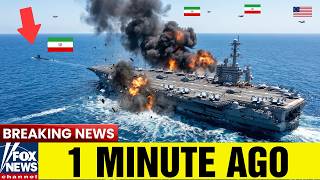
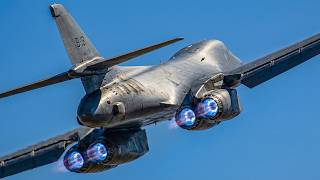
USB two spirit stealth bombers from Whiteitman Air Force Base have delivered a devastating blow to Iran's underground missile facilities. >> The nightmare of the Iranian regime has become a reality as B2 spirit stealth bombers returned to the theater, obliterating multiple strategic sites across the country. One of the boldest military operations in world history began silently.
On the runway of Whiteitman Air Force Base in the rural heart of Missouri, the most expensive and most mysterious war plananes in the world were waiting quietly. Each worth 2 billion, only 19BB two Spirit stealth bombers. At midnight, the engines started.
The pilots completed their final checks and clearance was granted for a 37-hour journey of retaliation. These aircraft are not ordinary bombers. They are ghosts unseen by radar.
undetectable by air defense systems. Their fuselages are coated with a special nano layer that absorbs radar waves, making them appear like invisible angels of death gliding across the sky. Their targets were Iran's underground ballistic missile facilities hidden deep beneath mountains and long promoted as untouchable and invulnerable.
These ghosts that took off from rural Missouri would appear over Iranian skies 37 hours later and no one would see them. No one would stop them. Before going into the details, we have a request from you.
Organized comments coming from pro-Iran regime accounts are seriously affecting our independent analysis work in a negative way. Your support is not only morale, it is a real force that enables us to continue these efforts. Liking the video, leaving a comment, and subscribing ensures that these analyses reach a wider audience.
We thank you in advance. And now we continue. Each B2 was loaded with 2,000 lb, approximately 97 kg GBU31 guided bombs.
These bombs were specifically chosen to penetrate the reinforced shelters that Iran had constructed beneath mountains. By refueling midair, the aircraft reached a range of 10,000 nautical miles and infiltrated Iranian airspace in an uninterrupted flight. In the second phase of Operation Epic Fury, the B2 struck at the heart of Iran's ballistic missile program.
Targets included missile launch ramps, underground depots, and command centers of the Islamic Revolutionary Guard Corps. After the operation, US Central Command Sentcom stated, "Last night, B2 stealth bombers equipped with one-ton bombs struck Iran's fortified ballistic missile facilities. No nation should ever doubt America's resolve.
Now, we must explain what the B2 Spirit truly is. Because this aircraft is not merely a bomber, but a technological marvel that has remained in service since 1989 and through continuous modernization has managed to remain one of the deadliest weapons in the world. It has a flying wing design, meaning it lacks the classic fuselage and tail structure.
Developed with stealth technology, its invisibility on radar screens is its defining feature. It has a wingspan of 52 meters and a maximum takeoff weight of 170 tons. With a single aerial refueling, its range can reach 10,000 nautical miles.
It can carry up to 20 tons of bombs. It has the capacity to carry 8,500 lb JDM or up to 16 nuclear bombs. In this respect, it is considered one of the fundamental pillars of the United States nuclear deterrent strategy.
The B2s are used exclusively by the United States Air Force, each costing approximately $2. 1 billion. Only 21 were produced and 19 remain active.
The bombs used in this operation were the 2,000lb GBU31 guided bombs. However, for even deeper targets, B2s can also carry the 30,000lb GBU57 massive Ordinance Penetrator, MOP, bunker buster bombs. These bombs can penetrate 60 m of concrete, powerful enough to pierce nearly a 20story building.
The development of these bombs took years, and they were specifically designed to target Iran's deeply buried nuclear facilities. Each MOP bomb costs approximately $3 million and can only be carried by the B2. Many of the facilities Iran constructed beneath mountains would be impossible to strike without such bombs.
When examining the details of the operation, an incredible logistical achievement emerges. Four B2s using the call signs Pro 41 to 44 took off from Missouri. They crossed the Atlantic Ocean, refueled over European skies, and reached the Mediterranean.
In total, they remained airborne for 37 hours. During this time, the pilots took turns sleeping on a small bunk behind the cockpit, used chemical toilets, and ate meals heated in a microwave. Depending on the mission type, F-22 or F-35 fighter jets providing air superiority accompanied them.
Tanker aircraft conducted mid-air refueling for the long range mission. Additionally, intelligence and surveillance aircraft provided safe route and targeting information before and during the mission. After completing their task, the aircraft landed at DAS Air Force Base in Texas.
These ghosts that remained airborne for 37 hours returned after reducing Iran's so-called untouchable facilities to rubble. Each refueling lasted only 15 minutes, during which dozens of tons of fuel were transferred into the B2's tanks. The pilots had to capture fuel booms measuring meters in length in the darkness of night under limited visibility conditions.
This is considered one of the most challenging flight maneuvers in the world. Upon entering the Mediterranean, several NATO countries opened their airspace and provided additional tanker support. Spain, Italy, and Greece allowed the aircraft to transit through their airspace.
Turkey, however, kept its airspace closed, forcing the aircraft to follow a more southern route. A US defense official stated that four B2 bombers flew from the United States to Iran and back, dropping dozens of one-tonon bombs on underground ballistic missile facilities in Iran. The bombs first penetrated the concrete and then detonated inside.
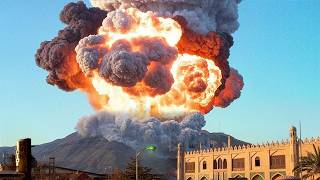
The missiles, fuels, and warheads stored within were destroyed instantly. Iran's yearslong secret missile program turned to ashes in a single night under the shadow of the B2s. Satellite images showed massive craters at the foothills of the mountains where the facilities were located.
In some areas, fires had still not been extinguished. Why the B2 and why now? The B2s were sent not to penetrate Iran's air defenses, but to ignore them entirely because you cannot strike what you cannot see.
There are several key reasons for choosing the B2. First, invisibility. The B2 can evade even the most advanced air defense systems in the world.
Russian S400 systems and the older Soviet systems in Iran's possession. None can detect the B2. Second, penetrating power.
The 2,000lb bombs can breach reinforced underground shelters. For deeper targets, the 30,000lb MOP bombs stand ready. Third, range.
B2s can take off directly from the United States and conduct missions without relying on regional bases, providing a significant logistical advantage. There is also a political message dimension. The use of B2s demonstrates how seriously the United States takes this matter and how much power it is prepared to employ.
This is a message not only to Iran but to the entire world. The United States does not hesitate to use its most powerful weapons when necessary. Following the death of Ali Kamune, a major power vacuum emerged in Iran.
Among the strongest candidates for religious leadership, Hassan Kmeni, Ibrahim Ricey, and other prominent clerics were also killed in the attacks. This situation raises serious questions about the future of the regime. The assembly of experts is required to convene and select a new leader.
However, most of its members were either killed or the whereabouts of those who survived the attacks remain unknown. Clashes between regime supporters and opposition groups erupted in the streets of Thran. Security forces are struggling to maintain control.
Israeli warplanes simultaneously targeted critical state buildings in Thran. In nighttime air strikes, the presidential office, areas where the security council convened and a building belonging to the 88 member assembly of experts were struck. Subsequently, the assembly of experts building in the city of Quaam was also attacked.
Israeli media claimed that the assembly of experts was targeted precisely while voting on the successor to common. It was reported that both buildings had been evacuated before the strikes. Therefore, no casualties occurred.
However, footage in local media showed that the building sustained heavy damage. The assembly of experts is the authorized institution responsible for determining the country's leader in the event of the leader's death. Those who selected Kamina are now unable to choose his successor.
The building where the assembly convened is now a pile of rubble. Israel's operation marked one of the most significant blows delivered to the heart of Iran. The precision with which Israeli jets struck their targets with missiles indicates a major intelligence success.
It is stated that Israel prepared for this operation for months and through agents inside Iran learned the exact time and location of the assembly's meeting. During the operation, electronic warfare systems used by Israel temporarily disabled Iran's air defense. The Islamic Revolutionary Guard Corps immediately retaliated and released a statement regarding the 11th wave of Operation True Promise 4.
The statement declared that 26 unmanned aerial vehicles and five ballistic missiles were launched at fixed and mobile US military targets in Kuwait, the UAE, Bahrain, and the Straight of Hormuz. As part of the attacks, the Arifjan US base in Kuwait was struck with 12 UAVs. The US military command and control center at Al-Minhad Air Base in the UAE was targeted with six UAVs and five ballistic missiles.
US naval facilities in Bahrain were also hit by six UAVs. Satellite images obtained by Planet Labs and analyzed by the New York Times, showed that several buildings at the US Navy's fifth fleet headquarters in Bahrain, the largest US naval base in the region, were completely destroyed following Iran's attacks. Iran's missiles are striking not only the United States, but also those hosting the United States.
The Gulf is no longer a safe harbor. In the attack on Arifjan base, at least 20 US soldiers were killed and more than 50 were wounded. The base's fuel depots and ammunition stocks sustained heavy damage.
The complete destruction of the command center at Al-Minhad Base has severely disrupted the coordination of US air operations in the region. The fifth fleet headquarters in Bahrain was the brain of all US naval operations in the Gulf. At present, communication systems have collapsed and many ships and submarines have lost contact with the command center.
Iran also targeted fuel depots at the commercial port of Dukam in Oman with drones. The camp of Iranian Kurdish opposition groups located in the Kodsenjac region of northern Iraq was also struck. These attacks demonstrate that Iran will not only target the United States but also other objectives across the region.
US President Donald Trump in a post on his social media platform Truth Social claimed that Iran's air defense systems, air force, navy, and leadership had been neutralized, stating, "They want to talk. I told them it's too late. " In a video message recorded at his Mara Lago residence in Florida, Trump announced that the war had begun and laid out his understanding of victory.
We will destroy their missiles and completely wipe out their missile industries completely. Again, eliminate them. We will destroy their navy.
Omen's mediation efforts and negotiations that had continued until the last moment have now been shelved. Trump said it was too late. The diplomatic table has collapsed.
From this point forward, the war will be fought to the very end. Trump's hardline stance is the clearest signal that the United States will not step back from the war. The president also implied that Iran's nuclear facilities are among the next targets.
Natans, Fordau, Isvahan, they're all next. He said these statements indicate that the conflict is set to expand even further. Brigadier General Ibrahim Jabari, adviser to the commander and chief of the Islamic Revolutionary Guard Corps, IRGC, announced on Iranian state television that in response to US and Israeli attacks, Iran has closed the Strait of Hormuz to maritime traffic and will attack any vessel attempting to pass through.
Jabari stated, "The Straight of Hormuz is closed. We will attack and set fire to every ship that attempts to pass. The ships will be burned by our heroes in the Revolutionary Guard's Navy and ground forces.
Do not come to this region. Oil has reached $82 and the world certainly expects it to reach at least $200. We will also attack oil pipelines and will not allow a single drop of oil to leave the region.
Following the closure of the straight of Hormuz, oil prices surged by more than 20%. Approximately 1if of the world's oil passes through this straight. Oil shipments from Saudi Arabia, Kuwait, Iraq, Qatar, the UAE, and Iran have nearly come to a standstill.
Every tanker stranded in Hormuz signals a new wave of crisis for the global economy. This rise in oil prices is deeply shaking the global economy. In the United States, gasoline prices have hit record highs while inflation in Europe has begun to climb again.
Asian countries are experiencing serious difficulties in energy supply. China and India are searching for alternative supply routes, but existing infrastructure is insufficient. The World Bank has warned that if oil prices remain at these levels, a global recession may occur.
Looking at international reactions, Russian President Vladimir Putin described the killing of Ayatollah Ali K as a brutal attack. China also issued a statement of condemnation. However, according to experts, Moscow will not take excessive risks for Iran and its support will largely remain at the level of rhetoric.
China continues to be Iran's largest trading partner, but its strategy has consistently been to oppose external intervention while avoiding direct involvement in conflict. Russia and China are allies of Iran, yet they are staying out of the war. Thrron has been left alone in its most difficult hour.
While Russia's support has been limited to rhetoric, China confined itself to calling for a ceasefire at the United Nations Security Council. Neither country has been willing to send direct military assistance to Iran. This situation demonstrates how isolated Iran is on the international stage.
The German Foreign Office summoned Iran's ambassador to Berlin following Iran's attacks against Israel and other countries in the region. The ministry stated, "We clearly warned the Iranian regime to immediately cease its reckless attacks against states in the region. " According to diplomatic protocol, formally summoning an ambassador to the ministry is considered one of the strongest diplomatic warning methods indicating serious dissatisfaction by the host country.
Germany's move signals that Europe may also become involved in the war. President Reichup Taip Erdogan of Turkaya in a condolence message published on March 1st stated, "I extend my condolences to the brotherly Iranian people and convey my sympathies on behalf of my country and nation. " Turkai's statement shows that it is trying to remain neutral in the region while not wishing to completely sever its relations with Iran.
The International Atomic Energy Agency, IAEA, confirmed that damage occurred at Iran's Natan's nuclear facility. Striking this facility, known as the heart of Iran's nuclear program, has dealt a major blow to Thrron's nuclear capacity. IAEA officials stated that the facility will be unusable for at least 2 years.
This means that Iran's uranium enrichment activities have effectively come to a halt. The Iranian Red Crescent announced that at least 787 people have lost their lives in the attacks. US officials reported that three American soldiers were killed and five seriously wounded in the operation.
Among those killed in Iran are numerous members of the Revolutionary Guards, soldiers and civilians. Hospitals are filled with the wounded and blood supplies are nearly depleted. The International Committee of the Red Cross has called for urgent medical assistance to be sent to the region.
Now the sun is rising in Missouri. The B2 bombers returning from their mission stand on the runway. The pilots are exhausted but proud.
The bodies of the aircraft bear the traces of the 37 hours they spent gliding through Iranian skies. On the other side in Thran, there are missile facilities reduced to rubble. The assembly of experts destroyed in Kum and US bases struck in the Gulf.
They took off from Missouri, flew for 37 hours, struck the underground ballistic missile facilities Iran considered untouchable, and returned. Four B2s, four Phantoms. But the wreckage they left behind was the harbinger of an empire's collapse.
Kamina is dead. The assembly of experts was struck. Missile facilities were destroyed.
Iran's retaliation drew Gulf countries into the conflict as well. Hormuz was closed. Oil prices soared.
Russia and China are watching from the sidelines. Trump said it was too late. March 3rd, 2026 has gone down in history as the day the fate of the Middle East changed.
The cost of this operation is also striking. The flight and munitions costs of the B2 bombers alone reached $30 million, while the estimated cost of the first 24 hours of the entire operation exceeded $800 million. However, the damage inflicted on Iran far surpasses this figure.
Experts state that rebuilding Iran's missile program and military infrastructure will take years and cost billions of dollars. So, what comes next? Who will be the new leader in Iran?
Will the United States intervene on the ground as well? How will Gulf countries emerge from this fire? We will see the answers in the coming hours, perhaps days.
But let us already say this. The shadow of the B2s has stretched from Thrron to Moscow, from Washington to Beijing. This war is a turning point that will change not only Iran's fate, but that of the entire Middle East.
With this operation, the United States has sent a clear message to the world. Do not doubt America's determination. Here we have a brief request from you.
Organized and malicious comments coming from pro-Iran regime accounts affect us negatively. Your support is not only morale, but a real force that allows us to continue this work. Liking the video, leaving a comment, and subscribing help these analyses reach a wider audience.
The super thanks or hype button also means direct support. We thank you in advance for your interest, trust and support and we present our respects.