the ocean is often thought of as a silent wilderness but under the surface is a symphony of sound sound that marine creatures rely on for their survival to find food to communicate to navigate the lights vanishes metres below the surface so the sound is really what supports life in water but humans are increasingly polluting the ocean with noise which is posing a threat to creatures from the smallest to the most majestic now we are facing a global issue that affects thousand species this man is at the forefront of the science of ocean sound he's working
to dial down the volume in a bid to protect marine life around the world like I said when Ellie grew so did the dental dilemma in his lab in Barcelona Michele Andre is conducting an experiment with an artificial ear so this is our hydrophone which is the artificial ear that is able to capture all the sounds that will send them to our artificial brain electronics that is inside his housing the underwater microphone is being put through its paces before it's dropped into the Mediterranean Sea the device is part of an ambitious experiment to better understand
how human sound is affecting marine life our perception of sound in the ocean is biased our ear is not made to listen underwater our ear is made to listen in air so for years and years and years we really thought that the sea was a world of silence Michelle's team is carrying out the biggest ever sound survey of the world's ocean dropping hydrophones in multiple locations and at various depths this combination of artificial ear artificial brain press transmission is something that has given us a human being a sixth sense that we didn't have and now
we can listen in to the ocean as if we were dolphins but also we can be anywhere sound is essential to marine life because light doesn't travel further than a few hundred meters underwater thousands of species use it to communicate to find their way around to spot their next meal or ensure they're not someone else's it is a harmony of sound that lived there for millions of years then as human beings we started to introduce different sound artificial sounds through our activities only 100 years ago so this is really recent that we have started to
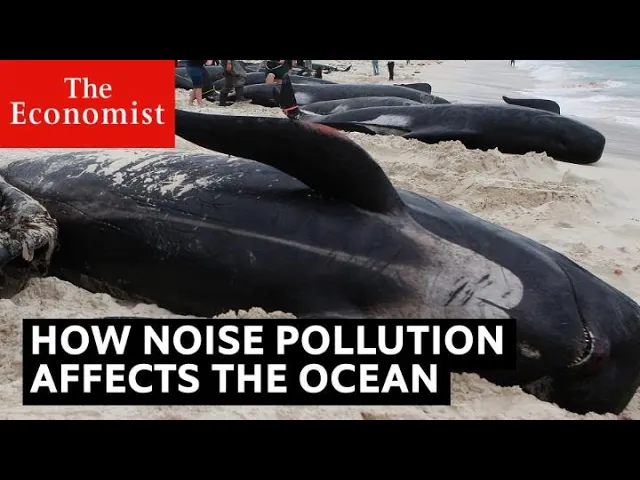
invade with our sound Louis pollution is now recognized as a major threat to ocean life everything that we do in the ocean introduces sound that may have an effect on the environment there are more than 15,000 container ships that sell every day around the world unlike many other threats to the ocean noise pollution is invisible which means it's often overlooked but in 2002 the world started to take notice 14 beacons whales stranded on the holiday beaches of Nan savatya and we're to Ventura it was later discovered that multiple ships and submarines were operating in the
area using sonar pulses of sound used to detect objects underwater this is the first time that we could associate as cost to effective relationship that a noise introduced by the Navy sonar was leading to the stranding of his whales whales talk to each other through a complex language of clicks and whistles these sounds help them to navigate and communicate man-made noises like sonar can disrupt this communication and disorientate them we know how sensitive people are to whales and dolphins totem animals and they were seeing them washed on shore by this human activity for the first
time so this really helped understanding that these noise could have a detrimental effect since this incident the use of sonar has been associated with a large number of whale strandings around the world but while beached whales continue to grab the headlines michelle was keen to understand if other creatures were experiencing the same fate a group of giant squids were found stranded on the beach the post-mortem analysis didn't show any cause of the death what he was about to discover would change scientists understanding of the effects of ocean noise pollution this group of experts realized that
geophysics experiments using high-energy sounds it was performed a few days before this event oil prospecting ships had unknowingly disturbed the ecosystem below them we decided in our laboratory to recreate this situation and we found this massive a protection when we expose this animal to sound although squid don't have ears their bodies contain small organs called stata cysts which are lined with noise sensitive hairs in his lab Michelle and his team discovered that even low intensity sounds destroy these hairs and knock out the squids balance we went through the idea that that was only affecting a
few species the whales are the Dolphins to invertebrates and fish and we are speaking about thousands of species so we cannot anymore consider the effect of noise as species specific but consider it as a global effect to the whole marine environment this revelation has been the driving force behind Michelle's plan to map the soundscape of the entire ocean so the yo shrimps this is the sound of a ship passing by so far he has built and installed 150 listening platforms around the world what we do is we want to identify all the sounds right we
don't want to leave anyone a part of this so we want to know everything to do that we need to train the system to recognize the features that belong to one or another source every sound is being labeled and stored in what is now the world's biggest database of ocean sound using artificial intelligence the sounds in the acoustic library can be identified as natural or man-made and the effects they're having on marine life can be assessed we aim at building trends that reflect the biodiversity of an area if we detect an external event that could
be a ship noise or other human activity that will influence the area in a negative way we will see how this trend changes because of this external factor researchers are trying to pin down the damage that human activity is having on the ocean and they're revealing some concerning trends noise pollution is most prominent in the northern hemisphere every decade noise from shipping has doubled in intensity which has been seen to have an effect on certain species of whale reducing their ability to communicate with each other by about 60% airguns are the most common method used
to map the ocean floor for oil and gas exploration their impacts have been detected 4000 kilometres from the source and have been linked to multiple mass strandings the South Pacific is the part of the ocean with the least human noise the good news is that unlike other forms of pollution the impact from noise is short-lived if we compare sound to other source of pollution as soon as you switch off the sound the effect is gone but not all noise is bad and Michel and his team are trying to ascertain how humans can best carry out
important work while limiting its effect on the ocean [Music] Michel is now working with marine based industries to help them reduce ocean noise pollution in our laboratory which way to understand this effect on the marine environment so we can provide the industry that operates at sea with these tools that will allow them to operate in the same way with a limited effect on the environment solutions include noise reduction technologies to lessen the sound of deep-sea drilling in the renewables sector and potential alternatives to sonar Michel Andres research is shifting Sciences understanding of noise pollution it's
just the beginning but his work could fundamentally change the way in which humans operate on the ocean and coexist with marine creatures in the future [Music] hi I'm Claire and I directed this film if you want to learn more about some of the greatest challenges facing the ocean and the people looking to solve them then click on the link opposite and if you want to watch more of the protector series and click on the other link please subscribe and thank you for watching