hey welcome today thanks for coming out to our class natural stone 101 I'm Rob bacon we're presenting this class in conjunction with the MAA tomorrow to Institute of America and everything you need to know about designing of the oldest building material is what we're going to talk about today that's contact information here one thing we've made a very important point to it within our organization here is that our speakers are certified and they go through a process of training and so anytime you're hearing a course a CEU course from the AMIA you will find that
the circuit the speaker has been certified and that is our little badge to indicate that that training has has occurred so it's very important that our message is consistent and clear and and that's the purpose for it course number AIA ID CEC and so on so be sure to fill out the sign-in sheet that I passed around also if you would please there is the evaluation form so those are sitting in front of you now it's important for us that you do fill those out give us your feedback because that's how we determine whether we've
hit the marker we need to do some improvements or maybe there's new courses we can develop that you have a particular interest in so please if you would fill those out for us we are registered with the IDC EC and we will do the reporting for you you get that information back to me at the end of the course and we pass it along through and the mi handles all the paperwork for you alright so the course here the description of this course here basically what we want to go through today is as an industry
design professional how do we go about you know selecting the proper materials and there's what's important in that is we got to go back to how is the stuff formed so we're going to get into that how is the stuff formed what type of formations and what does that mean for us at the end of the day when we try to use it in a particular application we'll talk about common coring techniques a fabrication methods finishing methods and hopefully by the end of this you'll have some confidence in your ability to at least begin selecting
product for your for your project our learning objectives here today we want to first get an understanding about the composition mineral composition of stone how it affects its use secondly the science of each species of stone and how it's commonly queried fabricated and finished and then we'll get into understanding the resources are available for us in designing with natural stone we've set this course up in a series of modules and so be paying attention here because at the end of each module can have will quiz and so whether or not you've paid attention we can
answer those questions for us is going to determine whether you pass the class so that's how we've broken it up here so may ask first of all how many of you are working with natural stone on a regular basis how many you're designing with stone okay what sort of projects are you working with and it can be you know paving what-have-you awesome so you get you're not completely foreign it's not a foreign concept of stone very good give me a definition of natural stone who knows for that cheating about looking it is natural right it's
natural so we're talking about natural stone it is coming out of the earth and we're not manipulating or if any in any way physically other than to say that we're cutting it into shapes that we want to cut it into unlike engineered products engineered stone cortical almonds etcetera which do contain some natural materials but it's a man-made it's constituted by man and so in that sense we do not classify those those building materials as natural stone so we won't be discussing those today we'll be talking specifically about natural natural stone my favorite slides here we
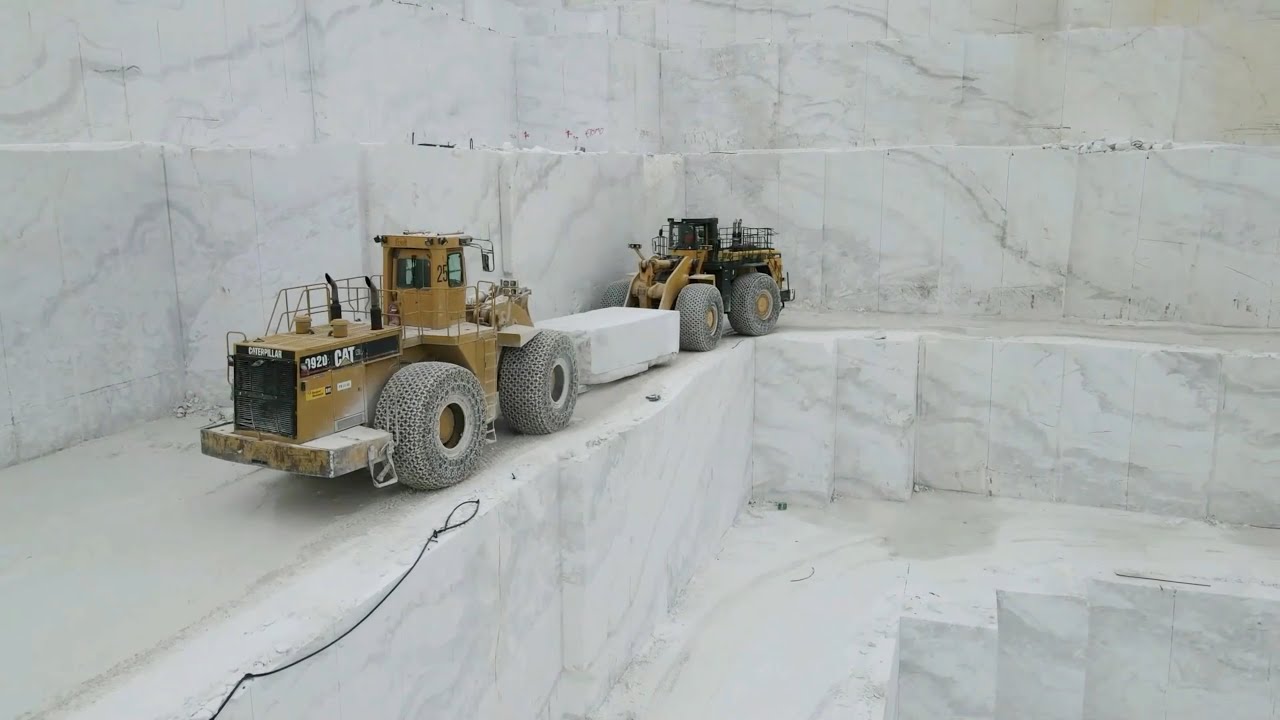
have the quarry New Mexico a travertine quarry I'll usually ask here has anybody been to a quarry or your experience there this is a pretty typical typical quarry we get different varieties we'll get into that a little bit later as far as the different types of quarries but basically as we look at a quarry and we go to figure out what kind of stone it is we have to understand it's basically made up in two different ways any stone is can be classified as either calcareous or siliceous and if it's calcareous it's made up of
calcium carbonate which similar to what you're getting marine chef your marine animal shells eggshells things like that or cilicia stones which are made up of silica or silicon switch is effectively sand or quartz so there's a very important distinction to understand right at the right at the outset once we go from there we talked about the formation of stone so we've got basically three types of formations sedimentary metamorphic and igneous so calcareous siliceous and they're going to be formed in one of these three ways we'll talk about sedimentary first so as the name would imply
sedimentary stones are formed through the processes of erosion d mutation air wind what-have-you glaciers that are taking minerals and they're moving them and depositing them typically in a waterbed lake a large C something along those lines and over millions and millions of years the pressure bonds these different layers together and so what you end up with after those millions of years as a as a stone and it's it's a it's bonded in these layers and one thing that's very indicative of a sedimentary stone is as these layers indicate you've got different strata layering that you
can see very clearly as each layer builds upon the other end and it bonds to each one so that's sedimentary this is a travertine deposit in Turkey classic classic example the formation you can even see the strata layering forming there at the edge of the quarry next we have metamorphic formation which is essentially this occurs within the earth and its heat and pressure over time and as the name implies that material that's subjected to that Eitan pressure metamorphosizes and we can come out with a different type of material than what it started at so that
could be a marble it could have started as a limestone it could have started as any sort of stone but with that with that application of heat and pressure it changes or metamorphosizes and in the last formation igneous and this is effectively igneous fire so think of cooling that cooling lava and we have intrusive which would be it's cooled internally within the earth or extrusive or volkov volcanic which it's left the core of the earth and as it has cooled exclusively or outside of the surface of the earth now just quickly of those about 95
percent of the earth the stone we work with out of the earth is igneous most of it as igneous we get a we get a small percentage on the earth's crust of the limestone and the marbles but most of it is igneous okay so we take this information we put on little matrix here to help us see it a little better we have the calcareous and we have a siliceous types or makeups and then from left the right sedimentary metamorphic and igneous so we start to classify our materials here so calcareous sedimentary we've got our
lime stones our travertine and our onix's which is you probably have seen that sedimentary laying is very is very visible and most of those materials calcareous metamorphic is our marble there is not a calcareous igneous stone and then moving down siliceous sedimentary bare sand stones so this is metamorphic as our slates quartzite serpentines and our soap stones and finally siliceous igneous granite sand assaults generally speaking as we move from left to right top to bottom across this chart these materials tend to get harder and denser as a general rule one thing we're going to talk
about today is these general rules are great but they are general so within each material classification we've got different considerations you have to look at each material individually and assess it so that we can truly understand if it's the right application just because it's a granted it may not be the right application just because it's a marble it may not be the right application doesn't mean all marbles falling but that particular model may not be appropriately so as we're thinking about the stones we want to use there's a number of defining characteristics that we need
to consider some of these qualities include absorption how much water is this going to absorb and how is that going to affect my design if I'm in a cool cold climate I don't want a material with a high absorption rate on the outside of the building because I'm looking at freeze thaw cycles affecting the performance the density is it is it going to be strong enough and dense enough to hold up and that ties into the absorption as well compressive strength if I'm going to use this as a as a stacked stone or if I'm
going to put it down as a paver and I'm going to have fire trucks running over I better understand what that compressive strength is so that I know it's going to hold up abrasion resistance Airport Mall I'm going to put a whole bunch of slime stone down or marble on that floor we need to understand that it's abrasion resistance is adequate it's going to hold up over time flexural strength this is really going to tie more into cladding high you know I've got if I'm going to run at the side of a building I got
to make sure I understand that it's got the bending strength that it's going to hold up it's not something that the wind or even seismic activity are going to have a major impact on and then finally modulus of rupture which ties into flexural it's a little a little bit but these are all the things we need to consider as we go about choosing material isn't working have we run the litmus test with these particular items to make sure that we're that we understand it most of these are we will get in this into the class
but most of these you can you can get the information through the EI ASTM testing so there's a test that will allow us to get results for each one of these on any given material and that's the crucial information that we need to make a final determination anybody heard of the Mohs scale of hardness so this is a this is a it's an interesting visual if we look at it across the board one is talked 10 is a diamond so to put it in perspective basically a knife blades going to hit at five point five
so to give you some perspective as far as the hardness one thing that's really important to remember with the Mohs scale is that it is a test on a specific mineral and so while we might classify onyx marble or limestone as a three or calcite normally Falls or we might put granted at a six or seven where fells bar and quartz test out it's very important to remember that I can't then say that a limestone is indeed a three or a granite is in fact a seven this is where the ASTM 241 the testing of
the abrasion really comes into play because this is neat it's good to know but stone is comprised of a number of these things and so that test that the abrasion resistant test gets us the average across the face of the material so at one point I'm hitting quartz another point I might be hitting some rust iron oxide that isn't going to test out nearly as strong so Mohs is great but it's not something what we don't need to say make sure your granite tests Atomos of seven it doesn't really work that way to see 241
so just indistinct now is like to make with that particular so light and I've seen it that way I've seen it specified it's got to hit a Mohs at seven well how do I test that there is no earlier than a way to do that so but still it's kind of neat you can do a little test too with your knife blade if you wanted to see well do I think it's granite maybe doing out if you run your knife blade it doesn't really scratch it does give you something idea that you are working in
the granite side of things rather than like limestone where it's going to we mentioned absorption and that as a that's affected directly by the stones porosity so one thing that's important as all stone is porous now some stones are more porous than others but all stones and this is looking at the surface or the section of the stone all stones have pores and but it's important to keep it it's relative granite is porous but the pores are small they're tight and so it doesn't mean that it's not good for that particular use but if I'm
looking at a limestone say a French limestone which I referred to as French bread that stuff is quite porous and so I'm not going to use it on the ground outside I just the pores are too big and there's too many of them and again prostate something we can measure with an ASTM test see ninety seven that allows us to understand how much it's absorbing and what does that mean for standard Road so recap test number one our quartz surfacing materials considered natural stones very good nice okay we're the two types of mineral composition very
nice so what's Justin kept curious and then we've got three types of formations give you three formations an example of each yes it's one of them absolutely what's another example of formation yeah that's right exactly very good and finally give me a third one igneous granite very nice we can move on now nice work everybody okay well now that we've gone through module one we've talked about the basic formation and the basic types of stones let's get into some more specifics about each one of those specific types let's start first with calcareous sedimentary limestone okay
limestone - sedimentary rock consisting chiefly of the mineral calcite with or without magnesium carbonate if we add the magnesium carbonate in there we get into an adult oolitic limestone so we've got a new little which is like an Indiana limestone dolomitic as I said has the calcium or at the magnesium carbonate and you can really tell the difference if you were to knock on a dolomitic limestone it's going to get that higher pitched ping and whereas the other lime stones and more classics are going to be a little deader so limestone it's a fantastic product
I really I personally really like working with limestone here's an example of a mole jános limestone quarry in Portugal so it's really kind of a traditional deep pit quarry here and the thing about limestone is it contains a lot of fossils shale formations that's one way to really tell that it is truly a limestone it's got a lot of moving activity with and that's one thing that's neat about limestone is if it does it looks like stone and I've had I've had some really good success using limestone on all sorts of different applications it's soft
enough that you can carve it so you get more classic type architecture as you see here with these columns and you can get it you know if it's vertical we can use a variety of them one thing that's important to understand with it though an example I like to use is I did a project once that was using French limestone which is we talked about the density earlier on with the we can determine from ASTM testing concrete's about 150 pounds a cubic foot which is about a medium density limestone well the French stuff is about
125 so you can almost cut it with a just a regular skill saw don't need a diamond blade so what does that mean that means if I'm going to use it on a wall I have to make sure I've done my engineering and so what we had to do is go to a 2 inch thick module with continuous anchors on this cladding job so just important that we understand that that limestone does sort of run the gamut on on its its density and that affects how we're going to use it but all in all good
product one thing we should note right now with calcareous stones because they are made up of calcium carbonate they the calcium carbonate is susceptible to etching when it when it's exposed to acid so citrus fruits wines vinegars those sort of things so we're showing a countertop here not necessarily the it's a function of the of the end-users expectations but if if we want long-term appearance to look as though it just got installed we need to really consider that in food prep areas limestone may not be with the clients wanting if as in like it's in
Europe or they really don't mind the patina that comes from that from the exposure to food prep and staining would have you then then it's okay but by and large in us we kind of like things to be just so especially on big commercial work so just just important to set the expectation early on with our customers this is a example of a limestone cladding project in Long Island New York so it again very versatile we're able to use limestone in a lot of different ways it's just important that we understand what's that which limestone
it is and that we've done our due diligence and determining that it is appropriate all right in the same family as limestone is travertine again calcareous sedimentary very very similar it's effectively a limestone the difference being that where it formed so it formed by chemical precipitation from solution in surface and ground waters near the mouths of Springs and caves things like that so you start to see in travertine the bug holds as I call them the little holes where all that water has percolated through them through the years of centuries and that gives it its
appearance that's what makes travertine travertine but again it's something we need to be careful of in terms of how we're going to use it doing our homework desert gold quarry in Belem New Mexico one thing that we need to be very clear on with travertine is it has pronounced anisotropic properties and effectively anisotropic means it's going to be much weaker in one orientation than in the other so if I take if I use the analogy of a deck of cards the deck of cards you stack them vertically that's sort of like as we take a
block of travertine or any sedimentary stone out of the ground if we slice it like a deck of cards that way that's called a crosscut and it's going to look more cloudy and it's a little stronger than orientation but if I cut vertically through that deck of cards I'm now cutting in a vein cut orientation where I'm going to see all that sedimentary layering it's beautiful but it's weaker along that axis so it's just important to understand that not something that's insurmountable when I was important we did a 15,000 square-foot travertine job large panels three
foot five foot 3cm tested it out the flexing the ASTM CA a flexural testing all all gave us the green light to go ahead and use it outside with a vein cut so it's just important to know that it's going to be weaker in that orientation than it would be in a crosscut so that is what anisotropic means as I mentioned it's going to include holes and that means what do I need to take into consideration in my application is it going on the floor well that's fine we're probably going to fill those and often
the fill is used with is a grout cementations grout or an epoxy one thing to note with that poxy is a little more expensive and it's limited generally to certain countries not all countries that produce travertine have the the ability to do epoxy fill so Turkey for example it's going to be Semin Tisha's Mexico is going to be a cementation fill Italy on the other hand they're going to be able to do or apply an epoxy based so important to note one other thing with travertine that's important to note is if I'm going to use
it on a floor it is a higher maintenance stone than most other stones because of these holes and what we have here is as we cut that we can see certain holes but we don't know how many holes are existing below that and so if we get a high heel we get a point load on that floor there are places where you're going to see some failure the nice thing it is very easy to fix it's not the end of the world but it is something to make your end-user aware of that it is it
is something to be ready to address getting museum lots of travertine so it's great you can use it outside if you've got the right product walnut right here on a fireplace another great example here of the commercial lobby application in noche travertine and that is travertine ok calcareous sedimentary onyx alright this is a compact crypto crystalline generally translucent variety of calcite usually deposited in cold water solutions these are CELAC tight stalagmites these are formed in caves and it's really a in my mind it's more of an aesthetic material than anything else here's an onyx quarry
and Turkey got to be careful with onyx because it is exceptionally vulnerable to chemical and mechanical attack so I'm going to be very careful I'll use it on top of that it's fairly expensive so we got to be you know we're going to be careful where we use it often we see it in backlit environments it might be the back wall of a nice Lobby it can be the clock tower behind the clock so there's some neat neat ways to use it just have to be very careful because it is a little more susceptible to
to those attacks a great example of onyx hears then cut you can see it's backlit so it has a it's got a lot of aesthetic value another example here of a white Onyx okay calcareous metamorphic talking about marble now so a metamorphic rock consisting of fine to coarse grain recrystallize calcite and or dolomite so the neat thing with marble is because it is metamorphic because it had all that heat pressure applied to it causing the changes you get a lot of beauty out of it you get a lot of movement you get a lot of
veining and here's a great example of a marble here one thing I should note is you're presenting these classes and I failed to do this before but bring a lot of samples the the designers architects really like seeing a variety of samples and I would also be sure you let them know what it is what is it where does it come from because it's interesting to them as well so anyway marble sample paths everybody look at one important thing to note about marble is that the marble Institute of America has a process where they classify
the marbles and they classify those it's a classification of the marbles soundness and it's an A or B or C or D and it's not intended to be a measurement of the stones quality or if its market value or anything else it's strictly intended to give you an indication of the workability of the material and a such as a Carrara white a Vermont dan B some of those they're there they're very clean there's not a lot of a lot of different minerals in it there's not a lot of heavy veining in it that's an indication
of its soundness it's an a you cut this as a fabricator can predict that I'm not going to have to do a lot of work to clean up that edge I know I'm going to cut it and it's going to be by and large it's going to hold itself together same thing as an installer I know while I have to be careful with any stone that I'm installing with the marble it's not as delicate as say a Class C or Class D like a darkened Parador now the dark comparator is a great great example of
a D which is a really beautiful material familiar with it I would here have a sample of it all sorts of different conclusions and color variations and veining and that's what makes it a D because as I go to cut that it's going to fall apart now the nice thing with the sound is that the am I allowed repair of those materials so doesn't mean we can't use them it just means that we need to know how to work with them karema marvels another great example very very strong very dense it's on the pawn par
with most Granite's in terms of its compressive strength however getting it from the quarry the blocks to the slab cut the size in the crates to the job there's a lot of room for error and there for it to break because it's got a lot of veining and but once it's down it's fantastic so you'll see a lot of times those marbles have a resonant mesh backing on them and they're there because the fabricators need it a factory needs that on there to get it from point A to point B in the factory and then
it's good for us in the shipping as well and handling to get it installed so some other variables we need to think about when we have that Marvel that mesh on the back of it epoxy grouts the different systems we have to think about to make sure that bonds in a Warren Keable system but that's a another class so here's a white Carrara quarry in Carrara Italy nice classic deep pit more deep pit quarry we mentioned the aesthetic values it's beautiful stuff and you just get a whole variety of different things so this is a
piece of Carrara joy it looks to me on this slide and pretty consistent stuff as then you go run the gamut on it again lift with use as a countertop we're seeing that as a more and more desired Tyrael and again it's fine if we set the proper expectation for the end-user so it might be easier to sell a homeowner on the use of marble because they absolutely love it they understand that well it's cat it's got a calcium carbonate bake makeup and if I spill wine on it it's going to etch it so as
long as I understand that the end-user knows what's going what to expect and then there should be no issue but it's good stuff we often recommend that you hone it if you're going to use it in the countertop because effectively etching it with a with a lemon or wine or something you're effectively honing the surface so if you put a home finish on and initially rather than polished you are helping to offset that that appearance and you won't see it straight on you're going to see it in reflection if you're standing you know standing off
to the side so nice Calcutta marble application in a bathroom so again think about your finished home floor people walking out of the shower and if I want polisher in the shower I may want to put home for sure so I'm cognizant of that slip resistance or resistance to slipping okay module to recap calcareous stones can you name the calcareous stone within each of the following formation categories a sedimentary very nice and metamorphic awesome igneous yeah that's awesome and some common applications for the following types of calcareous stones lime stone yeah we sort of said
we said yeah clay it's based on the material in the application right so that's the neat thing about limestone travertine it's in the same boat onyx there you go clock tower got to be careful that in marble there we go and I didn't note this on the marble I should I use illegal in to this on the marble we're outside is I just don't really go there well using marble in an exterior application we've got issues with the phenomenon called hysteresis where a lot of the whites and the Greens if they get they get exposed
to the elements they tend to they tend to warp they actually change their physical composition and we've seen that fail where the bond is lost and that's a problem so marble I would never use it outside as a paver there are some varieties you can get away with using on vertical work with two by and large keep it inside and with limestone as well there's very few that I would use outside of the paver very very few verticals of different limitations so there's module two all right moving from calcareous on to our siliceous stones will
start with siliceous sedimentary sandstone was a clastic sedimentary rock composed of grains of sand size of its sixteenth millimeter to two millimeters set in the matrix of silt or clay and united by a cementing material commonly silica iron oxide or calcium carbonate the sand particles are commonly quartz those sandstone is it's a it's a pretty it's a nice material as it's good in a lot of different applications here's a quarry in Colorado the red sand stones one thing to be cognizant of sandstone is it is a little more porous none of the material so we've
got to be careful where we're using it it is good for an abrasive surface for nonslip particularly in a natural cleft finish so with with sandstone as we as we quarry that this is a little different than say coring limestone or marble as we're pulling these these blocks of sandstone out they tend to want to separate along their along their cleavage plane or along those sedimentary layers we discussed and you get a neat natural cleft and finish it's called a cleft where that is separated and that adds a just by nature gives you a nice
non-slip system some are a little more aggressive than others in terms of you got to be careful a trip hazard but it is a naturally a nice non-slip surface can be honed and one thing I'm always careful to note with sand stones if I want to go vertical with it I'm going to hang it in a cladding system I might want to consider dowels instead of curves because it tends to the curves tend to sort of work against its its weaknesses so again that's an engineer that's your that's your system that you're designing and most
of the sand stones are resistant to chemical and salt deterioration so it's by and large pretty pretty nice product to use outside a couple of examples here where it's in a stack stone Oakwood sandstone and then in a flagstone application here again this is a veneer of an ear system and and again on the on the paving so the right sandstone is really a good a good product all right so this is metamorphic serpentine this basically it's comprised principally of the mineral serpentine they got a greasy or silky luster kind of a light soapy feeling
to it we haven't seen a lot of use of it lately there was a there was a much more use of it I'd say you know 15 20 years ago but still it's a very nice material here's the serpentine quarry in Vermont you can see it's extremely deep pit quarry so here's another example I'm going to do my homework is this the right product not only from its performance but you know maybe from a cost perspective getting down at it this the blocks out of that hole is a whole lot different than maybe getting out
of a more of an open open quarry so just something to consider not only just how is it performed but how are we getting it you know out of the out of the mountain around of the quarry here's an example of a photo of it does have a wide range and quality and performance due to its diverse mineral content and then we talked about the Mosel earlier the Mohs scale it's two and a half to five depending on that that's kind of that average so here we see it an exterior application for some cladding the
very antique serpentine of out of Vermont again here's some architectural trim on this exterior building here soapstone it's a metamorphic stone or rock composed of one or more minerals including talc magnesium dolomite Micah's and chloride the texture can be massive - fibrous or flakey and the best commercial grades are highly compacted and are low in absorption so often you will see this used in in laboratory applications because it is very resistant to the chemical attack it's great for for kitchens here's the Albemarle quarry in Virginia and it is soft that's one thing to keep in
mind but the thing about it being soft is it's easy to repair so if you do get scratches on it it's easy to repair so often you'll see it in a countertop application where they've treated it with mineral oil which the lower portion of this photos is shows that where as corridor as finished at the quarry and then below with the mineral oil application really brings out the rich tones Green iron soapstone here soap some of the near so it's got some variety of uses here's a nice kitchen and again I said sometimes you'll see
this in a laboratory setting okay slate compact micro crystalline metamorphic rock usually formed from shale deposits a slight and interesting material in this photo is very indicative and very lustrous in terms of how do we go about choosing the right material and as you see from this photo of the quarry it doesn't look anything like the travertine quarry or the Carrara quarry this stuff comes out in sheets so we know that it's metamorphic but it acts very much like a sedimentary and that it's got these cleavage planes and those will delaminate one from the other
so it's important we understand that in terms of how we're going to use it if I'm going to go on a wall with it outside it may the quarry might tell you don't do it because those those planes candy laminate cladding that's tough to you know you run a kerf along that plane you've just now you're really you're really weakening the stone so we have to really do our homework there and some slates are going to be better than others some I would never use outside some of the multi colors you can see the collecting
or the cleavage planning on it flakes off very easily some others some of the Brazilians for example or a little denser you don't have as much concern with that but one thing to note here is you see these come out any little sheets I ran into a project once where that we wanted to use slate and we wanted to use a quarry that was within 500 miles of the project so we could take advantage of some of the lead material resources credits available however the pattern that the architect chose required four foot by four foot
pieces and if you look at that relative to the men standing there you can probably see there aren't very many pieces that are going to be that large and that's precisely what this quarry said to us and it would have taken a couple years to get the quantity needed to finish the project and nobody has that kind of time so had to modify the design a little bit but again early on understand is it appropriate how is it quarried and will that allow me to do what I want to do with it or do I
need to I like the material enough where there's another goal such as a LEED goal that I'm trying to achieve on the project I'm willing to compromise the design or the pattern to make that work we talked about anisotropic properties with travertine slate is exceptionally anisotropic as I just suggested it does have a slightly cleavage quality that allows it to be split into thin sheets and again exterior freeze-thaw is not kind to some of these materials so we have to make sure we're very careful here's some more slate applied black slate prairie slate and some
bill emetic limestone here and this is a nice slate floor this is kind of the multicolor Shankly slate that's fantastic for this application inside it may not be the right thing outside okay so let's just metamorphic quartzite it's a metamorphic rock consisting mainly of quartz formed by recrystallization of sandstone by regional or thermal metamorphism quartzite is really a neat product here's an example the meta quartzite quarry in Nevada this stuff is really nice it's really really dense material which allows it to be utilizing a lot of different ways so countertops quartzite is fantastic because you
can get a lot of these neat looks with that metamorphose ism you do get those neat the color variation and what what that allows for though is sort of a marble look in a kitchen countertop that is resistant to staining it's also resistant to weathering so on all good stuff dents and there's a lot of uses for it cost is something to consider and availability you know depending on what we're trying to do with it if I'm trying to do a lot of cut to size stuff with it and I'm using a Brazilian quartzite I've
got to be careful that may may not be conducive to what those factories are focused on over there whereas if it's something out of China they're much more in tune with with doing more of a custom cut the size work same thing with the Vegas rock for example they're very good at being able to do just about any application couple more of examples a nice floor as will Makkah Lube on the countertop there and here's the meta quartzite from Las Vegas on these bar tops if you ever going to Las Vegas and you go to
the Aria hotel they've got the all over the exterior cladding all right into the igneous siliceous igneous we have got our basalt so basalt dark-colored fine-grained igneous rock composed of plagioclase and pyroxene minerals the salts can range from gray to black in color these are often the Northwest Pacific Northwest is a great place where there's a lot of basalt we get some out of China there's such great stuff out of Italy this is basically lava as its cooled one thing to be conscientious up with the salts here's a quarry in China you can see that
they're a hexagonal shape they're only so big so the salts another example of we got to make sure we know what we're trying to do with it we're not exceeding the physical properties of that material so if I want to do a large-format paver that's 72 inches long and 48 wide I can't get 48 inches out of that or if I can maybe if I can going to be very limited so knowing what we're dealing with some are good for wet environment applications it's highly abrasion resistant compared to Marlo's and limestone so it's really it's
a nice good solid material I've used it indoor/outdoor and it holds up very well a great example here is treads we've got some veneer now even some interior applications on the floor and on the walls so siliceous igneous granite another example here of a Dakota mahogany there's a geologic definition of that is a plutonic rock and which quartz makes up 10 to 50 percent of the felsic components and the alkali feldspar the total fills my ratio is between 65 and 95 percent commercially that means any hole of crystalline quartz barring plutonic rock so the great
thing with granite is it is it is really really the most usable and the most flexible product out there for application Dakota mahogany granite in South Dakota classic granite quarry blocks come out stick them on the saw and create slabs and we can do what we want with them at that point it does have a high abrasion resistance so by and large using it in a commercial flooring application for example I'm not going to have too many concerns I can always verify that the ASTM testing but it's dense strong stuff so I can feel very
confident in it does have great chemical and weathering resistance and as we talked about anisotropic properties and slate and travertine granite would be the opposite in that it is nearly isotropic so I can take that block out of the mountain and I can turn it in any orientation I want to cut it and it's going to have the same basic characteristics regardless of which way I I slice that deck of cards so if I'm doing exterior pavers I can sleep well using granite wall cladding same thing there's just a lot of uses we can do
with it and know that it's going to perform well as a countertop mature we all know there's I mean there's more granite statues from them then we could count so this commercially it's fantastic as well this is a Rhydian rock the lighted superior grant at the Ralph L car Colorado judicial system Pinnacle Award winner in 2013 so that is module three do a quick recap for module three see how we're doing can you name a siliceous stone within each of the following formation categories sedimentary very nice metamorphic the effort slate and quartzite as well and
igneous very good common applications for the following types of siliceous known soapstone it's one of them yep countertop is predominantly the use their slate flooring head yep ideally quartzite yep yep exactly great countertop material and granite and you name it absolutely very good you've passed module three all right moving from our module three and we'll talk about knowing your stone it's important as we've gone through all the characteristics of the different types of materials the limestone travertine marbles Granite's and so on it's important to know that within each of those classifications all stones are unique
so I might have you know to go to mahogany one day and then six months later I may have some different properties from that same material coming out of the quarry at that particular time so it's important to understand that even within one type of stone we can have some unique properties which again makes it critical that we're identifying a specific material to ensure that it is appropriate for the use reiterating again that how do we understand that we use our ASTM testing data to understand that we're using it in an appropriate way okay also
perception of color will vary depending on the orientation lighting of surrounding materials so it's important as we are sampling for example we want to make sure we're looking at these samples in the same sort of light and the same orientation as much as possible as it will be installed in ultimately so if I'm putting in a lobby and I'm going to have some afternoon sun casting in through the windows you know let's try to look at it in all those different situations so that we understand that that we've done our homework we're not surprised by
anything all right some stones are categorized commercially under a different definition than what it might be called by the quarry or scientifically rather photo on the bottom left here is that a marble or a quartzite and there's some there is there is some there is some argument some call that a marble and some call it a quartzite we call it a quartzite granite or gabbro technically absolutely black it's technically a gabbro commercially we call it a granite and the on the far right there is that granted or nice technically it's nice commercially we call it
granite so just it's just important it's not necessarily important from a executive level it is important though as we go through and get technical information on it so okay we'll get into fabrication and finishes here there's some neat things we can do with with our finishes this is example of marble using a book-matched orientation so two slabs in the block adjacent we open them up like a book and we finish those opposing phases and we get a really nice aesthetic look here so you've probably seen some neat example is that out in the world we've
got the ability to diamond match as well so we we're taking now four slabs and we're creating a nice feature or a series of features within they within a within a space slip max we're going to take that veining and we're going to orient its that the panel so that we get a nice linear look in whichever way we want orient that and we talked to be hit on this a little bit earlier but here's a nice illustration of that deck of cards we talked about vane cut versus flurry cuts so as we use the
deck of cards analogy if I'm going to cut against those those cards I'm going to get that vane look and we just to reiterate that does affect the properties the strength of the material on how we're going to use it so just making sure that if we go to test our materials that we're testing it in the proper orientation travertine used as cladding if I'm going to go then cut I better make sure my testing ASTM C 880 and my compressive strength all those things are being tested in the proper orientation and then there's the
aesthetics of it as well so a number of different finishes are available okay we have our smooth finishes which are effectively our polish and our own finishes these are achieved based on the grit of the the polishing heads that they use at the factory so the higher the grit we're gonna get a polish finish we use a lower grit we get into more of a honed finish and there's the advantage as we've talked a little bit about them there's an advantage seizing honed in certain applications if I'm going on the floor honed is going to
be ideal in terms of helping us to limit our slip potential we want to we want to maximize our slip resistance so polished typically is going to be slippery just depends on the material though so it's important we've tested that out we get some light textures so sandblasted acid-washed these might be great for an exterior paving application where I know I have to have some some definite slippers it's honed isn't going to work for me the nice thing too with textures we can create some interesting we can go vertical with this stuff and just create
a nice some nice features using different different finishes brushed tumbled one thing with brushed we've just got to be careful we're basically going back over this after we've we've sandblasted or maybe we've we've flamed it or something then we're going to go hit it with a brush it can cause it to be slippery again so just again doing our homework on that [Music] for example of a brushed and chiseled sandblasted and brushed gives you that they being unique or the antique or the leather finishes we're hearing more and more about we want more heavy texture
we know we don't want any slip so if I'm using stair treads in a granted I'm going to put a flame finish on I know I'm not going to have any problems here again outside Pavey pavers flamed is going to give us that the best the purchase we can we can hope for flamed interior may not be the best choice on the ground okay we've opened up some of the pores we've created some depth and some layering some texture that's a pocket for dirt to collect so if I'm using a light coat material and I
flame it and I want to use it inside I may have potential maintenance concern it looks dirty it's not but I can't help help the dirt from collecting in those pores and ridges we get into some more heavy textures deep line cleft there's a split faced Bush hammered all things we can utilize to whether its aesthetic or performance enhancements okay just to go over some of the resources that are available to you as you go through and specify materials there's we've talked about the ASTM testing there's anti testing C and ICC all these are available
for us the standards are there to help us know that we've that were making the right choices that were on the right path within the industry we've got the Marvel Institute natural stone Council BSI national granite NTC 80 TNA all these are set up here with standards and guidelines to help all of us through the process whether with a specify the supplier the quarry the fabricator the Installer it's all there for us to give us the tools we need to to make sure we're using the proper material applying them in the proper way using the
appropriate setting methods and so on so these resources are available to additional resources from the MIAA specifically we've got the dimensional stone design manual which if you don't have let's make sure you let's get you one because they're fantastic I referenced them regularly we have iPad apps my technical bulletins that come out of somewhat regular basis if there's something that's changed from the dsdm or or a particular topic at hand that will come out that adds adds a little more light to the issue and then you've got the mi a membership directory including accredited fabricators
and contractors so mi is here as a resource and has made these tools available to help you in this process so thank you for coming today make sure you signed in make sure you give me that evaluation form and please reach out to us if you have any other questions thank you you