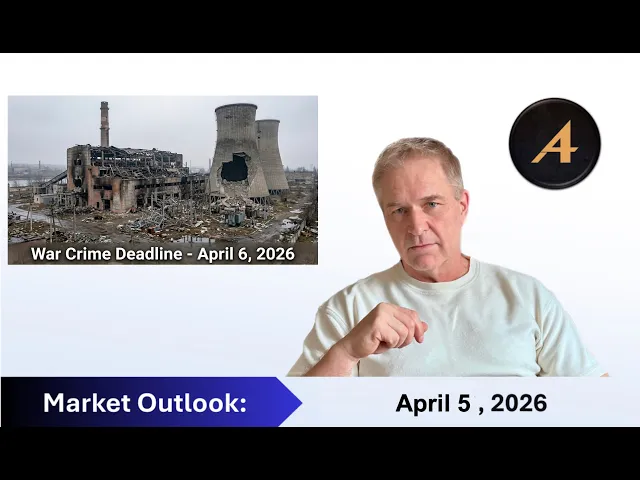
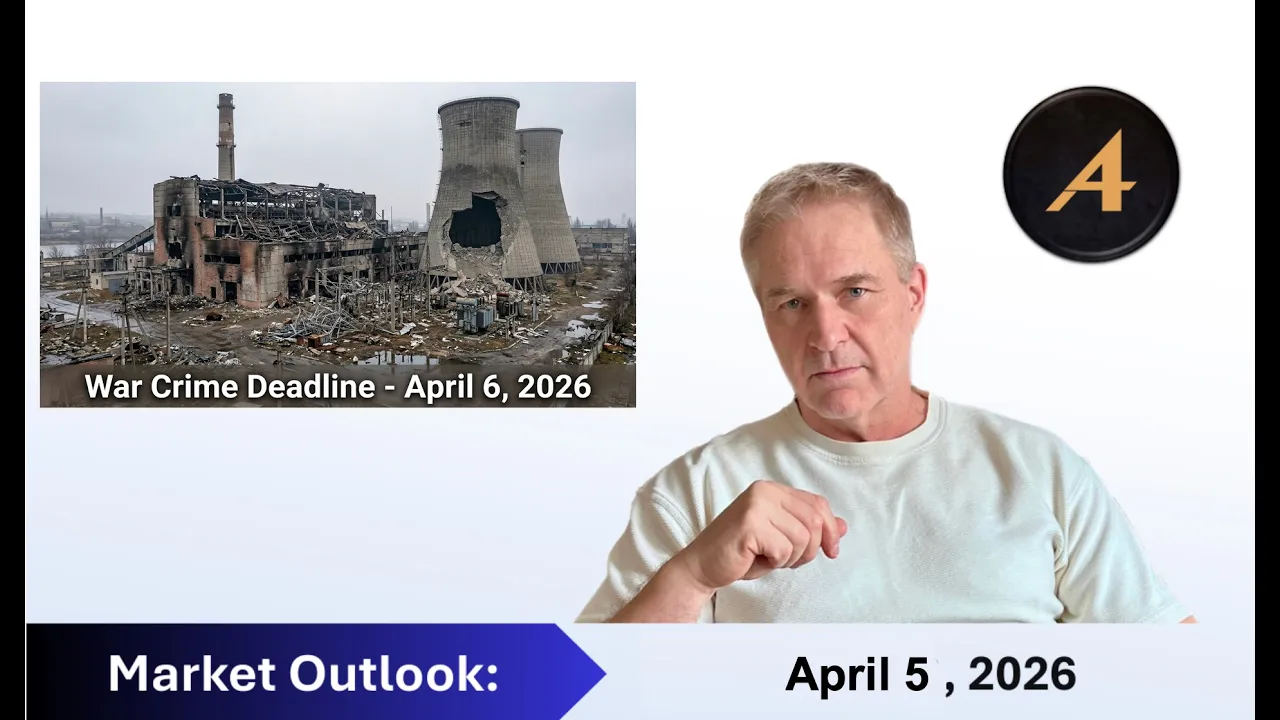
We're going to have a short week this week because there really is only one story uh that matters and that is uh the deadline, April 6th. And then Trump is going to go ahead and commit massive war crimes in Iran by targeting civilian infrastructure. Big surprise over the weekend. I thought Trump said, "We have full control of the skies. We destroyed everything." Yet two big expensive fighter jets shot down. That's got to be a little bit embarrassing, right? Anyways, let's start with our economic data and we'll go through our regular screens and we'll end with
a um a longer discussion of WTI of the situation in the US for uh oil. We had uh jolts earlier in the week. This is for the month of February. The jobs report we got on Friday was for the month of March. So, this is sort of uh a little historical. Uh openings uh down quite a bit below expectation as well and uh job quits are down as well. Consumer confidence um for March a tick up uh and certainly beats the expectations of 88. I don't know that there's much to be confident about. So you
know when I saw that number come out I thought well okay ADP said uh 40 the expectation was for 40 they said oh no 62,000 jobs will be created uh when we didn't have uh US data we relied on ADP and now that we have US data we're back to the always wrong ADP or it could be that it's the always wrong jobs report and it's the right ADP. uh but uh we the market moves on the jobs report not ADP so even if it's right it it's not the thing that moves the market retail
sales big bounce back from uh February this is oh sorry this is for the month of February sorry month of February uh big bounce back from the month of uh January uh up in all up in all categories little historical because uh We're in April now and uh we're still looking at February data. ISM for March. A little more timely because this is private. Uh the U manufacturing PMI 527 uh up from 524 expectation of 525. So that is a positive. Employment eh call it little changed. New orders uh are down however which you have
employment little change. New orders uh are are down. Prices are way up yet here we are. Employment down a tick, new orders down, but here we are. A creep up in uh the headline for manufacturing PMI. It doesn't seem to go together. And prices were 70.5 expectations 73783 that is including uh March that is including the energy price. So, hm, I say I say hm over here. That doesn't seem to match the background of what's going on out there. And hm, over here because that doesn't seem to match a couple of the sub indexes. Balance
of trade. We're still looking at February data. Balance of trade negative 57.3 billion. I wonder how long it would take this administration to realize that your trade deficit is directly a function of your budget deficit. The budget deficit is larger than the domestic savings rate. So there is no choice but to run a trade deficit simply because GDP doesn't produce enough goods and services for the quantity of money that you want to spend. We're going to reduce the trade deficit, they say, but we're not going to reduce the budget deficit. In fact, it's set to
go even bigger. So, you cannot reduce the trade deficit. It's like saying, make that balloon smaller while the person is still blowing up. And he's saying, I'm trying. I'm trying. Exports uh up. That's a good sign. Exports up 314 billion from 302. But, uh, imports up as well. 372, up from 356. Look at the uh goods uh trade balance 85 from80. And this is really where the focus of all the tariffs are on goods cuz well you're not uh tariff tariffing services. So we can uh probably give the administration probably I'd say a D so
far a year into this uh at least a D because we're not moving in the right direction as far as their uh trade policy is concerned and as far as their understanding of the material I got to give them an F. Uh, I don't know that they have anybody on the administration that really truly understands, hey, wait a minute here. If we balance the budget, we just might have a trade b trade balance or trade surplus if we didn't try to spend more than we make. What do you What do you guys think? Initial jobless
claims 202. This is uh for the week ending March uh 28 202 expectation was for 212 uh below last week. that is uh fairly low uh continuing claims um up higher. Now I I've made this point before as far as uh initial claims are concerned. Uh this is only for people who would qualify for unemployment and people who uh do not lose one job and then get another job at whatever at whatever salary they might get a lower job or that move into something like Uber driving uh uh things like that. they wouldn't qualify for
uh unemployment as well. So if the gig economy is very much alive, people who lose a job can say, "Well, look, I'm going to do this and this and this. I'm going to do these three or four things." Um and if they're well, if they're honest, if they unless they want to commit unemployment insurance fraud, they would not qualify for unemployment. Uh total vehicle sales, this sort of just got missed altogether. This is for the month of March, 16.3 million. We can certainly say Tesla did not come along for the ride on that one. Um
they had uh uh decreased their deliveries by quite a bit and are sitting on I believe in the US record level of inventories yet I saw a headline Tesla sales rise. I'm not kidding you. Going through the news feed, Tesla sales rise and I'm thinking, ah, we like what does it take to be to be this loyal to a shrinking company? But this is uh this is pretty impressive. 16 16.3 million. This is a run rate. This is the total vehicle sales from March and then you annualize it. 163 the 16s. Haven't seen the 16s
for a while. That's pretty impressive. Then Friday the market was closed but we got the jobs report nice how the headline and again I said h this uh this doesn't seem to line up retail sales strong ISM oddly strong consumer confidence oddly strong jobs numbers really strong does anyone else get the feeling that maybe our level of trust in US data should be just a little bit lower at this point. Uh h I said now I'm not full-blown conspiracy of saying oh these numbers are rigged but I am at the hm level on this one
because it doesn't seem to fit the narrative and the stories that you're hearing unless the narrative is just completely wrong. 178,000 but uh let's uh look at revisions. Um, January added 34, February took away 41. So, the net revisions were uh 7,000 fewer than we thought. Added 178 here. Um, so the average over 3 months you had 160 for January minus 133 for February, 178 for March. That's 205 divided by 3. Economy is adding about 68,000 jobs a month. But healthcare was 106 - 27 + 89 was 169 of that 205. So if we go
outside of health care um we're 12,000 jobs a month. Now health care it occurred to me this morning while I was thinking about that. I'm saying well wait a minute here we looking at uh government payrolls down 8,000. Whoa, whoa, whoa, whoa, whoa. I say you're going to have to add back some jobs because uh quite a few of those health care jobs are in fact government jobs. They're just classified in health care. How do you arrive at that number? Well, if we take the entire health care system, some of it is paid by private
insurance. A small little sliver is paid for by the consumer and the rest is uh Medicare and Medicaid. I'll just put ma for that. And so of the health care expenditure in the US, the taxpayer is picking up the bill uh for a significant amount and you have longer lives uh than you had let's say 50 years ago. people living longer and you have this huge uh baby boom cohort, the boomers uh that are aging uh into uh into that uh into you know 65 and plus in your most expensive years of health care are
your retirement years. So uh they also draw social security. So, uh, Medicare, Medicaid, Social Security, uh, is set to, uh, rapidly increase over the next few years in terms of, uh, the amount of, um, uh, cash that has to flow out. Another thing driving the deficit, I don't know how you fix that to be honest with you. That one is a tough one. I don't know how you fix that. I think you start by saying, look, Mr. president, you don't need to spend $1.5 trillion in 2027 on the Department of War. That is the number
that he's floating out there. $1.5 trillion dollar of money the country simply doesn't have to build battleships uh and fighter jets uh in a era of drones and cyber warfare. you could probably have the same lethal capability with 400 million or 500 million in drones, a drone army, uh, as opposed to 1.5 trillion for battleships. But, uh, this administration, I think, is incompetent. One thing we know for sure is they're not concerned with the debt or the deficit. Someone has to be the adult in the room at some point. This is unsustainable. The US is
going to hit sometime this year $40 trillion in debt. 40 trillion and set to accelerate with the baby boomer cohort, the aging population, just the change in demographics, set to accelerate with more war spending and if we believe Powell that Powell will be there for a while set to accelerate with higher financing costs and management is just whistling along as if everything is okay. And I'm not blaming one party. It's both. Spend, spend, spend, spend, spend, spend, spend until you can't spend anymore. Unemployment rate 4.3. The expectation was for 4.4. But, uh, participation rate did
a lot of the heavy lifting there from 62 to 61.9. So, if you can if you can get people to leave the labor force, they're not unemployed. You can get the unemployment rate to zero. If you just tell everyone a piss off, you're not getting a job. Just give up now. quit and live in the streets, you would have zero unemployment. Maybe unemployment isn't the best measure. So, there is U6, which is uh a a full unemployment rate, 8%. It creeped up from 7.9 to 8%. Manufacturing payrolls up 15,000. Yet, manufacturing PMI for March, jobs,
employment was a tick down. Where'd that come from again? H I say average weekly hours from 343 to 342. So you have uh people that are leaving the labor force, people in the labor force working fewer hours. You did have uh average hourly earnings that ticked up uh not very strong uh um on a month- over-month basis. Uh and if you um look at the weekly the average weekly income, it actually went down. So average hourly earnings went up, but because the average hours per uh week uh dropped, that overcame it. If you look at
the take-home pay week over week, the average it actually dropped. And that's what that's what consumers head to the malls with uh every Friday at 12:01 when it shows up in their account. They get in line at the mall right away. uh in the end uh even though uh 169,000 of these jobs were healthcare and I'd say a good 40 to 50% of them are paid for by the taxpayer through Medicare and Medicaid uh even though uh the productive economy doesn't appear to be producing very much. still people going home with paychecks. Uh which means
it's still buying power that's still heading to the malls, that's heading to Amazon, that's buying whatever whatever doesn't move and whatever does move apparently. So it still adds some purchasing power to the economy given the marginal propensity to consume uh on average in the US is somewhere like 95 96% meaning that the uh average American uh has the propensity to spend 95% of every dollar they get in their pocket. 95 cents of every dollar. Compare that with uh some other countries like Germany where it's more around 50% uh even lower in other countries 95% you
can say that the US is the consumption engine of the world curious enough do you know what the US is also number one in when I was uh more into REITs this really jumped out at me as uh when I looked at I said well yeah that makes a lot of sense because just the sheer level of consumption in the US highest marginal propensity to consume. They also have per capita the highest number of storage units. That's an interesting fact, isn't it? The highest number of storage units that if you were thinking about a REIT,
a storage REIT, you would say it better be in the US. Okay, let's look at our economic calendar for the week coming up. We do have a few important things. ISM services. Uh we're going to get uh Monday morning. Uh I don't know if this will be headline or if this will be background noise because April 6th is your deadline on uh on the war crimes threat. I keep saying that because uh the only channels that I hear, the only newscasters I hear saying it are non-American ones. Uh if you listen to non-American news, they
do point out that his threat is a war crime. You hear it. But in the US, they just seem silent about it. They're not even pointing out that that targeting civilian infrastructure under the Geneva Convention is a war crime. Maybe because the US doesn't recognize the International Court and for them, nothing is a nothing is a war crime. Could be, I don't know. Durable goods uh on uh Tuesday. Uh going into Wednesday, we do have uh well, there's your inventory, your uh uh crude oil inventories. again FOMC minutes we get on Wednesday afternoon being that
we have so much Fed speak so much they can't wait to get out there and talk I don't know that the minutes really have anything that we haven't already already heard or already read so they used to they used to be important they used to be an event now it's like okay all we're going to get is a reminder of what everybody said over the last three weeks too much Fed speak. So, go back to the green span area when no one spoke. Uh we do have um GDP fourth quarter, our final look at GDP
fourth quarter. Uh core PCE uh we're going to get as well, personal income and spending. And on Friday, uh there's your WASAD report. By the way, if you're into the grains, uh just be aware of the calendar here. 30-year bond auction as well. And on uh Friday for March, we get core inflation. Oh, sorry, not core, we get CPI. Core inflation, we get CPI. Uh we also get factory orders uh in here as well. And we get the Michigan uh consumer uh uh consumer sentiment uh as well. So, we do have uh some some economic
data for the week, but uh I think everything is going to come down. What do we do on Monday? It's a deadline. Does he Does he actually do it or does he taco? My bet is I see a taco. I see I see uh Oh, they they've asked us not to. We're going to give them another 24 days. It's It's like that kid on the playground. What did you say? You're a jerk. Say it again. You're a jerk. Say it again. You're a jerk. That's Trump. Say it again. Okay, let's have a look at uh
what our week looked like. And it may not feel that way, but it was a fairly positive week. Um, SPY up 3.43%. IWM 3.3. Uh, NASDAQ well triple Q sorry up 4%. Even TLT coming along here 1.34 KRE banking index up 4%. And uh long under the curve came down but still we have tighter financial conditions on consumer credit than we had at the beginning of the year because this is what consumer credit is based off of. And you have less profitability uh for financial oriented balance sheets that use a lot of short-term financing because
that is their financing cost. Dollar index gave up just a little bit but uh year to date uh still up um yield curve since the beginning of the year looks like this higher uh on the long end than it was at the beginning of the year. And ZQ is pricing in um two and a half basis points of cuts uh by Q the end of Q1 um by the end of this year 1 and a half call it zero over the next year zero they are on hold you have a flat futures curve basically here's
9636 9638 and you can see that we're pretty much between 9636 and 9638 that's a two basis point spread the chart makes it look like it's so much more I'll back out all that mess but it makes it look like it's much more variable but it's moving within two basis points. Uh so um I don't I don't buy into that zero. Uh the jobs report on Friday really changed expectations and ZQ just said no cuts and spy said oh god let's go red because there were futures trading for a little while that morning and then
it went away. Goldman Sachs still uh reiterating 50 basis points by the end of this year. They still see 50 basis points of cuts. What we need is wars to start talking. Now that may sound rather straightforward because April 13th. I believe that is the uh confirmation date. They do have a date in the calendar. April 13th confirmation is scheduled even though Tillis said he's not going to be on board for this one. However, we did get a decision. Judge Boseberg um said nope. this is the government trying to punish one of Trump's enemies. This
is this is harassment. And threw it out. Said, "No, not with me." Now, that's as far as you can go with that judge. But you can appeal to a higher court. So, there we go. Are they going to take that gun out, aim it at their foot, and shoot the other foot again? They have this amazing talent to continually shoot themselves in the foot. They don't take the victory when it's given to them. Call the judge all the names in the world. Blame Pam Bondi. Blame the the the the previous leader for letting this one
go and move on. But uh Pam Bondi was fired because she couldn't put some people Trump didn't like into jail. This is this is the president, right? He never lets go. He never lets go. Till the day you die, he will ruin your life as much as he can. And he wants to go after all his air quotes enemies. And is his need for revenge greater than his desire to move forward? You would think that he'd want to get policy done and re be remembered for, oh, he got this done, he got that done. But
no, he's more interested in making money. Policy is what makes him money, not what makes America great again. What's he going to do here? Does he really really give a about US debt and US interest costs and the debt that he's burdening the American taxpayer with? or does he want his revenge satisfied? It's a tough call. It really is a tough call. He's in a position now to blame other people for this failure, to blame other people and to take the win and move on. Think about it now. What do you think he's going to
do if you think, "Oh, this clears the way for Worsh." We got to watch this week to see if there's any more bullets left in that foot shooting gun of theirs. Um because if they do appeal to a higher court, then Powell is not going anywhere. He's more than likely going to be there for June. The curve is more than likely reflecting a Powell Fed for quite some time. And I'm out of ZQ. If we can't have wars, this is my last hope on this one. If we can't have Worsh, I'll move on because it
relies on Worsh. It relies on the way he sees monetary policy. He sees it as a money supply issue, not an interest rate issue. And to be perfectly honest here, almost every economist will tell you, the interest rate is ineffective for this type of inflation because this is supplied inflation. the interest rate does not work. And I think the people in that room know it. But when you start getting a group of people who only look at one tool and say, "Well, we got to do something with this hammer. We can't just sit here and
hold it. We know that's not a nail. We know it's a stick of dynamite, but we got to do something with our hammer." the desire to use that hammer on that stick of dynamite grows because we got to be seen as doing something. Whereas War says, "Look, we have the balance sheet. It's a money supply issue. We can do something. Let's reduce the money supply. We can reduce the interest rate. We can reduce the money supply." That's his focus. We need to hear from that guy. And we need this administration. Oh god. Just to take
the win. just to take the win even though it is a loss for Trump's revenge card. And that's what it comes down to. One man, one person. And the childishness of this one person. We're dealing with a man, baby. So, I don't know if if they appeal, I'm out. If we can hear from Worsh, I'll hang in. I'm with Goldman Sachs. I think minimum 50. I think you get a hundred out of this guy. But this war does complicate things and uh I don't know. I don't see Iran saying, "Oh, no. We'll we'll bow down
and let Trump have a victory." Each side each side is full of man babies. Real yields have all pulled back this week a little bit tighter from the 10 to the 30. break evens slightly higher this week. Uh but it's been a couple of weeks now. Look at the fiveyear 31 basis points higher on expectations. That is moving the wrong way. Credit spreads uh all tightened this week. Year to date, they're a little bit wider. Triple C up by 96. And let's look at our metals. Uh they had a fairly good week this week. Some
are still negative for the year. Copper is negative for the year. platinum and palladium. Uh gold up 3.5 up 8% yearday. Goldman Sachs has a price target for the end of the year of 5400 uh on gold. Uh and an update on demand from emerging markets. 850 tons over the course of the year. 850 tons from emerging markets. And um in uh in the Discord uh conversations, I keep uh being asked about one of my thoughts on emerging markets. And I've always said, "Look, I know I know one market really well. I I just have
never taken the time to get to know any emerging market, nor do I really feel like I want to do the deep dive because it's 6 months to a year to really get comfortable uh with new markets. You don't just look at them and within a couple of days you understand them. It takes a while to really understand how the government makes decisions. What's what's the priority of the government? How what what where does their central bank lean? What are the economics of the economy? Are they an import or export economy? What type of employment
do they have? Like it takes a while to really get to know an emerging market. But as each day goes by, I find the US less and less desirable to be in from an investment perspective because you can take everything you've learned and throw it out and there is only one variable. Return is a function of t trump period one person and to figure out how you're going to uh benefit in the market. You you can't just think about well what are Trump's policies. It doesn't work cuz he can't execute or he doesn't want to
execute. But what does work a little bit better is you figure out where's the money to be made because that is where policy will come from. If there's money to be made by moving this asset price in that direction, there'll be a policy introduced that gets that done. And you find that you can get a little bit closer uh to sort of forecasting what's going on. But more and more people are seeing through that, especially Iran with uh we've won this war, we've won this war. And Iran keeps saying no, we haven't. In fact, one
of the one of the messages they put out is these are just lies. This is just another profit opportunity on for the president and his family. Nothing is going on that he says is going on. Anyways, let's get back to our gold here. I might I might uh start exploring some emerging markets. 5,400 copper. uh I think is going to be under pressure for a while only because inventories have built up significantly. Um energy, there's your big story, right? Especially on Thursday. Oh man, that speech he made did nothing but drive up the price of
oil. If he was hoping to convince anybody, he did not. He simply just made West Texas a global commodity as opposed to a North American commodity. So it not only caught up with Brent, but passed Brent. It's now at a premium to Brent. On a quality basis, it is a premium oil. There's there's no there's no uh uh um arguing that. But on a transportation basis, it's more expensive to get it from uh the Gulf Coast all the way or even the east coast all the way over to Europe versus uh the Middle East, especially
when you get into the Asian markets. So that is why Brent is always traded at a premium to West Texas because the transportation uh component of it. But if you're going to or the belief is we're just going to leave and you guys figure out the straight of Hormuz, we're not going to bother and if you need oil, buy it from us. uh on that uh WTI exceeded the price of Brent because you can't get it anyways is the thinking that gas um down 24% for the year. Winter's over so you're not going to have
that driving that gas. But look at this. Look at that. 93.9% from the beginning of the year. Not even the beginning of the year. the last month. It just the last month because it was on a downward trend and of course all your food costs are higher as well. Although uh some of the grains pulled back this week we got perspective planting this week. We get the wasdi report this week that's always got a lot of volatility uh for the grains uh and uh mortgage rates had a good week. Last week I was looking at
these saying if I were in the US because then I wouldn't have the 30% withholding on the dividend. I would have a hard time not buying these uh at the prices they were at, I would have a hard time not buying them. Uh they had a good week. Agency up almost 5%. Housing, this is not good. Not good. Not good. Not good. This is going in the wrong direction. 6.46. 6.46. All because of one man man baby. All because of one man baby. I'm not going to say who I'm talking about. Case Schiller month overmonth
down negative.1. Mortgage apps for the month week ending March 27th down 10.4%. All a function of this. You want to get more housing activity. You got to get that down. To get that down, you got to get the 10year down. to get the 10-year down, you you have to starve the long end of the curve of issuance, make the 10-year extremely rare, which Besson seems to want to do. Um, will Powell go along for the ride? You need the Fed, uh, to work on that as well. April, uh, coming up 24 days, April, this is,
uh, should be, it should be Powell's last. Hopefully we by the time he has his press conference, Worsh will be confirmed and Powell can give his goodbye speech and and say in there that that that you know based on past Fed chairs, he's going to honor the tradition of resigning his seat because he is 73, be 74 soon. Uh he's not going anywhere. Uh zero basis points, 100%. There's a a rounding error here that that basically shouldn't exist. It's basically 100% that nothing's going to happen. He said so much, we are going to look past
this, but the longer it goes on, and by that he means two quarters, 3/4, it is going to find its way into other prices. So, um, they're not going to act at this point. And I think that's that's the right decision because uh the interest rate isn't going to change the price of oil. The interest rate isn't going to change the price of university tuition. The interest rate isn't going to change the price of car insurance. And it's not going to change the price of health care. Those are the big components of CPI. It's not
going to change the price of food. Their hammer will not work on any of the problems that they're looking at in any of the categories. All they can do is destroy already weak categories like housing because that's really where it works. Well, housing is already saying we give, we give. Uh raising rates isn't going to hurt that anymore. But you can destroy the auto industry if you want. I mean, they they are doing well. 16.3 million cars, people are getting car loans. Well, maybe we need to shut that down. Maybe we need to hurt the
car companies. And this is really the decision you have to make. is who are we going to hurt specifically with this interest rate? Not the energy sector, not the health care sector, not the education sector. AI will take care of that. So it it is a tough place. I think saying zero is probably the right bet under Powell for the next year because well raising rates isn't going to help but I mean lowering them would seem would seem rather silly. Worsh on the other hand uh would would change the focus to a different hammer. But
we got to get him confirmed and we got to get past a man whose need for revenge outweighs everything else. Can that happen? Uh zero uh from 92% up to 96.7%. Uh plus 50. There was a plus 50. Call that a rounding error. That's gone. Um, some small bet on uh a hike, but no bet on a cut. None at all. This is getting boring to watch. I don't know when this is going to start to get more exciting. I think it really is only going to be exciting once wars is confirmed. Then we can
watch uh the level of reserves and the level of repos. By the way, little bit of information. private repos. We look at the Fed repo window. It's zero for quite some time. But private repos are about 12 trillion. That's about 40% of GDP in overnight in uh well I shouldn't say overnight overnight and term repos. The private repo market $12 trillion. you get any kind of credit scare and you get even a percentage of this not being able to roll over or some of these participants not being able uh to find a counterparty. That's your
big ticking time bomb in here. We got to pray and hope that that is okay because that is what takes down an economy, not higher oil prices. Consumers will still spend. They'll just use their credit card more. They'll still spend. The US consumer will still spend. We can count on them for that. And if we give people more paychecks, who cares if if if 40% of those paychecks are paid by the government, if you just give them money, they will spend it. But this this takes everything down if something goes wrong there. Uh TGA still
sitting pretty much near its target. So far still being uh well behaved. Okay, let's have a look at uh US petroleum stocks. We get this uh every Wednesday at uh 10:30. Uh it is a new format of report. Uh if you looked at uh this week in petroleum, the old format is gone and it's a new format with a lot of tables. So you got to figure out what's uh what's going on. Table one, this is uh uh the petroleum stocks. Table two is uh production. So this is how much oil is sitting above ground
right now. Crude oil 876 uh million barrels. This is uh in millions over here. Uh we have a week ago 871. So you have 5.1 million more barrels above ground um week over week. If you look uh year-over-year, you have 40 million more barrels above ground than you did at this time last year. Doesn't sound like there's a problem with oil here, right? Uh and it breaks it out to uh commercial excluding XPR and sorry the SPR and with SPR total uh gasoline 240 million barrels. It's down slightly um difference down 6 uh million barrels
uh year-over-year. If we go over here, it's up 3.3 million barrels over this time last year. And I have some charts down here. This is uh crude oil stocks, millions of barrels. Uh the um big sort of gray grayish area in here. That's the five-year range, the 5-year low, the 5-year high. And you kind of want the blue line to sort of be in the middle of that range, suggesting that well, it's, you know, on average. It was below that range for quite some time. It was sitting way at the bottom of the range and
then this started and look what happened to inventory supplies. They are skyrocketing up to the top end of the range. How can that be? This is called demand destruction. So you don't need higher interest rates, you just need higher prices. Higher prices will reduce demand. And this is a shift along the demand curve to less quantity demanded at higher prices. So look at the increase. You have uh inventories that are up but you also have prices that are up 43%. So as inventories are skyrocketing up the price is also going up or what we could
say is the price has gone up 43%. So we would expect to see a higher level of inventories because you have a lower level of demand. we look at gasoline. Um gasoline looks more variable because it's seasonal. Uh so you always have the uh inventory build during the winter months and then during driving season you have draw downs. So we are in April now. So the winter or spring is rolling up through the US. More and more people driving because it's better weather. And uh you have inventories that are dropping. But notice that you are
above the five-year range. You could say, but look at the inventories of gasoline dropping. That is seasonal. It's going to drop anyways. Uh but you are above the 5-year range on this one. So you have inventories that are up basically year-over-year. You're up 3.3 million barrels of gasoline year-over-year. And you have prices that are up 58.6%. So you can see the demand destruction taking place March 27th oil was uh this is 2025 going back a year because this is year-over-year right you have 4.8 uh let's go to uh crude oil here 4.8 million or 4.8%
8% more inventory year-over-year. Oil was 69 uh62. This year it was 99.94. And gasoline we are up 1.4% on inventories. Last year at this time, March 27th, RB was 2.0123. Now it is 3.19. That is huge. And what we're seeing is economics 101 playing out. Higher prices, lower demand, inventories build. When inventories build and you have a glut, it puts downward pressure on prices. So economics is working. You don't need the interest rate for this one. Domestic production, um, we're not going to show table two, but domestic production is 13.234 million barrels per day, including
Alaska. It breaks out Alaska as a separate line items in table two. But the US produces 13.234 million barrels a day and it is a net importer. It imports almost 3 million barrels a day. Um it um gets most of that uh from Canada. Uh gets I think 200,000 a day from Venezuela. Gets some from Mexico. Um, most of it from Canada, 4.5, I think closer to maybe even 5 million barrels a day. Uh, coming from Canada, it imports about 6 million overall, exports about 3 million. So, it does have an export market. It imports
certain grades of oil and exports other grades of oil. So, it's not as if Trump is right as we don't need we don't need this oil. Some refineries need that oil. There is no choice. They need that particular uh uh blend of oil. I say blend, it's not really a blend. That particular grade of oil, but they are a net importer still of 3 million barrels a day. We'll move on now to the term structure of the futures curve and the spread. I have a two-year chart up here of the September December spread. uh this
is uh a curve that is uh in backwardation. In fact, this is called extreme backwardation. Uh and this is May, June, July, August, September, and I have December pointed out here. So, what we're looking at is a spread between these months right here captured over here -576. Um and this is the typical spread. I have it uh I put the line as close to zero as I can and you could see that there are times where it's positive and there are times where it's negative. But you do have a mean reverting level and you had
a really really tight spread uh in here. Uh this I put this line in here. This is uh since about July mid July of last year the spread got really really tight. And then this is this year I have 30 contracts on the spread and I'm more than willing to add to it. These do not last long. When you look at uh the difference in here, you're maybe uh even as high here as maybe up $2. The that that means that you had more of a contango curve. But here's $1 here. You can sort of
just draw a dotted line. And here's $1 here. uh the majority of the observations are within a dollar. A dollar up uh in meaning in contango or a dollar down meaning in slight backwardation that when you get to uh this level 576 you are multiples of standard deviations away from that mean reverting level. Um it is worth uh saying at this point prices very rarely have mean reverting levels. Relationships typically always have mean reverting levels. And a relationship is something like a spread or something like a ratio where you have one product over another product
and it's the ratio of the two products. Uh usually don't get too far out of line. And when they do, they typically mean revert. If they get too tight, they'll widen. If they get too wide, they narrow. This is hugely mean reverting. as you can see on on this graph that it is not trending in any one direction over this whole period of time. It is basically uh oscillating in and around a point. That is a a a serious footprint of mean reversion. So this cannot hold. Uh to me it is the most obvious and
easiest trade to make is to trade the shape of the curve and not the price. That being said, extreme backwardation rarely holds as well. Um, so either this month, this part of the curve comes down or this end of the curve comes up thereby solving this problem as well. What is it going to be? Is the front end of the curve going to come down or is the long end of the curve going to come up? If refineries start believing that no this is the new price level they will start buying futures over here saying
let's lock in that margin right now let's lock it in and this will slowly start lifting the curve upwards and if this is the new price eventually see this green line here eventually you'll end up with something that looks like this but starting from this level uh because they'll lock you they'll move to lock in that margin very quickly if it is believed that this is short-term producers will start selling these months very quickly and let's lock in that price now because this will start coming down, the front month will start coming down and then
you'll end up with something like this green line over here. It's going to satisfy itself one way or the other. If you're playing price, the question is, well, which one is it? Will the long end of the curve come up to meet the front end of the curve? If it does, you want to be buying something like December oil because December oil will have to rise to higher curve levels if this is the deal. If you think no, this cannot hold, then you're going to want to be selling May or June oil because you think
it is going to be coming down. Tough bet to make. That's a tough one. The curve is easier because the curve flattens either way. So, I'm doing the curve trade. I'm not doing uh the price trade. But if I were going to do it, if I had to place a bet right now, I feel the risk is to the downside because these domestic uh oil prices are a little bit too high. We're already seeing inventories build. You're already seeing demand destruction here. And you may think, well, so what? Let it let let it go and
let's sell our oil to the rest of the world. Uh but one way to convince the rest of the world to take over in the straight of Hormuz is to say that's all the oil you have. You can't have our oil. We're going to put an export ban on our oil and it will force you force you to head into the straight of Hormuz and to satisfy that requirement. However, making a deal with Iran is easier. $2 million for a tanker adds almost nothing to the price of a barrel of oil. 50 cents a buck
maybe considering the capacity of these carriers. These carriers are classified as VLCC, very large crude carriers. Uh that $2 million if you think about it per barrel of oil is minimal. It's easier to make a deal with Iran than to take the straight of Hormuz. So there is the US administration in another sticky situation. How do we get out of this? Should have followed the Warren Buffett rule. the best way to get out of trouble is to stay out of trouble. Shouldn't have shouldn't have agreed to pay for Iran's uh uh Israel's war against Iran.
But he got praised and complimented into the war and Americans are now paying for it and pay for it you will. Uh while Israel takes care of other things that it needs to do like passing death penalty laws if a gauze and kills an Israeli but not the other way around. Got to get that done while the US picks up the tab for this and suffers the downside. Look at the volatility in here. Look at the percentile you're in. Last 13 weeks, 97th percentile. You're in the 99th percentile for the last year. Uh IV last
for this for this contract. That's huge. This is one of the most liquid futures curves uh on the planet. the sheer amount of volume that comes in, the efficiency of almost every contract out for years. By the way, you don't get this done on copper. You don't get this done on bond futures. You go out uh they're issued quarterly. You go out to the second month or even the you go the third month, there's almost no liquidity in the third month, there's huge liquidity in every every month of these contracts have that kind of IV
74.5%. It's huge. The at the money straddle, this is with the May underlying. If you want a May underlying, there's 12 days to expiration, is 16.64% of the price of the contract. 16.64. If you uh have played with these futures before and played with the options on futures, you know that's big. The straddle pays $18.65. So my recommendation is uh if you uh can avoid playing price and you do want to play energy, the spreads are mean reverting. Use that to your advantage. They are absolutely mean reverting. These types of spreads do not hold because
one group of participants is going to move to close it. Whether it's producers saying this these good times won't last or it's refineries saying these bad times are going to last forever. What's good for one side is bad for the other, right? Personally, on price, I would avoid, but if I had to make a bet, I would bet that the risk is to the downside on this because this war is in no one's best interest. It's not in Iran's best interest, and it's not in the US's best interest. And if that were true, why do
we not have a deal? Why do we not have some kind of resolution to this if it's in nobody's best interest? Is because you have manb babies on both sides who want to walk out, puff out their chest, strut around saying, "I'm the tough guy. I won this war." And anything less than that, well then people will die. Energy prices will go up. Food crisis will happen because we're not going to let this fertilizer through. The world will suffer unless two sides can walk out to their public and say, "I'm the tough guy here." Okay.
And on to SPY. Everyone's out of correction territory now. NASDAQ is only down 7.83%. IWM only down 7% and SPY only down 5.93. But but but a qualification, this is Thursday close. Futures on Friday had something to say about that. So, we'll see how we open uh tonight. Two down fighter jets, a deadline on war crimes looming. I don't know. 48 hour threat on Saturday. Give us a deal or else. Give us a deal or else. I mean, this is uh talk about playing your hand a little too aggressively on on both sides. Bad poker
players. I mean, you put a shark at that table, they would clean up. Forward four quarter operating earnings 338. Big jump up because we moved forward a quarter. So earnings are always forecast like this. So if you take this one off for the forward four, this one comes on and you get the delta between them which looks like to be about 18 bucks. question you have to ask is given the conditions in the world today will those will those earnings forecasts have to come down closing S&P 6582 puts it as 19 12 times aggressive I'm
going to say aggressive forward earnings or the unadjusted forward earnings uh for Iran uh and Trump the unadjusted forward earnings maybe Maybe they'll have a new type of earnings that adjusts for Trump. Adjusted for Trump. Our earnings would have been this. And that's what you should pay attention to cuz Trump one day will die. He is 79 or 80. Or he'll go well he'll go uh there won't be any elections. You he'll only die. The question is will you still have democracy or will you have a bloodline by the time he dies? 1977 uh last
week. So we're pretty much in around the same area. lower volatility than what we had last week in the 13th week with 76th percentile. Uh S&P still below the 50 and 200. This is the key one here. This right now is resistance. This is a 3x failure on this one to get above 662 uh or above 660, but we're 662. That's the number to watch. You need to finish uh above that. Um any a technical analyst will tell you these guys who draw lines on charts and thinks it and and they think it works will
tell you that that you want a good firm close above not just a little above but a good anywhere from 1 to 3% close above that. 3% is a little much to ask for but a close at around 668 to 670 would cement the 200 is now being support. Uh, and then you turn your eyes to the next one. Um, I don't see it. I don't see it just yet. Uh, I would I would sort of bet that we'll be under the 200 for a while. We have been rolling over for quite some time on
on the market that I just don't see us suddenly skyrocketing to new highs. That being said, we'll probably skyrocket to new highs because it is the most bewildering move and the market has been nothing but bewildering over the last three or four years that you look at some moves and you think, "But why? This doesn't make any sense." So, the move that makes no sense is on to new highs. So, there's the bet. More than likely, we're going on to new highs. That's a terrible way to invest. IWM uh is above its 200 but below
the 50 and 100. So it has held the 200 quite well. The 242 it has held the 200. The only one of the indexes uh that that has held the 200. Triple Q's also below uh the 200 day moving average of 595 finished at 584. It has not come back up to test that line yet. S&P has tested it or has approached it three times and it has failed. But let's be clear, it's not failing because of the internal dynamics of the market. It's failing because of the randomness of the orange king. It's failing because
of headlines, not because of its own weight, not because it's tired inside. You can really see that this market wants to go up underneath. If these guys can just step out of the way and stop shooting themselves in the foot, if they could just step out of the way, this market does want to go, comma, for now. The longer this goes on, the less reason the market will have for saying, "Oh, it's over. Yay, now that all the buildings are on fire and and the bridge is blown up. Yay, it's over." that you're going to
have less and less reason to go up. But it does want to go. You can see it whenever there's a positive headline. There's this immediate reaction. Maybe it's short covering. I don't know. But it does appear to want to go. So maybe maybe uh the 200 day moving average can be beaten if we get confirmation from both sides. Um, but just to be crystal clear on this, it's it's it's not failing at its 200 day moving average because of the natural uh uh feeling of the market itself. It's failing because of headlines. We only have
two earnings this week. Delta Consolation Brands and our IV has uh pulled back a bit this week, 20%, but we do live in an era of IV, so I don't think that's over. Next week uh not this week here but next week uh starts uh the earnings uh parade uh with the banks and uh that is it for the week.