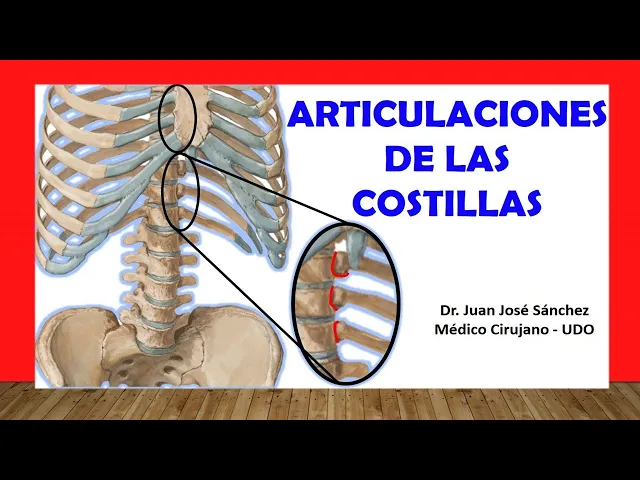
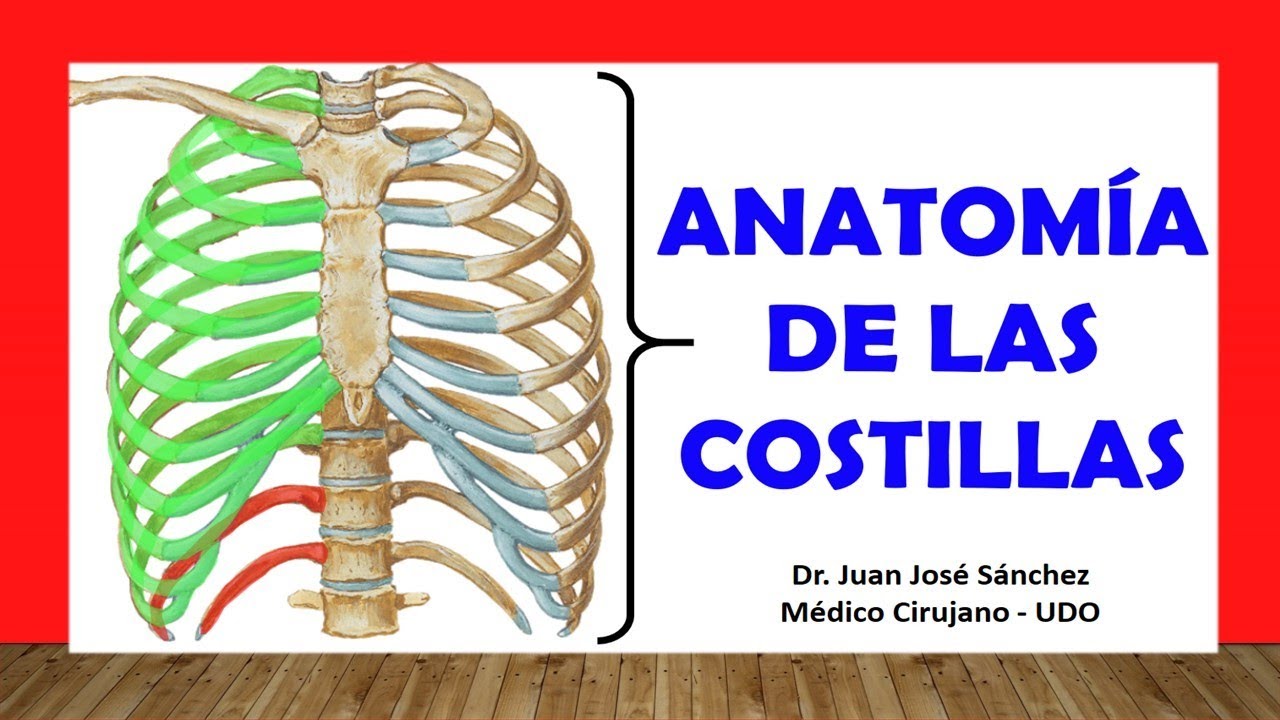
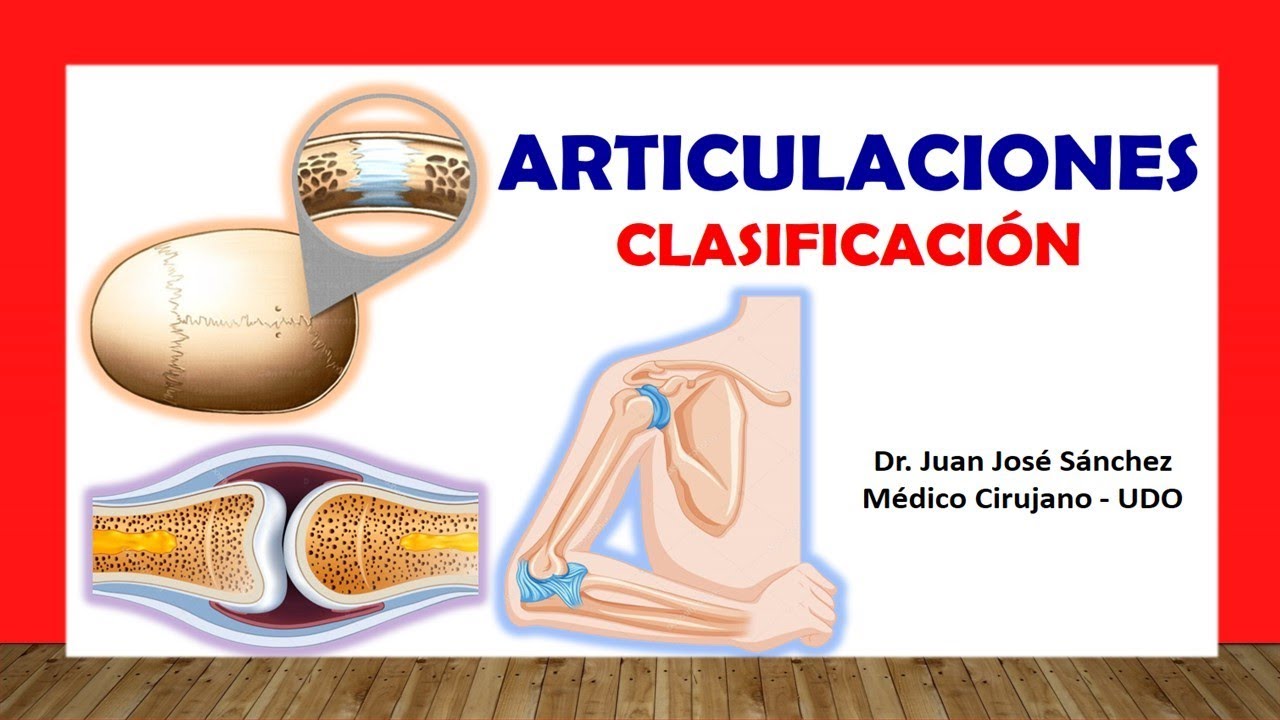
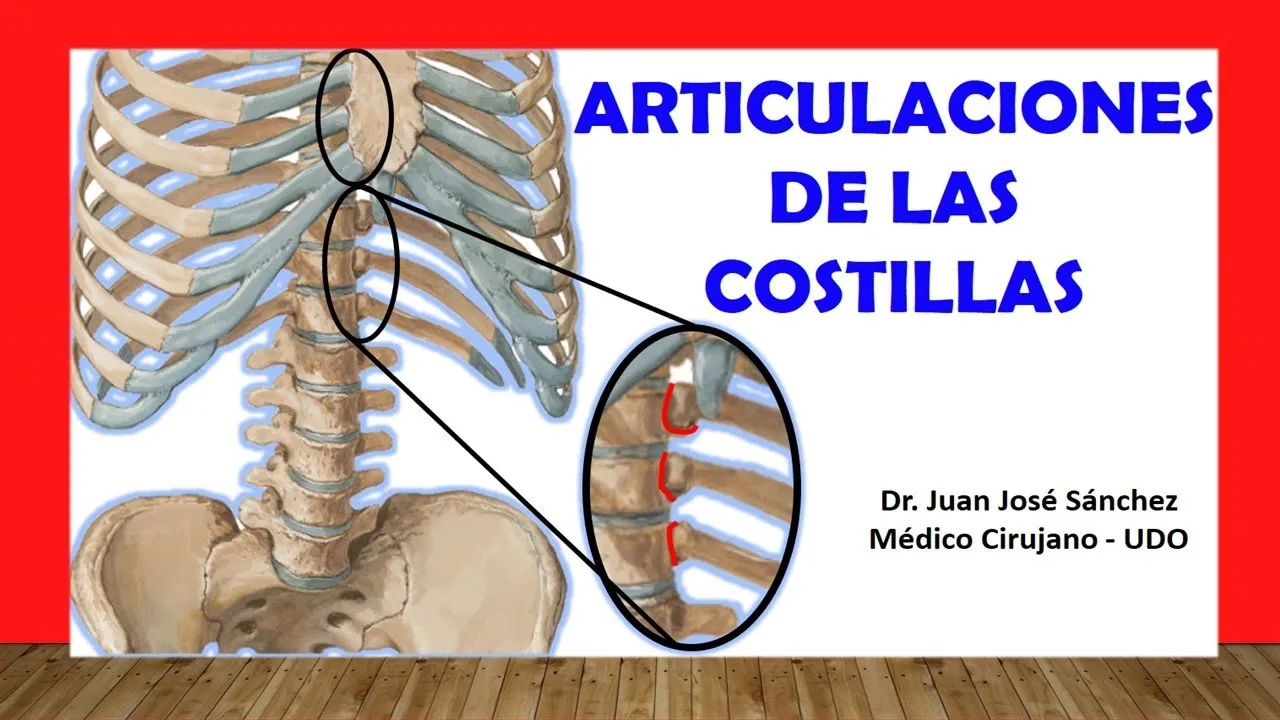
Okay my listeners, then we are going to continue with the third and last part of the thorax, which are the joints of the ribs and in the previous video we already talked about the generalities of the ribs, so first of all I invite you to subscribe, it is very important that Subscribe to my channel here in the lower right corner so that the channel can continue to grow and I can continue making videos like this one. So the ribs have two ways of articulating, in the posterior part or where the head of the rib is located, it articulates with the vertebral column and in the anterior part, where the rib, which is the costal cartilages, is already in the cartilaginous part, articulates. then with the sternum, then those joints in the posterior part we call the costovertebral joints and the external costal joints in the anterior part; So these vertebral costal joints can in turn be of two types.
Why two types? Because first the head of the rib articulates with the body of the vertebrae, okay? So that is why we call them joints of the head of the ribs, but in addition to that at the level of the neck where the tuberosity is articulated with the transverse process and it is what we then call transverse costo joints, both grouped within the group of joints.
costovertebral, then this is a typical rib , remember that in the head it had an upper half-moon and a lower half-moon, separated by a crest called the interarticular crest, so notice as a diagram how the typical rib is articulated with the vertebral body in the joint of the head of the rib, one of the costovertebral, so this occurs from the second to the ninth rib which are remember, that the typical ones were from the third to the ninth but in addition to that the second also had the two articular facets, the upper articular facet , assuming then that this is the third rib, the upper articular facet that the smaller one articulates with the lower articular facet of the body of the vertebra that is above the one whose number corresponds to it, looks like a tongue twister but listen to it slowly and it is like this, that is, with D2 while the lower articular facet with the upper articular facet of the vertebra that corresponds to the number that if the third rib is there it would be with D3, that happens from the second to the ninth rib. Then notice that in the middle there is precisely the interarticular crest, with whom? with the intervertebral disc and there is a ligament that reinforces it, which is the famous intra-articular ligament as it is called, then the ribs other than the second to the ninth, this is an example of the second rib, that is, the first, the tenth, eleventh and twelfth have a single articular facet, so in part they generate special ribs, I invite you to watch the previous video, then they are going to have a single articular facet at the level of the head but it would also be a costovertebral joint; You see that the articular capsule of the joint of the head of the rib is reinforced by this ligament that looks like the rays of a sun, which is why it is called the radiated, radial ligament.
Now, notice here how we would have the upper articular facet, here the interarticular crest and see how this ligament is that joins it to what is the intervertebral disc , which is the intra-articular ligament. Now let's go with the costotransverse joints, which are the ones that occur here between the rib and the transverse processes, they are only from the first to the tenth rib because the 11th and 12th and they do not have a costotransverse joint because those ribs do not even have a tubercle and Incidentally, the transverse process of these vertebral bodies is practically non-existent, so see that there are ligaments that reinforce this costotransverse joint, first we have the ligament that joins the pedicle and part of the transverse process with what is the neck of the rib, which is the costoligament transverse process, in addition to that we have a ligament that reinforces the tip of the transverse process with what is the tuberosity of the rib, that would be the lateral transverse ligament, which is called the external costotransverse ligament and in addition to this we have a ligament that you see here that unites what is the neck of the rib with what is the transverse process of the vertebra that is above, which is the superior costotransverse ligament, so this would be the costotransverse ligament external or lateral, this is the transverse costo only and there is the superior transversal costo, you will say: well, what is this one here on the side? That is a ligament that you see that joins the transverse process to the transverse process, it has nothing to do with the rib, we already saw that, the ligament of the spinal column is the intertransverse ligament, it has nothing to do with it right now, okay?
What matters to me is the superior costotransverse joint, which is this, see, up to the transverse process of the vertebra that is above, in addition to that we are going to talk about the external costal joints, those external costal joints are already the previous ones, as I explained to you just now, they are the ones that are between then the rib and the sternum, then the first, the first of the costal cartilage that reaches the manubrium, the sternum is a cartilaginous type joint and this cartilage is continuous with the same cartilage of the external clavicular joint, while the rest, That is, from the second to the seventh they are synovial type joints, see that it has its synovial cavity, then remember that the second rib reaches the junction of the manubrium with the body at the level of the Lewis angle from the third to the sixth to level of the body of the sternum and the seventh, see that it is reaching the xiphosternal joint, that is the name of this joint where it reaches the seventh rib. They are of a synovial type, now there are ligaments that join these last ribs with the anterior and posterior part of the xiphoid appendage which are famous costoxiphoid ligaments ok? See that at the arrival of each costal cartilage it also radiates in all the synovial cells because the joint capsule is reinforced, those are what we call radiated externalcostal ligaments, they are the same as those in the head but they are in the anterior part now.
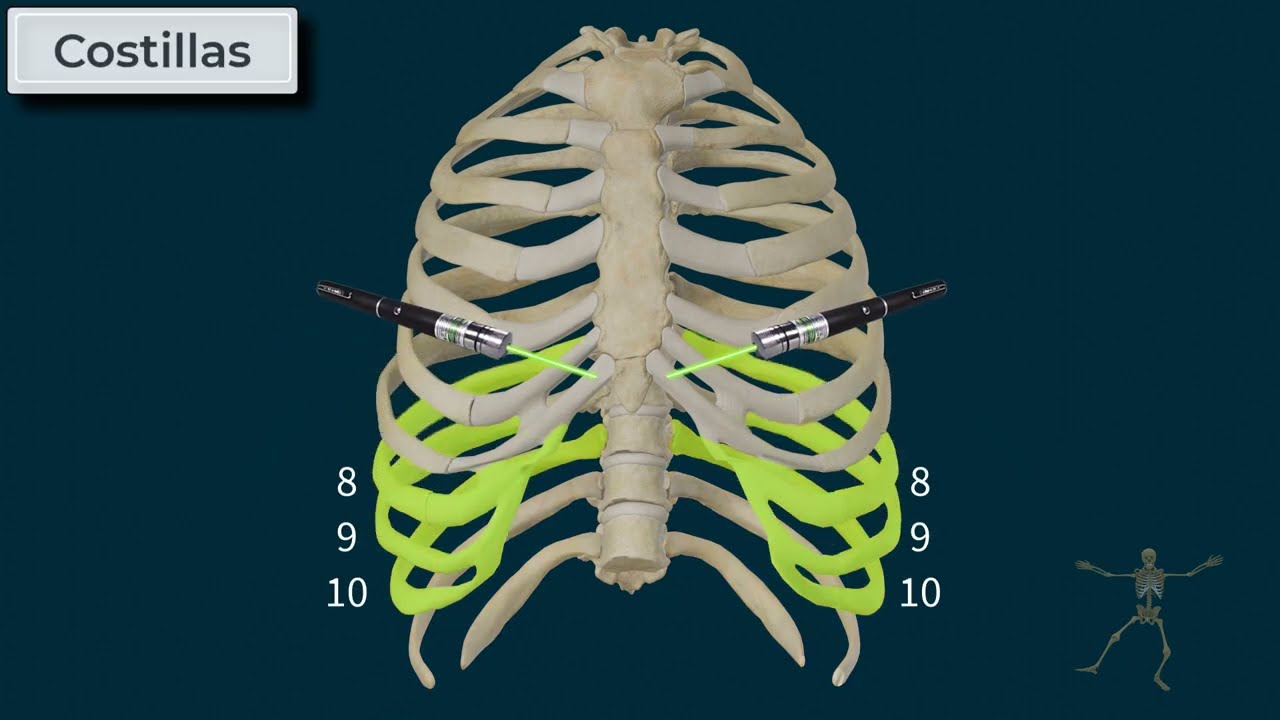
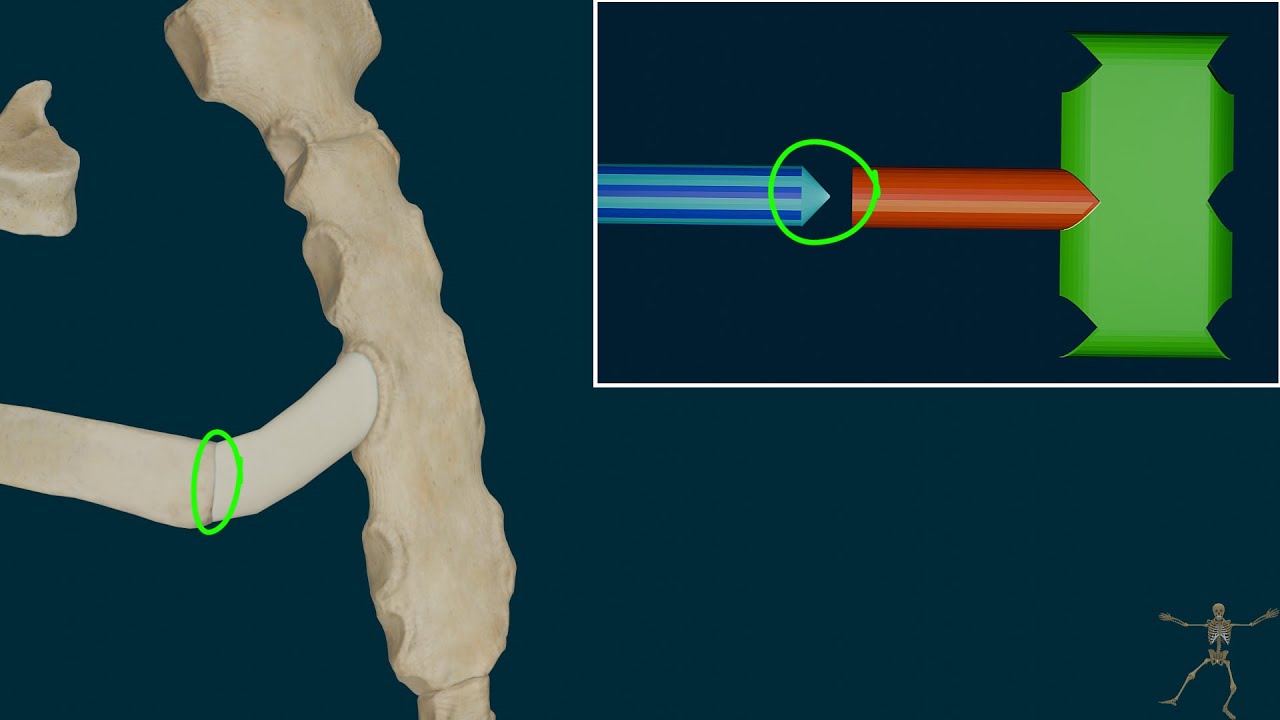
Now to finish quickly there are some joints that no longer have to do between the ribs and the sternum, but are joints that occur between the ribs, first the joint between the bony part of the ribs, the cartilaginous part, see that it is a joint cartilaginous type, okay? They are cartilaginous type joints, in addition, the joint is costochondrale, chondro cartilage and cost of rib and finally joints that now occur between the costal cartilages, they are then the interchondral ones and although you may not believe it, these synovial type interchondral joints, ok? see synovial here, see them here see, now they occur from the fifth to the tenth costal cartilage, that is, the tenth articulates with the cartilage that is above, the ninth with the one above, the eighth with the one above, the seventh with the sixth and although it is not seen in this image, the theory says that the sixth also articulates with the fifth costal cartilage, which is why they are called interchondral because it is between cartilages.
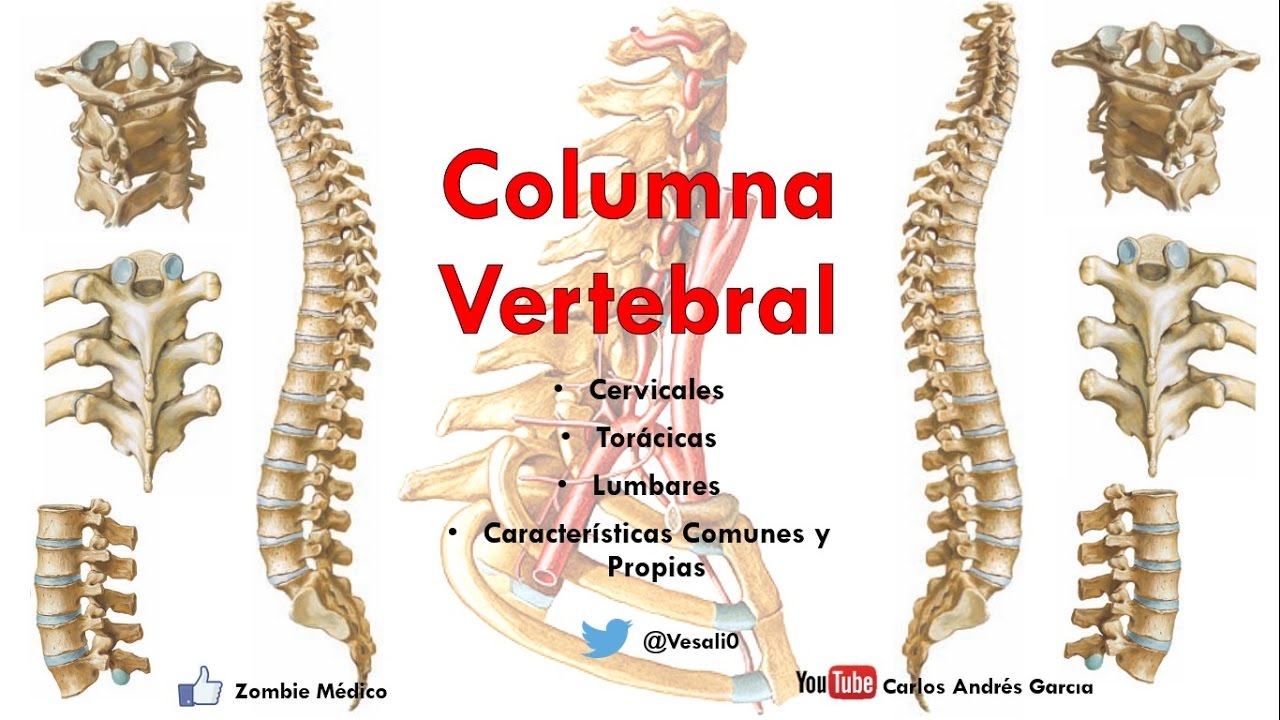
And good friend, this has been the entire video, here I will leave you the links so that you can see the spine and can understand these joints well so that you can see the previous videos of the thorax, sternum and ribs and do not forget to follow me on Instagram at @juan_sanchez1315 and subscribe to the little circle that appears here. Thank you very much for your attention.