Scribe
Scribe

Vous aimez ? Rendez Scribe encore meilleur en laissant un avis

Obtenir l'extension Chrome

Parcourir

  • Vidéos Populaires
  • Vidéos Récentes
  • Toutes les Chaînes

Outils Gratuits

  • Téléchargeur de Sous-titres Vidéo
  • Générateur de Horodatages Vidéo
  • Résumeur de Vidéos
  • Compteur de Mots Vidéo
  • Analyseur de Titres Vidéo
  • Recherche de Transcriptions Vidéo
  • Analytiques Vidéo
  • Créateur de Chapitres Vidéo
  • Générateur de Quiz Vidéo
  • Chat avec Vidéo

Produit

  • Tarification
  • Blog
  • Obtenir l'extension Chrome

Developers

  • Transcript API
  • API Documentation

Légal

  • Conditions
  • Confidentialité
  • Support
  • Plan du site

Droits d'auteur © 2026. Fait avec ♥ par Scribe

— Si cela a rendu votre vie plus facile (ou au moins un peu moins chaotique), laissez-nous un avis ! Nous promettons que cela nous rendra heureux. 😊

Related Videos

Você sabia que leveduras não servem só para fazer pão? #InstanteBiotec 68

Video thumbnail
58.54k414 Mots2m readGrade 10
Partager
Channel
Instante Biotec
Many pieces of evidence indicate that the Egyptians produced bread and fermented beverages more than 5,000 years ago. Hieroglyphs and illustrations depicting the production of these foods have already been found. And not only that, several utensils and containers and even samples of beer and bread were preserved by the warm and dry climate of the region.
Wine waste in utensils and jugs found in Iranian mountains dating back 7,000 years ago are, to date, the earliest evidence of brewing beverages. And all thanks to a microorganism. The word yeast comes from the Latin levare, which means to grow, because in the process of fermenting loaves, the increase of the volume of the dough occurs through the release of gases and the formation of foam.
Yeasts are unicellular fungi and constitute about 1% of all known fungus species. Mushrooms and mold of gorgonzola cheese, for example, are fungi but are not yeast. Typically, yeasts are 3 to 4 micrometers in diameter, but some species may reach up to 40 μm.
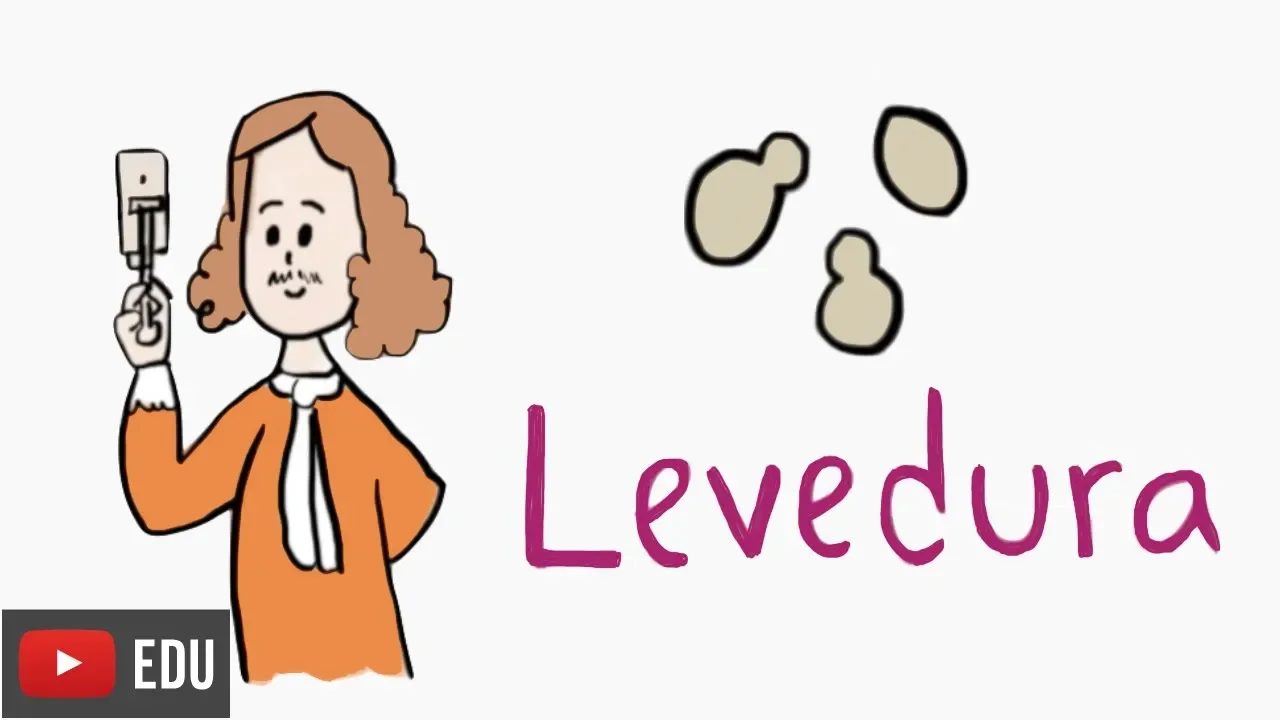
The first time a yeast was seen under a microscope was in 1680 by the Dutch naturalist Antonie van Leeuwenhoek. He discovered that yeasts were floating globules, but he thought they were just globular particles of starch. It was only in 1875 that the famous French microbiologist Louis Pasteur proved that the alcoholic fermentation was done by living yeasts and not by a chemical reaction.
In this fermentation the yeast feeds on the sugar and produces, as a result, alcohol and gases. Therefore, yeasts are widely used in biotechnology. Due to its ability to ferment sugars, we can produce beers, wines, breads, and alcohol fuel.
But they are not just for that, some species are capable of doing even more incredible things: The yest Yarrowia lipolytica is able to degrade the TNT explosive and some industrial effluents. Saccharomyces cerevisiae, which is famous for bread and beverages, also has potential for bioremediation, eliminating toxic pollutants such as arsenic from industrial effluents. The yeast Saccharomyces boulardii is used as a probiotic supplement to maintain and restore the natural microbiota of the gastrointestinal tract.
But some yeasts can also cause diseases. Some species are opportunistic pathogens and cause infection in people with compromised immune systems, such as Cryptococcus yeast that can cause meningitis. Another example is Candida.
It is found in human mucous membranes, but can sometimes become pathogenic causing candidiasis. If you liked the video, give a thumbs-up and share it too. See you next time!
Vidéos connexes
Bacteria: what are they? where do they live? what do they do? #InstanteBiotec 63
3:13
Bacteria: what are they? where do they liv...
Instante Biotec
361,518 views
FERMENTAÇÃO DAS LEVEDURAS
3:19
FERMENTAÇÃO DAS LEVEDURAS
Laboratório na Rede
123,426 views
Let's brew beer!
4:07
Let's brew beer!
Instante Biotec
54,679 views
How Does Yeast Make Bread?
9:14
How Does Yeast Make Bread?
Journey to the Microcosmos
85,511 views
LEVEDURA NUTRICIONAL // O que é e como usa na cozinha
6:31
LEVEDURA NUTRICIONAL // O que é e como usa...
Chef Helena Jang
68,946 views
How Does Music Affect Your Brain? | Tech Effects | WIRED
12:02
How Does Music Affect Your Brain? | Tech E...
WIRED
714,555 views
O BOLOR de um jeito que VOCÊ NUNCA VIU
9:46
O BOLOR de um jeito que VOCÊ NUNCA VIU
Manual do Mundo
532,365 views
The Birth of Microbiology
15:01
The Birth of Microbiology
Professor Dave Explains
56,865 views
Why almost all coal was made at the same time
6:39
Why almost all coal was made at the same time
Steve Mould
1,515,286 views
REINO FUNGI - FUNGOS - Aula Completa | Biologia com Samuel Cunha
49:39
REINO FUNGI - FUNGOS - Aula Completa | Bio...
Biologia com Samuel Cunha
1,065,177 views
The Invisible Universe Of The Human Microbiome
5:29
The Invisible Universe Of The Human Microb...
NPR
861,946 views
Como são regulamentados os OGM? #InstanteBiotec 79
4:56
Como são regulamentados os OGM? #InstanteB...
Instante Biotec
17,215 views
How to make Sourdough Starter | The Apartment Baker (en subtitles)
4:28
How to make Sourdough Starter | The Apartm...
Padeiro de Apartamento
2,478,669 views
Pão com Fermento Natural !!! Receita Simples !!! Sem mistérios !!!
27:57
Pão com Fermento Natural !!! Receita Simpl...
Chef Mancuzo
137,043 views
O ataque silencioso dos fungos
5:57
O ataque silencioso dos fungos
Pesquisa FAPESP
492,964 views
What are the fields of work of biotechnology? #InstanteBiotec 70
5:09
What are the fields of work of biotechnolo...
Instante Biotec
34,025 views
The bizarre flashing lights on a smartwatch
13:29
The bizarre flashing lights on a smartwatch
Steve Mould
2,858,222 views
Photosynthesis has a problem
8:48
Photosynthesis has a problem
Grist
159,906 views
Os fungos e a descoberta da penicilina #InstanteBiotec 82
4:41
Os fungos e a descoberta da penicilina #In...
Instante Biotec
86,231 views
A DESCOBERTA DA PENICILINA: UMA REVOLUÇÃO SEM QUERER QUERENDO
3:16
A DESCOBERTA DA PENICILINA: UMA REVOLUÇÃO ...
Minutos Psíquicos
109,787 views