Here we have an athlete preparing for a game. They’ve put on their gear and done their warmup, and now it’s time for one more routine— stretching. Typically, athletes stretch before physical activity to avoid injuries like muscle strains and tears.
But does stretching actually prevent these issues? And if so, how long do the benefits of stretching last? To answer these questions, we need to know what's actually happening in the body when we stretch.
There are two kinds of stretching our athlete might be doing. Dynamic stretches, which are controlled movements that engage a range of muscles throughout the motion. And static stretches, where the stretcher holds a position to keep specific muscles at a fixed length and tension.
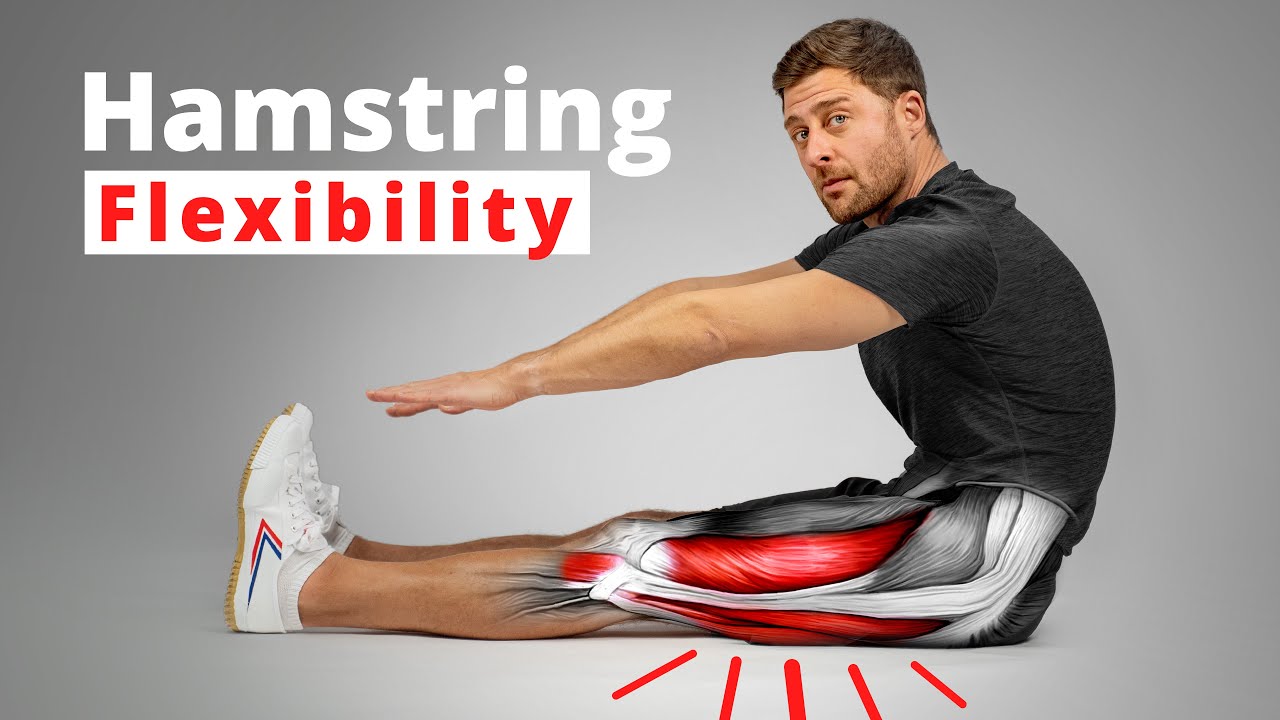
Our athlete is currently doing a static hamstring stretch— a 30 second interval where he pulls his hamstring beyond its usual range of motion. However, while we often think of stretching a muscle like stretching a rubber band, muscles are actually comprised of various tissue types, which interact to make a complex material. Rubber is elastic, meaning it resists being stretched and then returns to its original shape.
But muscle is viscoelastic. This means that, in addition to those elastic qualities, muscle changes under the stress of being stretched. Let’s see this in action.
At the large scale, this hamstring stretch is pulling on layers of protective tissue surrounding the muscle fibers, as well as the tendons that connect this muscle to nearby bones. These tissues contain elastic proteins like collagen and elastin, which allow them to slightly elongate over the duration of the stretch. At the smaller scale, these skeletal muscle fibers are comprised of millions of sarcomeres— the smallest contracting unit of muscle tissue.
Sarcomere’s long, fibrous proteins can relax to elongate muscle fibers or they can contract to shorten them— pulling on tendons and protective tissue to create the force propelling our athlete’s body. And when those tissues have been stretched out, they retain their strength at longer lengths, allowing our athlete to take full advantage of his improved range of motion. Unlike a rubber band, this muscle’s resistance to stretching decreases with each 30 second stretch, allowing our athlete to continually elongate his hamstring.
And this improved flexibility likely decreases the chance of incurring certain muscle injuries. But due to muscle’s elastic properties, this effect will be gone in just 10 minutes without further activity. The exercise from his match should elevate his muscle’s temperature and continue elongating the muscle, maintaining his increased flexibility throughout the game.
But once he gives his hamstrings a break, they’ll retract back to their previous state. So if all this is just temporary, how can you permanently improve your flexibility? For skeletal muscles, improved flexibility comes from additional sarcomeres, which allow you to maintain strength at even greater lengths.
Sarcomeres are added and subtracted to muscles depending on how frequently they’re used, so improving overall flexibility requires a comprehensive stretching regimen. Plus, you need to stretch often— very often. Current research suggests at least 10 minutes a day for roughly two months.
And since it's unsafe to hold any stretch for too long, it's recommended that you break up your stretching within any given session. Frequent stretching also makes lasting changes to your brain. The more you stretch a muscle, the higher your pain threshold becomes, allowing you to stretch further and further.
Long-term improvements to your flexibility can provide a better range of motion for your joints, potentially reducing your risk of muscle injury in the short and long-term. But it’s also possible to stretch too much, as flexible people can move their joints in potentially dangerous ways. Stretching also isn't helpful for every kind of movement, especially those where muscle injuries aren't very common.
For example, long distance running only involves a small range of motion for the joints involved, so stretching is unlikely to prevent that sport’s most common injuries. When it comes down to it, different lifestyles require different kinds of mobility. And no single stretching regimen is flexible enough to fit every situation.