art history can be deadly if it's happened to you you know what I'm talking about a darkroom and endless succession of flat images on a screen names and dates and movements and napping if you've had a great art history class I'm so glad and if you've had a single art history class well it's may be better than none I'm thinking about this because I've been watching the new series civilizations which takes a wide view in talking about the beginnings of human creativity and its development in many different parts of the world it's a follow up
to a series the BBC aired in 1969 called civilization singular where art historian Kenneth Clark outlined a personal and very Eurocentric account of quote the great works of Western man he wasn't telling the history of art per se but what he called quote all the life-giving human activities we lump under the terms civilization barbarism was in his view the opposite of civilization and nearly wiped out civilization entirely but he does clarify that great works of art can be produced in barbarous Society now this is problematic from a number of angles and was even old-fashioned at
the time but people loved it in Europe and in the u.s. they felt empowered to understand cultural history had watching parties and bought the book afterward there was even an uptick in cultural tourism 50 years later comes civilizations in which three art historians attempt a much more global history of human artistic production starting with the first human marks we've discovered in caves and skipping around the world through history and up to today it's a lot to cover but rather than promoting an understanding of civilization fighting to hold barbarians at bay the new series emphasizes how
cultures around the world have influenced each other constantly evolving and borrowing and exchanging ideas they add an extra s to the Renaissance as well telling us of the flourishing of art in areas other than Italy we're told of Rembrandt's interest in Mughal art and its impact on his work stemming from the Dutch East India Company's trade between the Netherlands and India there's a tendency in art history to tell the story of influence moving in one direction but here we see the tides flowing both ways weaving a much more complicated tale this shift from civilization to
civilizations reflects a wider transformation in the way art history and history in general is taught now you can take classes not only about art history but classes about how we teach art history or methodology a word I hoped I'd never say publicly these days there's a wider acceptance that any one topic can be approached from a variety of directions like you can look at a work of art formally analyzing only what you can see color line composition etc you can read a work iconographically recognizing the symbols it might contain and what those symbols meant when
the work was created you can take a biographical approach researching the story and intentions of the person or people who made it or you can use a whole swath of what are called critical theories to better understand your subject like psychoanalytic theories seeking out the subconscious drives that might be a play in a work or Marxist theory looking at the economic and social conditions that inform the work post-colonial theory you'll be surprised to learn seeks to understand a work through the colonial or Imperial forces that might have shaped it the new civilizations doesn't shy away
from these readings pointing out european artists interest in Islamic culture as a source of the exotic often concocting scenes and histories whole cloth fantasy is propagating stereotypes rather than reflecting anything based in reality we can also look at the ways race gender and sexualities have and have not been represented in art and whole categories of people have been excluded from our history books or were prevented from making work and showing it in the first place these are just a few of the many lenses you can use to look at art deploying one or many of
them to inform your understanding of a thing not to complicate the matter further but what even is art to begin with you'll note civilisations sidesteps the question by using their amorphous but now more inclusive term there's art anthropology architecture design visual culture material culture thing theory we use these terms to talk about all of the stuff and environments and experiences that humans have made understanding that none of them is sufficient on its own but for all of the nuance we've added to the study of art at the upper levels very little has changed in our
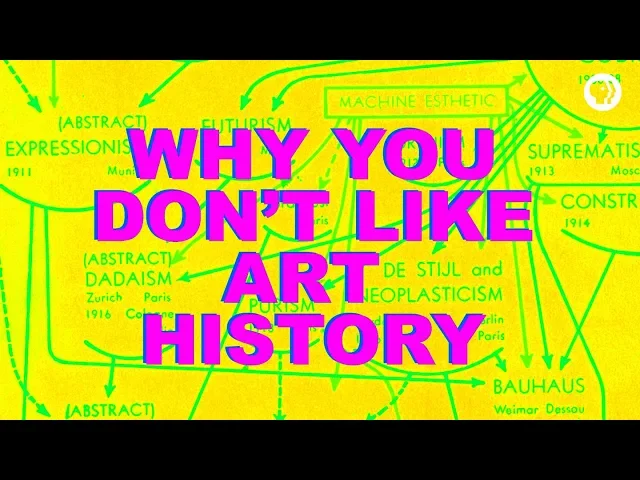
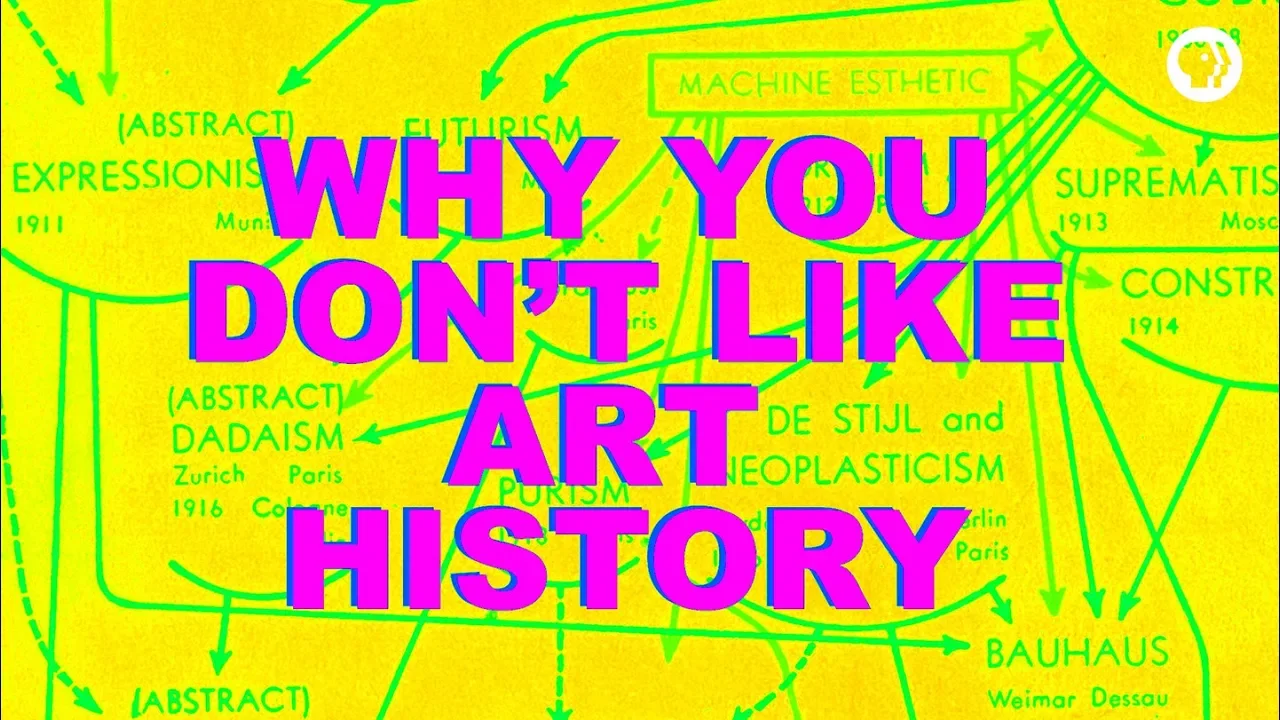
introductions to art what's most often communicated is a linear narrative of cultures and movements at least in America focusing on the yes significant contributions of ancient Greece and Rome the Italian Renaissance perhaps touching on a few non-western parts of the world in general we're told a story of advancement and progress from one school of art to the next Impressionism to neo-impressionism to post-impressionism ISM begetting ISM as if the creation of art is a single timeline rather than a vast confusing web the art of the last 50 years and of today is either left out or
smushed into the final fifteen minutes of the last class complication and nuance are reserved for higher level courses where if you get there you'll steadily pick apart the narrative you are originally presented with in your introduction the more linear version of history you first learn may have been easier to memorize and promptly forget but it recklessly sacrifices so much in its efforts to simplify and smooth over it also tends to gloss over the important factor of you in the story of art and use of the past by this I mean how artworks have been interpreted
historically and in the present and the biases inevitable in whomever is telling the story Kenneth Clarke civilization was flawed for sure but he was very effective in sharing with others what it is he about art and architecture and philosophy just a few years later one of my personal heroes John Berger came out with a BBC series of his own called ways of seeing which he also adapted into a book rather than attempt any sort of overview of art he sought instead to teach us how to look at things in the world in a critical but
altogether revelatory way seek it out and watch it I have chosen to teach art history through this show in my own particular and flawed way it's inefficient and scattershot jumping around in time and space bringing up stories of art from the past as they relate to the present I privilege the things I happen to learn about in my American schools and career I use the term art in a broad way trying not to give it boundaries but instead let it be a shapeless nebulous catch-all every way we talk about art or whatever you want to
call it is flawed and incomplete and biased but it's a matter of which flawed and incomplete and biased way or ways we pay attention to I would argue that you don't like art history because the stories you learn usually don't bear any resemblance to the world as you experience it which is messy and complicated and hard to make sense of with hindsight we're able to craft totalizing narratives which are helpful when the AP College Board tries to test your mastery of a subject but those narratives are ultimately unhelpful in getting you to like art in
teaching you how to see and how to be a critical thinker maybe the goal is to absorb as many of the flawed incomplete and biased histories as we can appreciating what is there what's missing and who's telling it and to let ourselves live with a chaotic asynchronous story of art allowing for diversity and difference and change which is ultimately a more accurate and more compelling representation of the fullness of the world if you're interested in absorbing a tremendous amount of art and architecture and history you should check out civilizations the new series produced by PBS
and the that tells the story of art from the dawn of human history to the present day it's a rigorous and thoughtful and mind expanding look at how art and creativity helped forge our societies and cultures click the links in the description below to find out more many thanks to Indianapolis homes Realty and all of our patrons for supporting the art assignment if you like our show subscribe and if you'd like to support our show head over to patreon calm art assignment [Music]