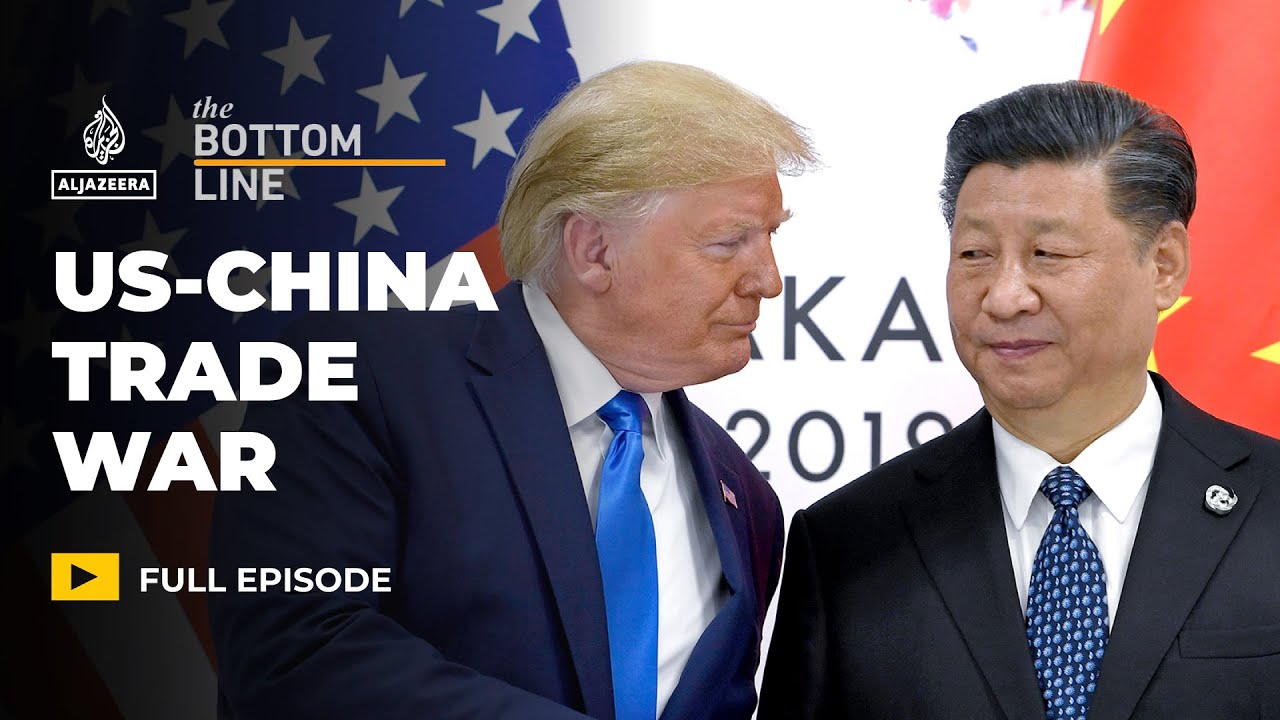
in recent days president Donald Trump has garnered significant attention by imposing a series of tariffs on various countries including allies like Canada and Mexico as well as Rivals such as China these measures are part of his America First Trade policy which aims to reduce trade deficits and address perceived unfair Trade Practices the Administration has proposed Universal tariffs on us Imports with treasury secretary Scott bessent suggesting a phased implementation starting at 2. 5% specific countries face targeted tariffs due to various grievances including trade imbalances migration issues and geopolitical conflicts these tariff proposals have elicited backlash from the affected Nations for instance Canadian officials have expressed strong opposition with prime minister Justin Trudeau stating that Americans are realizing Trump's tariffs on Canada would make life a lot more expensive Ontario Premier Doug Ford has threatened to cut electricity exports to the US in retaliation Mexico's president Claudia Shin bomb has stated that the tariffs would not solve problems with immigration these responses highlight the potential for escalating trade tensions and the possibility of retaliatory measures that could disrupt established economic relationships amidst the focus on these trade disputes another significant executive action has received comparatively less media attention on January 23rd 2025 president Trump signed an executive order titled strengthening American leadership in dig digital Financial technology this order marks a sharp shift in federal policy toward promoting and supporting the digital assets industry notably it prohibits federal agencies from developing or promoting a central bank digital currency effectively halting any plans for a digital dollar instead the administration is focusing on fostering innovation in the private sector particularly in areas like cryptocurrencies and blockchain Technology this executive order has significant implications for the future of digital Finance in the United States by assuming the development of a cbdc the US may be seeding ground to other nations such as China and members of the European Union which are actively developing their own digital currencies this could potentially impact the US Dollar's dominance in global trade and finance before starting his administration and after election President Donald Trump issued a Stern warning to the brics Nations threatening to impose 100% tariffs on their exports to the United States if they pursued the creation of a new currency to challenge the US Dollar's dominance he stated as a bricks Nation they'll have a 100% tariff if they so much as even think about doing what they thought and therefore they'll give it up immediately referring to efforts aimed at reducing Reliance on the dollar in global trade Trump emphasized that this stance was not merely a threat but a clear policy position asserting it's not even a threat in fact since I made that statement Biden said they have us over a barrel I said no we have them over a barrel and there's no way they're going to be able to do that however this new ban on cbdcs benefits the global South more than it supports the US dollar Chinese officials and economists have observed president Donald Trump's executive order Banning the development of a US Central Bank digital currency cbdc with interest viewing it as a potential opportunity for China to advance its own digital currency initiatives ju Guang Yao China's former Vice Minister of Finance emphasized the importance of digital currencies for the future economy he noted that cryptocurrencies are a crucial aspect for the development of the entire digital economy and suggested that China should closely monitor Global developments in this area hang yiping a former adviser to the pboc has also highlighted the significance of digital currencies he urged Chinese authorities to consider the long-term implications of their current cryptocurrency policies suggesting that a rigid ban might not be sustainable in the future Josh lipsky director of the Atlantic council's Global cbdc tracker emphasized the international ramifications of the ban stating the most significant impact from the executive order is the signal it sends to the rest of the world it tells Europe that they have the playing field to themselves to set privacy and cyber security standards through the digital Euro he further noted that China could leverage this opportunity to position itself as a leader in digital currency technology potentially influencing other countries to follow its lead Vincent Arnold a researcher at the Yale program on financial stability criticized the ban as shortsighted he advocates for the development of a crossborder wholesale cbdc or offshore digital dollar to maintain the US Dollar's International status and enhance Global Financial stability Arnold contends that while stable coins offer certain benefits they cannot fully replace central bank money and a us cbdc would provide a more secure and effective means of facilitating International transactions the European Central Bank ECB has interpreted the US ban as a catalyst for accelerating its own digital Euro project ECB board member Pierro chipolone highlighted the competitive implications suggesting that the US support for dollar backed stable coins could attract more customers and weaken European Banks he argued that a digital euro is essential to maintain the relevance of European financial institutions in the face of growing Global digital currency initiatives critics warned that the US ban on cbdc development May inadvertently accelerate Global dollarization efforts by abstaining from cbdc Innovation the US risks seeding leadership in setting International digital currency standards potentially diminishing the Dollar's dominance in global markets over time in this video we analyze the impact of these decisions on the US dollar and economy since the ban on cbdcs could have a major effect on the Dollar's Global standing we take a closer look at its potential consequences additionally we examine other executive orders issued by President Trump that have already faced backlash and could further destabilize the economy understanding cbdc Central Bank digital currencies cbc's are digital versions of a country's Sovereign currency issued and regulated by its Central Bank unlike decentralized cryptocurrencies like Bitcoin or ethereum cbdcs are centralized representing a direct claim on the issuing Central Bank this centralization ensures stability and reduces volatility the primary goals of cbdcs are to enhance Financial inclusion streamline payment systems and provide a secure efficient medium for transactions in the digital economy cbdcs are accessible via digital wallets and are recognized as legal tender ensuring they are an official medium of payment within the country they are designed for interoperability with existing Financial systems facilitating seamless integration and widespread use robust security protocols protect against fraud and cyber attacks maintaining trust and reliability in the digital currency the digital un ecny China leads cbdc development with the digital un ecny launched by The People's Bank of China pboc in April 2021 after extensive pilot programs in major cities by January 2025 the digital un has been widely adopted becoming integral to China's Financial ecosystem and demonstrating the government's commitment to advancing digital Financial Technologies as of January 2025 the digital un has over 1 billion active users which is approximately 70% of China's population daily transactions average 500 million ecny transfers with monthly transaction values exceeding 50 trillion un or about $7. 2 trillion USD Merchant adoption is robust with 80% of urban retailers and service providers accepting ecny integration with major payment platforms like alipay and WeChat pay has significantly driven adoption among consumers and businesses the digital un operates on a two-tier system enhancing efficiency and security the pboc issues ecny to commercial Banks which distribute it to end users via bank accounts or digital wallets this system maintains Central Bank control over issuance while leveraging existing banking infrastructure for distribution the digital currency electronic payment or DCP framework ensures secure and efficient transactions key features include offline functionality using Bluetooth and NFC enabling transactions without internet connectivity and support for programmable money allowing smart contracts and conditional transactions these features expand the digital un's functionality and Foster innovation in financial services China has implemented comprehensive policies governing the digital un balancing user privacy with regulatory oversight to prevent illicit activities privacy protections Safeguard user data while allowing the government to monitor transactions for legal compliance the ecny aligns with national monetary policies enhancing Financial stability by providing real-time data and enabling direct Central Bank interventions China is also promoting the digital UN in crossb transactions to enhance the un's global usage initiatives include strategic Partnerships and international agreements aimed at positioning the ecny as an alternative to traditional Reserve currencies thereby promoting Financial sovereignty and reducing Reliance on the US dollar China's strategies to internationalize the R&B via the digital un include bilateral trade agreements and currency swaps by 2024 China has established currency swap agreements with 15 countries including Argentina Brazil Canada and the UK these agreements facilitate direct conversions between local currencies and ecny bypassing the USD and reducing its role in international trade offshore un centers China has set up offshore un centers in Hong Kong Singapore and London supporting ecny transactions and enhancing un liquidity Hong Kong alone accounts for nearly 50% of all offshore R&B deposits making it the largest R&B deposit pool globally erosion of USD Reserve currency status the usd's dominance is challenged as the digital un gains traction by July 2024 53% of Russia's International transactions were conducted in un increased ecny adoption may lead lead to a gradual decline in USD Reserve status reducing its influence over global monetary policies diversification of Foreign Exchange reserves central banks worldwide are diversifying reserves to include ecny China's currency swap agreements enable countries to hold UN in reserves facilitating trade and reducing USD Reliance this diversification promotes Financial stability and reduces vulnerability to USD Centric economic fluctuations impact on US economic influence and policy Leverage the usd's dominant role grants the US significant economic and geopolitical Leverage The Rise of the digital un diminishes this leverage as countries adopting ecny can circumvent us imposed sanctions more easily for example China's currency swap agreements and the growing use of ecny and international trade allow transactions outside the USD based Financial system reducing the effectiveness of US economic policies as foreign policy tools let's take a quick pause if you've enjoyed the video so far could we ask a small favor hitting the like button helps us reach a broader audience and sharing your thoughts or feedback in the comments makes an even bigger impact thank you for watching now let's dive back in tariffs on Canada and Mexico president Trump announced that the United States would Implement a 25% tariff on All Imports from Mexico and Canada effective February 1st 2025 this decision is is part of the administration's broader America First Trade policy aiming to address trade imbalances and encourage domestic manufacturing the United States maintains substantial trade relationships with both Canada and Mexico underscoring the depth of economic integration within North America in 2022 the combined trade in goods and services between the US and these two Nations amounted to approximately $1.
76 trillion specifically trade with Canada total an estimated 98. 9 billion comprising $427. 50 billion in exports and $481 two billion in Imports similarly trade with Mexico reached approximately 8551 billion with US exports at $362 billion and imports at $ 4931 billion these figures highlight the significant role that Canada and Mexico play in US trade Collective accounting for a substantial portion of both exports and imports the imposition of a 25% tariff on imports from these countries could have far-reaching implications potentially disrupting established Supply chains and affecting various sectors of the economy the automotive industry exemplifies this deep integration in 2024 the US imported over $22 billion worth of automobiles and related parts from Canada and Mexico such extensive crossb trade underscores the potential for significant ific economic disruption should substantial tariffs be imposed furthermore Canada and Mexico are pivotal markets for US exports Canada stands as the top export destination for 36 US states while Mexico holds this position for Six States including key border states such as Texas Arizona New Mexico and California for instance New Mexico relies heavily on the Mexican market with 70% of its exports valued at $3.