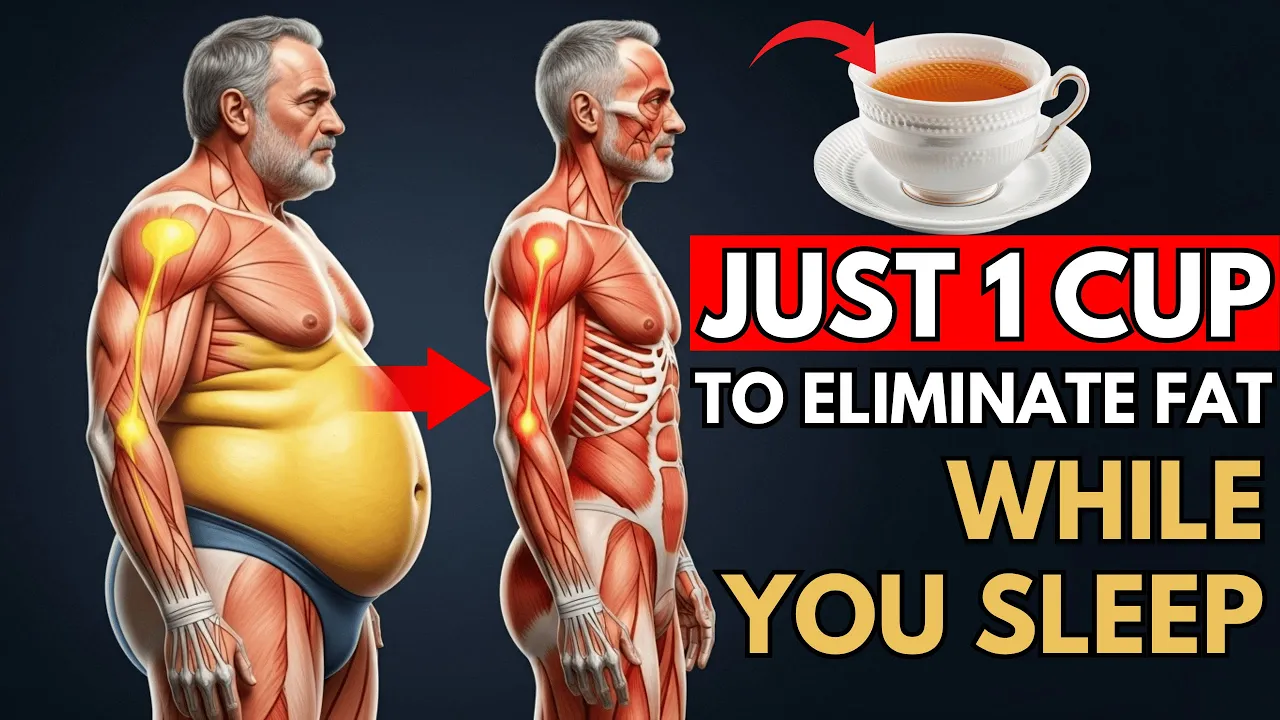
What if the key to fighting the most dangerous type of fat in your body wasn't a new diet trend or a grueling exercise program, but a simple, natural drink you have right before you go to sleep? I am talking about a specific strategy to target the fat you cannot see. This isn't the soft, pinchable fat on the surface.
This is visceral fat—the "hidden" fat that wraps itself tightly around your vital internal organs: your liver, your pancreas, your intestines. The reason this is so critical is that this fat is not dormant. It is a living, metabolically active organ.
Twenty-four hours a day, it acts like a factory, pumping inflammatory chemicals and hormones into your body. This inflammation is the direct pathway to the very conditions I treat every single day in my older patients: Type 2 Diabetes, high blood pressure, heart attacks, strokes, and fatty liver disease. I am Dr Richard Coleman.
For over thirty years, my entire medical career has been specialized in geriatric medicine—the health and well-being of older adults. I've dedicated my life to helping patients navigate these complex health challenges. Many people have heard of green tea for weight loss, and it has its merits.
But today, I am going to share with you seven other natural, effective teas. These specific compounds are scientifically shown to support your body’s natural fat-burning and repair cycles, which are most active while you sleep. We will go through each one, how it works, and how to prepare it correctly.
You will want to stay for all seven. As we go through this crucial information, if you find it valuable, please take a moment to like this video and share it with friends or family who could benefit from this knowledge. If this is your first time visiting, I invite you to subscribe to the channel for more practical, science-based health advice.
And I would genuinely like to know, which city or country are you watching from today? Please let me know in the comments below. It’s always encouraging to see how far this message of health can reach.
Now, let's begin. The first combination I want to discuss is perhaps one of the most powerful. It is turmeric tea, combined with black pepper.
This is a golden-colored, warming drink, but its medicinal value is profound. Turmeric's primary active compound is called curcumin. Now, you have certainly heard the word "inflammation" many times.
In my field of geriatrics, we often talk about "inflamm-aging. " This is the chronic, low-grade, systemic inflammation that quietly builds up as we age. It is the smoldering, unseen fire behind so many age-related conditions—from the pain of arthritis and the stiffness in your joints to the development of heart disease and even cognitive decline.
This "inflamm-aging" also creates a biological environment where your body finds it very easy to store fat, especially this dangerous visceral fat, and makes it incredibly difficult to lose it. When you drink turmeric tea about an hour before bed, you are introducing a potent anti-inflammatory agent right at the beginning of your body's natural, nightly repair cycle. This is when your system is primed to heal.
But, as the original video correctly states, there is a critical detail. Your body is very poor at absorbing curcumin on its own. It's a large, complex molecule that is difficult for our gut to transport into the bloodstream.
This is where the black pepper becomes essential. Black pepper contains a substance called piperine. This compound acts as a biological "key," unlocking curcumin's availability and increasing its absorption in your bloodstream by up to two thousand percent.
Without it, the benefit is, frankly, largely wasted. This combination also supports your liver's detoxification pathways and, very importantly, helps improve insulin sensitivity. This means your cells become more receptive to the hormone insulin, allowing your body to use sugar for energy efficiently instead of immediately storing it as fat.
The result is not just a long-term, gradual reduction in abdominal fat, but many of my patients report waking with significantly less joint stiffness and less abdominal bloating. To prepare it: simply add one teaspoon of turmeric powder and a small pinch of black pepper to a cup of boiled water. Let it simmer gently on low heat for about three minutes, strain it, and drink it while it's warm.
I must add a necessary medical caution: Curcumin is a mild blood thinner. If you are currently taking any anticoagulant medication, such as Warfarin, Eliquis, Xarelto, or even a daily aspirin regimen, you must consult your physician before making this a regular habit. The second tea I want to discuss is hibiscus.
This is a beautiful, deep ruby-red infusion with a pleasant, tart flavor, similar to cranberry. Its power comes from its high concentration of bioactive compounds called anthocyanins—these are the same potent antioxidants you find in dark berries like blueberries and blackberries. The original video mentions these compounds have a "thermogenic" effect.
Let's be very clear about what that means. It is not a furnace. It will not magically melt fat while you sleep.
Rather, it provides a very gentle, subtle nudge to your metabolism, encouraging it to remain active and efficient even as your body slows down for sleep. For an older adult, whose basal metabolic rate has naturally declined with age, this gentle, consistent support can be quite meaningful over time. Some scientific studies have indeed shown a link between regular hibiscus consumption and a reduction in waist circumference.
But from my clinical perspective, I am even more impressed by its other, more robustly documented benefits. Hibiscus tea has been shown in multiple, high-quality clinical trials to have a measurable, positive effect on blood pressure. Hypertension, or high blood pressure, is perhaps the single most common chronic condition I manage in my patients.
Hibiscus appears to act as a natural, mild ACE inhibitor, which helps to relax blood vessels and, consequently, lower pressure. It also has a mild diuretic effect, helping your body gently excrete excess sodium and water. This is why many people report feeling significantly less bloated in the morning.
This is not fat loss overnight; it is the reduction of fluid retention, which contributes to that heavy, uncomfortable feeling and can often mask the progress you are making. To prepare it: steep two tablespoons of dried hibiscus flowers in one cup of boiling water for about 10 minutes. This allows those anthocyanins to be fully released.
Strain it, and I recommend drinking it about two hours before bedtime. This timing is important. Because it is a diuretic, you want to give your body time to process it before you fall into a deep sleep, to avoid interrupting your rest.
And again, a necessary caution: Because it can lower blood pressure, if you are already on antihypertensive medication, you must monitor your blood pressure closely and discuss this with your doctor. It can amplify the effect of your medication, and it can also interact with certain prescription diuretics. Now, while managing inflammation and fluid retention is critical, we must address another primary driver of abdominal fat, especially in the senior population: chronic stress.
This brings us to our third tea, which may surprise you: sage. Most people know sage as a culinary herb, something you use for a holiday meal. But when prepared as a medicinal tea, it reveals extraordinary properties for managing stress-related weight gain.
The secret lies in its natural compounds, such as rosmarinic acid. These compounds appear to have a direct influence on the regulation of cortisol. Cortisol is your primary stress hormone.
It is a lifesaver if you are facing an immediate, physical threat. The problem is that in our modern lives, the stress is not a physical threat; it is chronic, low-level anxiety. For my older patients, this can be worry about health, finances, family, or it can be a simple physiological stressor, like the poor, fragmented sleep that often accompanies aging.
This leads to chronically elevated cortisol levels, especially at night when they should be at their absolute lowest. When cortisol is high at night, it sends a powerful biological signal to your body: "We are in danger. Store energy immediately.
" And its favorite place to store that energy is deep in your abdomen, as visceral fat. This is a survival mechanism that has gone terribly wrong. Drnking sage tea in the evening can help modulate this.
It has a calming effect on the nervous system, which in turn helps to normalize that evening cortisol level. It helps shift your body out of "high alert" and into "rest and repair" mode. This is the only state in which your body can effectively repair itself and burn stored fat.
Without this hormonal shift, fat burning is biologically very difficult. The preparation is simple. Use one tablespoon of dried sage leaves in one cup of hot water.
As the original video notes, be careful not to use water at a rolling boil. Excessive heat can damage some of these delicate compounds. Let the infusion steep for about 8 minutes, strain, and drink it while it's warm, ideally around 40 minutes before bedtime.
In addition to helping regulate cortisol, it improves the quality of your sleep, which, as we've discussed, creates a positive feedback loop for better metabolic health. A simple caution: for individuals who already have naturally low blood pressure, sage tea can have a mild hypotensive effect, so it should be used in moderation. The fourth tea on our list is a true classic, a dynamic duo: ginger and lemon.
This combination works in perfect synergy, and its benefits are both immediate and long-term. Let's break this down clinically. Ginger contains powerful bioactive compounds, namely gingerols and shogaols.
These are responsible for ginger's slightly spicy, warming taste. The original video mentions this is 'thermogenic,' and again, this refers to a mild, supportive increase in your metabolic rate. It's like gently stoking your body's internal furnace.
But from my medical perspective, I am far more impressed with ginger's profound anti-inflammatory and, most importantly, digestive properties. This is where it truly shines for my older patients. As we age, our entire digestive system naturally slows down.
We produce less stomach acid, and our digestive motility—the speed at which food moves through our system—becomes more sluggish. This is why indigestion, abdominal heaviness, reflux, and bloating are among the most common complaints I hear. Ginger is what we call a prokinetic.
It gently stimulates the digestive tract, encouraging it to move food along efficiently. A settled, comfortable, and efficient gut is the absolute foundation for a healthy metabolism. If your digestion is stagnant, your entire system becomes sluggish.
Now, let's look at the lemon. It adds more than a refreshing citrus flavor. It provides vitamin C, a key antioxidant, but more importantly, it provides pectin.
Pectin is a type of soluble fiber. This fiber is particularly important at night because it helps to slow down the absorption of any sugars from your evening meal that are still in your digestive tract. This action prevents a sharp "blood sugar spike.
" When your blood sugar spikes, your pancreas releases a flood of insulin to manage it. Insulin is a storage hormone. Its job is to take excess sugar out of the blood and store it.
. . primarily as fat.
By stabilizing your blood sugar, the pectin in lemon helps to prevent this insulin surge, keeping your body in a more neutral or even fat-burning state as you rest. This is a simple yet effective way to manage your nighttime insulin response. Preparing this tea is straightforward.
Peel and thinly slice about 2 centimeters of fresh ginger root. Boil it in one cup of water for around 5 minutes. Once you remove it from the heat, add the juice of half a freshly squeezed lemon.
Allow it to cool until it is comfortably warm. This is an excellent tea to consume about one hour before bed. A practical warning: for those who suffer from severe acid reflux or GERD, both ginger and lemon can be irritating to the esophagus.
If you have this condition, you must start with a very weak, diluted infusion to see how your body tolerates it. We have discussed inflammation, stress, and digestion. Now we must turn our attention to one of the body's most critical, and often most overburdened, systems in the fight against visceral fat: the detoxification pathways.
This brings us to our fifth tea: horsetail. This is an ancient medicinal plant, and while many people know it as a remedy for skin, hair, or nails, few realize its value for combating this deep abdominal fat. What makes horsetail special is its unique and dense mineral profile, particularly its richness in silicon and potassium.
Silicon, or silica, is a trace mineral that is absolutely fundamental for building and maintaining healthy connective tissue—that means your bones, your cartilage, your skin, and your arteries. For my geriatric patients, supporting bone density and joint health is a primary concern, so this is a significant co-benefit. But in the context of visceral fat, horsetail's power comes from its support of your body's natural cleansing processes.
As we age, the efficiency of our liver and kidneys naturally declines. The "detox" pathways can become sluggish. Your liver is already working hard at night to neutralize toxins.
Horsetail supports the next step: elimination. Visceral fat is not "clean" fat; it is a known repository for metabolic waste and environmental toxins that your body has walled off. Horsetail's mineral content, particularly its potassium, supports kidney function.
It acts as a natural diuretic. It gently promotes the elimination of excess fluids and the toxins dissolved within them. This is why it is so effective at reducing abdominal bloating.
By flushing this excess fluid, it not only helps you feel lighter but also prevents unnecessary strain on your circulation. However, I must be very firm and clear with my warning here. Horsetail is a powerful diuretic.
It is not a gentle, everyday tea like ginger or hibiscus. Because it is so effective at flushing fluids, it can also deplete your body of potassium. This can be dangerous, especially if you are on certain blood pressure medications, heart medications (like Digoxin), or prescription diuretics (like Furosemide).
If you have any history of kidney issues, kidney stones, or kidney disease, you must not use this tea without the direct supervision of your healthcare provider. For a healthy individual, it can be an effective tool when used in moderation—perhaps for a few days at a time, but it should be rotated with other teas and not used continuously. To prepare it, use one tablespoon of dried horsetail in a cup of boiling water.
Allow it to steep for about 12 minutes, strain well, and drink it approximately two hours before bedtime. This timing is important, as with hibiscus, to allow its diuretic effect to work before you fall into a deep sleep. The sixth tea that deserves a place in your nightly routine is cinnamon.
This is a spice most of us associate with sweet aromas and holiday baking, but medicinally, it is one of the most powerful tools we have for managing blood sugar and, by extension, visceral fat. What makes cinnamon stand out are its bioactive compounds, especially cinnamaldehyde. This compound has been shown in numerous studies to have a direct, positive effect on how your body handles glucose.
The core problem for many, if not most, adults as they age is a condition called "insulin resistance. " You can think of it this way: for years, a diet high in processed foods and sugars has caused your blood sugar to spike repeatedly. This forces your pancreas to "shout" by releasing floods of insulin.
Over time, your cells—your muscles, your liver—become "numb" or "resistant" to this constant shouting. They stop listening. So your pancreas has to shout even louder, producing more and more insulin to get the same job done.
This state of high insulin, or hyperinsulinemia, is the definition of a fat-storage mode. It is also the direct precursor to Type 2 Diabetes. Cinnamon appears to help "re-sensitize" your cells.
It makes them "listen" to insulin's signal again. It helps transport glucose from the blood into the cell more efficiently. This means your body needs less insulin to effectively clear sugar from your blood.
Less insulin in your system means your body can finally switch off the fat-storage signal and switch on the fat-burning signal. This shift is especially valuable at night, during your natural fasting period. The original video gives excellent advice here: it is essential to use a true cinnamon stick, not powder.
Most powder sold in stores is of the Cassia variety. Cassia contains high levels of a compound called coumarin. In large, regular doses, coumarin can be toxic to the liver.
True cinnamon, often called Ceylon cinnamon, has very low levels of coumarin and is much safer for regular use. Place one stick in a cup of water, bring it to a gentle boil, and let it simmer for about 5 minutes. Remove from heat, allow it to cool slightly, and drink it warm about 40 minutes before bed.
This is a safe, simple, and remarkably effective ritual for supporting metabolic balance. For those with diagnosed diabetes, you must, of course, monitor your blood sugar closely and discuss this with your doctor, as it can enhance the effect of your medication. Finally, we arrive at the seventh tea on our list.
Dandelion. This is a plant often dismissed as a stubborn garden weed, but in functional medicine, it is one of the most respected and potent natural allies for eliminating visceral fat, precisely because it supports the single most important organ for this task: your liver. Your liver is the central processing plant for your entire body.
It is a metabolic powerhouse. It is responsible for metabolizing fats, neutralizing toxins, managing your hormones, and storing essential vitamins. As we age, the liver's efficiency and its ability to regenerate can slow down.
It becomes more easily overburdened. The liver does its hardest work at night, particularly between the hours of 2 and 4 AM. This is its dedicated "deep clean" cycle.
During this window, it processes the fats you consumed during the day and begins to mobilize stored fat—including visceral fat—for energy. But to do this, it needs one crucial tool: bile. Bile, which is produced by the liver and stored in the gallbladder, is what emulsifies fats.
You can think of it as your body's natural detergent. It breaks down large fat globules into tiny, manageable droplets so your digestive enzymes can process them and your body can eliminate them. Without sufficient, healthy-flowing bile, fats are not broken down properly.
They are re-circulated and are more likely to be re-stored. Dandelion's power comes from its naturally bitter compounds. These compounds are what we call a "cholagogue"—they stimulate your gallbladder to contract and release a healthy flow of bile.
They also act as a "hepatic," meaning they support the liver's own detoxification processes, what we call Phase 1 and Phase 2 detoxification. By drinking dandelion tea before bed, you are essentially "prepping" your liver for its important nighttime work. You are ensuring it has the bile it needs to break down fats efficiently.
The preparation is simple: use one tablespoon of dried dandelion leaves or root in a cup of hot water, and let it steep for about 15 minutes to fully extract those active compounds. That slightly bitter taste is the medicine. It's a sign the beneficial compounds are present.
Dandelion offers an additional advantage as well. It's naturally rich in potassium. This is important because, like hibiscus, it also has a diuretic effect, helping to reduce fluid retention.
But unlike many other diuretics, it is "potassium-sparing," meaning it gives you potassium while helping you flush excess water, making it much safer in that regard. To truly benefit from these teas, the key, as the original video rightly concludes, is consistency. But I must add this as your physician: these teas are not a magic wand.
They are not a replacement for sound medical advice, nor are they a cure for a poor diet or a sedentary lifestyle. They are allies. They are a support system.
They help to optimize your body's own natural processes. Reducing visceral fat is a slow and steady process. It absolutely requires a diet that is low in processed sugars, refined carbohydrates, and industrial seed oils.
These are the foods that fuel visceral fat and drive the inflammation we are trying to fight. You must replace them with a diet rich in fiber from vegetables, high-quality protein to protect your muscle mass, and healthy, natural fats. Staying hydrated during the day is equally important.
Your kidneys cannot flush out toxins if they are dehydrated. And as the video mentioned, it is critical to avoid eating heavy meals at least two to three hours before drinking your tea and going to sleep. Your body has a limited amount of energy at night.
It can either focus on digestion or it can focus on repair. It cannot do both well at the same time. If you go to bed on a full stomach, your body will spend all night working on digestion, and that entire "repair and detox" window—the very window we are trying to target with these teas—is lost.
Pick one or two of these teas that appeal to you and seem appropriate for your health needs. Alternate them throughout the week. And pay attention.
Notice how your body reacts. Don't just look at the scale. Notice how your stomach feels.
Notice the quality of your sleep. Notice the energy you wake up with in the morning. These are the true signs of returning metabolic health.
This is a natural, steady process of giving your body the support it needs to heal itself. Thank you for your time and attention.