[♪ INTRO ] Nowadays, it's pretty standard thinking that psychological disorders can be traced back to something biochemically unusual in the brain. But a hundred years ago, scientists were just starting to figure this out and use different chemicals as treatments, especially for schizophrenia. We've had a number of false starts that probably did more harm than good.
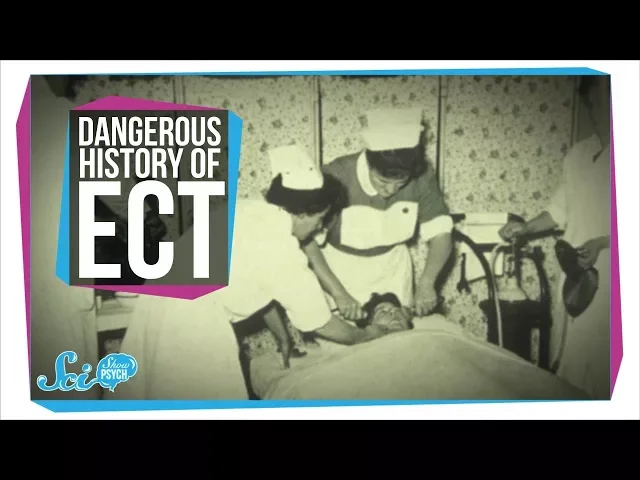
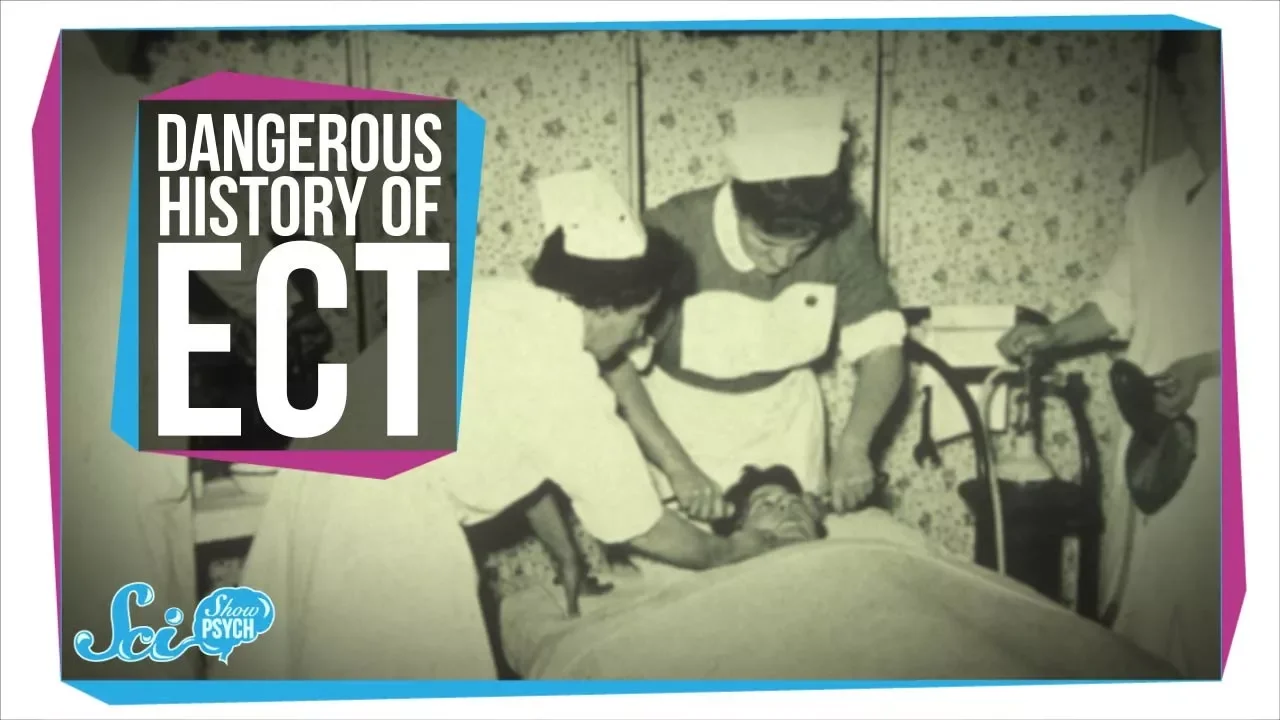
But all this led up to electroconvulsive therapy or ECT— the use of electric shocks to the brain. ECT has a history of misuse, but professionals are still actually looking into it as a treatment in a few specific cases today. Schizophrenia is a disorder that has many complex symptoms, which include hallucinations and delusions, as well as disrupted thoughts and motor functions.
It can be pretty debilitating. Today, many patients can control symptoms with medication and therapy, but a hundred years ago there weren’t really any treatments for it. One of the first medical experiments to treat schizophrenia came about in the 1920s.
It was called deep sleep therapy. The goal was to induce sleep for 5 to 11 days at a time using chemicals called barbiturates. Barbiturates slow down the central nervous system by stimulating GABA neurotransmitter receptors, which inhibit neurons from firing.
Deep sleep therapy was based on the idea that schizophrenia involved a vicious cycle between brain excitation and motor activity. So, hypothetically, getting patients to sleep for a long time could break that cycle of too much activity, and hopefully cure the disorder — or at least reduce some of the hallucinations and delusions. According to the first research report in 1922, a quarter to a third of the first 26 patients supposedly woke up with fewer symptoms.
But it failed to mention that 3 of them died. In fact, death was a constant risk. And many patients that survived deep sleep therapy suffered from life-threatening fever, heart trouble, and vomiting from that much interference with their central nervous system.
But this practice continued through the 1920s because it kinda worked, even if the reasoning behind it was iffy and it was super dangerous. Soon, though, people moved on to other ideas — like insulin shock therapy in 1927. This treatment involved giving people big doses of insulin, which is a chemical your body uses to lower your blood sugar by telling mostly fat and muscle cells to store extra glucose.
But all your cells need glucose to make energy. So if your blood sugar gets low enough, your brain cells won’t make the energy they need to keep you conscious, and you can slip into a coma. Which is exactly the point of insulin shock therapy.
This treatment was based on the idea that schizophrenia was caused by some weak neurons in the brain … which, for the record, is also wrong. And supposedly the lack of blood sugar would force those weak brain cells to shut down and conserve energy, which would sort of jump-start them into functioning properly again. Patients would be placed into a coma for 15 minutes, 5 or 6 times a week for 10 weeks.
And they had to be woken up with glucose through a nasal tube or delivered straight into their blood vessels. And while the original report in 1933 claimed that over 70% of patients showed improvements, even those improvements were usually temporary. On the flip side, patients could suffer permanent brain damage, or even die from the procedure.
Which are… some pretty serious consequences. Now, in the 1930s, convulsive therapy was also introduced. The idea was that seizures and schizophrenia were antagonistic disorders — meaning, they couldn't both exist in the same person.
By the way, now we know this is also 100% not true. But, based on this hypothesis, doctors used chemicals to induce seizures to get rid of schizophrenia symptoms. Typically, they used a drug called metrazol, which isn’t well understood.
But it high doses it causes seizures by disrupting the receptors of some neurotransmitters. There may have been some positive effects from convulsive therapy — at a symposium in 1937, they claimed that half of treated patients were cured. But also these so-called successes may have been patients who only showed fewer symptoms temporarily.
And — no surprises here — the treatment was also a huge risk. Some reports said that nearly half of the patients had such severe convulsions that they were at risk of fracturing their spines. So scientists were throwing a lot of spaghetti at the wall when electroconvulsive therapy, or ECT, was proposed.
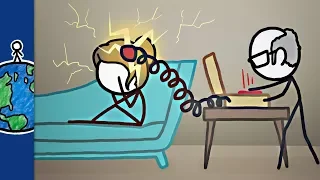
In the late 1930s, an Italian physician named Ugo Cerletti supposedly watched pigs get anesthetized with electricity before being butchered. So he wondered if it could be used with humans for medical reasons — like in the convulsive therapies that were in fashion. Early on, ECT treatments involved two electrodes placed across from each other on a patient's scalp, sending 120 volts of electricity through them — which is about the voltage of a power outlet in the US.
Doctors quickly discovered that inducing convulsions this way didn't help with schizophrenia. But according to research reports in 1943 on several different disorders, ECT seemed to actually help with severe symptoms of depression. Patients were also reporting positive experiences with ECT, and for a while it became a fairly common treatment in hospitals throughout the United States and Europe.
But there was a major problem: those thumbs-ups might have been because severe memory impairment was a side effect. The patients often couldn't remember their treatments. There was also a risk of severe cognitive impairment, like thinking skills.
High voltage shocks can cause tissue damage, and can disrupt the electrical signals in neurons. ECT also came to be abused in some hospitals. In 1985, it was reported at a National Institutes of Health conference on ECT that its misuse didn’t have “the goal of curing, but of controlling the patients for the benefits of the hospital staff.
" The good news is that today, scientists have found a lot of chemical medications that can help manage both schizophrenia and depression, with side effects that aren't as severe or deadly. But ECT is still used in some cases. There are some differences today.
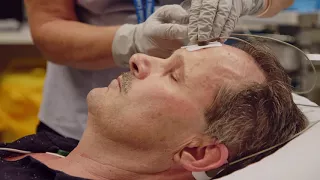
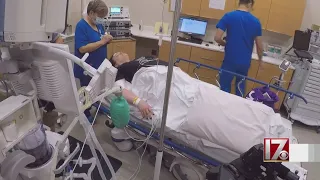
One newer practice is to place electrodes on one side of the head instead of sending electricity straight through, which might decrease the chances of memory loss. And now, patients are given muscle relaxants and anesthesia to reduce possible dangerous side effects from uncontrolled convulsions. But because there’s still a chance of memory loss or cognitive impairment, ECT is only used in patients who consent to those risks.
And it’s often considered a last-resort treatment for very severe cases of depression. That being said, some evidence suggests that it really seems to help. A meta-analysis in 2004 showed that in studies where people were randomized to receive ECT or either a placebo or medication, ECT was pretty consistently better than the others at reducing symptoms.
And researchers aren't entirely sure why. Some think it might be a benefit associated with the abnormal electrical activity of seizures, as weaker treatments that don't induce seizures don’t seem to be as effective. And studies in rats have shown that feel-good neurotransmitters like serotonin and dopamine can be released after a seizure.
Others think it might reset people's stress responses, by jumpstarting the release of neurotransmitters that don't function right in depression. But even as we’re still learning about ECT, it’s one of the tools that clinical psychologists have in their arsenal, along with talk therapy and other medications. Even if it came from a complicated history.
Thanks for watching this episode of SciShow Psych! If you want to learn more about chemical treatments for depression, check out our episode where we debunk 4 antidepressant misconceptions.