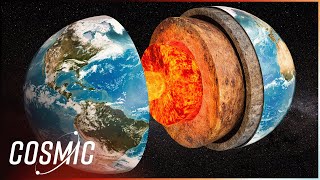
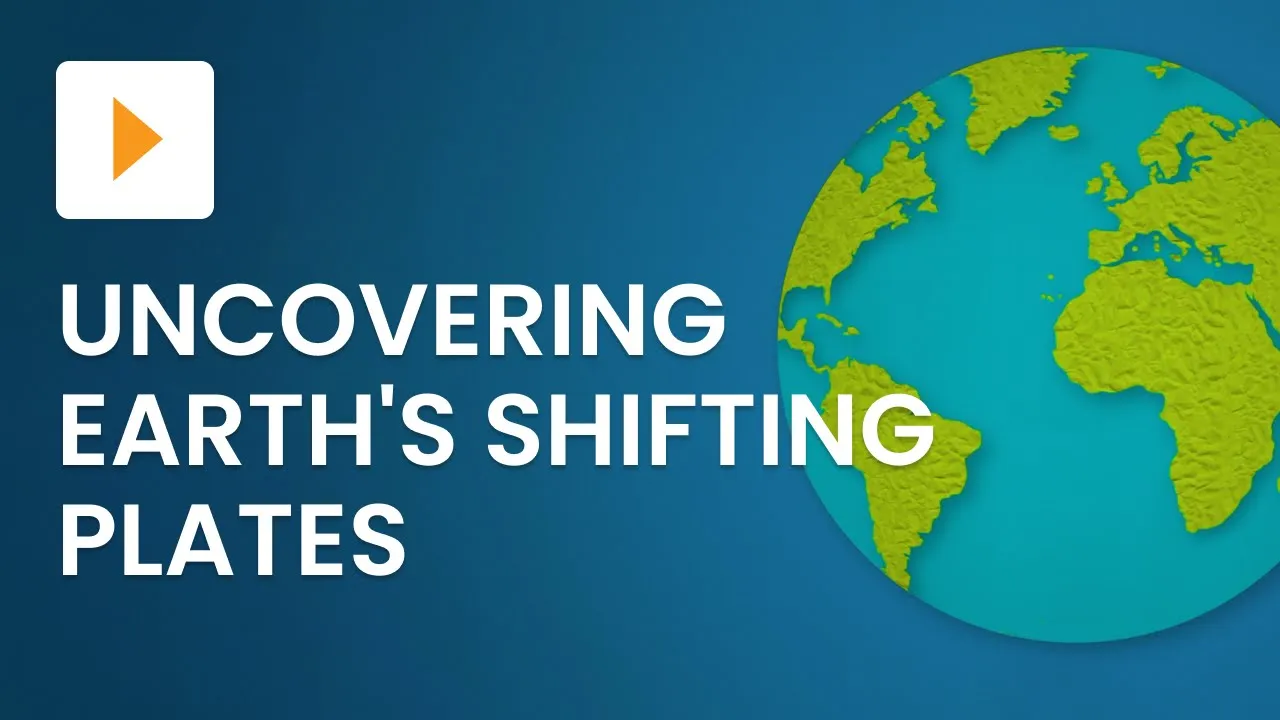
oceans mountains and continents these are just some of the features that make up the world that we live in the earth's surface makes up only a tiny fraction of our planet which we call the crust but do you know what lies beneath it [Music] to get an idea of how much of the earth is crust take a look at this peach a peach has three layers a thin hard skin on the outside a thick layer of yellow flesh and a stone on the inside like this peach earth is also made up of several layers the
crust the mantle and the core can you see how thin the crust is compared to the rest of earth's layers under the crust lies a semi-liquid mantle layer of molten magma which can be divided into the upper mantle and the lower mantle together the upper mantle and the crust are collectively known as the lithosphere below the mantle lies the core which can also be divided into the outer core and inner core the outer core is made of iron and nickel but because temperatures are so high here you find these metals in their molten liquid form
at the center of the earth beneath the outer core lies the inner core this layer is a solid ball made of iron as well this is the hottest part of the earth with temperatures as high as the surface of the sun the inner core stays solid because earth's gravity is so strong the metals cannot melt despite how hot it is if you took a look at a world map it would be easy to think that the earth has always looked like this and always will however this is just how the earth's surface looks currently because
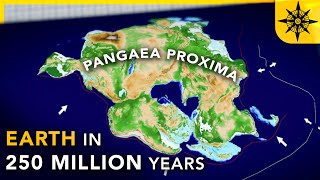
it is changing all the time most of these changes happen in the lithosphere earth's lithosphere is divided into many tectonic plates that are different in shapes and sizes but fit tightly together like a jigsaw puzzle there are seven large key plates and several smaller plates and our lands and oceans lie on top of them did you know that all of the continents that we know today once formed a single supercontinent this supercontinent existed 335 million years ago and we call it pangaea over millions of years the tectonic plates which hold the continents moved around smashing
into each other and then pulling apart this process is called plate tectonics but is sometimes also known as continental drift if you look closely you can see where some of the edges of the continents line up like the edges of africa and south america fossils of animals that couldn't swim or fly have been found on different continents providing further evidence that all the continents were previously connected so how did the plates manage to move the continents to where they are today to find out we'll have to look at what lies under the plates within the
earth there is tremendous heat and pressure and this drives slow circular movements called convection currents within the mantle layer which in turn cause the plates to move different tectonic plates meet each other at their boundaries which are known as plate margins there are three types of plate margins depending on what kind of movement occurs between the two interacting plates at a constructive or divergent plate margin two plates move away from each other this movement forms a gap between plates which allows magma to seep through and cool to form new geological features such as volcanoes the
mid-atlantic ridge under the atlantic ocean is an example of a constructive plate margin at a destructive or convergent plate margin two plates move towards each other this can either cause one plate to go under and the other to be pushed up or two plates to smash together and push upwards this process can form majestic fold mountains and deep trenches and often create powerful earthquakes this is how the himalayas in nepal home of earth's highest mountain mount everest were formed at a conservative or transform plate margin two plates slide against each other either in different directions
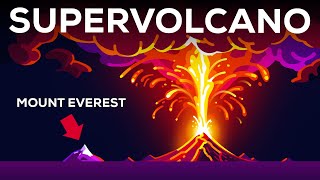
or in the same direction at different speeds these parts of the world also experience earthquakes due to the movement of these plates an example of this is the san andreas fault in california our earth is a dynamic and active planet and its surface is composed of many individual plates that are always on the move due to the convection currents within the plates are moving far too slowly for us to notice yet they are responsible for the most devastating tectonic hazards like volcano eruptions earthquakes and tsunamis