Are ordinary people able to do terrible things? And if so, how many would give a strong electric shock to an innocent other, just because they are following an order? To answer these questions, we can look at the controversial work of a man who just wanted to find answers to his family's horrific past.
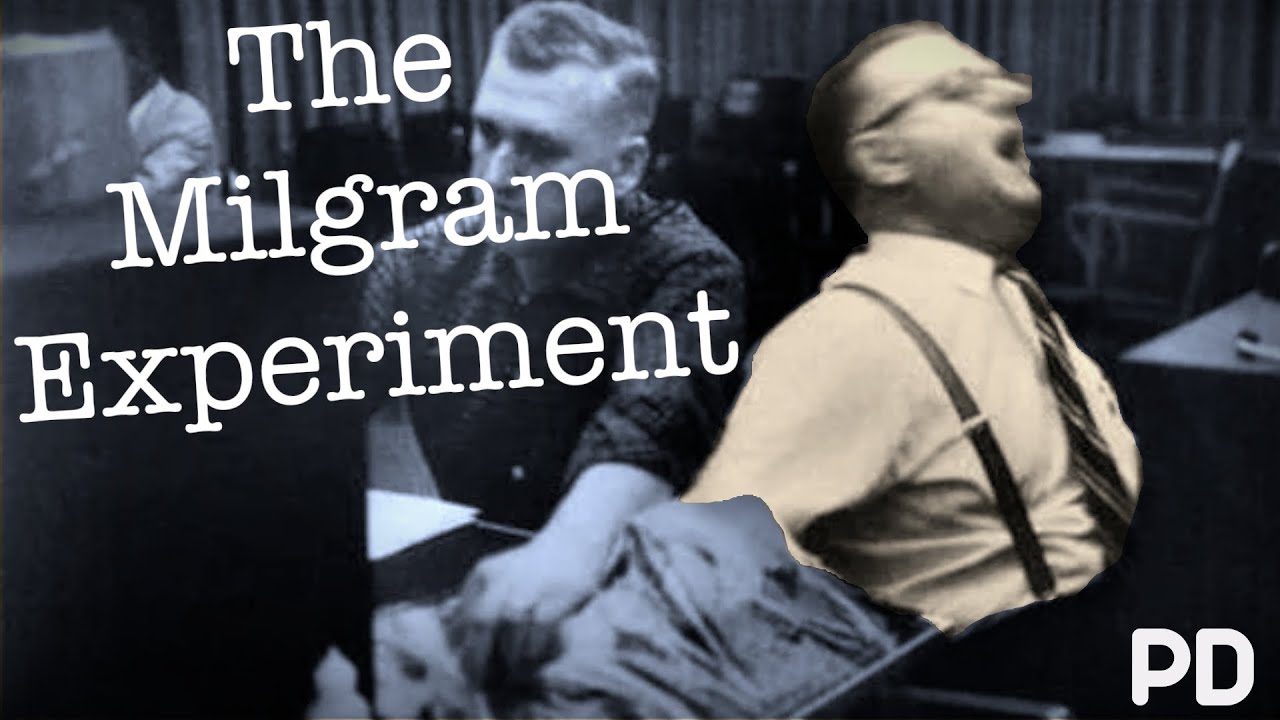
In 1961, Stanley Milgram, a young psychologist, wanted to find out how ordinary citizens were able to commit acts of unspeakable evil in Nazi Germany. His theory: some people do horrific things because they obey even the most wicked leaders. To test his theory, Milgram designed a clever experiment that changed our understanding of human behavior forever.
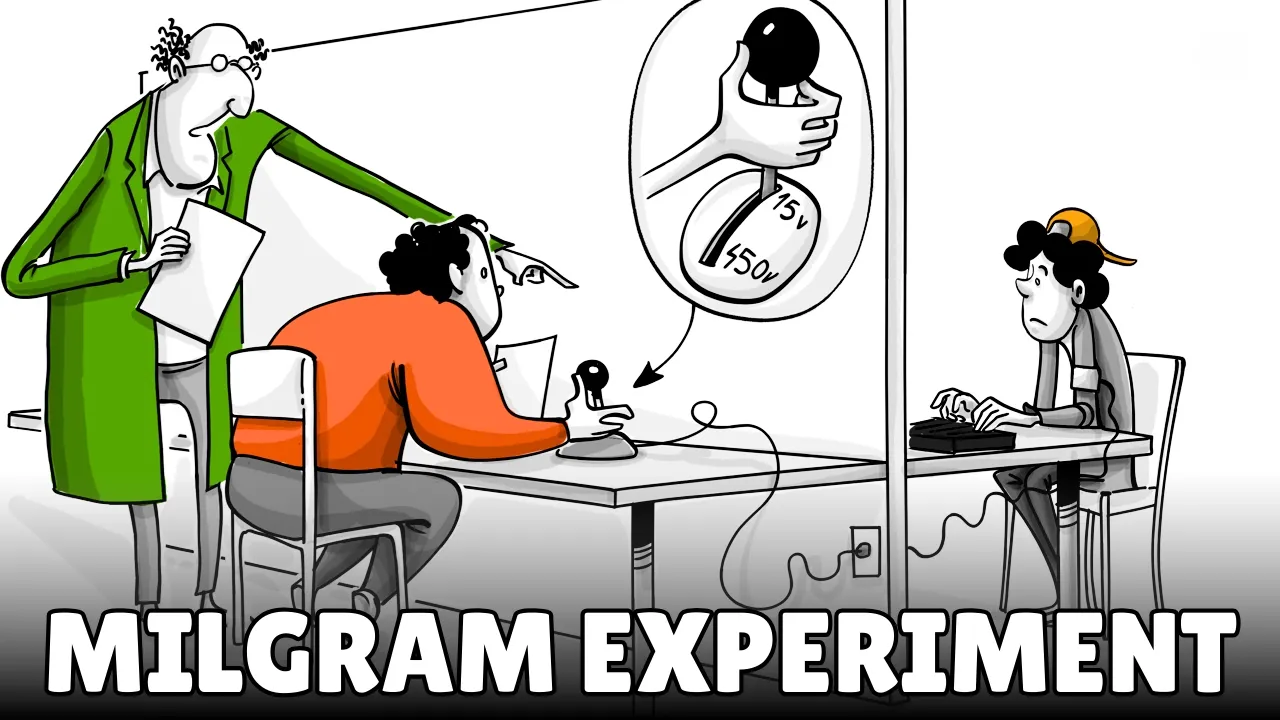
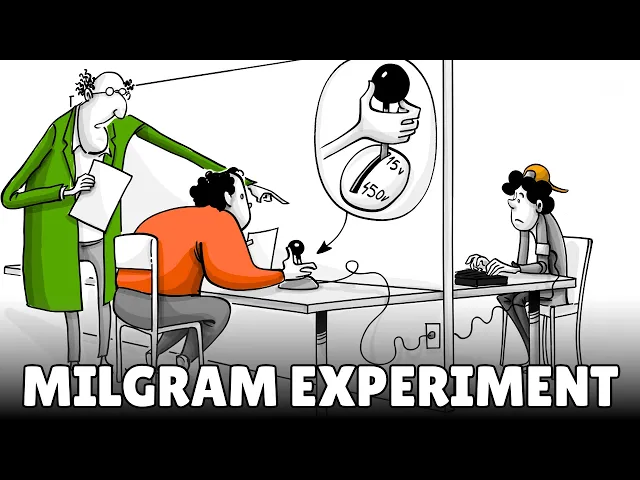
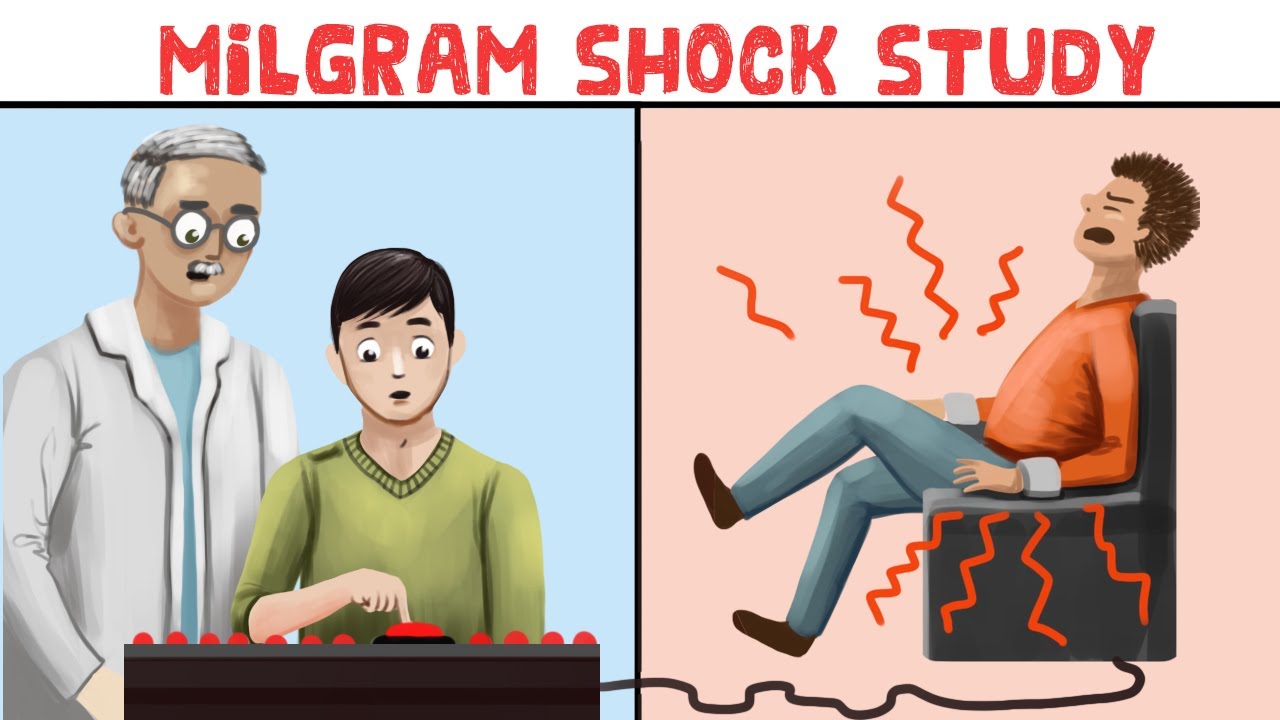
The Milgram Experiment involved 3 people: An authority, called the experimenter, who was dressed in a lab coat to appear powerful. A volunteer, who was assigned to be the teacher. And a victim, the so-called student.
The teacher was the test subject, whereas the experimenter and student were both actors. Following orders, the teacher should test a student, who is sitting in another room, by asking them questions. For every wrong answer the experimenter would ask the teacher to inflict an electric shock up to a life threatening 450 volts.
Before he began, Milgram asked his colleagues what they expected the outcome to be. Almost all of them agreed that only a few of the volunteers would obey and inflict electric shocks on innocent others. What do you think?
Would anyone administer shocks higher than 300 volts? Milgram then advertised his experiment as a "study on memory and learning" at the campus of Yale university. People signed up without any idea of what they were really getting themselves into.
The experiment began with the volunteers meeting the other participants. The volunteers then pulled a card to draw their role. Little did they know that they could only draw the teacher.
Next, they would be given a sample of a light electric shock in order to experience firsthand what the others would have to go through. To start, the experimenter and the teacher were seated in one room, and the student was strapped to a chair in an adjacent room. The Teacher and student were able to communicate, but not see each other.
The experimenter then gave the teacher a list of questions. The teacher would then read out the questions and the student would press a button to indicate a response. For every false answer, the teacher would administer a shock, starting at 15 volts and increasing in 15-volt increments up to 450 What the teacher did not know was that the student didn't actually receive any shocks.
Instead, a tape recorder was used to play various responses. In the beginning the teacher would hear protest, or bangs against the wall. If shocks would increase the reactions would become louder.
And in case someone would go all the way, the learner would fall silent. In case the teacher became hesitant and asked to stop, the experimenter would resort to the following four prompts. First, he would say: "Please continue".
If that was unsuccessful, he would go on with: "The experiment requires that you continue”. Then: "It is absolutely essential that you continue”. And lastly: "You have no other choice; you must go on".
Along the way, the volunteers displayed signs of extreme tension such as sweating, trembling, and even uncontrollable laughing fits. The experiment would be stopped only after all four prompts had been used or the maximum voltage of 450 volts had been given three times. Milgram found that of all participants, 100% gave at least 300 volts and 65% went all the way to 450 volts.
The experiment was later criticized for being unethical because it deceived innocent people into performing what seem to be terrible acts of violence. However, his experiment was successfully replicated many times, involving different populations and leading to similar findings. Milgram himself left us with this to think about: “It may be that we are puppets - puppets controlled by the strings of society.
But at least we are puppets with perception, with awareness. And perhaps our awareness is the first step to our liberation. ” What do you think?
Would you follow or question the orders if you were one of Milgram's participants? And what can we as a society teach future generations to help prevent horrific acts that can happen when ordinary people blindly follow an authority? Let us know your thoughts in the comments below.
This and all other Sprouts' videos are licensed under the Creative Commons. That means teachers from all around the world can use them in classrooms, online courses or to start projects - and today, thousands already do! To learn how it works and download this video without Ads or background music, checkout our website or read the description below.
If you want to support our mission and help change education visit our Patreon - that's patreon. com/sprouts.






![The Halo Effect [Pretty Privilege]](https://img.youtube.com/vi/kpjeMaOirvg/maxresdefault.jpg)