[Music] [Laughter] [Music] you know the the that was the biggest takeaway for me on your your latest visit was the extent to which you were seeing all those different salt textures and look i mean we could see the salt in the core and we could see the evaporite minerals in the core but the the fundamental change for me was you being able to identify where the salt had been these so-called collapse broaches and showing us the one the footprint of where the salt used to be the salt moved already so that was the first thing
and then the second thing was the the extent of these things i mean you know i i was really surprised by the number of these uh salt sort of footprints where the salt had left how many of those layers we were seeing in the in the core and in the in the basin um could you just talk us through the importance of one those those collapse branches and then secondly um how much salt there there is in the basin and and why why that's so important oh yeah i'm happy to do that because i mean
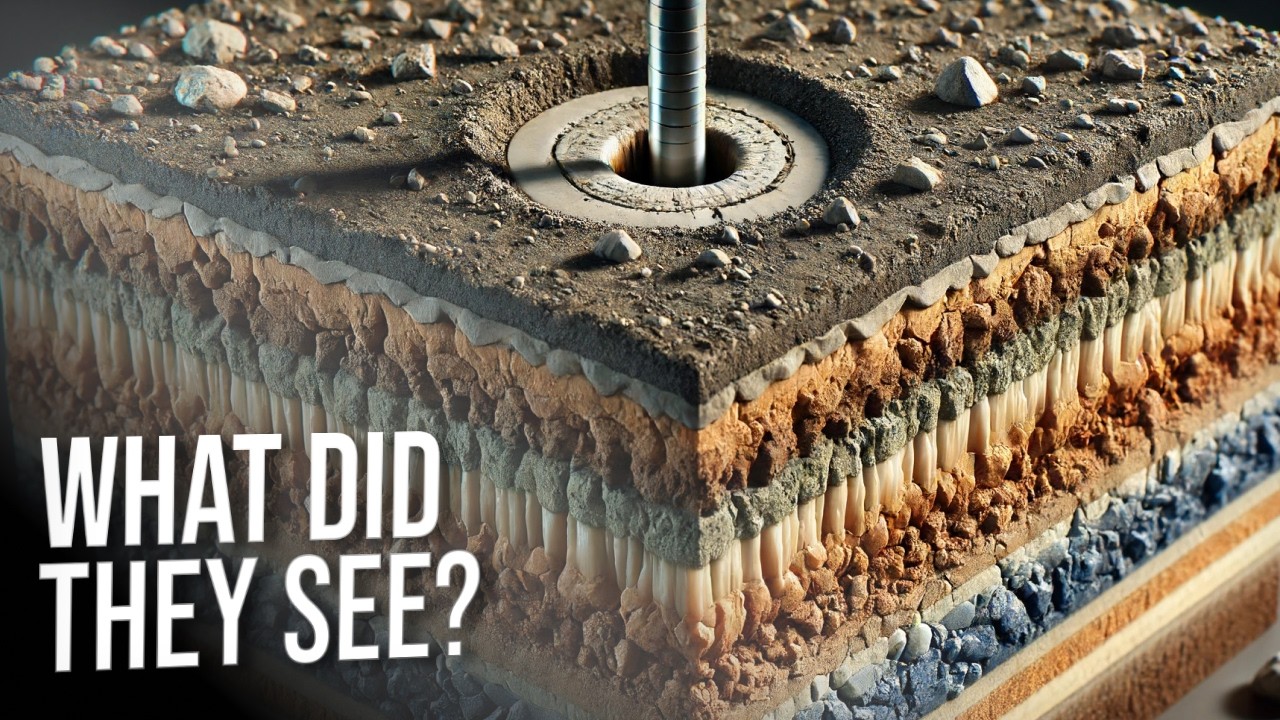
it sounds like a little bit sort of like the stunt of a magician to show you something that is invisible but basically that is what one has to do and the question is how convincing is such an explanation and how convincing it can be to the local geologists so the big question is how can you show that at a place there was some sort when the salt is gone now what we actually found in the drill core and the drill core we found very very strange or odd broken type of rocks we found sequences that
were asymmetrical we had sort of a solid football at the bottom and then we saw a bit of a mess but this mess was in a way systematic because it only consisted of broken and collapsed material of one and the same rock type and when in the drill core we would going strategically higher you could see the same rock type sort of still sticking together but broken to pieces before even higher up we would go into the same rock type in a solid way now the only way to explain this because there was no external
material nothing had been washed in there like a conglomerate or anything sort of ground up by a fold we found that these breakthroughs which they are these systematic brakes are absolutely parallel to the bedding and we found numerous of those and this is a typical pattern that we find if a layer or a cushion or even a dome of salt gets dissolved then obviously the roof caves and this produces this very very systematic asymmetrical type of fractures and this is what we call dissolution collapse branches i've been very very fortunate a couple of years ago
to travel and to work on all deposits in iran and in iran you've got the desert next to the persian gulf it's a very it's an extremely hyper arid environment it's dry dry dry and in this desert there are a lot of salt domes that means at a certain depth salt has been deposited and salt has the habit of becoming plastic and starts to creep and if there is enough overburden and rocks resting with their weight on top then the sword starts creeping up and it forms these blobs or this sword die appears it's a
little bit like in one of these magma lamps although that is obviously all liquids but the saw does this as a solid creep and some of these salt dye pairs which in other parts of the world would be dissolved by the groundwater and you would never see them on surface but since they have come up in a desert they actually pop up as sort of mountains and you can actually go and visit those you can knock them with a hammer you can lick them you can stick your tongue to the sword because the sword is
exposed on surface because it simply hardly ever rains in that part of the desert and what you can also see is that on top of the sword and on the flanks you've got a bit of a mess and that is a mess that is very very similar to what we're finding in the drill core in uranius exploration area because it is the collapsed material it's the collapsed roof material that is lying and resting on top and which we actually see so in the iranian desert we can actually observe what has apparently happened underground in the
area of the kutuku and we were asking how often do we find this how common is it well you have now quite a number of bohols and in these boreholes we've seen stacked units of these collapse branches now if we sort of interpret them correctly one could insert the salt that had been there before it was dissolved and so we can speculate whether it was a 10 meter layer of salt or a 2 meter layer of salt or a dome but probably the stratigraphy that we see in the drill core today has probably been reduced
by in thickness by something like 20 maybe 25 where the salt is gone and this salt has basically been washed away by aqueous solutions giving rise to these chlorine rich fluids or possibly also sulfur-rich fluids which we talked a little while ago about having this capability of trans leaking and transporting metals so we can from what we see now is we are pretty sure that the basin was a saline saline to as we say hyper saline basin in which only part of the sword is still preserved as part of the stratigraphy today [Music] you