Human beings are everywhere. With settlements on every continent, we can be found in the most isolated corners of Earth’s jungles, oceans, and tundras. Our impact is so profound, most scientists believe humanity has left a permanent mark on Earth’s geological record.
So what would happen if suddenly, every human on Earth disappeared? With no one maintaining them, some of our creations backfire immediately. Hours after we disappear, oil refineries malfunction, producing month-long blazes at plants like the ones in western India, the southern United States, and South Korea.
In underground rail systems like those in London, Moscow, and New York City, hundreds of drainage pumps are abandoned, flooding the tunnels in just three days. By the end of the first week, most emergency generators have shut down, and once the fires have gone out, the earth goes dark for the first time in centuries. After the first catastrophic month, changes come more gradually.
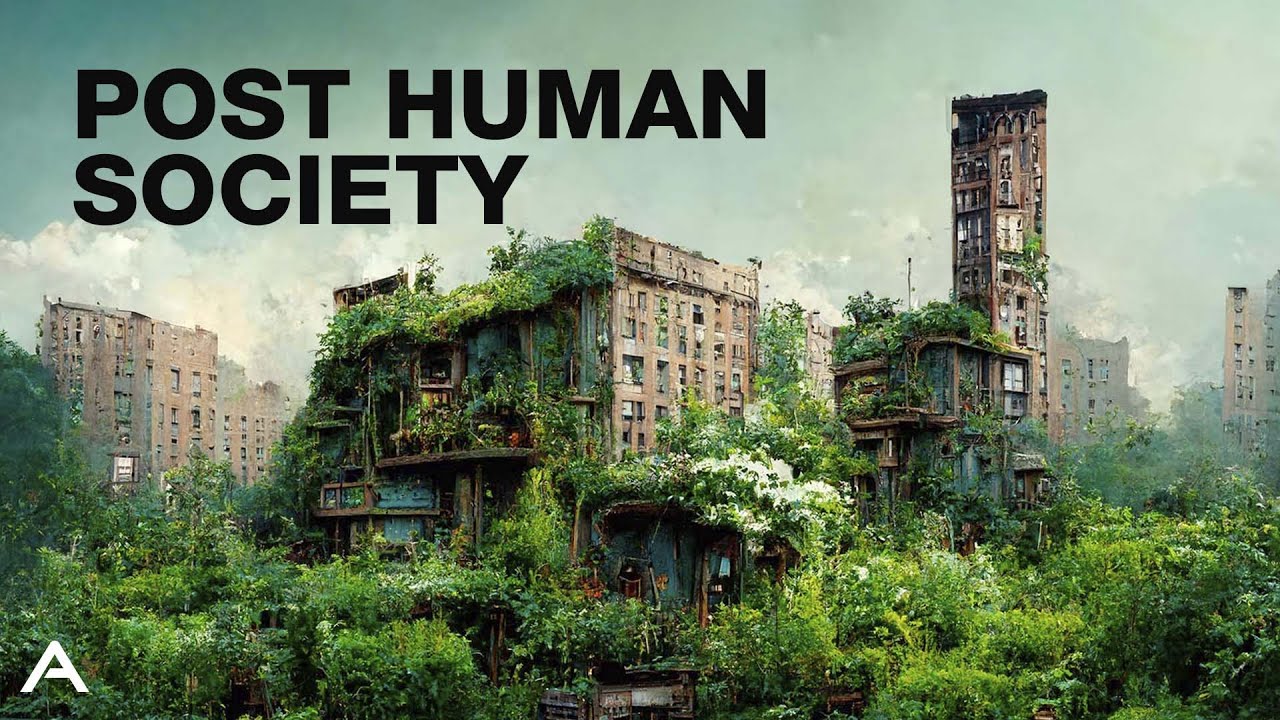
Within 20 years, sidewalks have been torn apart by weeds and tree roots. Around this time, flooded tunnels erode the streets above into urban rivers. In temperate climates, the cycle of seasons freezes and thaws these waterways, cracking pavement and concrete foundations.
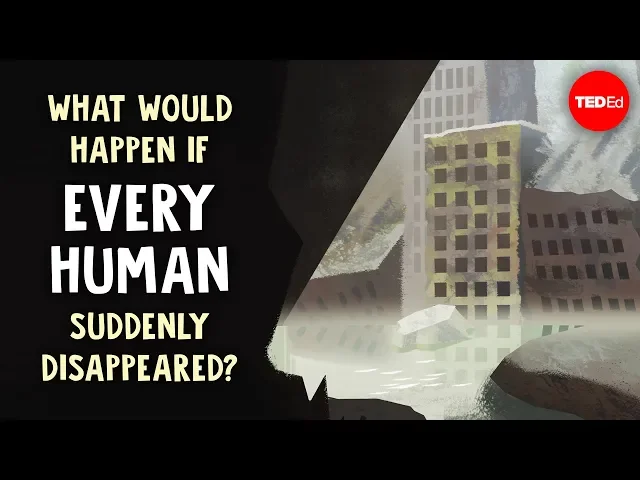
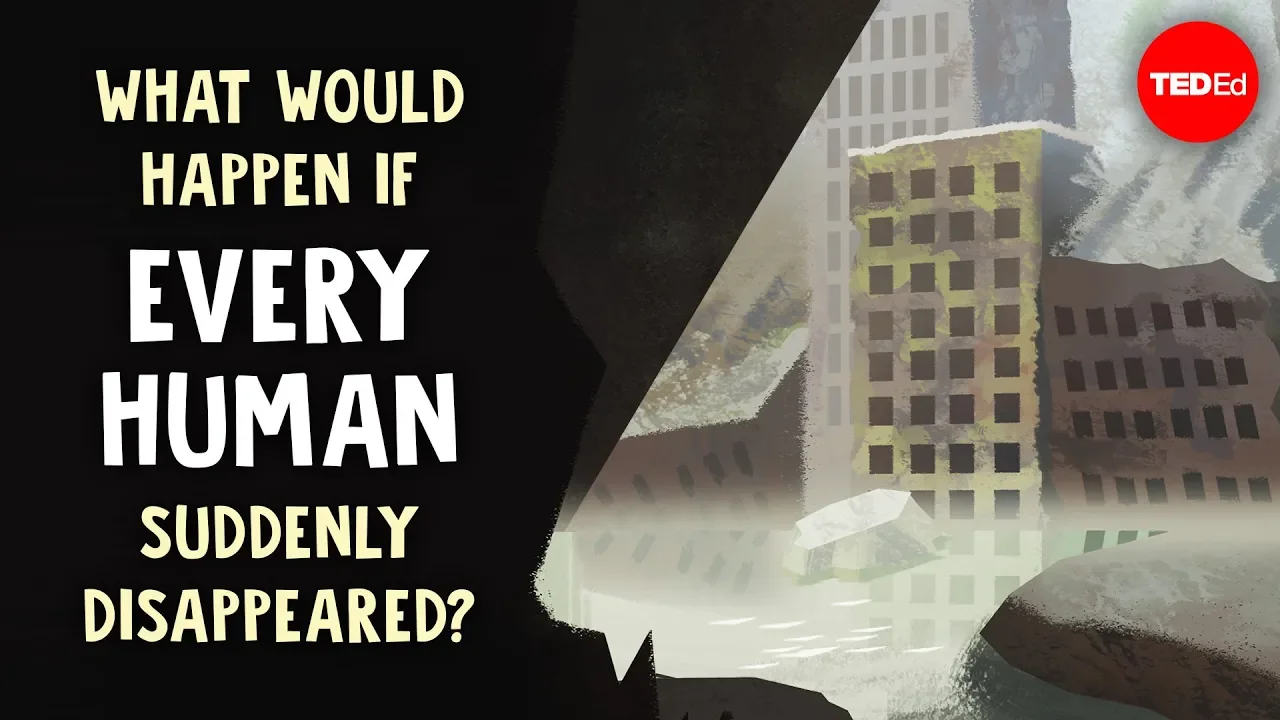
Leaking pipes cause the same reaction in concrete buildings, and within 200 winters, most skyscrapers buckle and tumble down. In cities built in river deltas like Houston, these buildings eventually wash away completely - filling nearby tributaries with crushed concrete. Rural and suburban areas decay more slowly, but in largely unsurprising ways.
Leaks, mold, bug and rodent infestations - all the usual enemies of the homeowner- now go uncontested. Within 75 years, most houses' supporting beams have rotted and sagged, and the resulting collapsed heap is now home to local rodents and lizards. But in this post-human world, “local” has a new meaning.
Our cities are full of imported plants, which now run wild across their adopted homes. Water hyacinth coat the waterways of Shanghai in a thick green carpet. Poisonous giant hogweeds overgrow the banks of London’s Thames River.
Chinese Ailanthus trees burst through New York City streets. And as sunken skyscrapers add crumbled concrete to the new forest floor, the soil acidity plummets, potentially allowing new plant life to thrive. This post-human biodiversity extends into the animal kingdom, as well.
Animals follow the unchecked spread of native and non-native plants, venturing into new habitats with the help of our leftover bridges. In general, our infrastructure saves some animals and dooms others. Cockroaches continue to thrive in their native tropical habitats, but without our heating systems, their urban cousins likely freeze and die out in just two winters.
And most domesticated animals are unable to survive without us – save for a handful of resourceful pigs, dogs, and feral housecats. Conversely, the reduced light pollution saves over a billion birds each year whose migrations were disrupted by blinking communication tower lights and high-tension wires. And mosquitos multiply endlessly in one of their favorite manmade nurseries – rubber tires, which last for almost a thousand years.
As fauna and flora flourish, Earth’s climate slowly recovers from millennia of human impact. Within 35,000 years, the plant cycle removes the last traces of lead left by the Industrial Revolution from Earth’s soil, and it may take up to 65,000 years beyond that for CO2 to return pre-human levels. But even after several million years, humanity’s legacy lives on.
Carved in unyielding granite, America’s Mt. Rushmore survives for 7. 2 million years.
The chemical composition of our bronze sculptures keeps them recognizable for over 10 million. And buried deep underground, the remnants of cities built on floodplains have been preserved in time as a kind of technofossil. Eventually, these traces, too, will be wiped from the planet’s surface.
Humanity hasn’t always been here, and we won’t be here forever. But by investigating the world without us, perhaps we can learn more about the world we live in now.