If you go to the store in search of milk, there are a dizzying number of products to choose from. There’s dairy milk, but also plant-based products. To turn a plant into something resembling milk, it must be either soaked, drained, rinsed, and milled into a thick paste, or dried, and milled into flour.
The plant paste or flour is then fortified with vitamins and minerals, flavoured, and diluted with water. The result is a barrage of options that share many of the qualities of animal milk. So which milk is actually best for you?
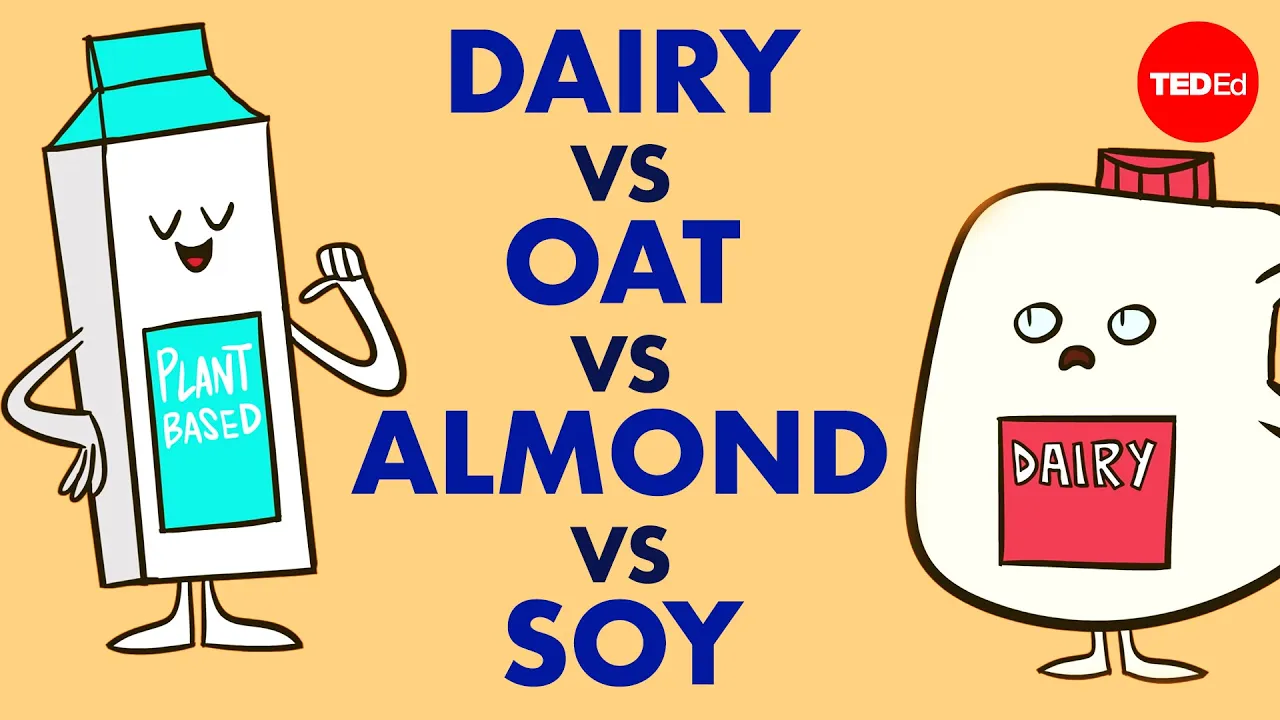
Let’s dive into some of the most popular milks: dairy, almond, soy, or oat? A 250 ml glass of cow’s milk contains 8 grams of protein, 12 grams of carbohydrates, and 2 to 8 grams of fat depending on if it’s skim, reduced fat, or whole. That’s approximately 15% the daily protein an average adult needs, roughly 10% the carbohydrates and 2 to 15% the fat.
Most plant-based milks have less carbohydrates than dairy milk. They also have less fat, but more of what’s often called “good fats. ” Meanwhile, the healthy nutrients vitamin D and calcium found in dairy milk don’t occur naturally in most plant-based milks.
Looking more closely at our plant-based milks, both almond and oat are low in protein compared to dairy. But while almond milk has the least nutrients of the four, oat milk is full of beta-glucans, a healthy type of fibre. It also has a lot of carbohydrates compared to other plant milks— sometimes as much as dairy milk.
Soy milk, meanwhile, has as much protein as cow’s milk and is also a great source of potassium. Soybeans contain isoflavone, which people used to think might trigger hormonal imbalances by mimicking the function of estrogen. But ultimately, soy milk contains very small amounts of isoflavones, which have a much weaker effect on our bodies than estrogen.
Depending on individual circumstances, one of these milks may be the clear winner: if you’re lactose intolerant, then the plant-based milks pull ahead, while if you’re allergic to nuts, almond milk is out. For people who don’t have access to a wide and varied diet, dairy milk can be the most efficient way to get these nutrients. But all else being equal, any one of these four milks is nutritious enough to be part of a balanced diet.
That’s why for many people, the milk that’s best for you is actually the milk that’s best for the planet. So which uses the fewest resources and produces the least pollution? It takes almost 4 square kilometers to produce just one glass of cow’s milk, land use that drives deforestation and habitat destruction.
Most of that is land the cows live on, and some is used to grow their feed. Many cows eat soy beans and oats. It takes much less land to grow the oats or soybeans for milk than it does to feed a dairy cow— only about a quarter square kilometer per glass.
Almond milk has similar land use. But where that land is also matters— soybean farms are a major driver of deforestation, while oat and almond farms aren’t. Making milk uses water every step of the way, but it’s the farming stage where big differences emerge.
Dairy milk uses the most water— about 120 liters per glass, mostly to water cows and grow their food. Almonds take second place, at more than 70 liters of water per glass. Most of that water is used to grow almond trees, which take years of watering before they start producing almonds.
The trees must be watered consistently, or they die, while many other crops can be left fallow and still produce later. All told, soy and oats require less water to grow: only about 5 to 10 liters per glass of milk. Milk production generates some greenhouse gas emissions— about 0.
1 to 0. 2 kilograms per glass for the plant-based milks. But for dairy milk, the cows themselves also produce emissions by burping and farting out large quantities of the gas methane.
Overall, each glass of dairy milk contributes over half a kilogram of greenhouse gas emissions. So while depending on your dietary needs, any one of these milks may be a good fit, in terms of the health of our planet there’s a strong case for choosing plant-based milks, particularly oat or soy milk.